Artwork
Landscape
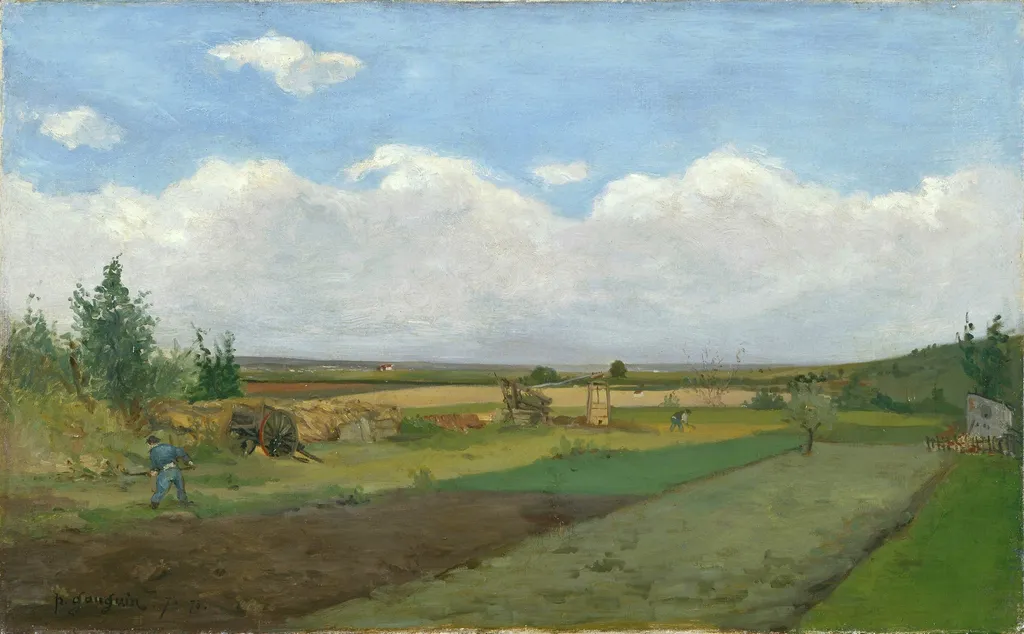
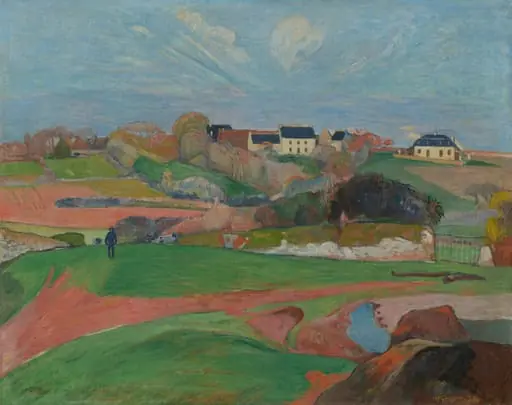
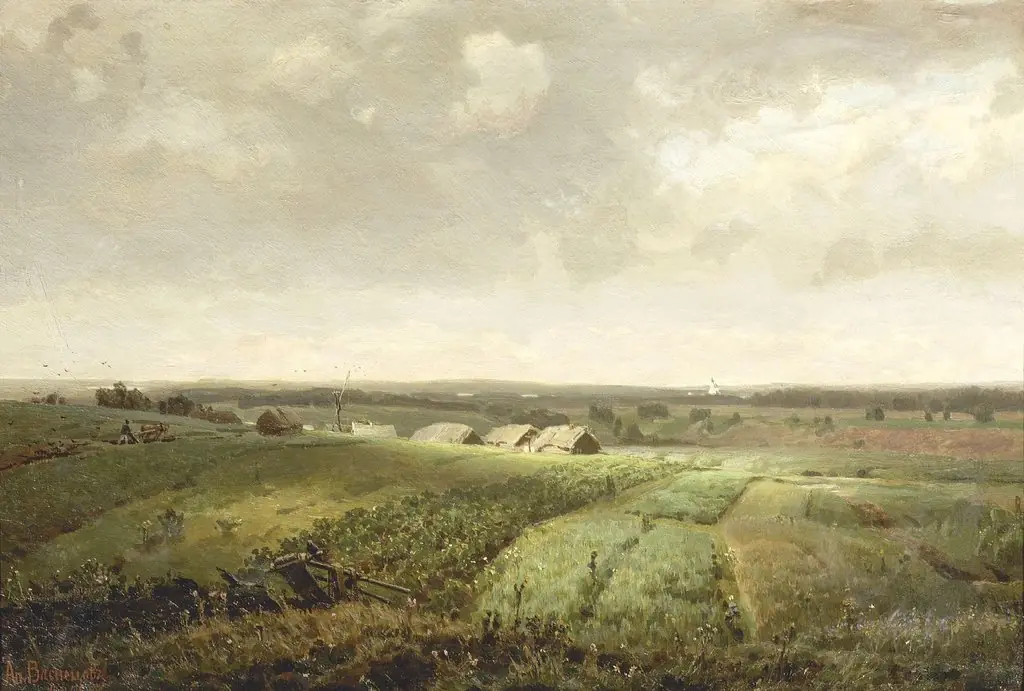
Landscape is an oil painting by Paul Gauguin. It dates from 1873 and is held in the collection of the Fitzwilliam Museum.
About this work
Overview
It reflects his initial engagement with naturalistic representation, prior to his adoption of bold color and symbolic forms.
Painted in 1873, *Landscape* is an early oil work by Paul Gauguin, created before his later stylistic breakthroughs. It reflects his initial engagement with naturalistic representation, prior to his adoption of bold color and symbolic forms. The piece belongs to the landscape tradition and remains part of the Fitzwilliam Museum’s collection, offering insight into Gauguin’s artistic development during his formative years.
Subject & Meaning
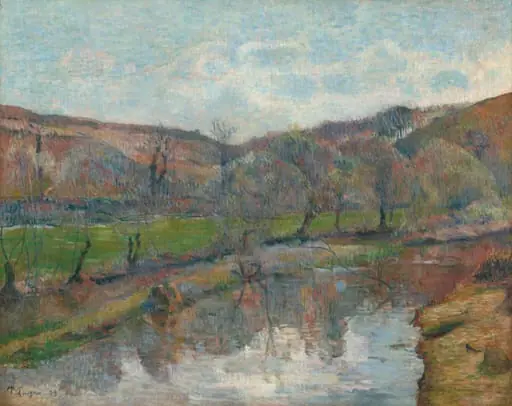
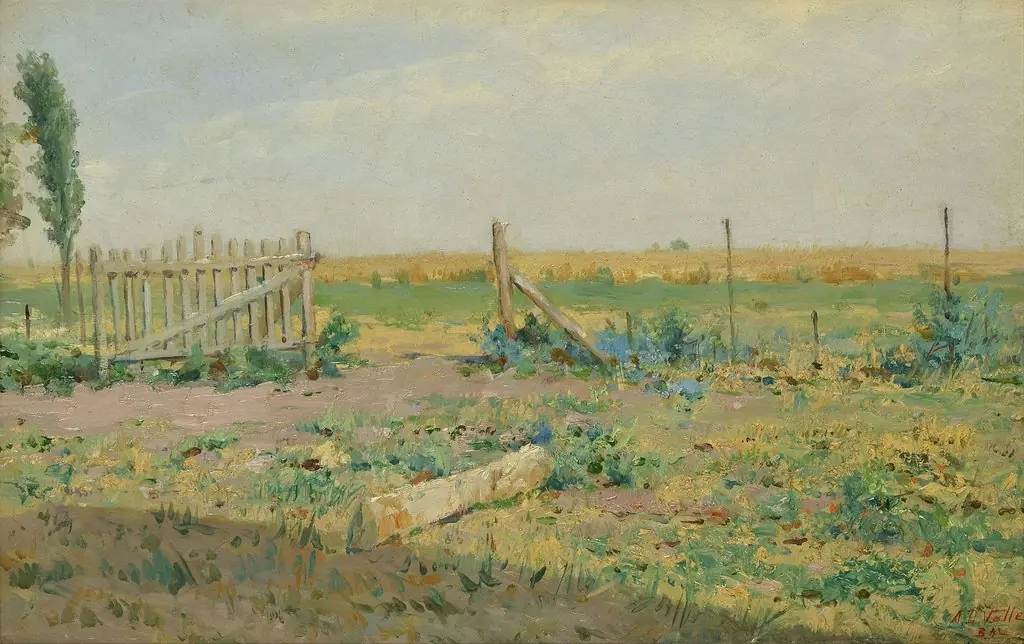
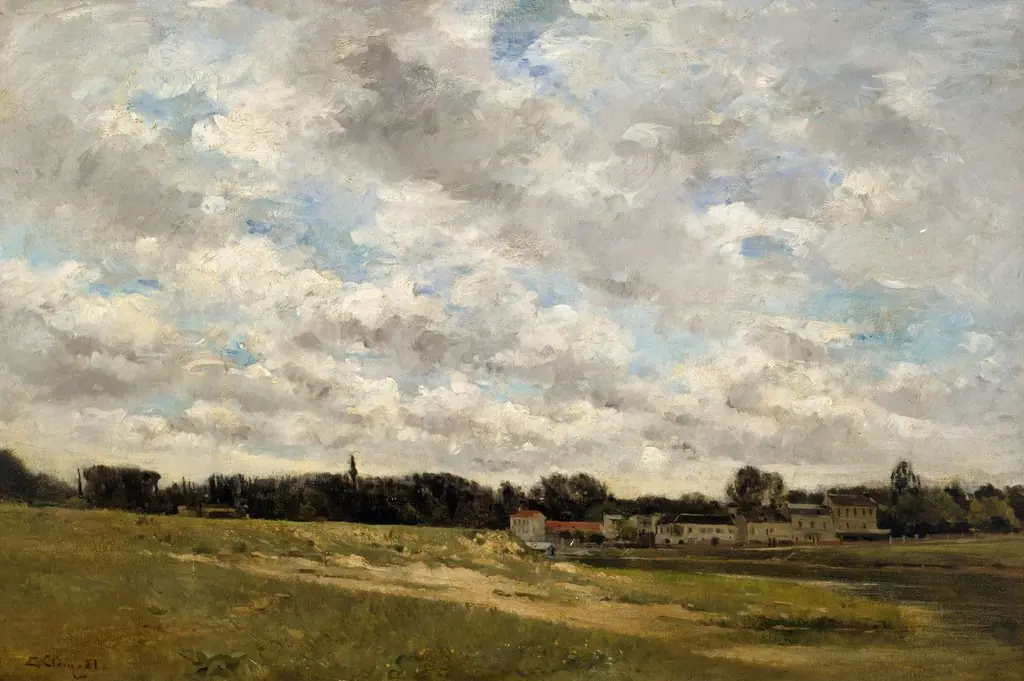
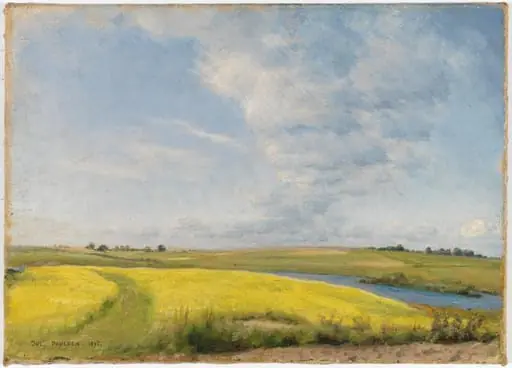
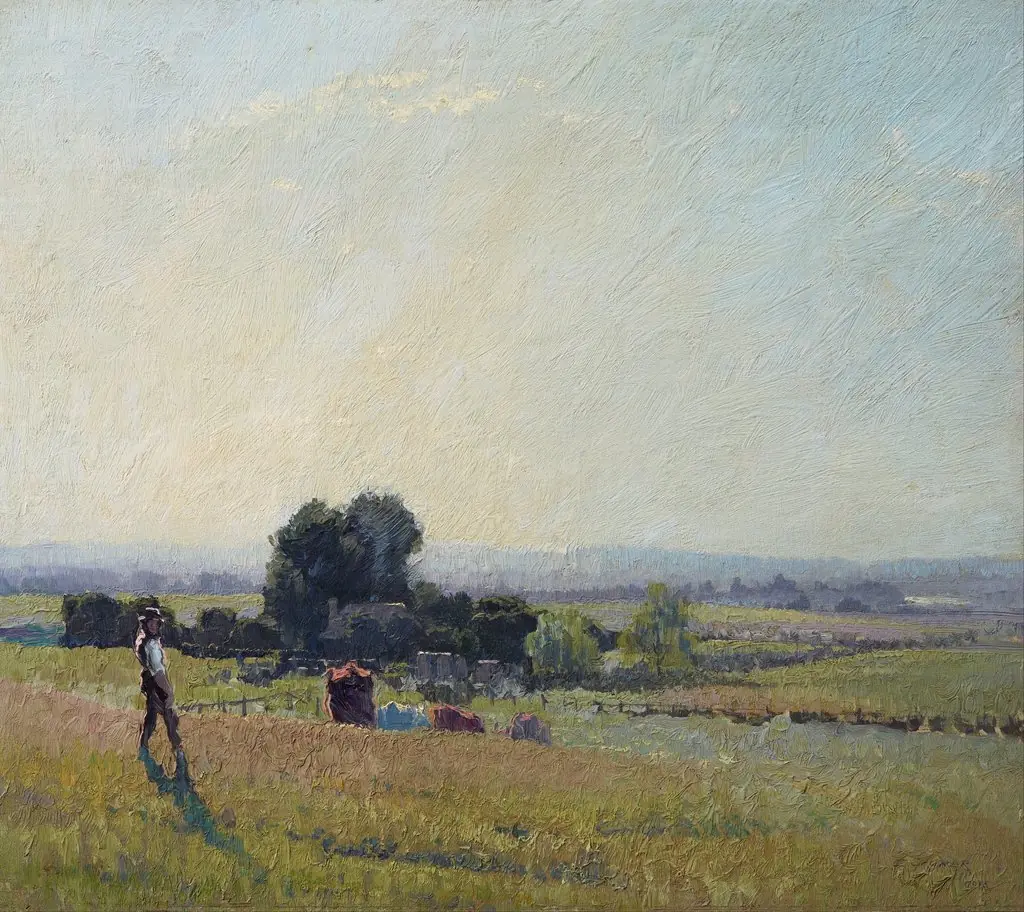
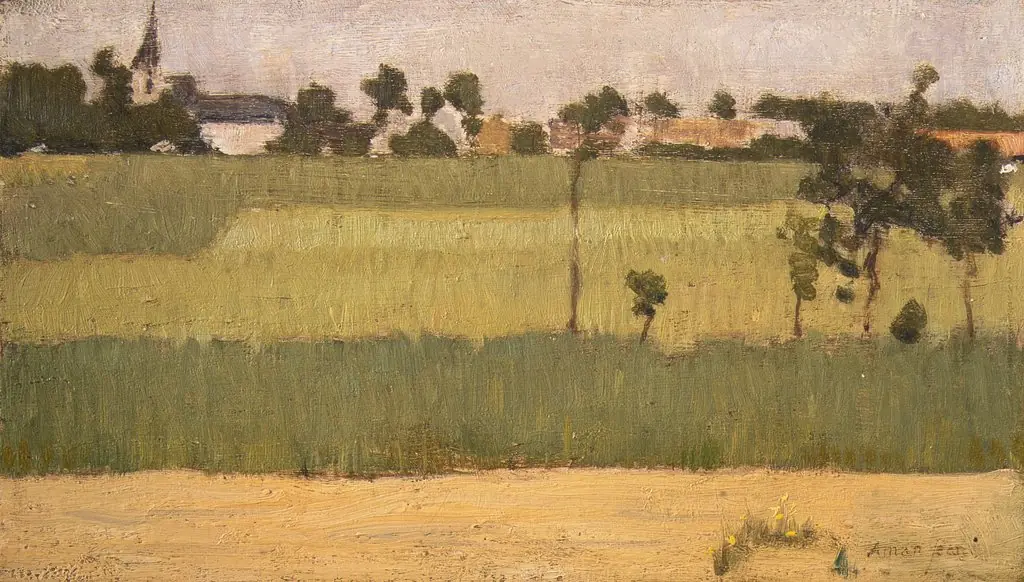
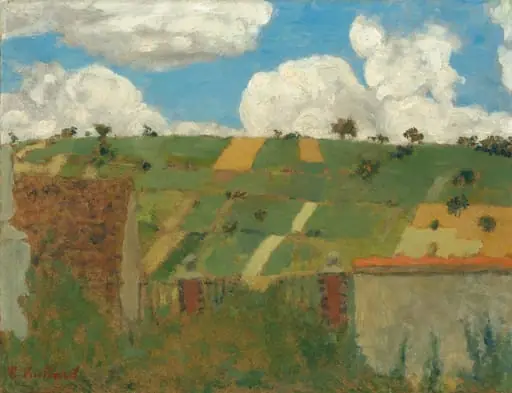
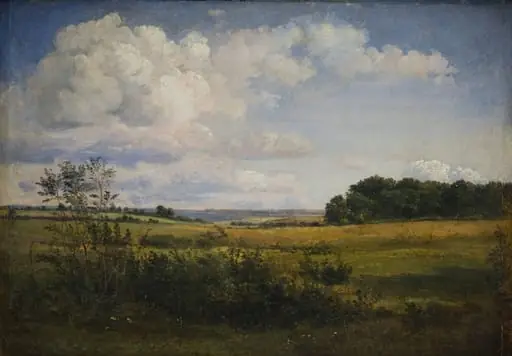
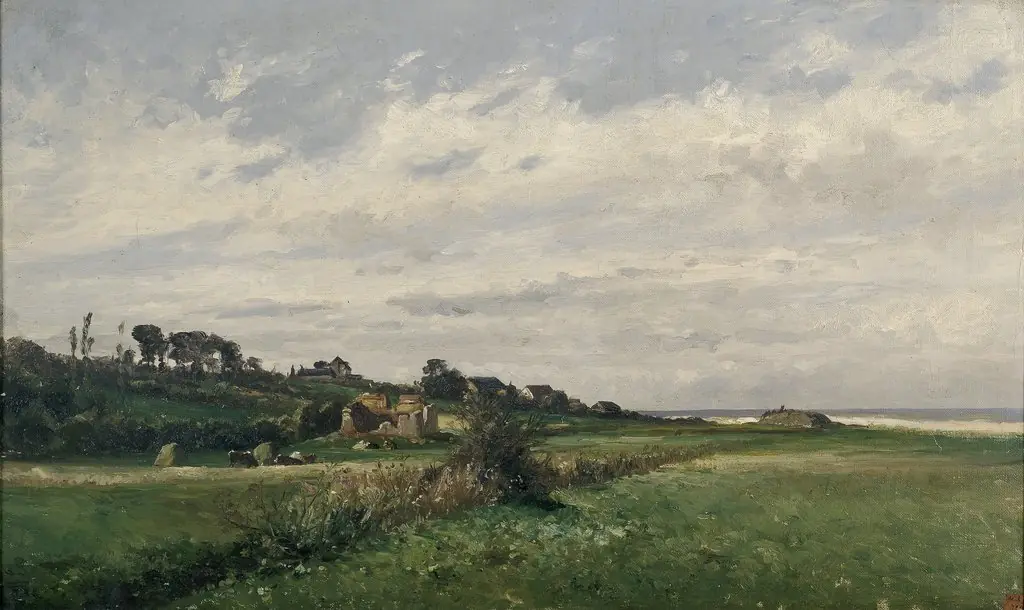
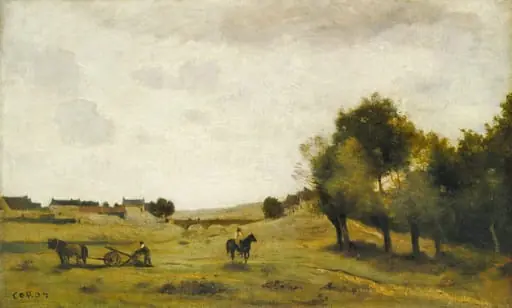
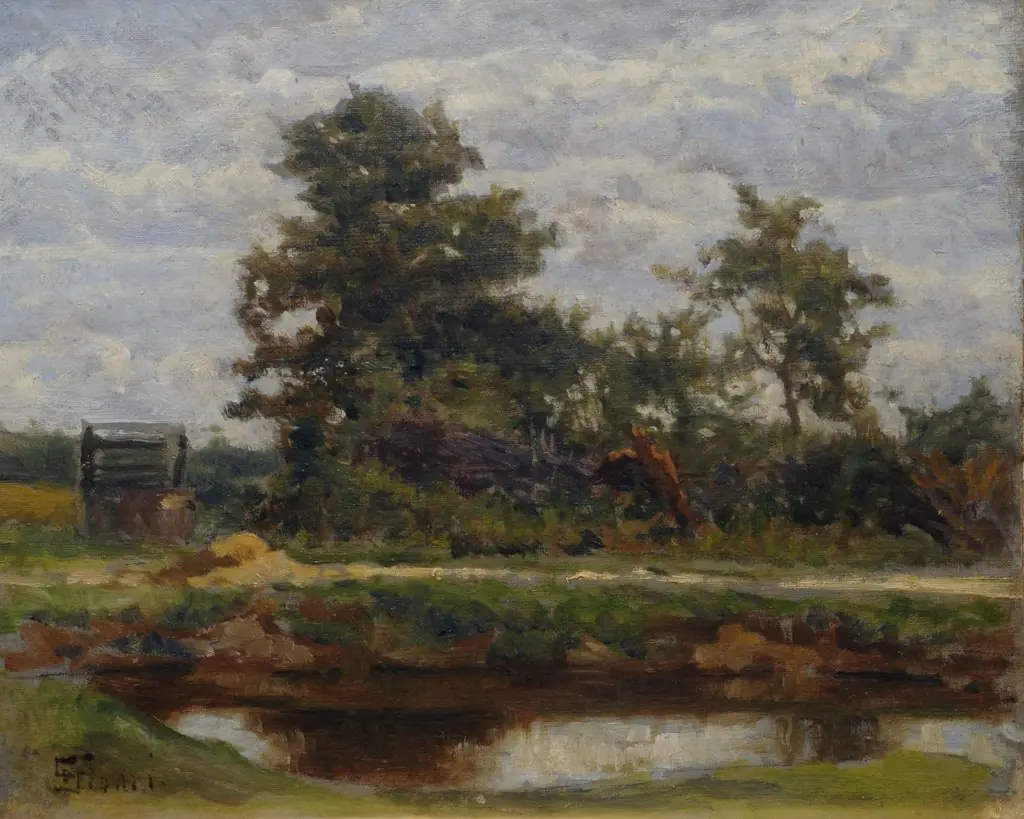
The painting portrays a quiet rural scene: a lone figure in blue works a field beside a cart and stacked hay, surrounded by gentle hills and scattered trees. There is no overt narrative or symbolic intent; instead, the focus lies in the observation of everyday labor and the calm rhythm of the countryside. The composition invites contemplation rather than drama, emphasizing harmony between human activity and the natural environment.
Technique & Style
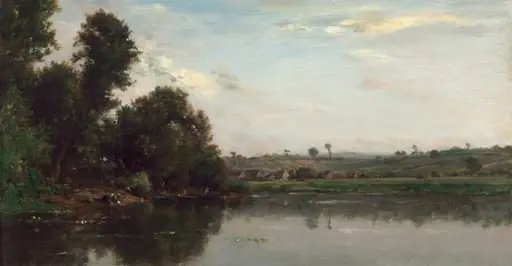
Gauguin applied oil paint with visible, deliberate brushstrokes that build texture without heavy impasto. The sky, rendered in soft blues and whites, recedes gently behind the foreground, creating spatial depth. Color is muted and naturalistic, with earthy tones grounding the scene. The handling of light and form shows the influence of contemporary landscape traditions, before his later departure toward abstraction and flat planes.
History & Provenance
Created during Gauguin’s early career as a stockbroker-turned-artist, the painting predates his association with the Post-Impressionist movement. It remained in private hands until entering the Fitzwilliam Museum’s collection, where it has been preserved as an example of his pre-experimental phase. Its documented history is limited, but its presence in a major public collection underscores its role in tracing his artistic evolution.
Context
In 1873, Gauguin was influenced by the Barbizon School and early Impressionism, both of which emphasized outdoor painting and everyday rural life. This work aligns with broader French artistic trends of the period, which valued direct observation over idealization. Unlike his later works from Tahiti, this landscape reflects a European sensibility, rooted in the countryside near Paris rather than exoticized locales.
Legacy
Though not representative of Gauguin’s mature style, *Landscape* serves as a foundational piece in understanding his artistic trajectory. It demonstrates his early commitment to painting from nature and his capacity for quiet, observational composition. The work contributes to scholarly discussions on how even the most conventional early efforts of radical artists can illuminate their eventual transformations.
Own this work as a print
Artist & collection
Artist
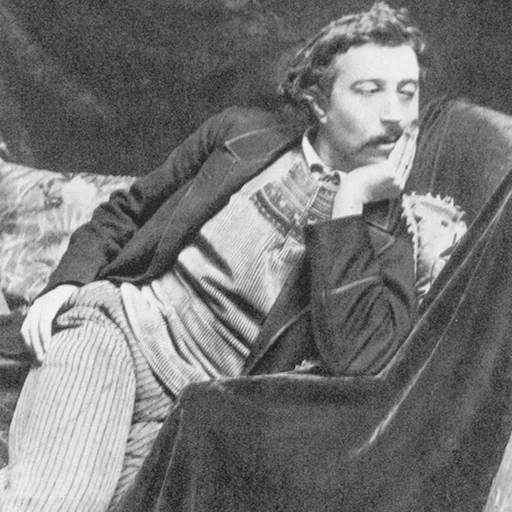
Eugène Henri Paul Gauguin (; French: ; 7 June 1848 – 8 May 1903) was a French painter, sculptor, printmaker, ceramist, and writer, whose work has been primarily associated with the Post-Impressionist and Symbolist movements.