Artwork
Ostre Anlaeg Park, Copenhagen
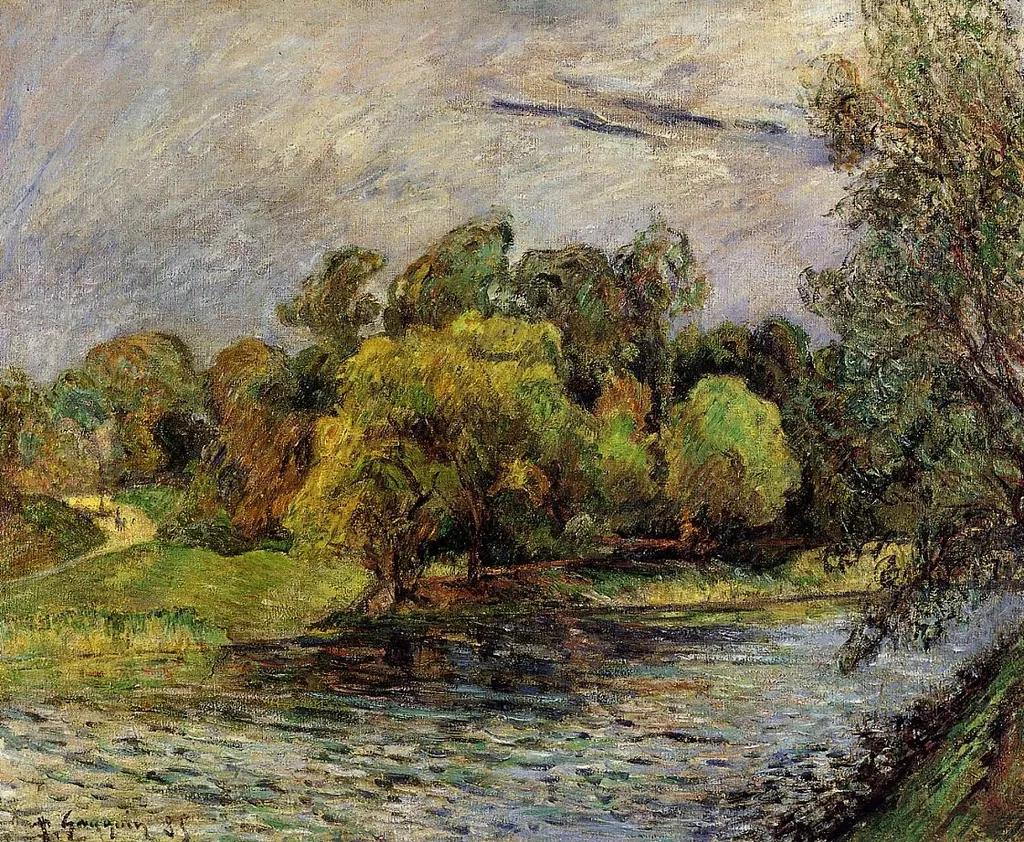
Ostre Anlaeg Park, Copenhagen is an oil painting by the Impressionist artist Paul Gauguin. It dates from 1893 and is held in the collection of the Kelvingrove Art Gallery and Museum.
About this work
Overview
Painted in 1893, *Ostre Anlaeg Park, Copenhagen* is an oil on canvas work by Paul Gauguin, created during a brief stay in Denmark.
Painted in 1893, *Ostre Anlaeg Park, Copenhagen* is an oil on canvas work by Paul Gauguin, created during a brief stay in Denmark. Though rooted in the observational traditions of Impressionism, the piece anticipates Gauguin’s later departure toward more structured, emotionally charged compositions. It captures a quiet urban park scene with restrained tones and deliberate brushwork, reflecting a transitional phase in his artistic development before his full embrace of Synthetism.
Subject & Meaning
The painting presents a tranquil park landscape centered on a large, spreading tree, its limbs extending horizontally across the canvas. A body of water traces the lower edge, while distant buildings and foliage recede into a muted sky. Unlike narrative-driven works, the scene offers no clear human presence or symbolic allegory. Instead, it conveys stillness and solitude, suggesting a personal meditation on place rather than a public statement.
Technique & Style
Gauguin employed loose, textured brushstrokes to build form without rigid definition, favoring atmosphere over precision. The palette is subdued—dominated by olive greens, earthy browns, and cool grays—with minimal contrast. Color is used not to mimic nature but to evoke mood, and the flatness of the background planes hints at a move away from naturalistic perspective. These choices signal his early experimentation with simplification, foreshadowing his later Synthetist approach.
History & Provenance
Created during Gauguin’s time in Copenhagen, where he stayed with his Danish wife’s family, the painting remained in private hands until entering the Kelvingrove Art Gallery and Museum’s collection. Its journey reflects the limited recognition Gauguin received in northern Europe during his lifetime. Unlike his later Tahitian works, this piece was not widely exhibited or reproduced, contributing to its relative obscurity in art historical narratives.
Context
In 1893, Gauguin was navigating financial hardship and artistic uncertainty, torn between his European roots and his growing desire to escape Western conventions. This painting, made shortly before his departure for the South Pacific, stands as a quiet counterpoint to his later, more radical works. It reveals an artist still engaged with northern European landscapes but increasingly drawn to emotional resonance over optical accuracy.
Legacy
Though less celebrated than Gauguin’s Polynesian paintings, *Ostre Anlaeg Park* illustrates the gradual evolution of his visual language. Its restrained color and flattened space anticipate key tenets of Symbolism and Synthetism. As a bridge between Impressionism and his mature style, it offers insight into how personal isolation and artistic ambition shaped his departure from naturalism toward expressive abstraction.
Artist & collection
Artist
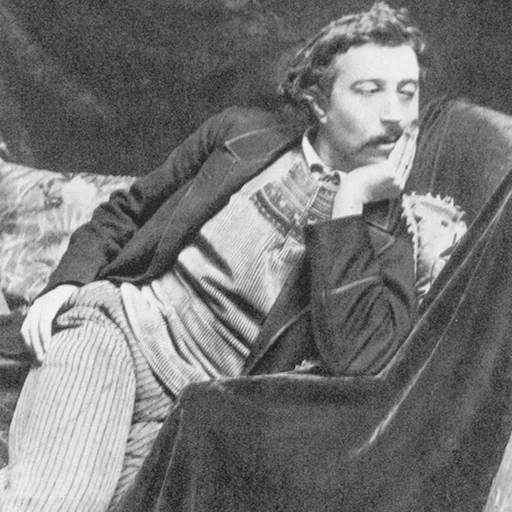
Eugène Henri Paul Gauguin (; French: ; 7 June 1848 – 8 May 1903) was a French painter, sculptor, printmaker, ceramist, and writer, whose work has been primarily associated with the Post-Impressionist and Symbolist movements.

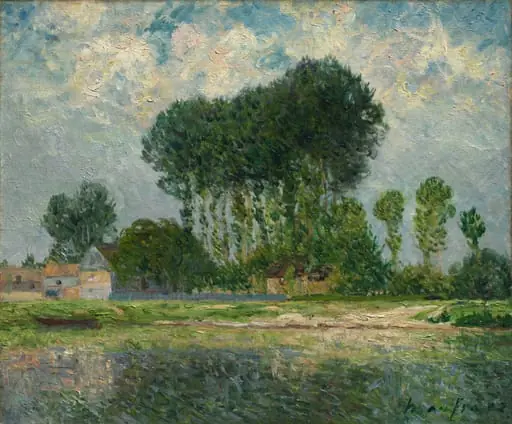 The River
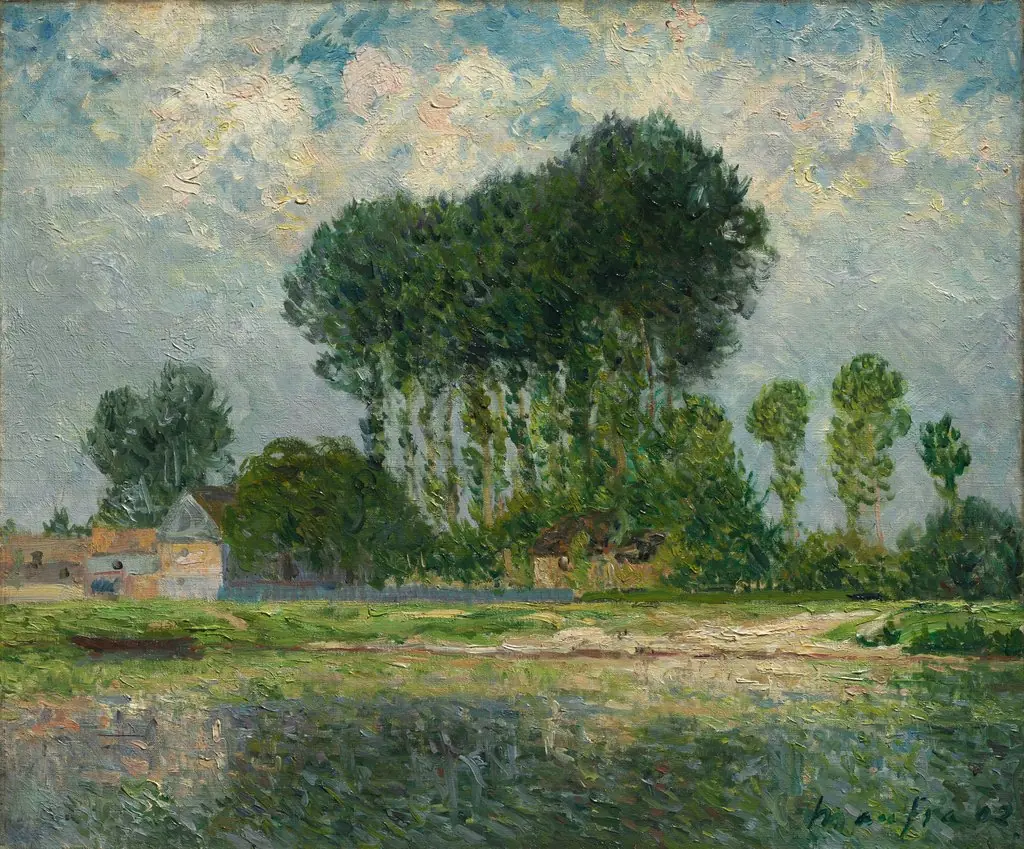 The River
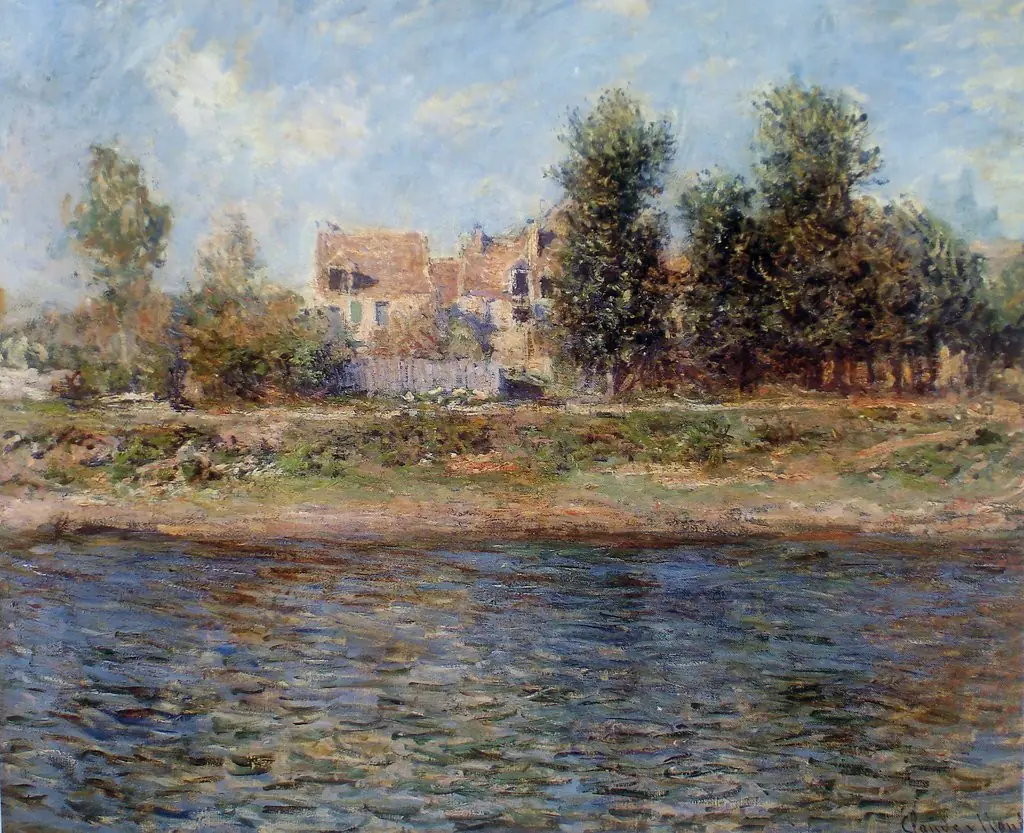 The Bank of the Seine
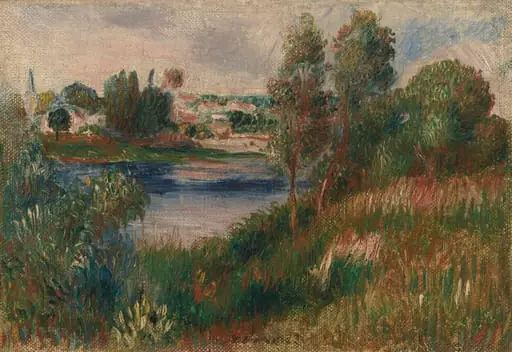 Landscape at Vétheuil
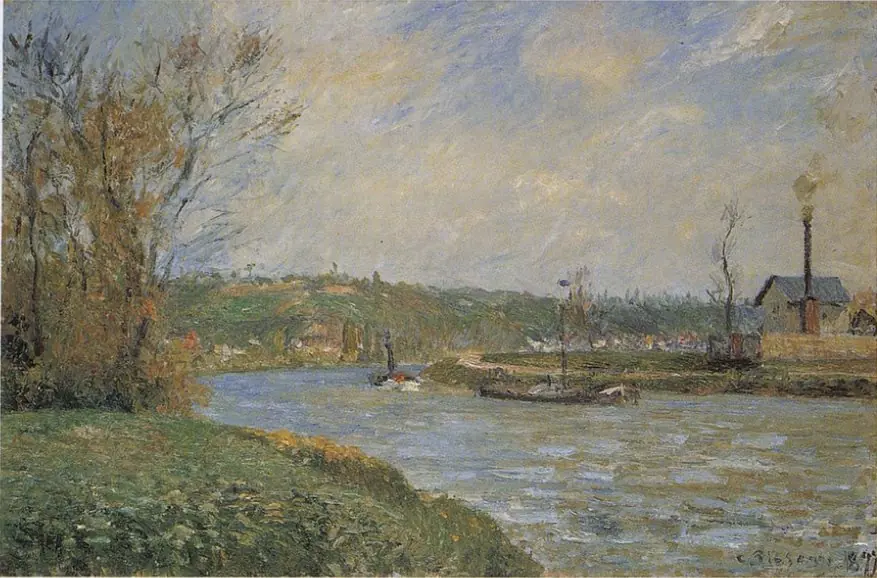 Bords de l'Oise près de Pontoise
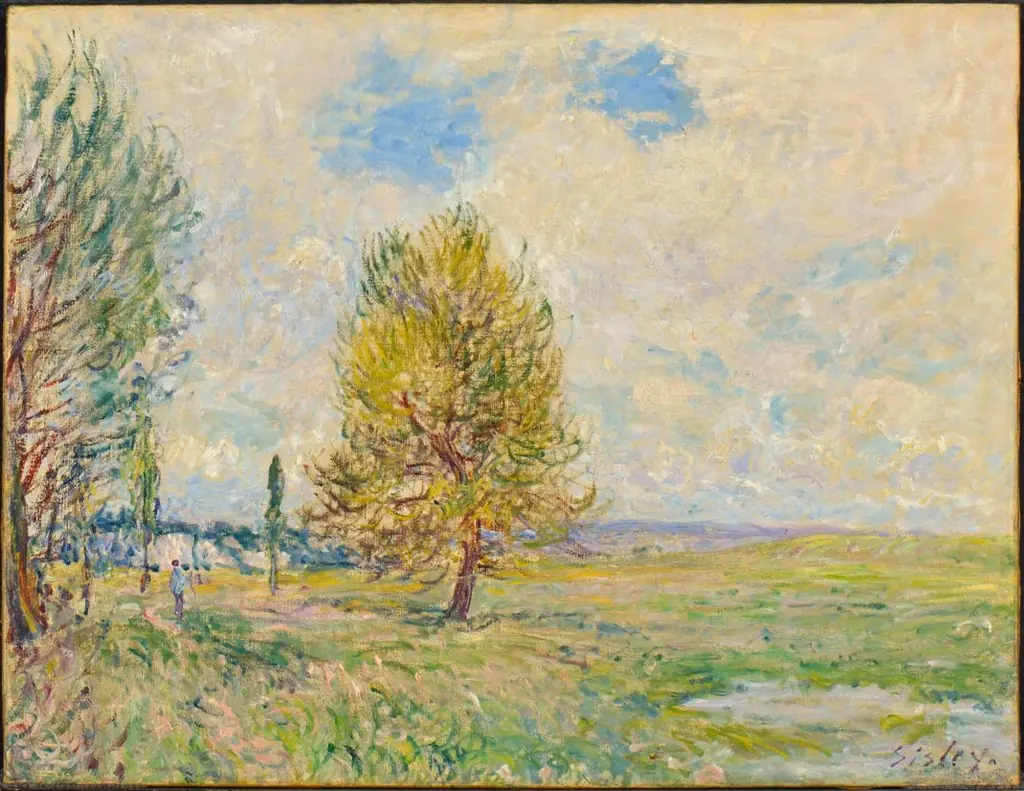 The Plain at Veneux-Nadon
 Banks of the Loing River
 The Path to the Old Ferry at By
 House on the Seine near Vernon
 Peasant Woman Resting at the Foot of a Tree, Effect of Sunshine, Éragny
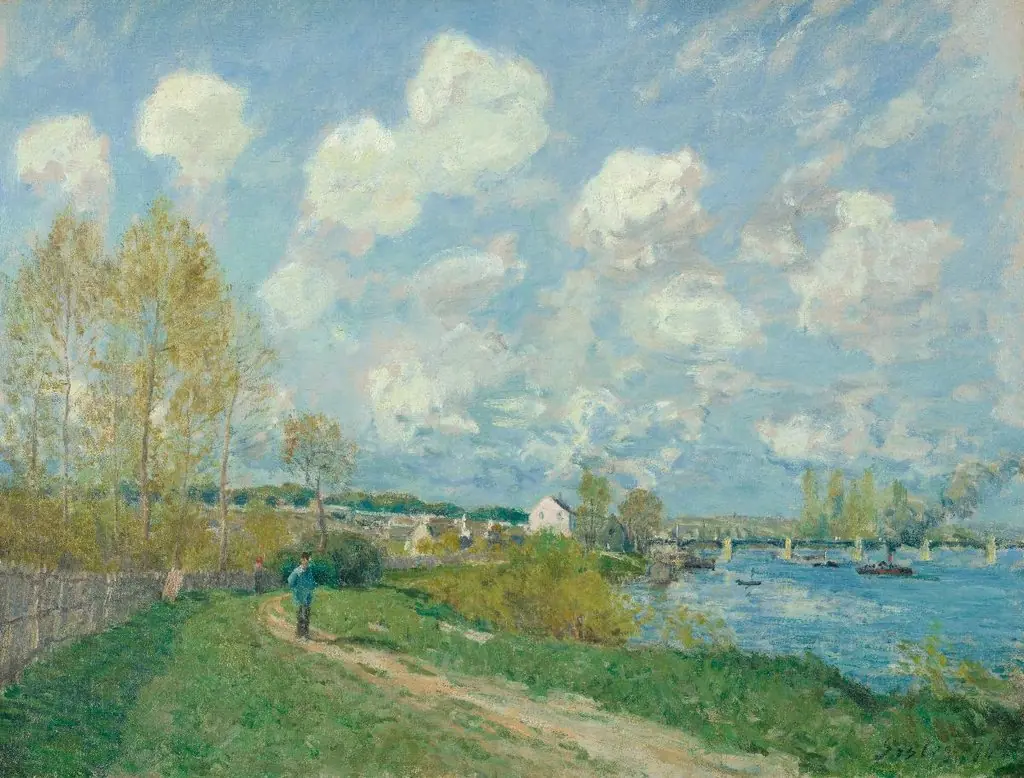 Summer at Bougival
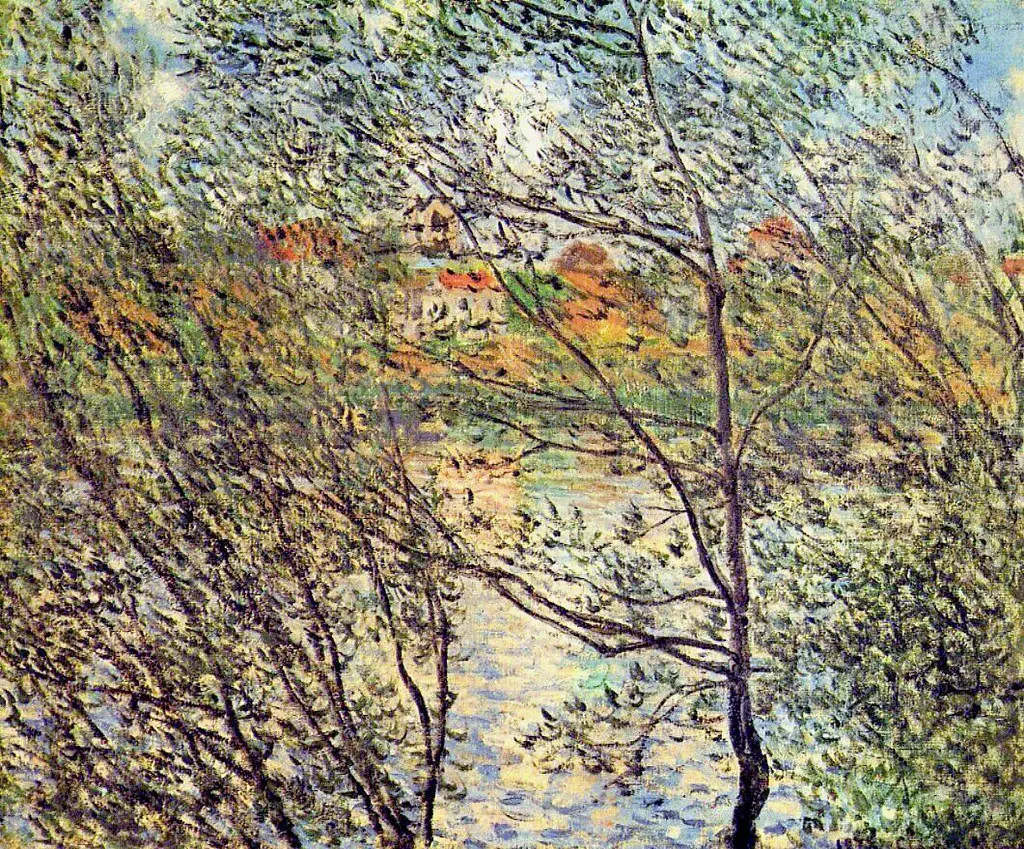 Le printemps à travers les branches