Artwork
Bouquet de fleurs
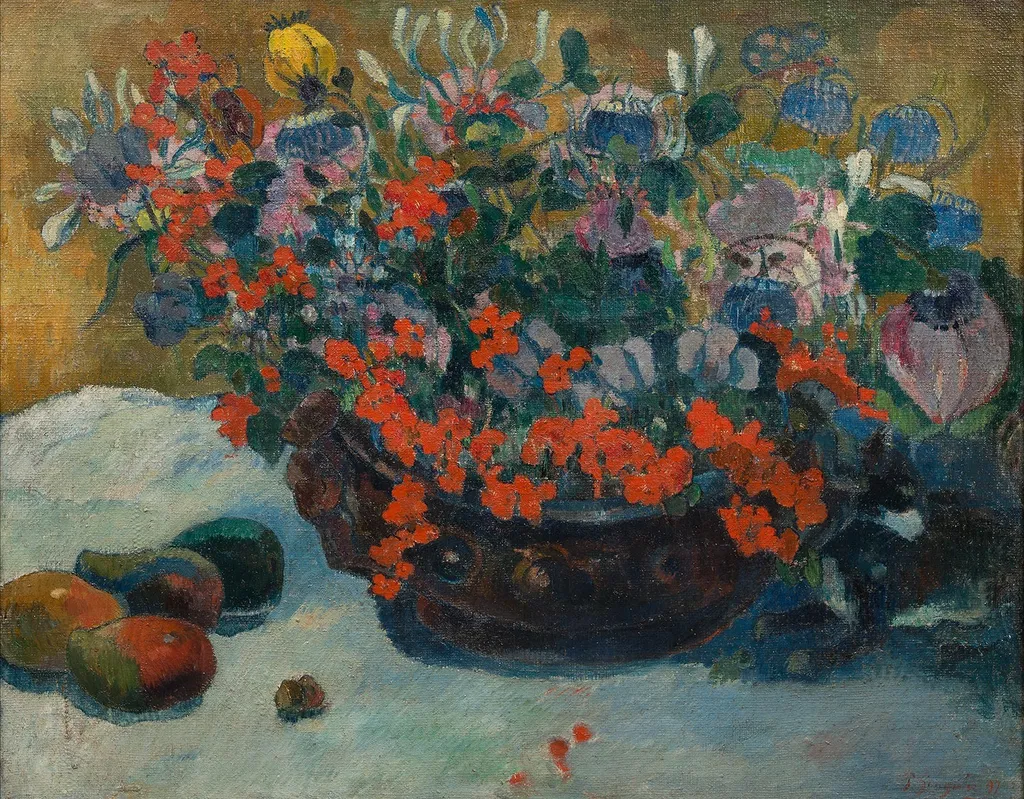
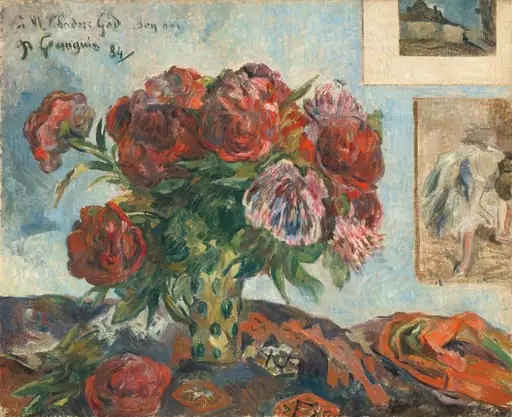
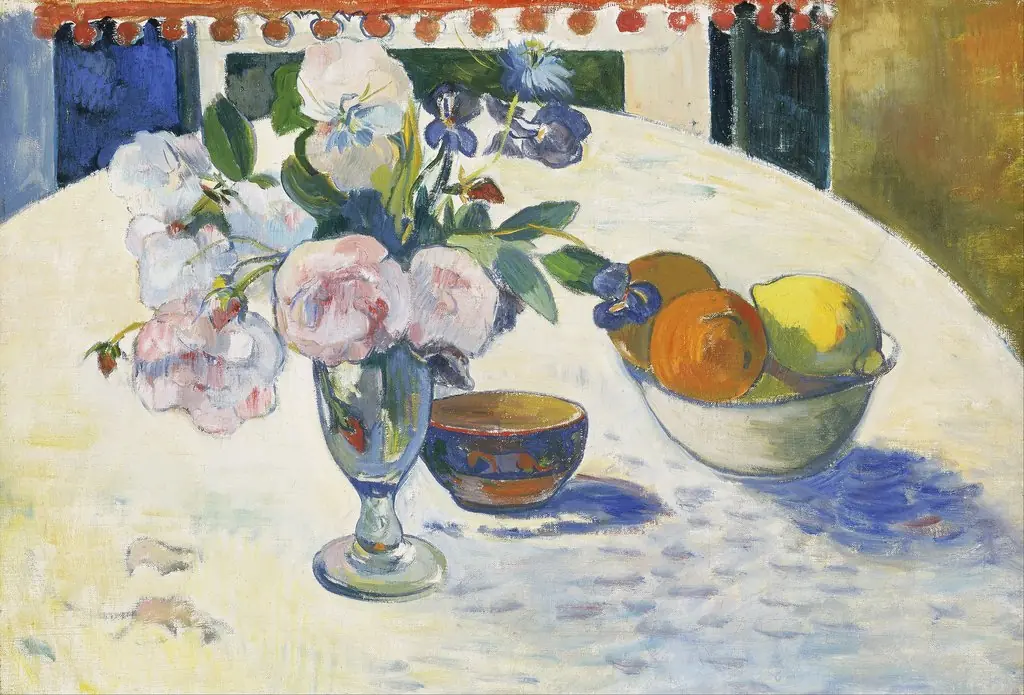
Bouquet de fleurs is an oil painting by the Post-Impressionist artist Paul Gauguin. It dates from 1899 and is held in the collection of the Musée Marmottan Monet.
About this work
Overview
Painted in 1899, *Bouquet de fleurs* is an oil-on-canvas work by Paul Gauguin that reflects his mature style following his departure from Impressionism. It belongs to the Post-Impressionist tradition, emphasizing emotional resonance over naturalistic representation. The painting is part of the Musée Marmottan Monet’s collection in Paris, where it has remained since its acquisition.
Subject & Meaning
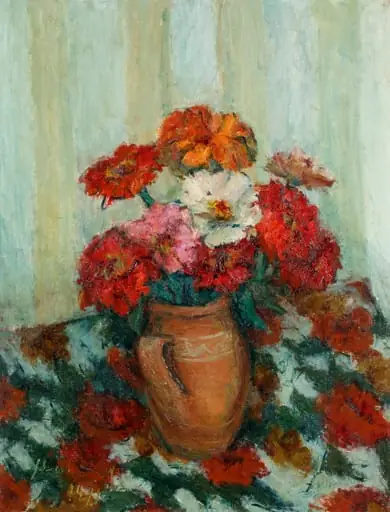
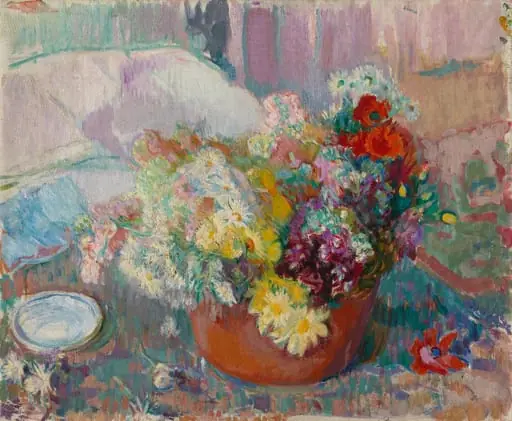
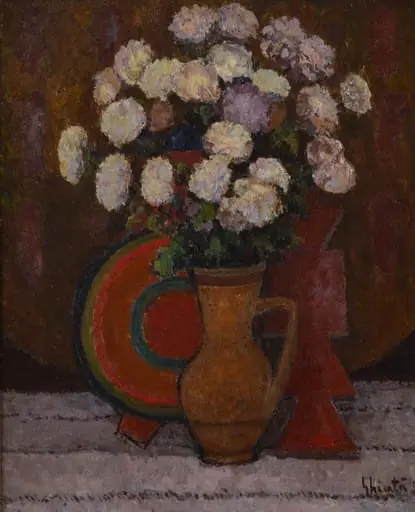
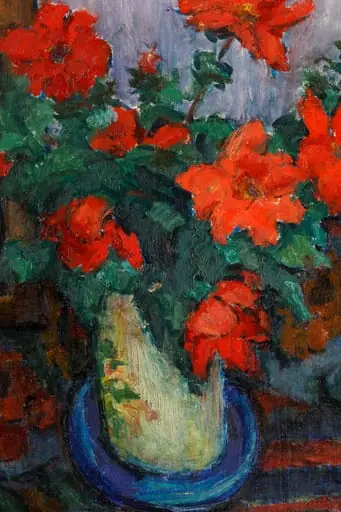
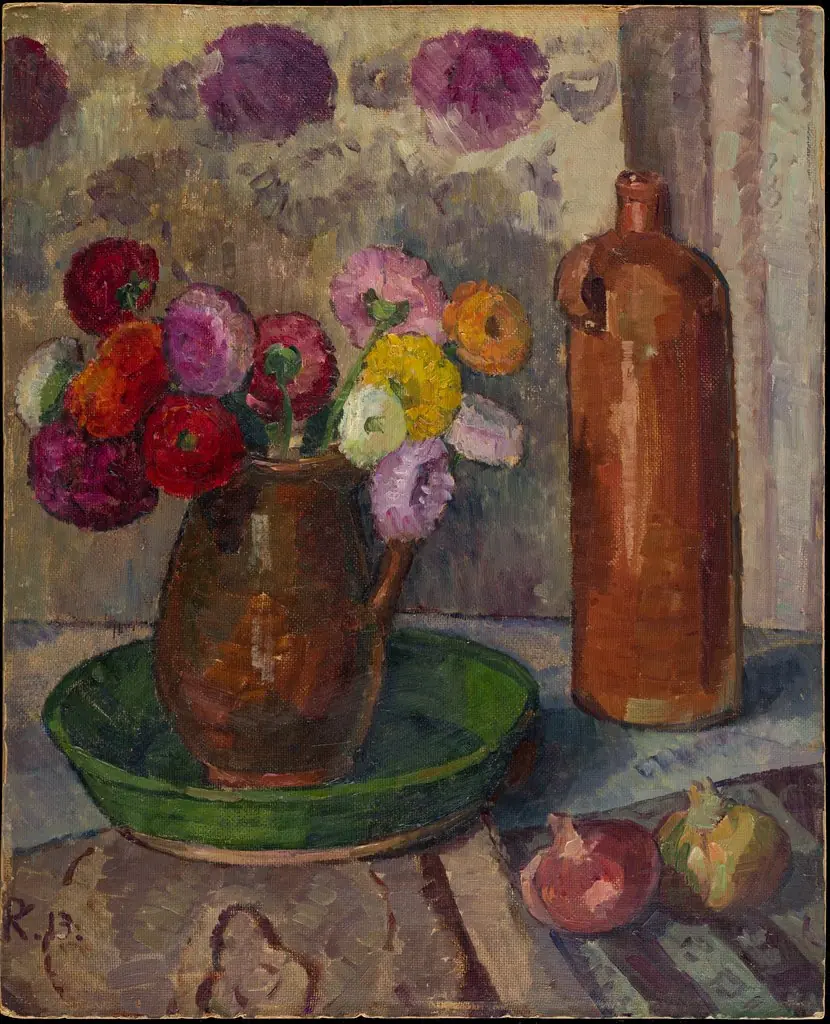
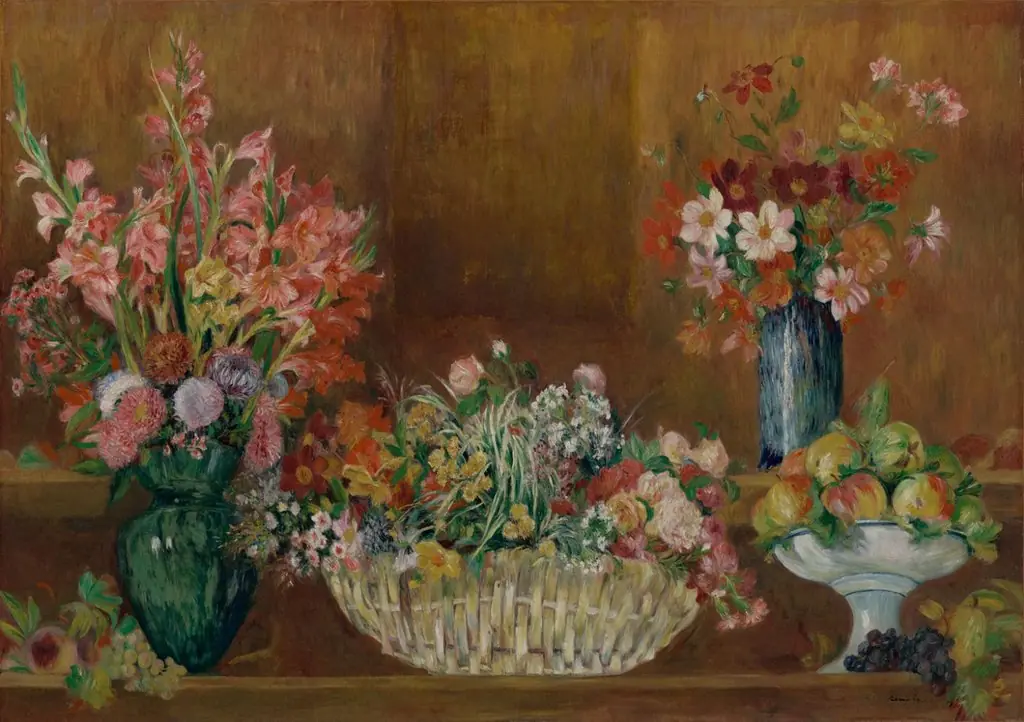
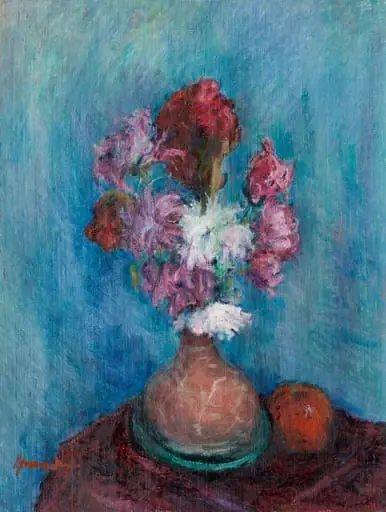
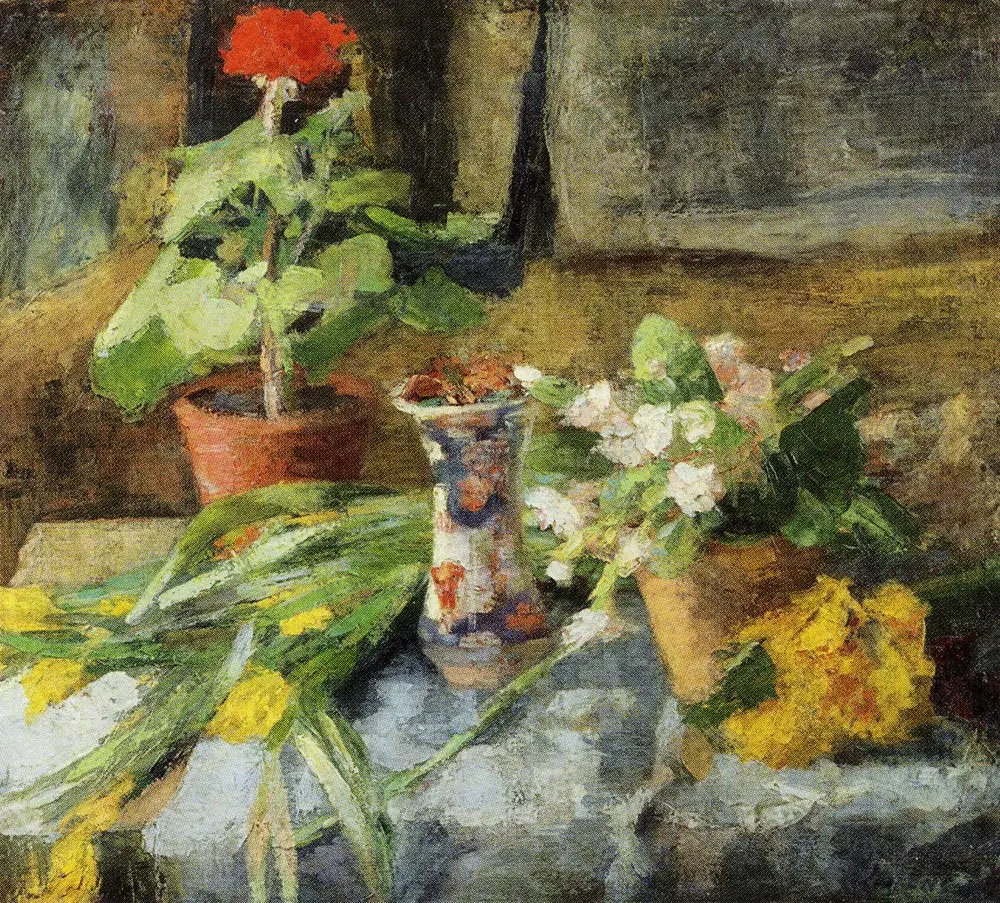
The composition centers on a loose arrangement of wildflowers in vivid hues—red, purple, and yellow—rendered without botanical precision.
The composition centers on a loose arrangement of wildflowers in vivid hues—red, purple, and yellow—rendered without botanical precision. Gauguin treats the bouquet not as a still life but as a symbolic vessel, evoking vitality and transient beauty. The absence of a vase or context suggests a moment caught between life and decay, aligning with his interest in spiritual and emotional states over literal depiction.
Technique & Style
Gauguin employs thick, visible brushwork and flat planes of unmodulated color, characteristic of his Synthetist approach. The flowers emerge from a warm, amber background with minimal shading, creating a sense of flatness that prioritizes pattern over depth. Textural contrasts between the bold petals and the muted ground enhance the painting’s rhythmic energy, rejecting academic realism in favor of expressive abstraction.
History & Provenance
Created during Gauguin’s later years in France after his time in Tahiti, the painting entered the Musée Marmottan Monet’s holdings in the 20th century. It was likely acquired through private collections linked to Gauguin’s circle or posthumous sales. Its preservation reflects its significance as a representative example of his still-life experiments during a period of stylistic consolidation.
Context
In the late 1890s, Gauguin was refining his symbolic language, moving away from the fleeting impressions of light favored by earlier artists. *Bouquet de fleurs* reflects his broader interest in non-Western aesthetics and spiritual symbolism, even within domestic subjects. The work resonates with his contemporaneous writings on art as a vehicle for inner truth rather than external observation.
Legacy
Though less known than his Tahitian scenes, *Bouquet de fleurs* illustrates Gauguin’s enduring influence on modernist still life. Its bold color and simplified forms prefigure later developments in Fauvism and Expressionism. The painting remains a quiet testament to his belief that ordinary subjects could carry profound emotional weight when stripped of conventional realism.
Artist & collection
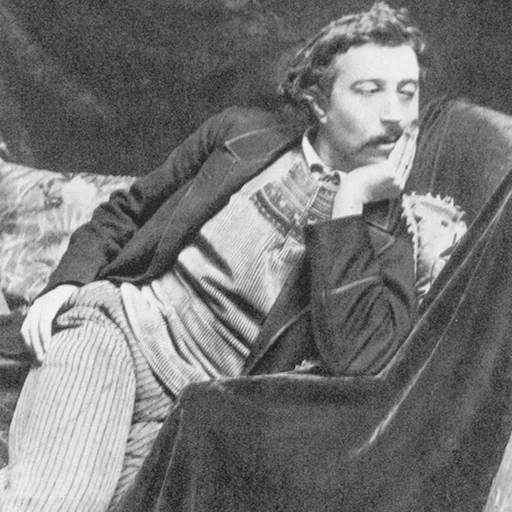
Artist
Eugène Henri Paul Gauguin (; French: ; 7 June 1848 – 8 May 1903) was a French painter, sculptor, printmaker, ceramist, and writer, whose work has been primarily associated with the Post-Impressionist and Symbolist movements.