Artwork
Upa Upa (The Fire Dance)
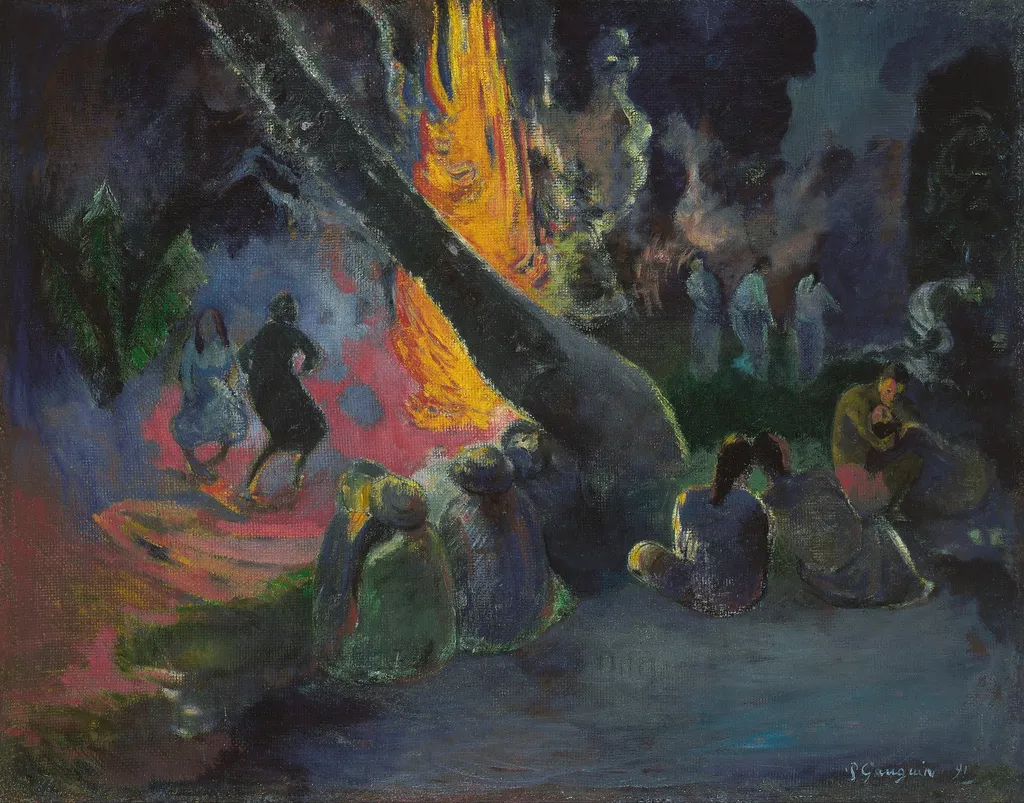
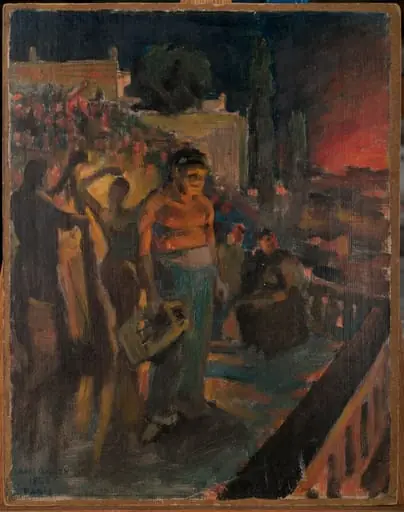
Upa Upa (The Fire Dance) is an oil painting by the Post-Impressionist artist Paul Gauguin. It dates from 1896 and is held in the collection of the Israel Museum.
About this work
Overview
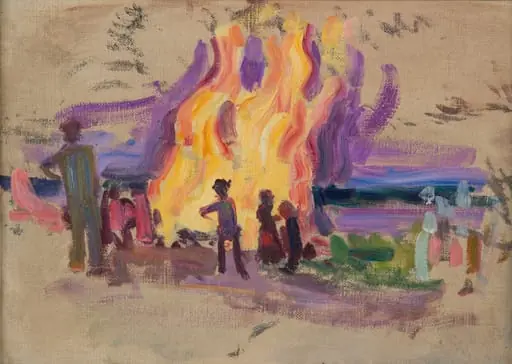
Paul Gauguin's *Upa Upa (The Fire Dance)*, created in 1896, is a Post-Impressionist oil painting from his Tahitian period, characterized by bold brushstrokes and vivid colors. The scene depicts a group around a fire with a central dancing figure, set against a dark background with warm, glowing light.
Subject & Meaning
The painting captures a moment of communal energy through a fire dance, emphasizing symbolic expression over realism. The obscured faces and simple attire of the figures shift focus towards the collective, dynamic experience rather than individual identities.
Technique & Style
Gauguin's Synthetist approach is evident in the painting's bold visual contrasts and symbolic color use. The central fire, rendered in warm, vibrant tones, contrasts sharply with the dark, muted background, drawing the viewer's eye to the dancing figure.
History & Provenance
Painted during Gauguin's Tahitian period, *Upa Upa* reflects his experimentation with Post-Impressionist techniques. The work is now part of the Israel Museum's collection.
Context
Created amidst Gauguin's broader exploration of Tahitian culture, *Upa Upa* blends observational elements with the artist's distinctive, expressive style, influenced by his departure from Impressionist norms.
Legacy
As part of Gauguin's Tahitian works, *Upa Upa* contributes to the legacy of Post-Impressionism and Synthetism, influencing subsequent artistic movements with its emphasis on symbolic, expressive forms.
Own this work as a print
Artist & collection
Artist
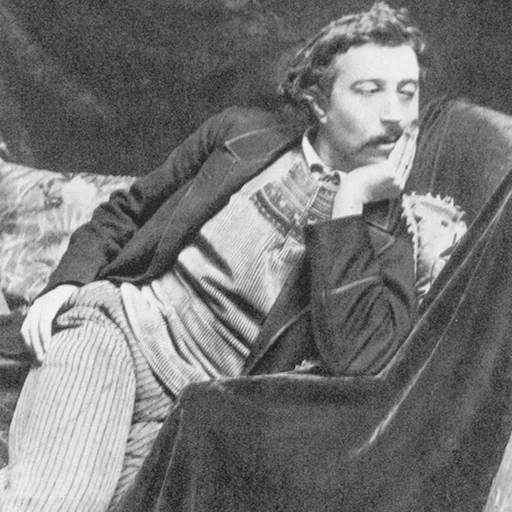
Eugène Henri Paul Gauguin (; French: ; 7 June 1848 – 8 May 1903) was a French painter, sculptor, printmaker, ceramist, and writer, whose work has been primarily associated with the Post-Impressionist and Symbolist movements.