Artwork
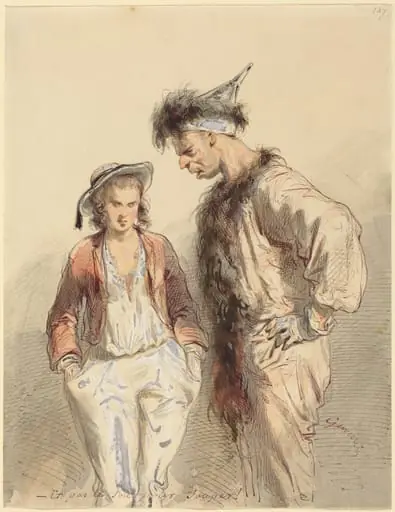
Les Actrices: J'avais demande un petit chapeau!
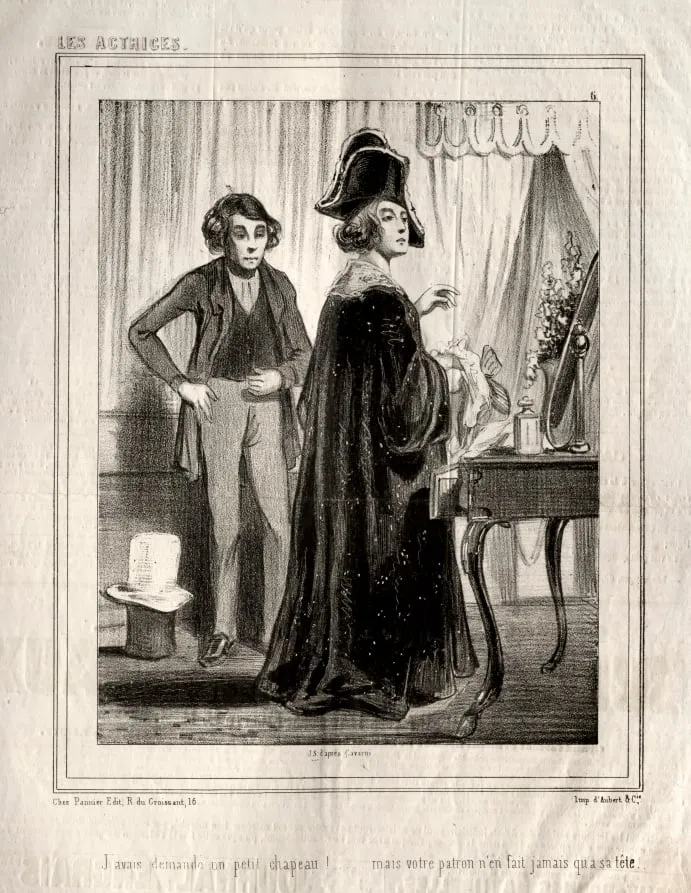
Les Actrices: J'avais demande un petit chapeau! is a print by the Romanticist artist Paul Gavarni. It dates from 1843 and is held in the collection of the Cleveland Museum of Art.
About this work
The man's expression is somewhat serious, and he appears to be critiquing the woman's choice of headwear.
In this 1843 painting, a woman stands in front of a mirror, wearing a large hat and a dark dress. She is looking at her reflection, while a man stands behind her, watching. The man is dressed in a suit and has his hands on his hips.
The woman's hat is quite large and elaborate, and it seems to be the focus of her attention. The man's expression is somewhat serious, and he appears to be critiquing the woman's choice of headwear.
This painting is a great example of the Romanticism movement, which emphasized emotion and individualism. To learn more about this style, check out the Romanticism movement.
Overview
Created in 1843 by French artist Paul Gavarni, this lithograph captures a moment of quiet tension between two figures in a domestic interior. The work belongs to a series of satirical prints examining middle-class manners and fashion. It is part of the collection at The Cleveland Museum of Art, where it is preserved as an example of 19th-century graphic satire.
Subject & Meaning
The scene depicts a woman admiring her reflection in a mirror, adorned with an oversized, ornate hat, while a man stands behind her, arms crossed, observing with apparent disapproval. The title, referencing a request for a modest hat, suggests irony—the woman’s choice defies expectation. The image critiques societal pressures around female appearance and the judgmental gaze of male authority.
Technique & Style
Executed as a lithograph, the work employs fine, controlled lines to define form and texture. Gavarni uses tonal contrast to isolate the hat as the visual anchor, while the figures’ postures convey psychological distance. The composition is tightly framed, focusing attention on the interaction between subject and observer, characteristic of Gavarni’s sharp, narrative-driven graphic style.
History & Provenance
The print was produced during Gavarni’s prolific period illustrating Parisian social life for periodicals. It was likely published as part of a serialized commentary on contemporary customs. Acquired by The Cleveland Museum of Art in the 20th century, it entered the collection through a donation of European graphic works, reflecting institutional interest in social satire of the era.
Context
Gavarni’s work emerged amid rising urban middle-class culture in post-revolutionary France, where fashion became a marker of identity and social aspiration. His prints often targeted the pretensions of bourgeois life, aligning with broader satirical traditions in French illustration. Unlike Romantic painting, his approach was observational and ironic, grounded in daily reality rather than idealized emotion.
Legacy
Gavarni’s prints influenced later caricaturists and social commentators, including Daumier, by demonstrating how graphic art could convey nuanced social critique. While not widely exhibited as fine art in his lifetime, his work is now recognized for its incisive portrayal of gender dynamics and consumer culture, offering a window into the quiet rituals of 19th-century domestic life.
Artist & collection

Artist
Paul Gavarni was the pen name of Sulpice Guillaume Chevalier (13 January 1804 – 24 November 1866), a French illustrator, born in Paris.

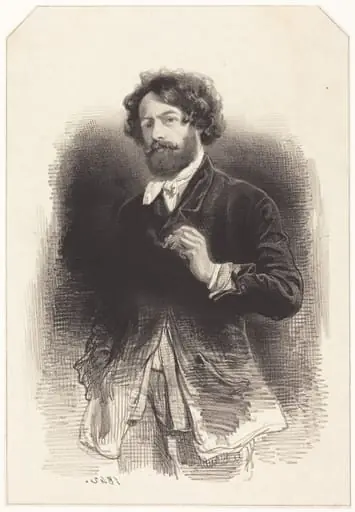
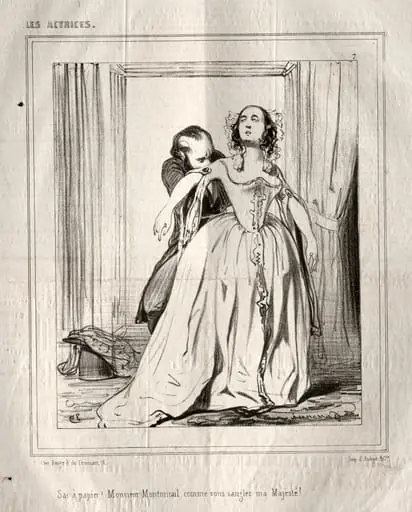 Les Actrices: Sac à papier! Monsieur Montmirail comme vous sanglez ma Majesté!
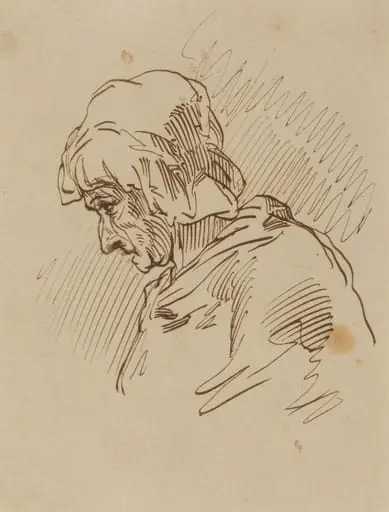
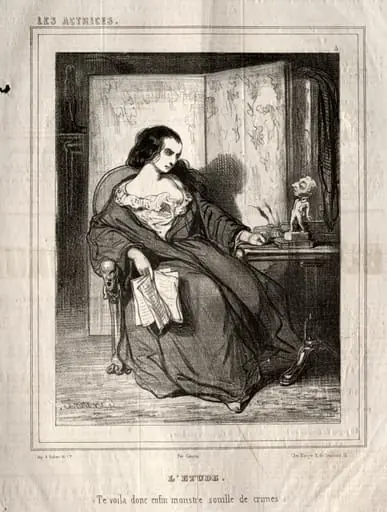 Les Actrices: L'Etude
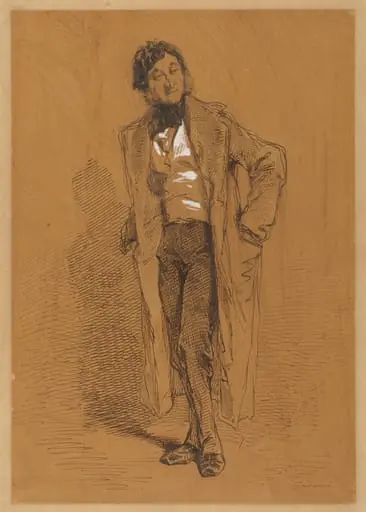
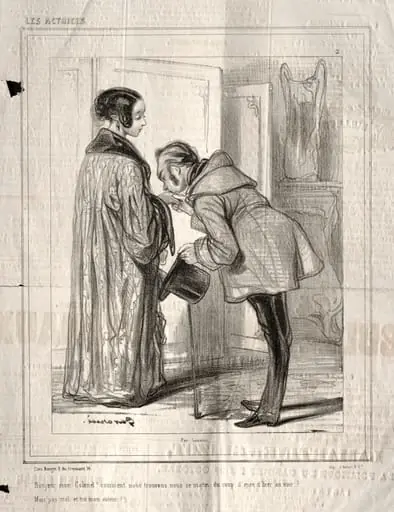 Les Actrices: Bonjour mon Colonel!
 Je vous demande pardo si je ne vous ai pas apercue ...
 Les Actrices: Nous ferez-vous l'hommeur de nous baiser le main?
 Les Actrices: Protegez Seigneur! un vierge chrétienne