Artwork
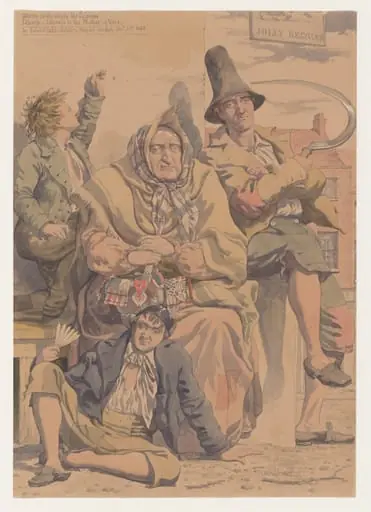
Gulliver Awed by Three Giant Beggars in the Land of Brobdingnag
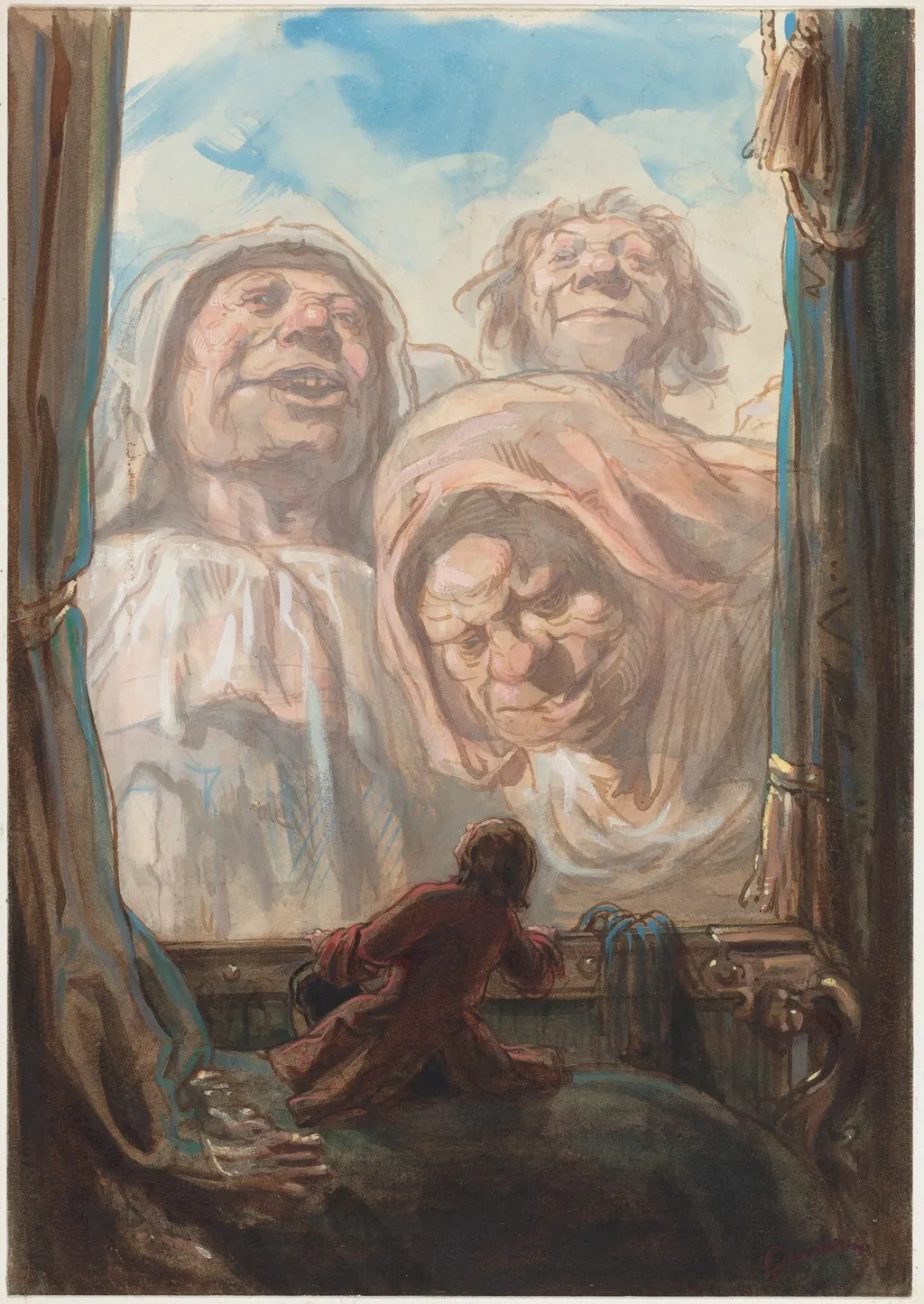
Gulliver Awed by Three Giant Beggars in the Land of Brobdingnag is an ink drawing by the Impressionist artist Paul Gavarni. It dates from 1862 and is held in the collection of the National Gallery of Art.
About this work
Overview
The piece was produced during the height of his career, when he was widely recognized for his satirical and literary visual commentaries in French periodicals.
Created in 1862 by French illustrator Sulpice Guillaume Chevalier, known as Gavarni, this drawing illustrates a moment from Jonathan Swift’s *Gulliver’s Travels*. Executed in pen, brown ink, watercolor, and gouache over graphite on wove paper, the work reflects Gavarni’s skill in narrative illustration. The piece was produced during the height of his career, when he was widely recognized for his satirical and literary visual commentaries in French periodicals.
Subject & Meaning
The scene captures Gulliver, dressed in a red coat, kneeling on a bed and gazing out a window at three towering beggars in white robes. His posture and turned back emphasize his vulnerability and awe. The giants’ exaggerated, distorted faces heighten the sense of alienation and scale, reflecting Swift’s critique of human pride and societal norms. The image transforms literary satire into a visual meditation on perception and power.
Technique & Style
Gavarni employed layered media—pen for precise outlines, watercolor and gouache for flat, vivid tones, and graphite for underdrawing—to build depth and texture. The brushwork is deliberate yet fluid, avoiding the looseness of Impressionism while retaining a sense of immediacy. The composition uses scale contrast and simplified forms to focus attention on the emotional dynamic between the tiny protagonist and the looming figures.
History & Provenance
The drawing was made during Gavarni’s mature period, when he frequently illustrated literary works for French journals. It likely originated as a preparatory study or standalone illustration, though its exact early ownership is undocumented. The paper, laid down on a support, suggests it was preserved as a finished work rather than a sketch. It remains within institutional collections today, valued for its literary and artistic significance.
Context
In mid-19th century France, illustrated editions of classic literature were gaining popularity among the middle class. Gavarni’s work responded to this trend, blending literary fidelity with visual wit. His illustrations for Swift’s novel emerged amid broader cultural interest in fantasy and social satire, offering readers a visual counterpart to the text’s critique of human folly and institutional absurdity.
Legacy
Gavarni’s illustration contributed to the visual canon of *Gulliver’s Travels*, influencing later interpretations of Swift’s world. Though less known today than his political cartoons, this work exemplifies his ability to translate complex narratives into emotionally resonant images. It endures as a quiet but potent example of how 19th-century illustrators shaped public engagement with literature through image.
Own this work as a print
Artist & collection

Artist
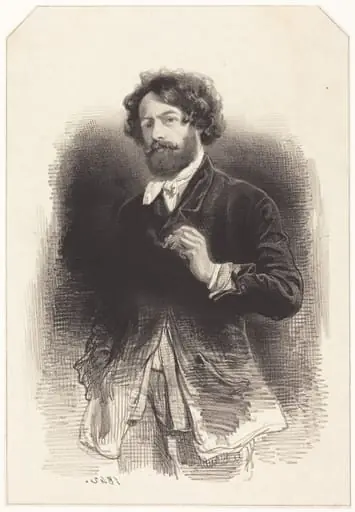
Paul Gavarni was the pen name of Sulpice Guillaume Chevalier (13 January 1804 – 24 November 1866), a French illustrator, born in Paris.

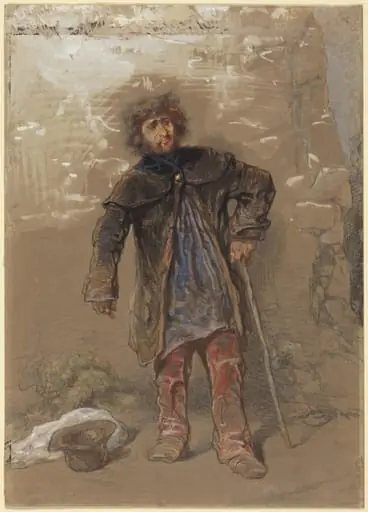
 Sketch to illustrate the Passions: Idleness
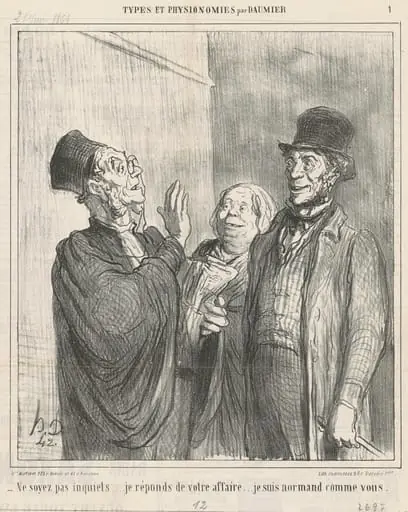 Ne soyez pas inquiets ...
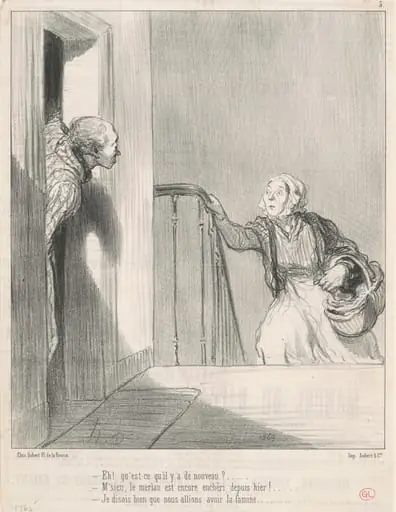 Eh! Qu'est-ce qu'il y a de nouveau? ...
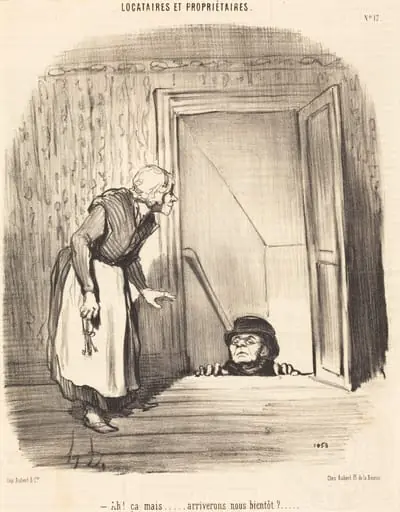 Ah! ça mais... arriverons-nous bientôt?
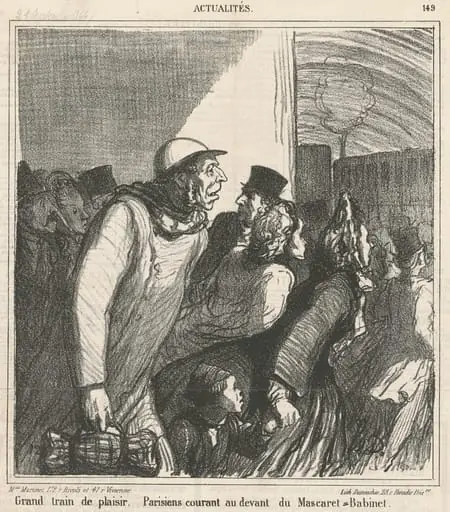 Grand train de plaisir
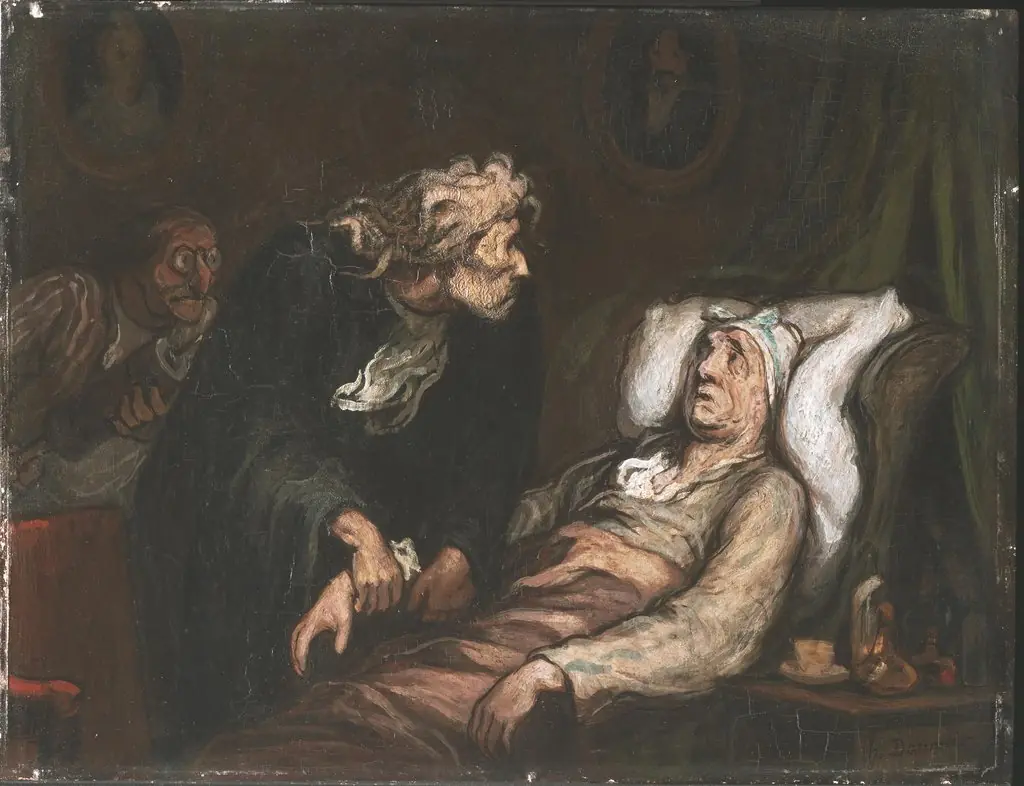 The Imaginary Illness
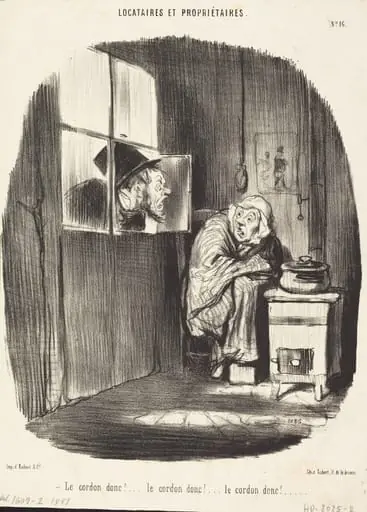 Le Cordon donc!...
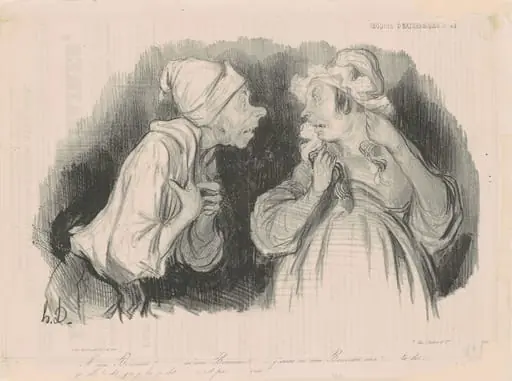 M'ame Bonneau... J'aime m'ame Bonneau moi!...
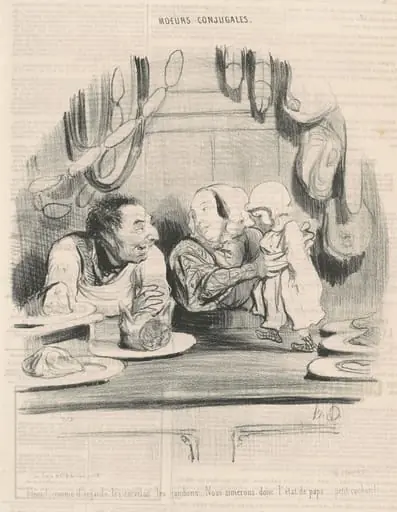 Hein! comme il regarde les cervelas...
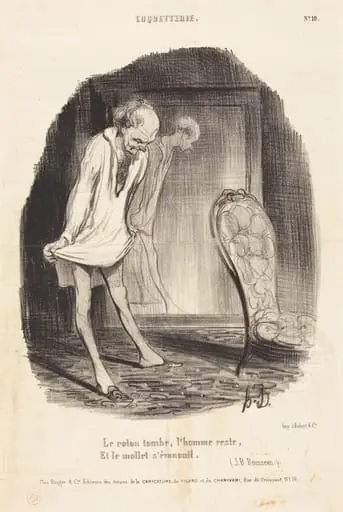 Le coton tombe, l'homme reste...
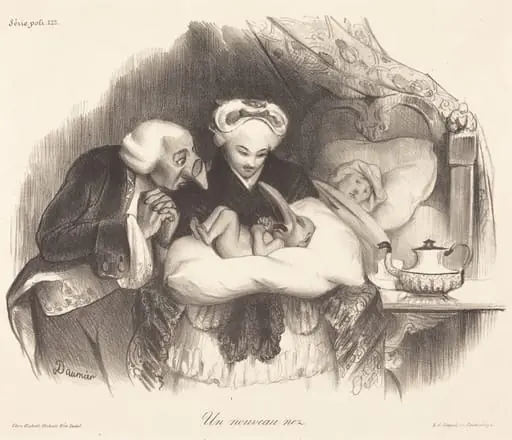 Un nouveau nez
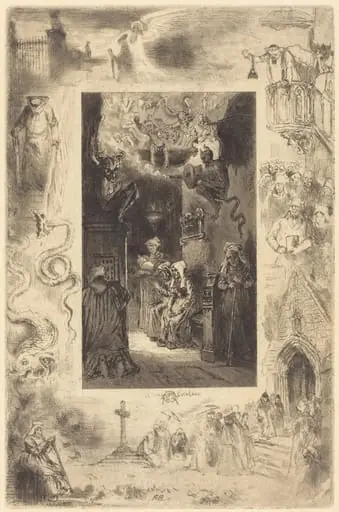 Le Curé de Cucugnan (The Vicar of Cucugnan)