Artwork
Untitled
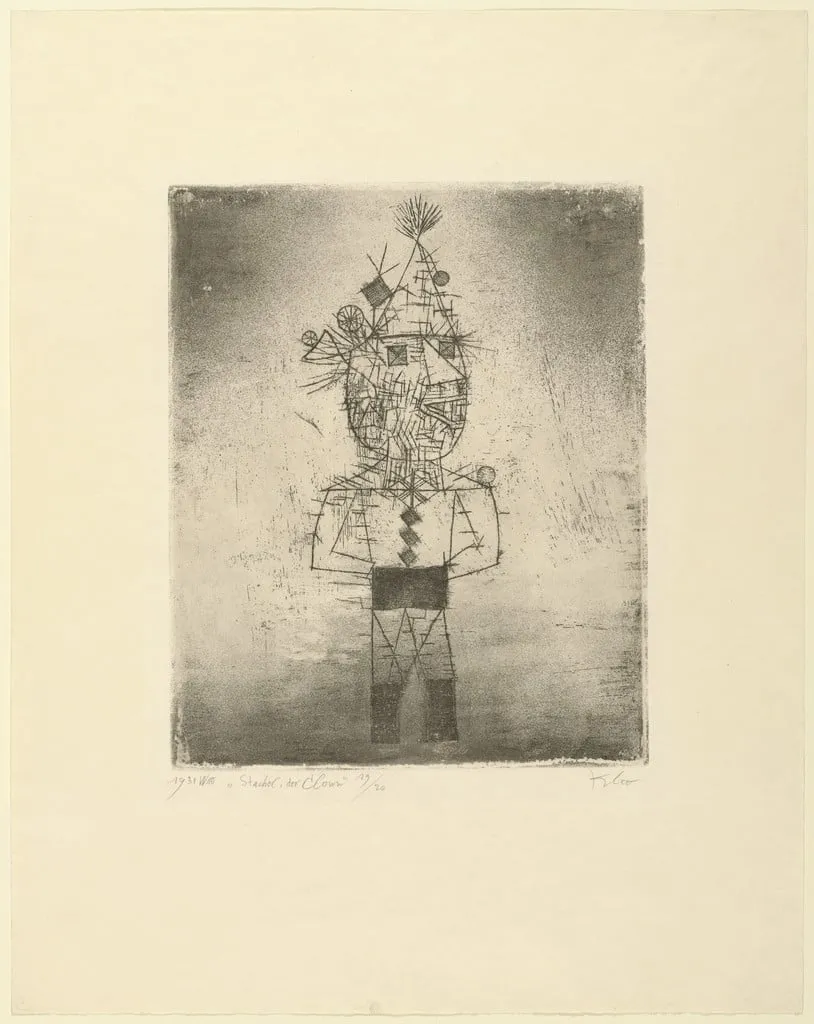
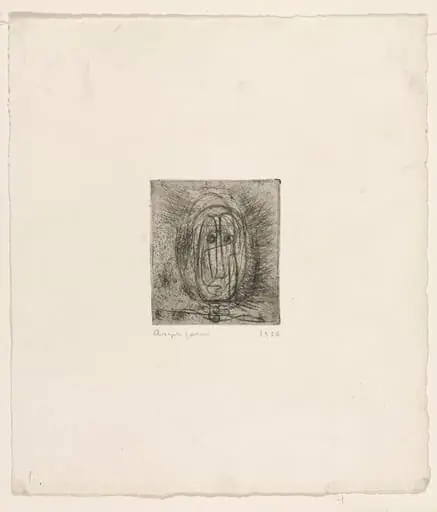
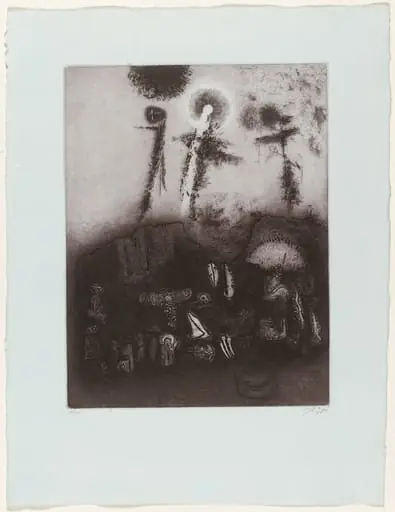
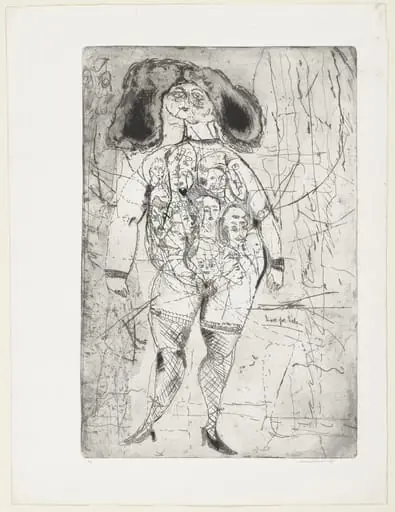
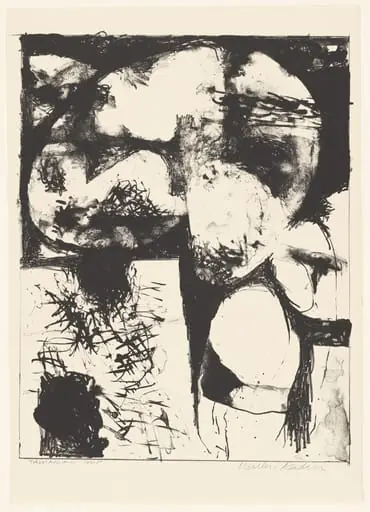
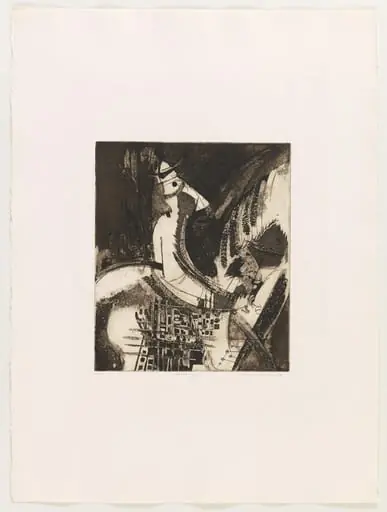
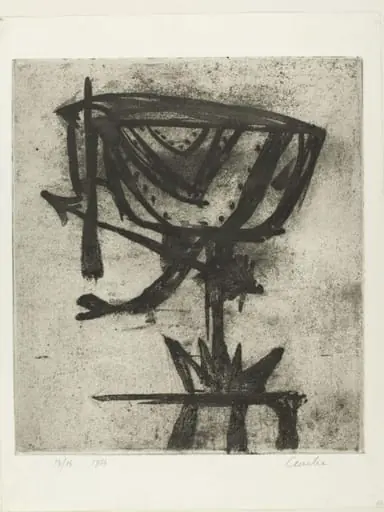
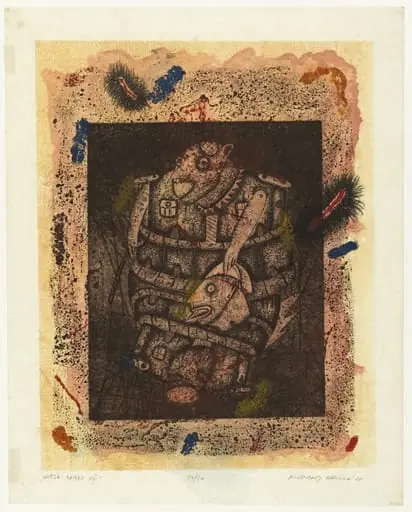
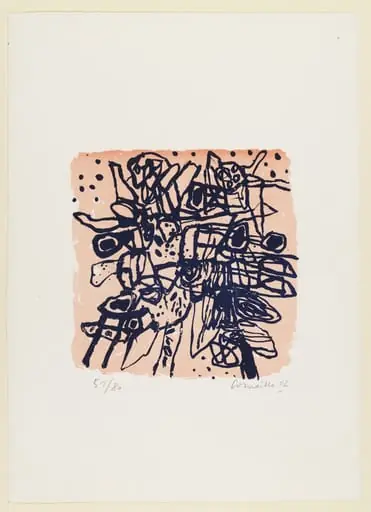
Untitled is an ink print by Paul Klee. It dates from 1931 and is held in the collection of the Museum of Modern Art.
About this work
Overview
The work is unsigned and untitled, consistent with Klee’s practice of leaving some pieces without formal titles.
Created in 1931, this print by Paul Klee combines etching and aquatint to produce a delicate, textured surface. The work is unsigned and untitled, consistent with Klee’s practice of leaving some pieces without formal titles. Its abstracted form and muted gray background reflect his interest in reducing visual elements to essential shapes, aligning with his broader exploration of visual language beyond literal representation.
Subject & Meaning
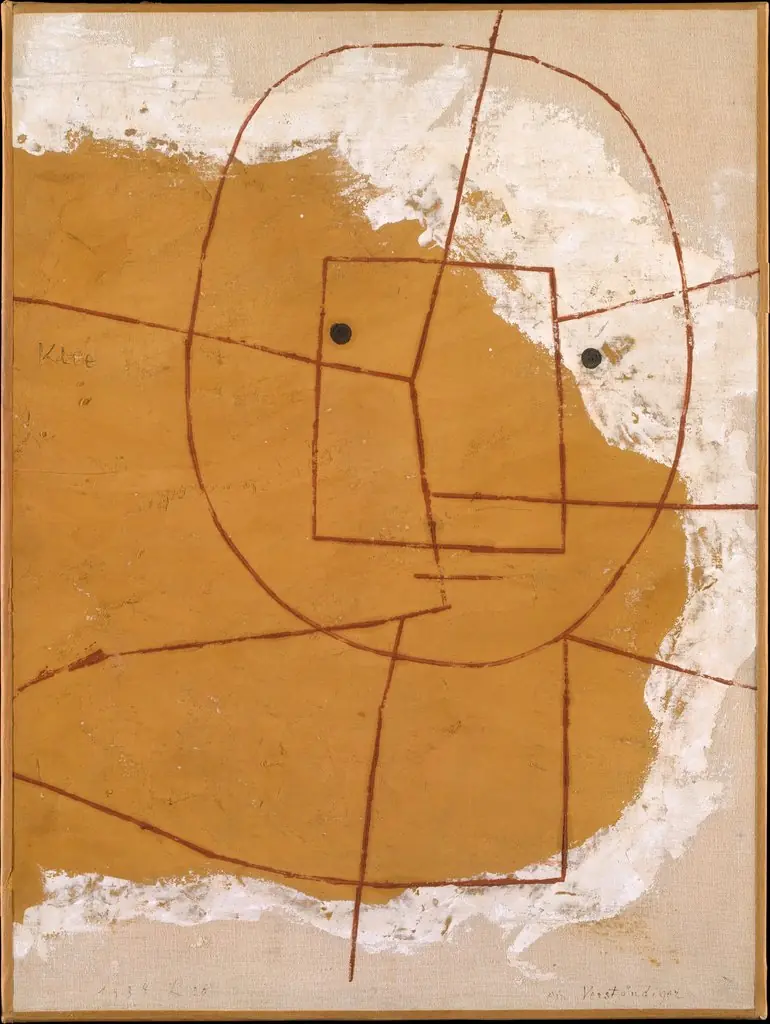
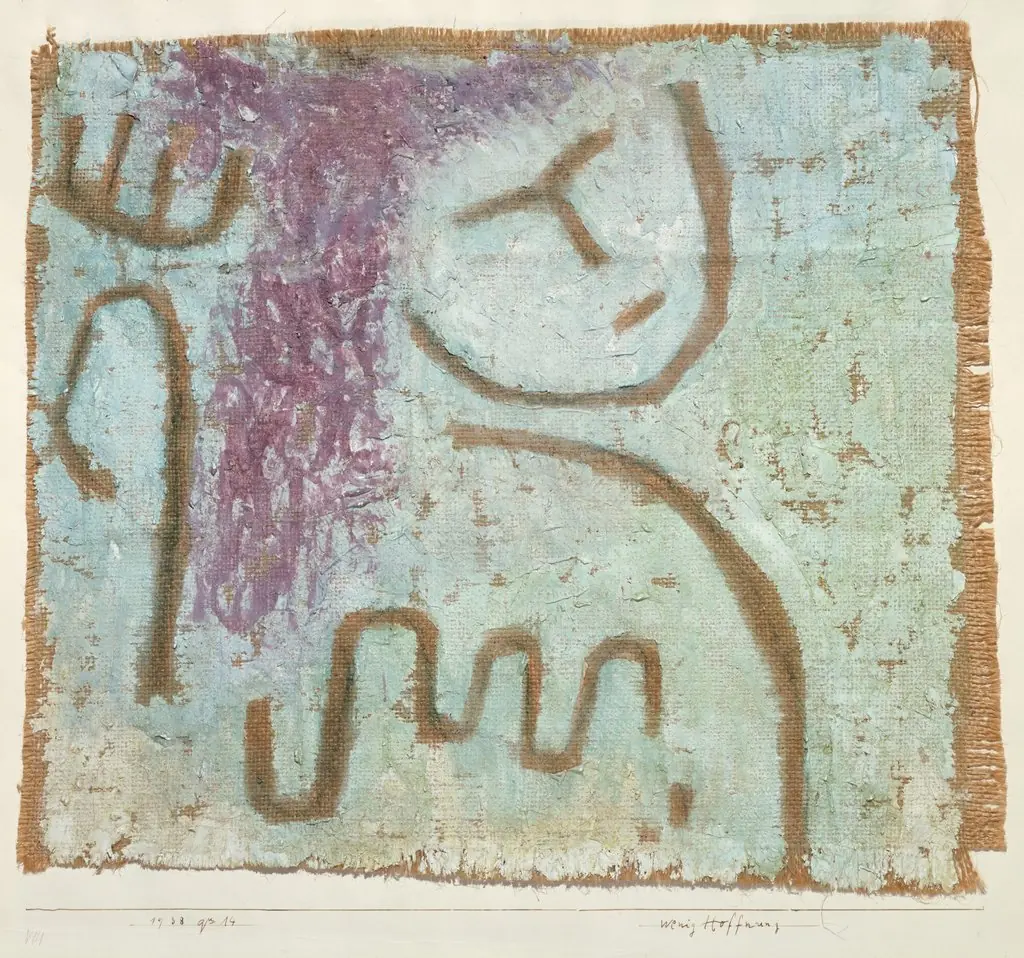
The figure depicted is an abstract assembly of geometric and linear elements—triangles, circles, and jagged contours—suggesting a human form without realism. A minimal head, crowned with a feathery mark, rests atop a fragmented torso and block-like legs. The lack of narrative detail invites interpretation as a symbolic presence, possibly evoking inner states or spiritual archetypes, consistent with Klee’s interest in metaphysical and childlike imagery.
Technique & Style
Klee employed etching to incise fine lines into a metal plate and aquatint to create tonal gradations through controlled corrosion. The resulting print exhibits a grainy, atmospheric texture that contrasts with the sharp, angular forms of the figure. His precise draftsmanship merges with experimental printmaking, producing a balance between control and spontaneity that characterizes his mature style and reflects his theoretical writings on form and line.
History & Provenance
This work was produced during Klee’s tenure at the Düsseldorf Academy, a period marked by intense theoretical and artistic development. Though not widely exhibited at the time, it entered private collections in Europe before being acquired by public institutions. Its date, inscribed in the corner, aligns with other works from his 1931 output, when he was refining his visual vocabulary amid political tensions in Germany.
Context
Created in the early 1930s, the piece emerged during a time when European artists were redefining representation through abstraction. Klee’s approach, while distinct from pure cubism or surrealism, engaged with their concerns—fragmentation, psychological depth, and symbolic form. His work stood apart from dominant styles by prioritizing introspective, almost poetic visual logic over ideological or political messaging.
Legacy
Klee’s prints, including this untitled work, influenced postwar artists interested in the interplay of line, texture, and abstraction. His integration of printmaking techniques with theoretical insight expanded the possibilities of the medium beyond reproduction. Today, such works are studied for their quiet innovation, demonstrating how minimal forms can carry complex conceptual weight.
Artist & collection
Artist
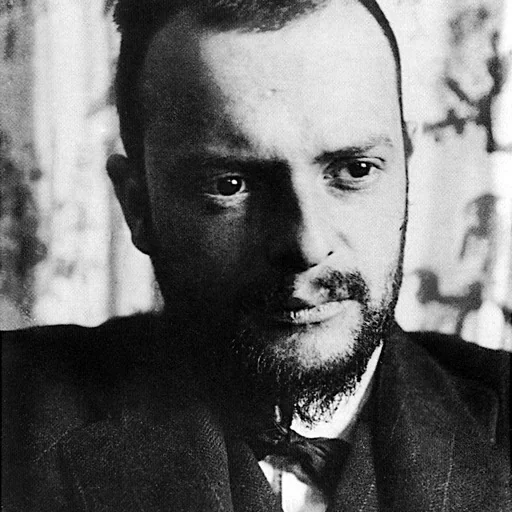
Paul Klee (German: ; 18 December 1879 – 29 June 1940) was a Swiss-born German artist.