Artwork
Woman Standing Beside Railing with Poodle
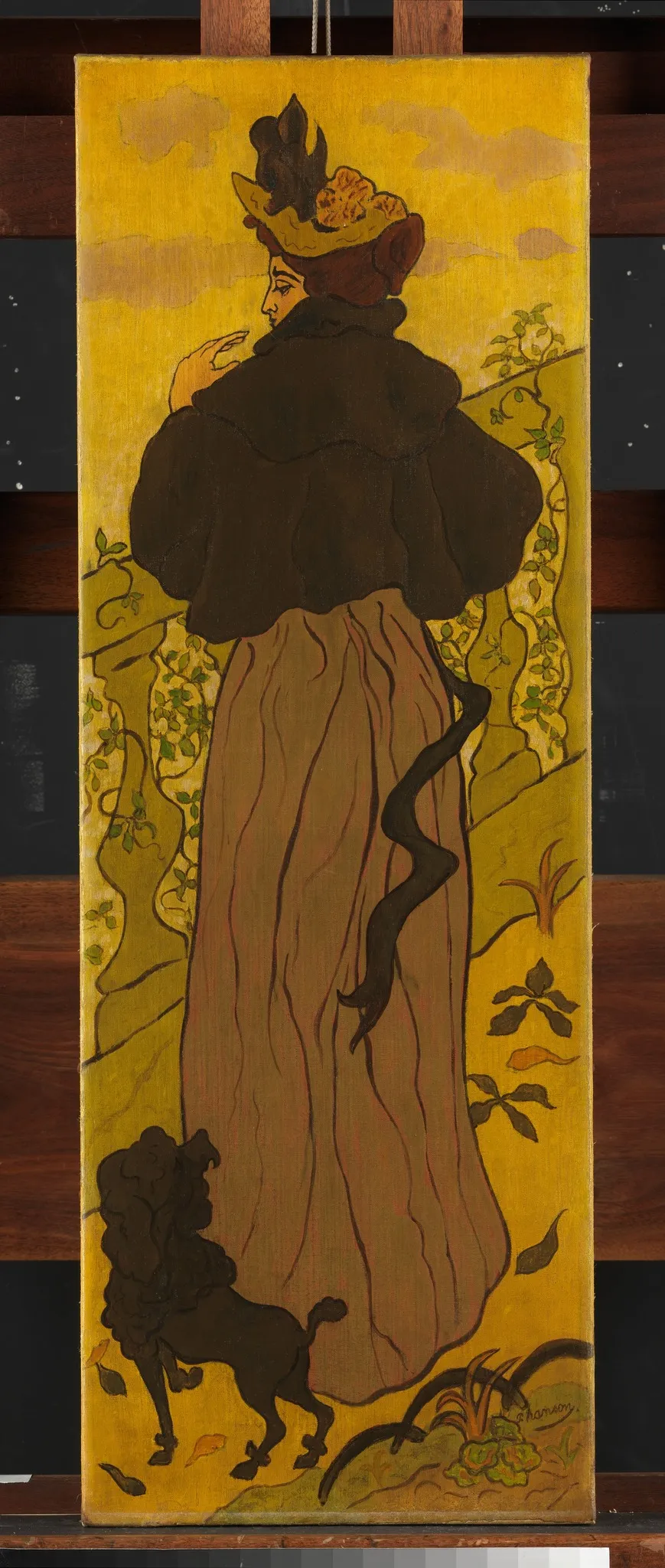
Woman Standing Beside Railing with Poodle is an oil painting by the Post-Impressionist artist Paul Ranson. It dates from 1898 and is held in the collection of the Metropolitan Museum of Art.
About this work
Overview
This work exemplifies the artist's engagement with the Nabis movement, characterized by its decorative qualities and symbolic undertones.
Paul Ranson's "Woman Standing Beside Railing with Poodle," an oil painting from 1898, is housed in The Metropolitan Museum of Art. This work exemplifies the artist's engagement with the Nabis movement, characterized by its decorative qualities and symbolic undertones. The composition features a solitary female figure accompanied by a small dog, rendered with a distinctive aesthetic that prioritizes flattened forms and expressive color over strict naturalism, reflecting late 19th-century artistic trends.
Subject & Meaning
The painting depicts a woman in profile, her back partially turned, enveloped in a dark cloak and a wide-brimmed hat adorned with a flower. A small poodle sits attentively at her side, gazing upward. The background is a vibrant yellow, patterned with green vines and leaves, creating a striking contrast with the figures. This arrangement evokes a sense of quiet contemplation and stillness, suggesting an intimate, perhaps introspective, moment between the woman and her companion.
Technique & Style
Ranson employed a distinctive style characterized by bold outlines and broad, unmodulated areas of color, reflecting the influence of Japanese prints and the Symbolist movement. The scene possesses a deliberate flatness, where depth is minimized in favor of decorative surface patterns. The warm yellow background, juxtaposed with the dark cloak, highlights the figures while contributing to the painting's overall decorative and somewhat enigmatic atmosphere, typical of Nabis aesthetics.
Context
As a prominent member of Les Nabis, a group of post-impressionist artists active in the 1890s, Paul Ranson embraced a vision of art that prioritized imagination and spiritual expression over naturalistic representation. The Nabis, meaning "the prophets," sought to infuse their work with symbolic meaning and decorative harmony, often drawing inspiration from Gauguin and medieval art. This painting exemplifies their departure from traditional academic styles, favoring simplified forms and expressive color.
Artist & collection