Artwork
Portrieux, the lighthouse
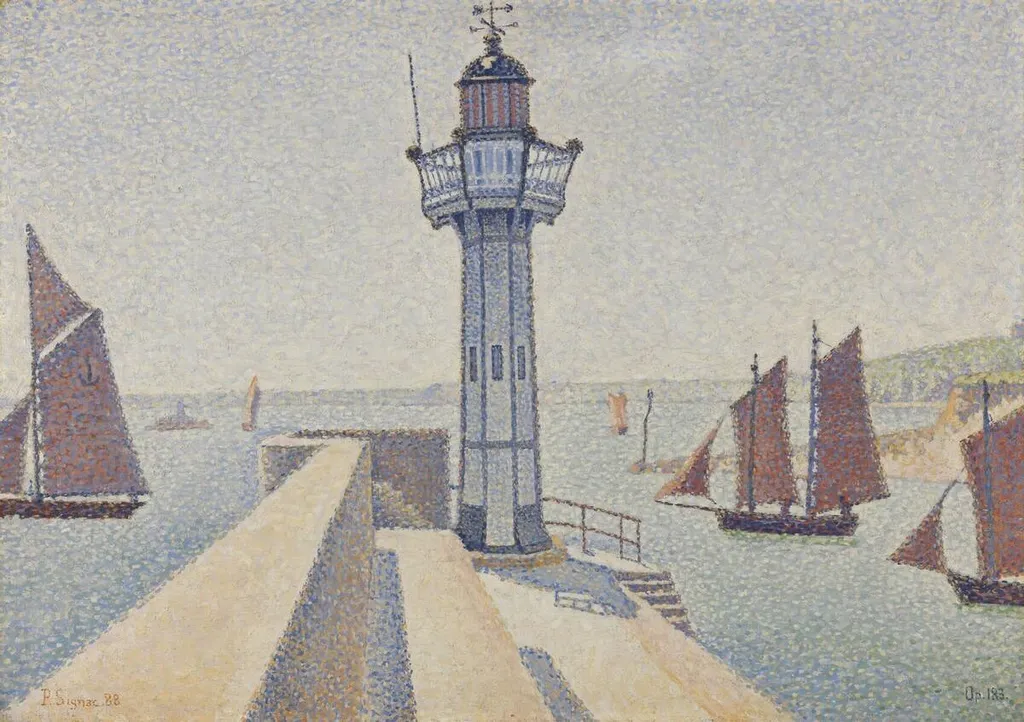
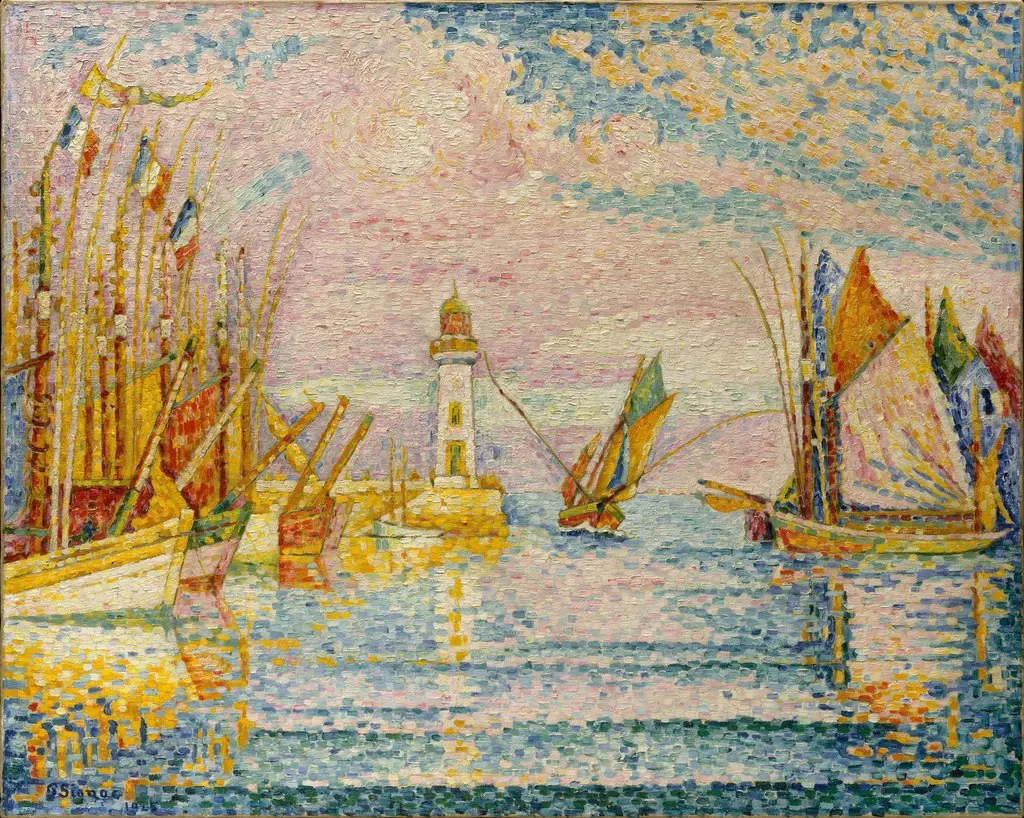
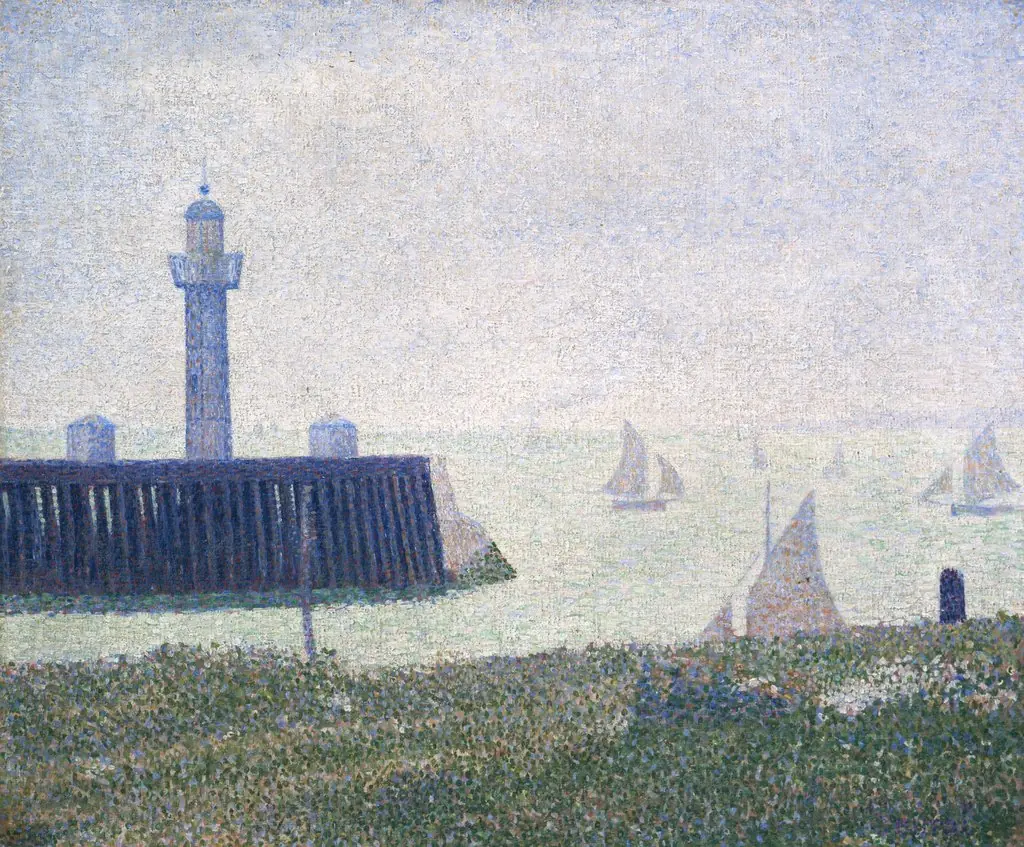
Portrieux, the lighthouse is an unspecified painting by the Post-Impressionist artist Paul Signac. It dates from 1894 and is held in the collection of the Kröller-Müller Museum.
About this work
Overview
Painted in 1894, *Portrieux, the lighthouse* is a coastal scene by Paul Signac, created during his mature engagement with Neo-Impressionism.
Painted in 1894, *Portrieux, the lighthouse* is a coastal scene by Paul Signac, created during his mature engagement with Neo-Impressionism. The work captures the Breton village of Portrieux, focusing on its functional lighthouse and surrounding maritime activity. Signac’s approach reflects his commitment to optical color theory and structured brushwork, distinguishing his practice from the spontaneity of earlier Impressionism.
Subject & Meaning
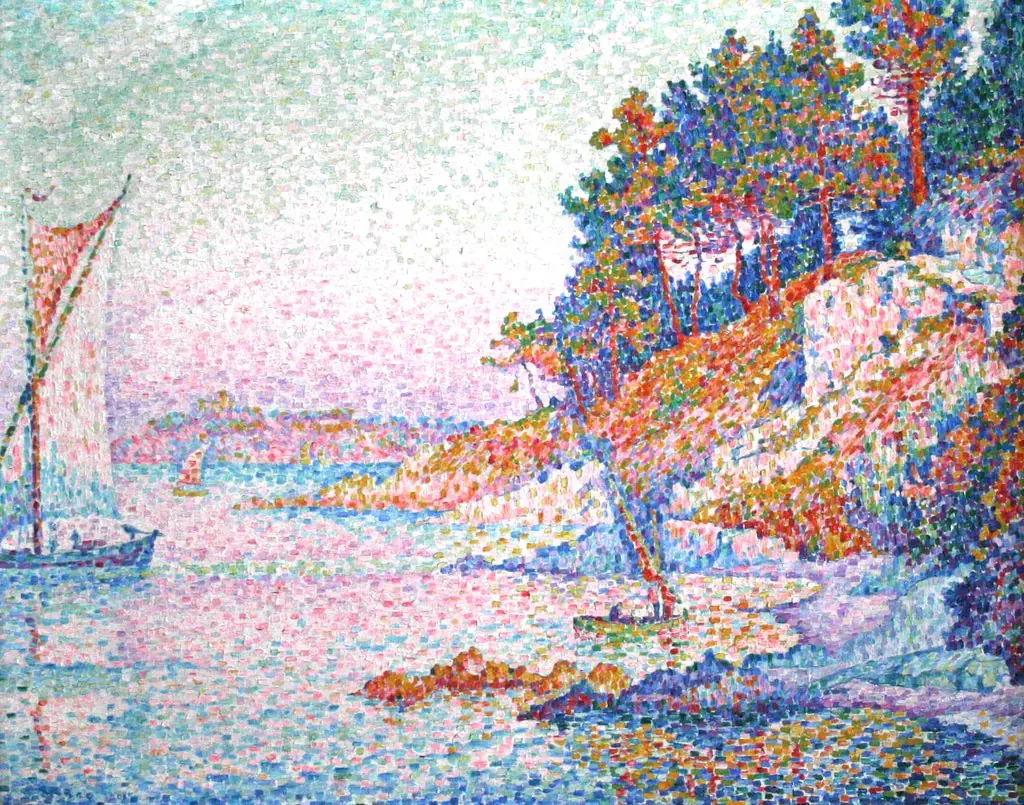
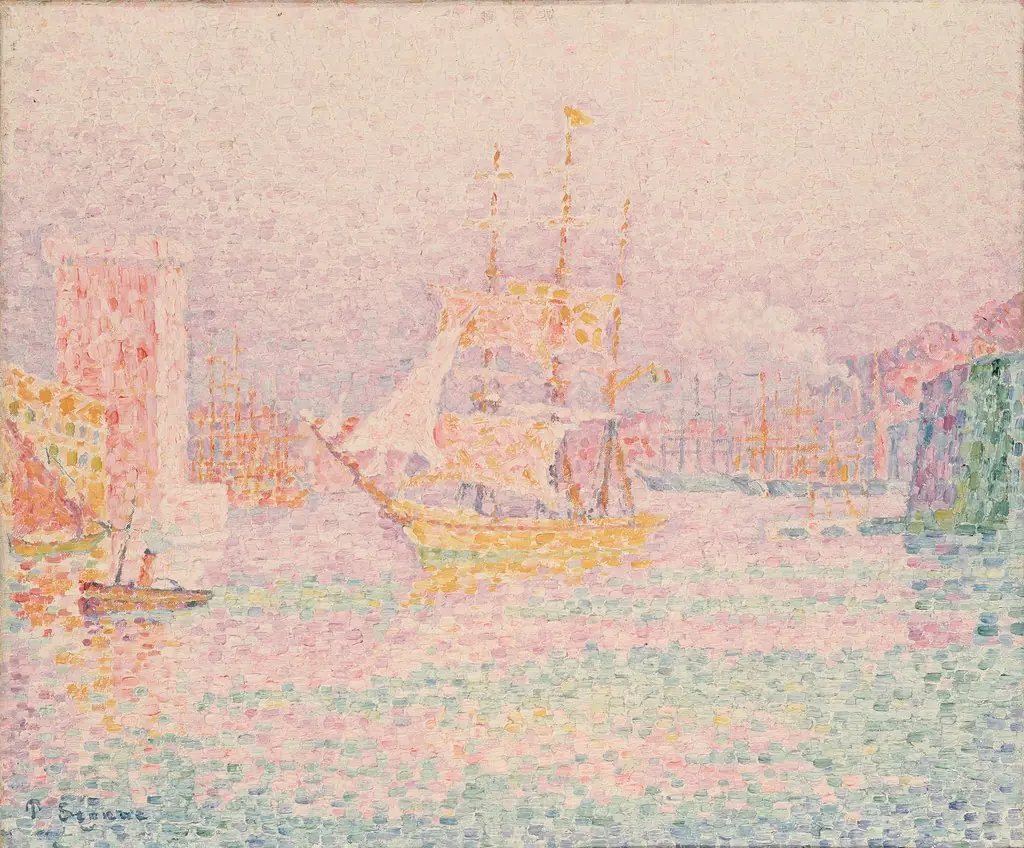
The painting centers on a solitary lighthouse rising from a rocky shore, connected by a narrow walkway to the land. Behind it, small sailboats drift across calm waters, suggesting quiet labor and routine. The absence of human figures emphasizes the enduring presence of the structure and the rhythm of coastal life, evoking stillness rather than narrative drama.
Technique & Style
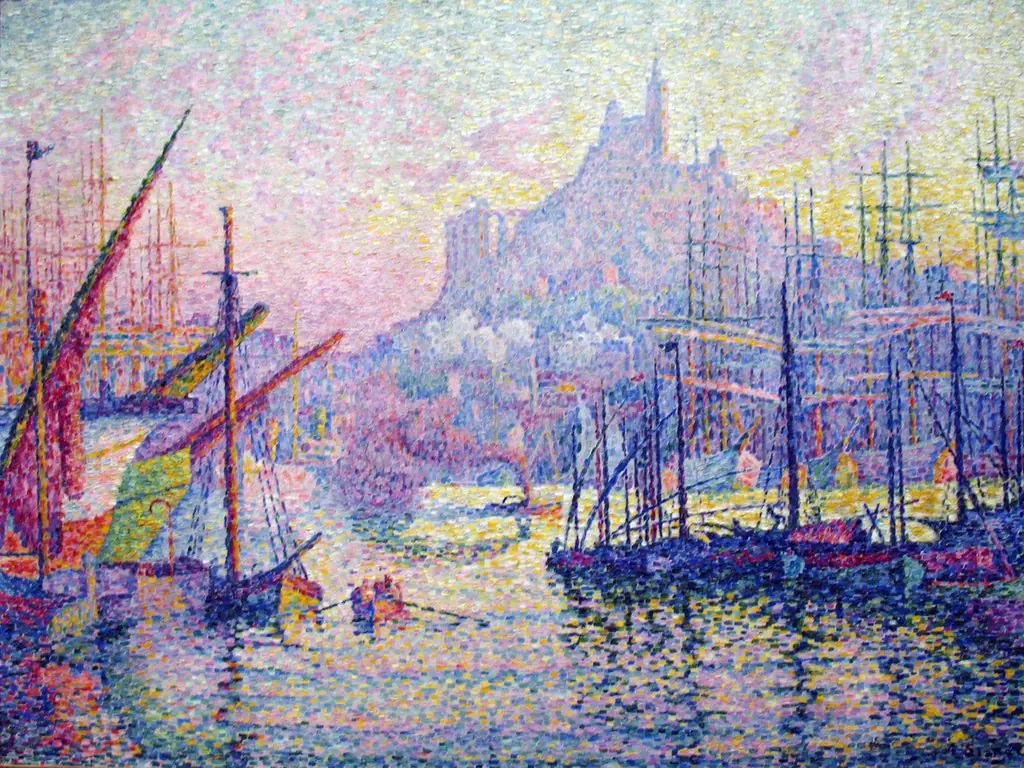
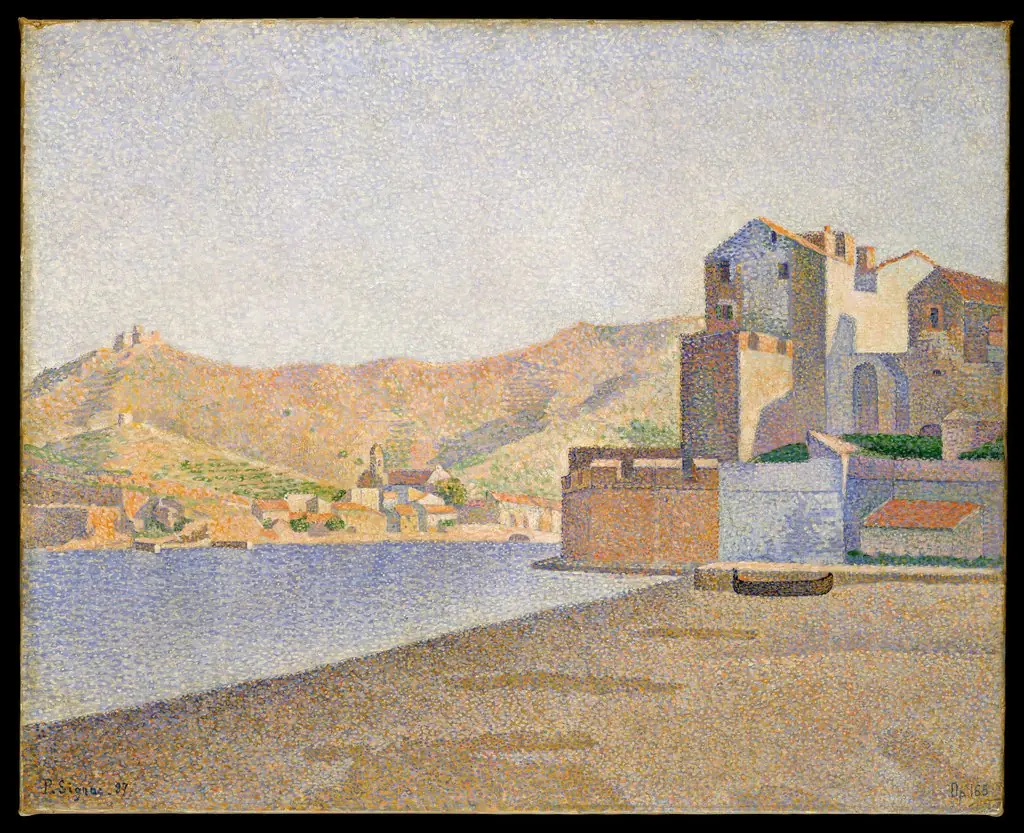
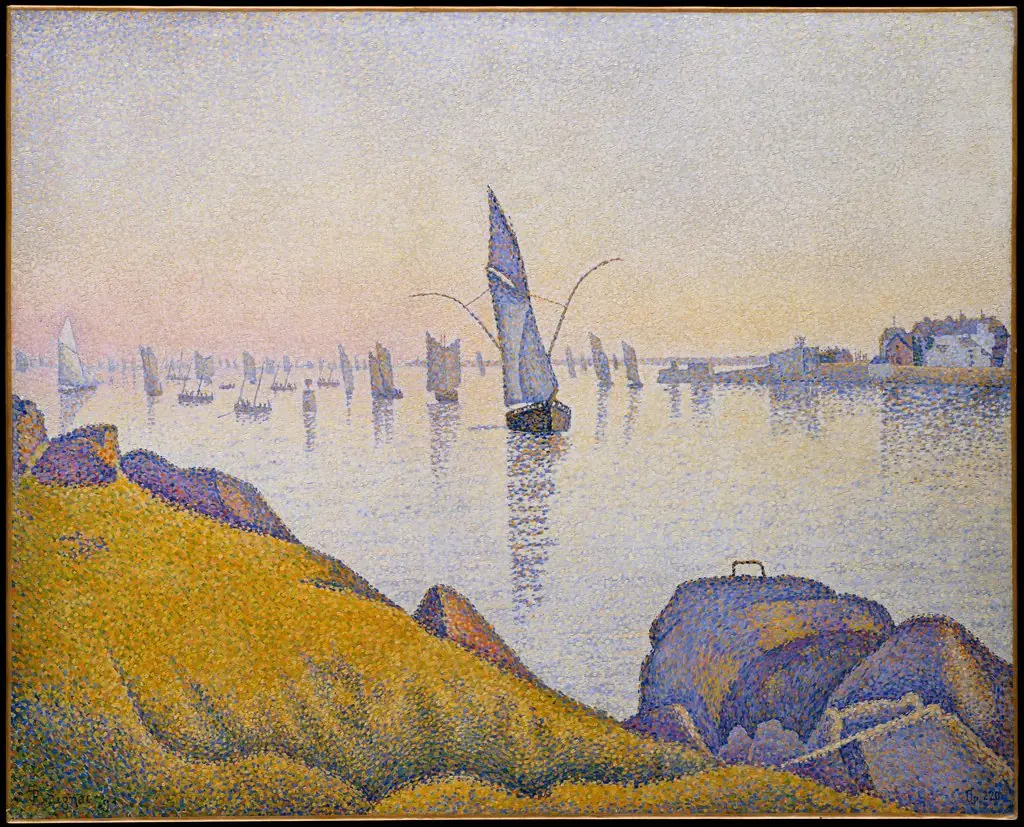
Signac applied small, deliberate dots of pure color across the canvas, a method derived from Pointillism. These dots blend optically to form luminous skies, water, and stone, enhancing the sense of atmospheric light. His palette is restrained—soft blues, greens, and ochres—creating harmony without contrast, reinforcing the scene’s tranquility through systematic color placement.
History & Provenance
The painting entered the Kröller-Müller Museum’s collection in the early 20th century, acquired through the museum’s founder, Helene Kröller-Müller, who systematically gathered Neo-Impressionist works. Its presence there reflects the museum’s early recognition of Signac’s role in advancing modern painting beyond Impressionist spontaneity toward structured, scientific color application.
Context
In the 1890s, Signac was refining Pointillism as a disciplined alternative to the fleeting impressions of his predecessors. He traveled extensively along France’s northern coasts, documenting working harbors and maritime architecture. *Portrieux, the lighthouse* aligns with this period of focused observation, where landscape became a vehicle for exploring color relationships and compositional order.
Legacy
The work exemplifies Signac’s influence on later modernists who valued color theory and structural composition. Though Pointillism was not widely adopted, his method inspired movements like Divisionism and early abstraction. *Portrieux, the lighthouse* remains a quiet testament to his belief that painting could be both scientifically grounded and emotionally resonant.
Artist & collection

Artist
Paul Victor Jules Signac ( seen-YAHK, French: ; 11 November 1863 – 15 August 1935) was a French Neo-Impressionist painter who, with Georges Seurat, helped develop the artistic technique Pointillism.