Artwork
Venice, Giudecca Canal, Morning
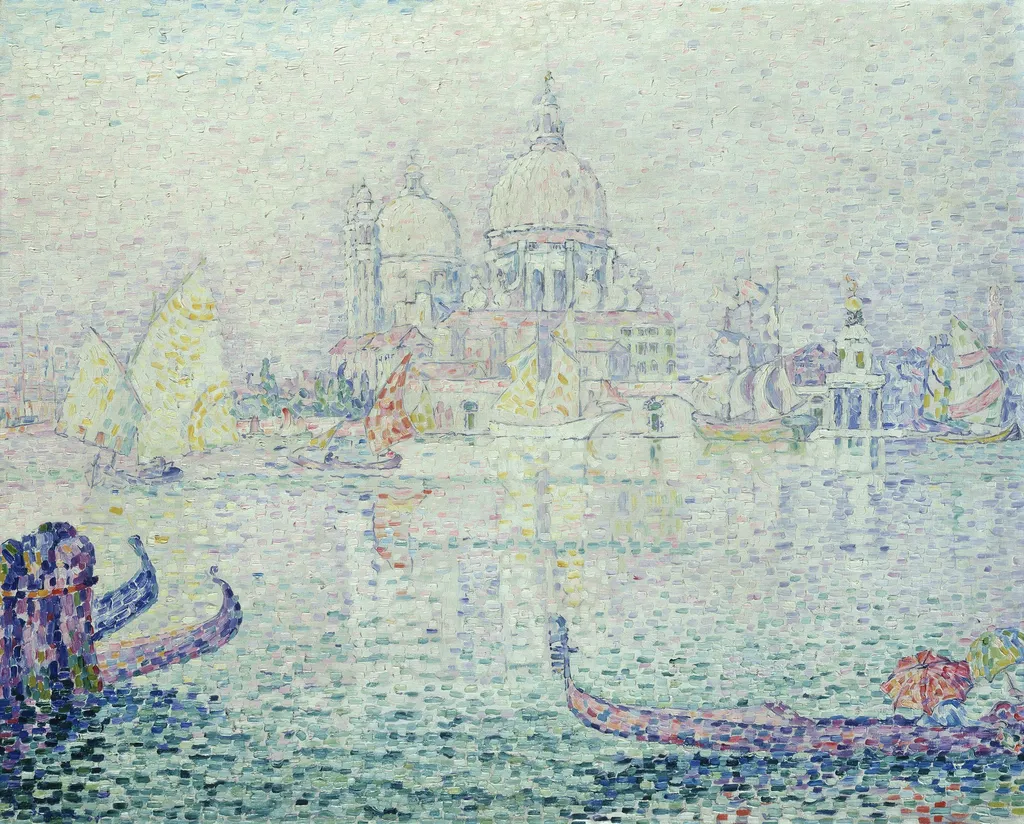
Venice, Giudecca Canal, Morning is an oil painting by the Post-Impressionist artist Paul Signac. It dates from 1905 and is held in the collection of the Foundation E.G. Bührle Collection.
About this work
Overview
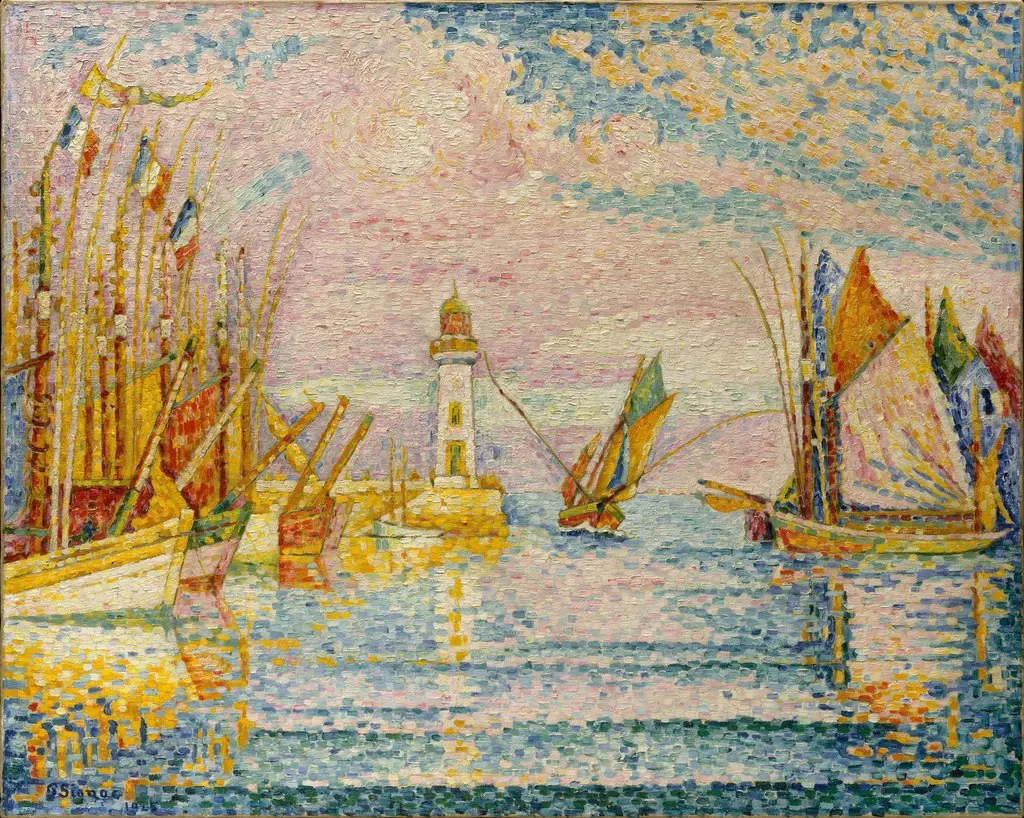
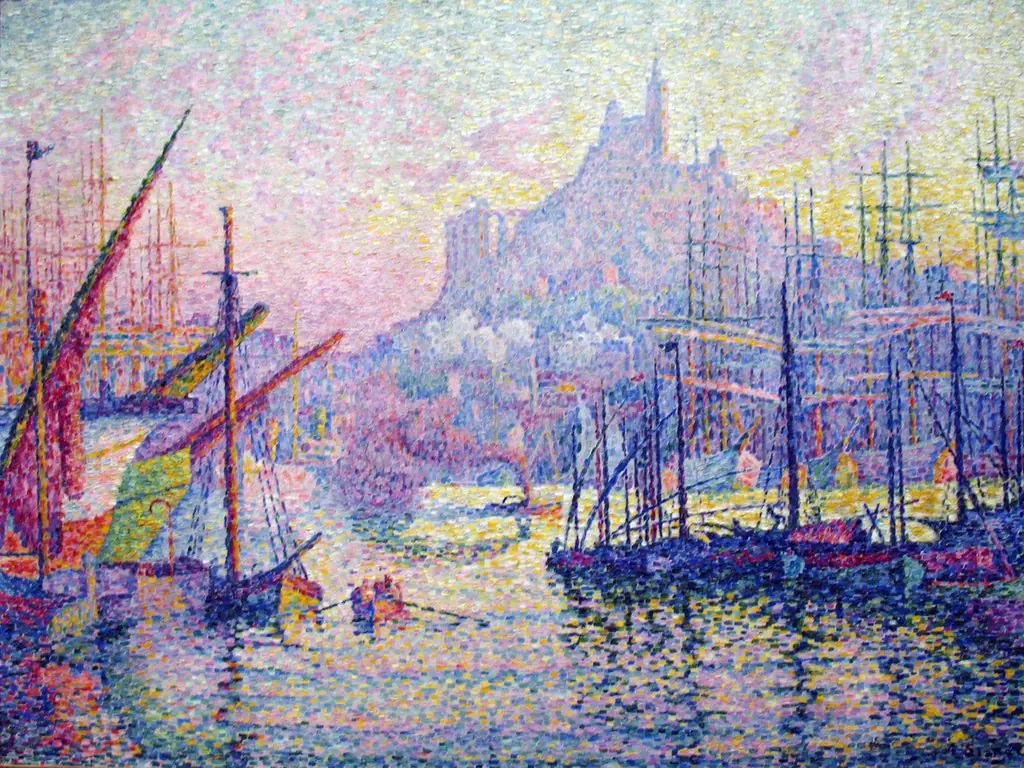
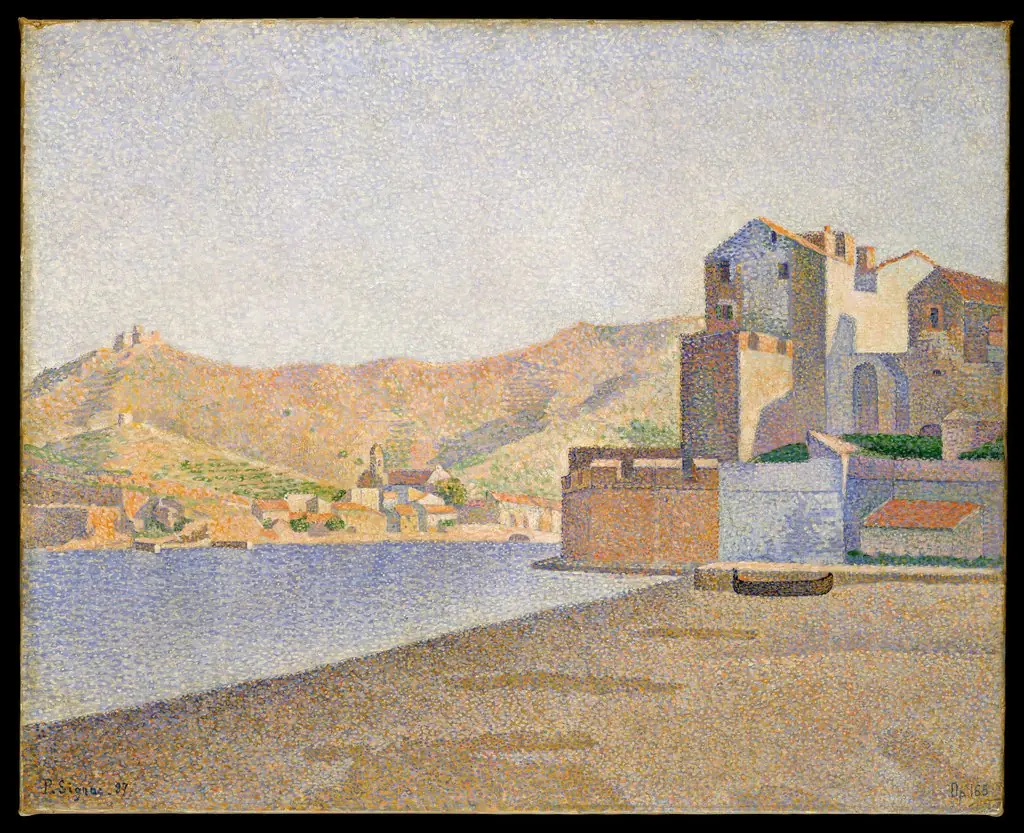
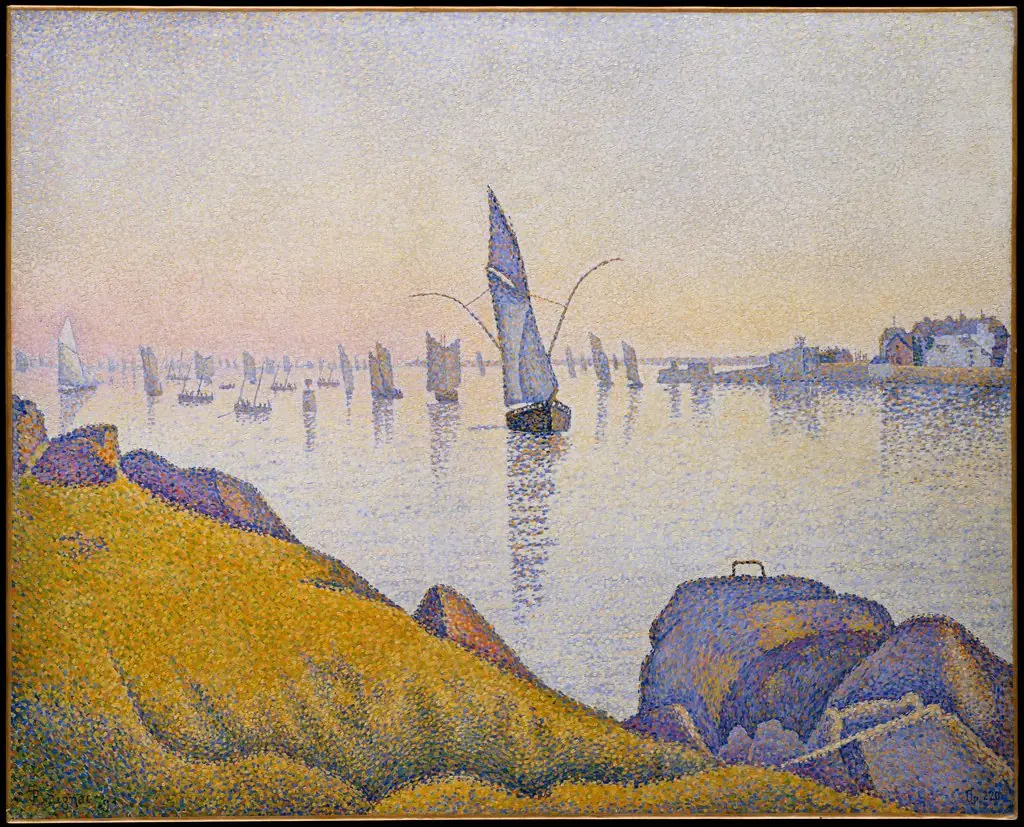
Painted in 1905, Paul Signac’s *Venice, Giudecca Canal, Morning* is an oil work capturing a tranquil stretch of the Venetian waterway at daybreak. Executed in the Pointillist technique, it reflects Signac’s commitment to optical color mixing through minute brushstrokes. The scene conveys quietude, with no overt narrative, focusing instead on light and atmosphere as primary subjects.
Subject & Meaning
The painting presents a serene morning view of the Giudecca Canal, with low buildings lining the shore and small boats drifting on still water. Figures in the vessels are indistinct, emphasizing the environment over human activity. The absence of drama or movement suggests a meditation on time, stillness, and the subtle interplay of natural light on architecture and water.
Technique & Style
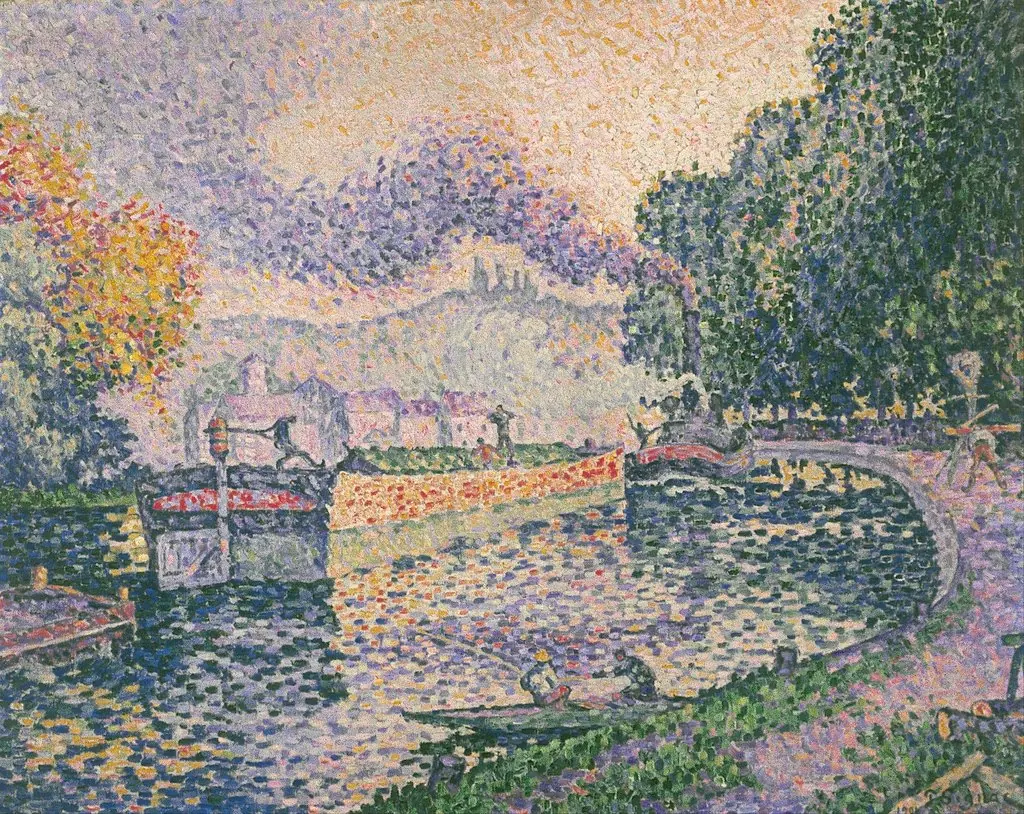
Signac applied pigment in countless tiny dots of pure color, allowing the eye to blend them optically. Hues of pale blue, mint, lavender, and ochre are arranged with precision to evoke morning light. The method, rooted in Neo-Impressionist theory, avoids blending on the palette, instead relying on scientific color principles to generate luminosity and depth through proximity.
History & Provenance
Created during Signac’s travels in Italy, the painting entered the Kunsthaus Zürich collection in the 20th century. It reflects his broader practice of documenting coastal and canal landscapes across Europe, often after extended stays. Unlike many of his contemporaries, Signac rarely sold works immediately, preferring to retain them for exhibitions or institutional acquisition.
Context
In 1905, Signac was deeply engaged in refining Pointillism as a systematic approach to light and color, following the legacy of Seurat. Venice, with its reflective surfaces and atmospheric haze, offered ideal conditions for his experiments. The city’s quiet canals contrasted with the industrial energy of Paris, aligning with his interest in harmony and natural rhythm.
Legacy
This work exemplifies the mature phase of Neo-Impressionism, influencing later movements that prioritized color theory and structured brushwork. While not widely exhibited in his lifetime, Signac’s Venetian series contributed to the broader recognition of Pointillism as a legitimate mode of landscape representation, bridging scientific inquiry and aesthetic contemplation.
Own this work as a print
Artist & collection

Artist
Paul Victor Jules Signac ( seen-YAHK, French: ; 11 November 1863 – 15 August 1935) was a French Neo-Impressionist painter who, with Georges Seurat, helped develop the artistic technique Pointillism.