Artwork
Venice, the Doge's Palace
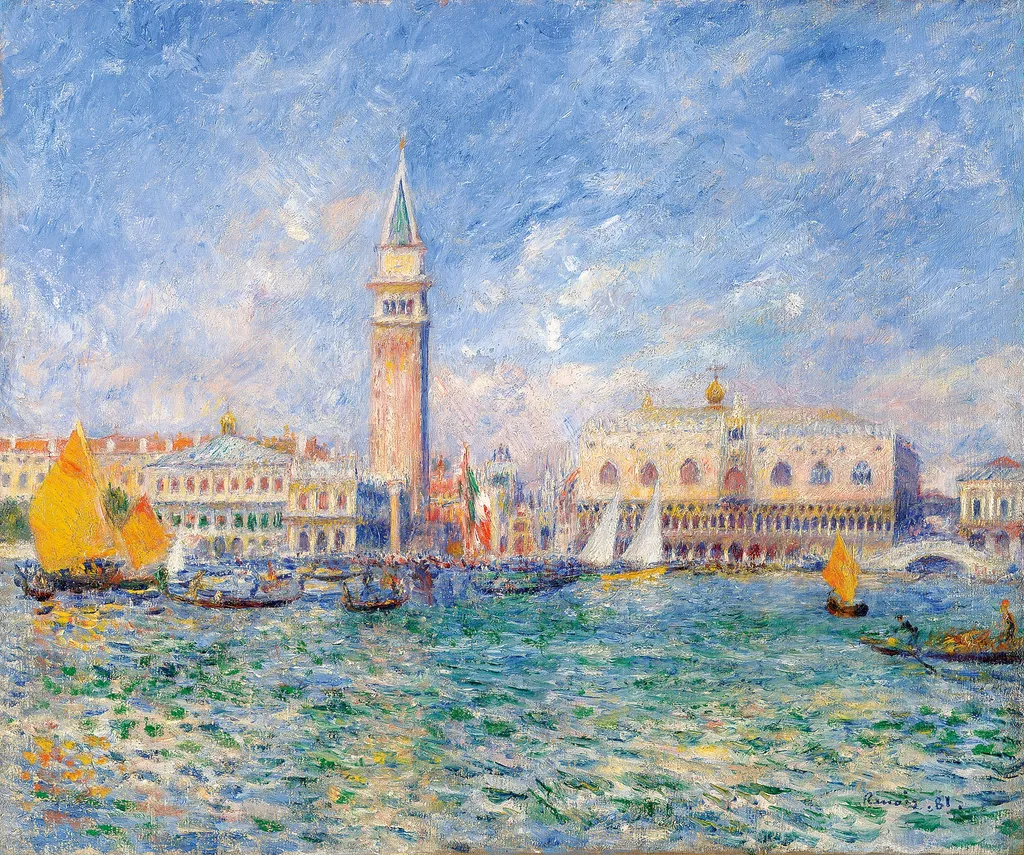
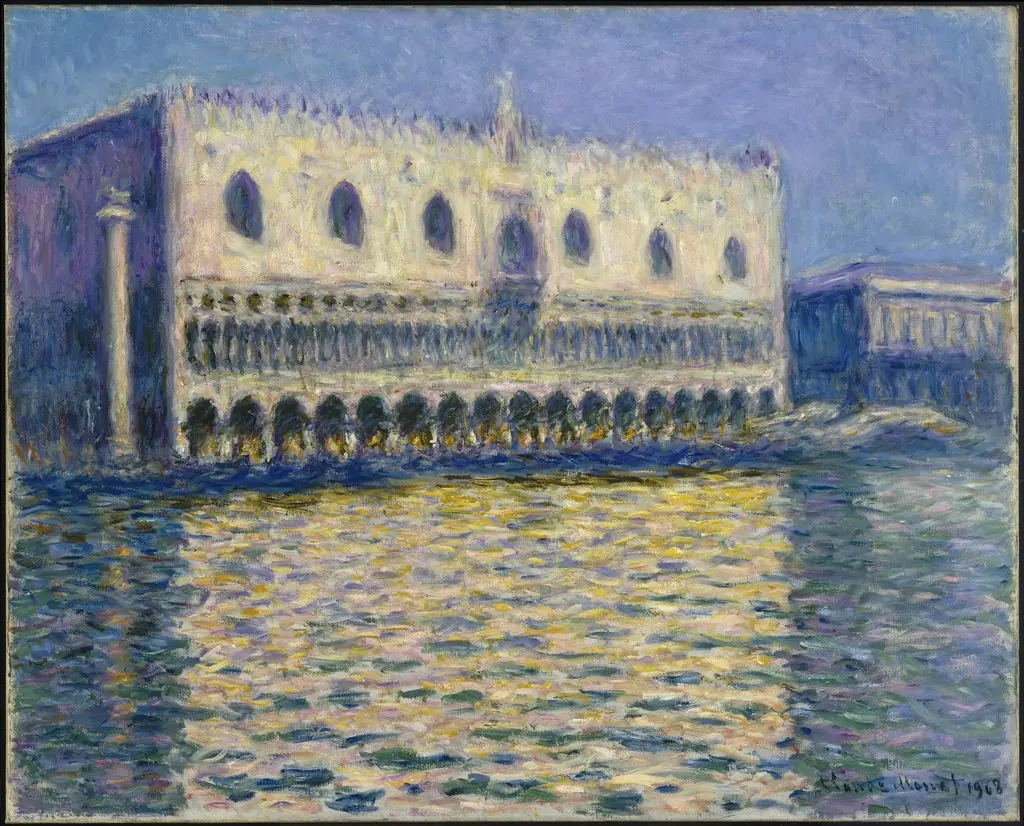
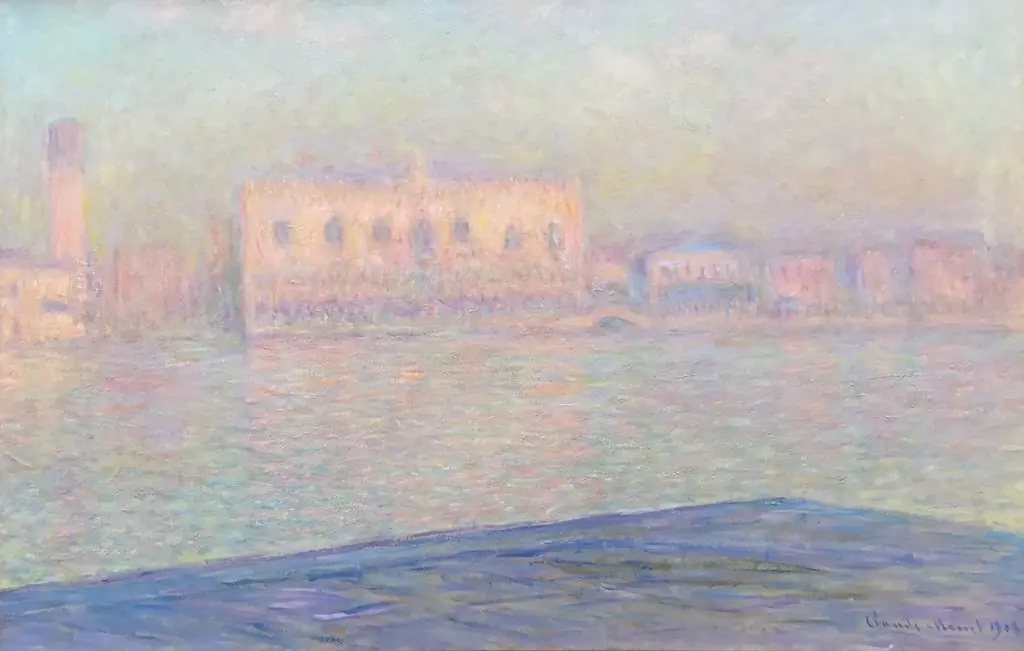
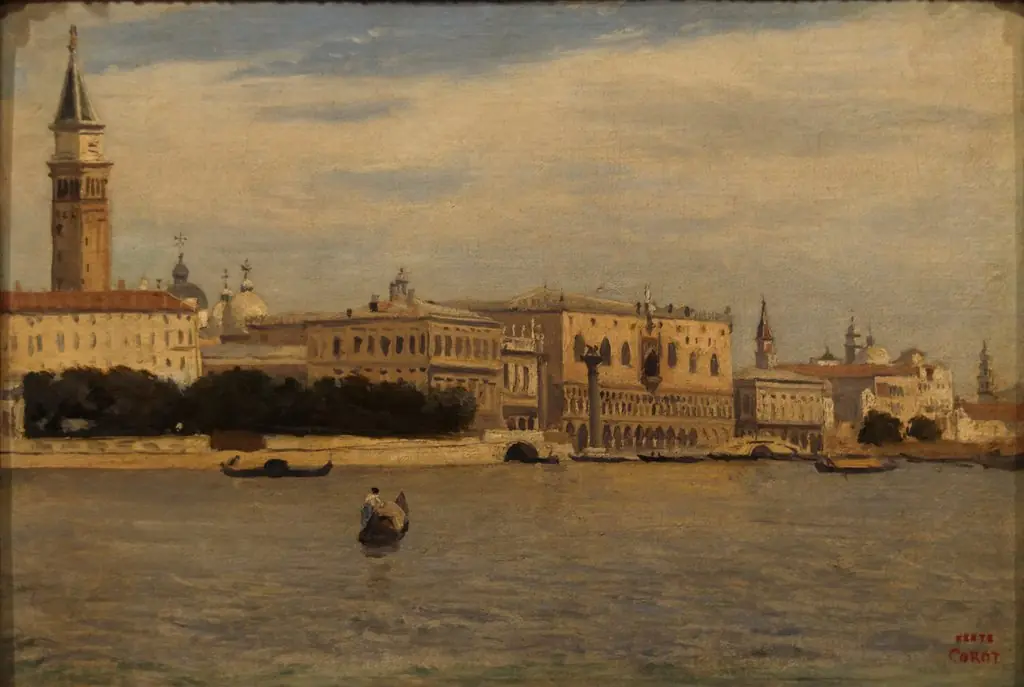
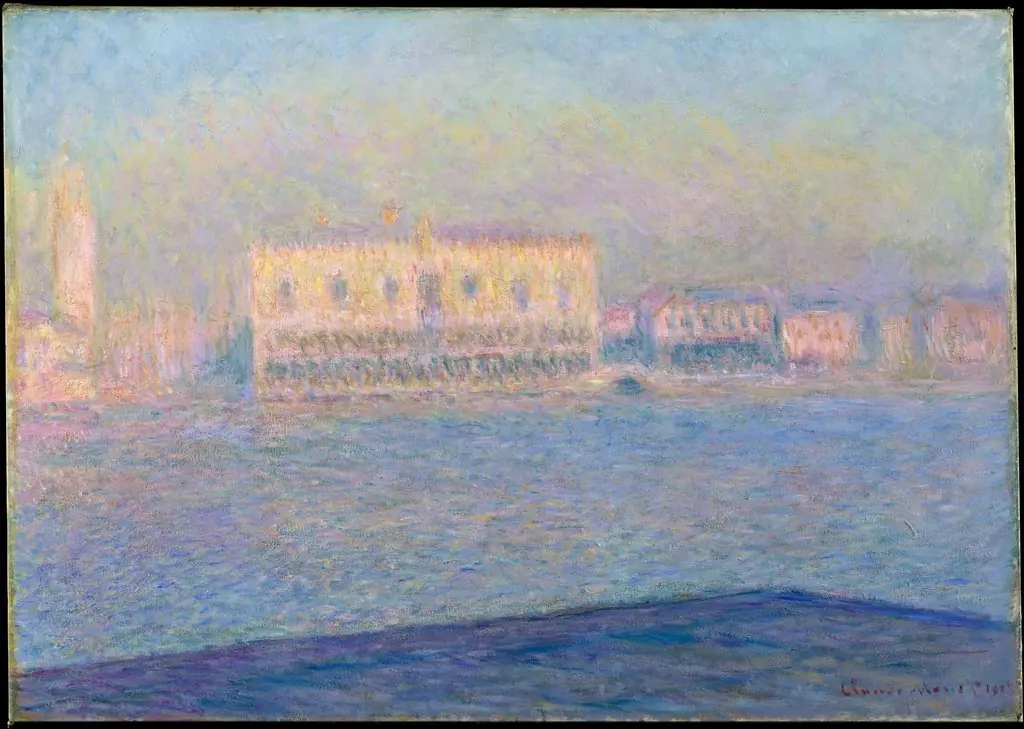
Venice, the Doge's Palace is an oil painting by the Impressionist artist Auguste Renoir. It dates from 1891 and is held in the collection of the Clark Art Institute.
About this work
Overview
Renoir’s approach favors atmospheric harmony over architectural precision, focusing on the interplay of light and surface rather than topographical accuracy.
Painted in 1891, this oil on canvas depicts the Doge's Palace in Venice, rendered by Pierre-Auguste Renoir during his travels in Italy. The composition captures the building’s ornate facade mirrored in still water, with small boats gently bobbing nearby. Renoir’s approach favors atmospheric harmony over architectural precision, focusing on the interplay of light and surface rather than topographical accuracy.
Subject & Meaning
The Doge's Palace, seat of Venetian political power, appears here not as a monument but as a quiet presence within a tranquil landscape. Renoir omits human activity and historical weight, instead presenting the structure as part of a serene, almost dreamlike environment. The reflection in the water suggests a fleeting, contemplative moment, aligning with the artist’s interest in transient impressions of light and place.
Technique & Style
Renoir employs loose, fluid brushwork and a muted palette of blues, soft ochres, and pale pinks to evoke the hazy quality of Venetian air. Highlights on the palace’s stonework and water are suggested with delicate touches rather than defined edges. The sky, lightly brushed with wisps of cloud, blends seamlessly into the reflective surface, reinforcing a sense of calm unity between elements.
History & Provenance
Renoir painted this work during a trip to Italy in 1881, returning to it in 1891 after further reflection. It entered the collection of the Clark Art Institute in William A. Clark’s bequest in 1925. The painting remained relatively obscure until the mid-20th century, when scholars began to reevaluate Renoir’s Italian works as distinct from his more famous Parisian scenes.
Context
In the 1880s and 1890s, Renoir sought to reconcile Impressionist techniques with classical composition, often turning to Mediterranean light for inspiration. Venice, with its reflective waters and architectural grandeur, offered a compelling subject. Unlike contemporaries who emphasized historical narrative, Renoir treated the palace as an element within a broader sensory experience of place.
Legacy
This painting exemplifies Renoir’s later shift toward a more lyrical, less fragmented style. While not widely exhibited during his lifetime, it has since become a key example of his Italian period, illustrating how he adapted Impressionism to evoke mood rather than document place. Its quiet intensity continues to inform interpretations of his mature work.
Own this work as a print
Artist & collection
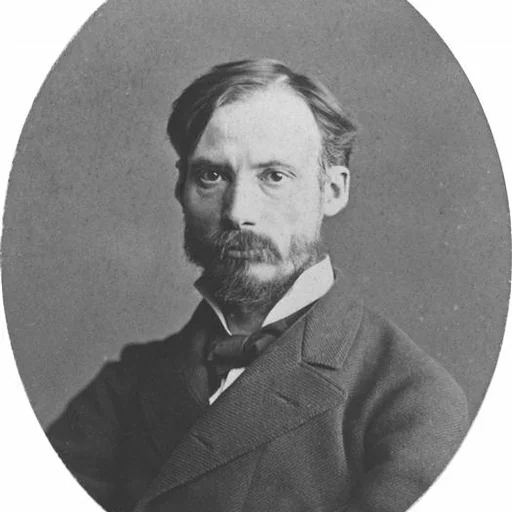
Artist
Pierre-Auguste Renoir was born on 25 February 1841 in Limoges, the son of a tailor and a seamstress.