Artwork
Esau selling his birthright
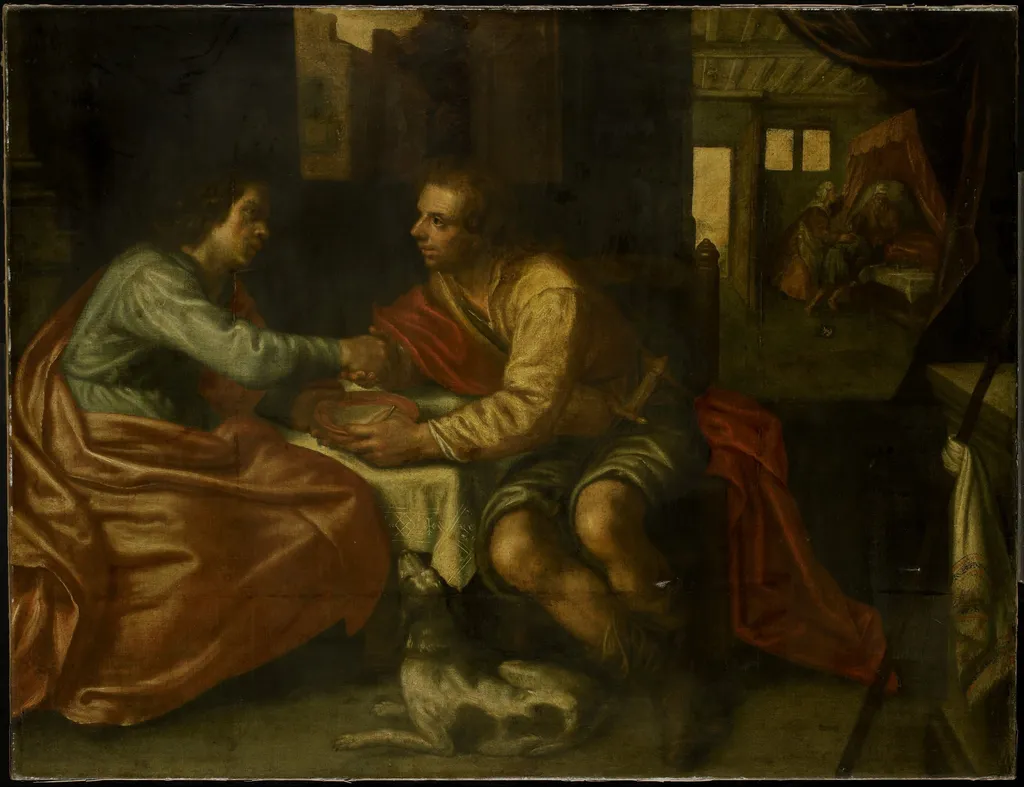
Esau selling his birthright is an oil painting by the Early Baroque Italian artist Paulus Moreelse. It dates from 1609 and is held in the collection of the Rijksmuseum.
About this work
Overview
Paulus Moreelse’s oil on canvas, dated 1609, portrays the biblical episode of Esau relinquishing his birthright. The work is part of the Rijksmuseum’s collection and presents two seated figures in a modest interior, illuminated by a single window that casts strong contrasts across the scene.
Subject & Meaning
The central figure, identified as Esau, holds a bowl and spoon, suggesting the moment he trades his inheritance for a meal. Opposite him, a younger man—traditionally understood as Jacob—receives the transaction. The composition underscores themes of impulsivity, familial rivalry, and the moral consequences of short‑sighted decisions.
Technique & Style
Moreelse employs chiaroscuro to model the figures, allowing the limited light from the window to define form and texture. The white shirt and red cloak of Esau contrast with the yellow shirt and green shorts of his counterpart, while a dog lies calmly on the floor, adding a domestic touch. The dark background deepens spatial recession.
History & Provenance
Executed in the early seventeenth century, the painting reflects the Dutch Golden Age’s interest in biblical narratives rendered with domestic realism. It entered the Rijksmuseum’s holdings in the twentieth century, where it remains on display as an example of Moreelse’s religious oeuvre.
Context
Moreelse, a prominent Utrecht painter, often blended portraiture with narrative scenes, situating sacred stories within familiar, interior settings. This approach aligns with contemporary Protestant sensibilities, which favored personal, contemplative engagement with scriptural episodes rather than grandiose altar pieces.
Artist & collection