Artwork
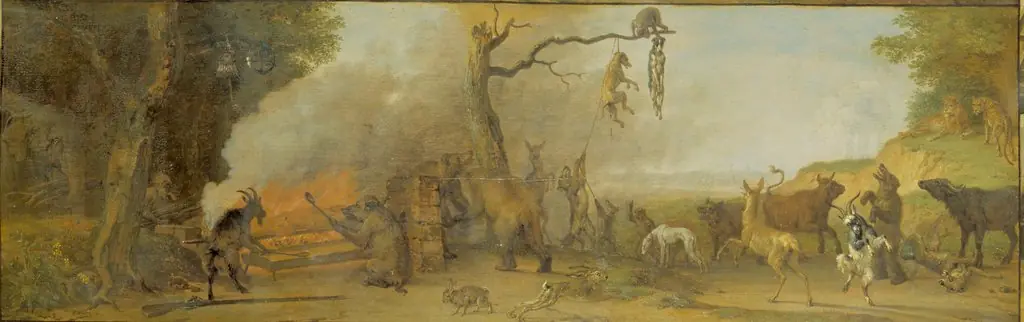
Hunting a Goat
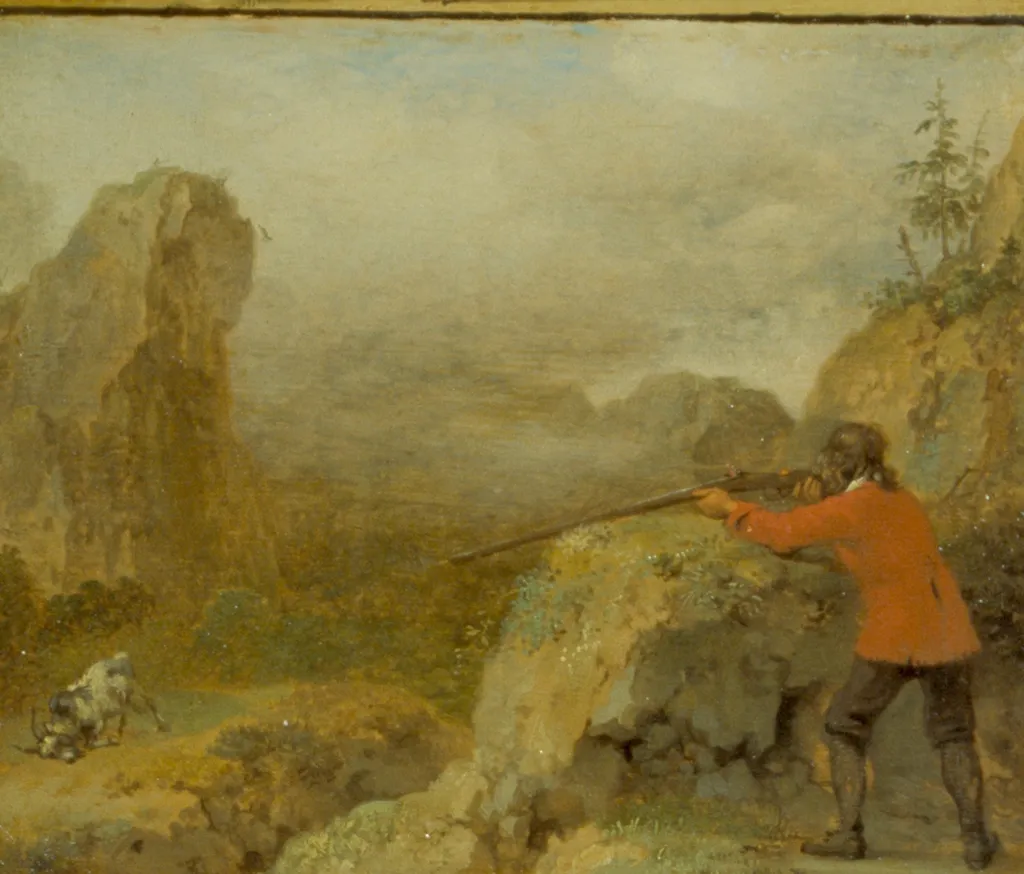
Hunting a Goat is an oil painting by the Dutch Golden Age artist Paulus Potter. It dates from 1650 and is held in the collection of the Hermitage Museum.
About this work
Overview
Created circa 1650 by Dutch artist Paulus Potter, *Hunting a Goat* is an oil painting that captures a moment of rural pursuit. The work is part of the State Hermitage Museum’s collection and exemplifies Potter’s focus on everyday animal scenes during the Dutch Golden Age.
Subject & Meaning
The composition centers on a solitary hunter, dressed in a bright orange shirt and dark trousers, aiming a rifle at a small goat perched on a rocky ledge. The quiet forest edge, with distant cliffs and sparse trees, frames the encounter, emphasizing the tension of the imminent shot while portraying a slice of 17th‑century countryside life.
Technique & Style
Potter employs a restrained palette of greens, browns and muted reds, allowing the soft light to illuminate the hunter’s back and the goat’s form. Careful modeling of light and shadow across the rocks and figures creates a subtle chiaroscuro effect, lending depth and realism to the scene.
History & Provenance
Painted during Potter’s brief but prolific career—he produced roughly one hundred works before dying of tuberculosis at twenty‑eight—the piece entered the Hermitage’s holdings at an unspecified later date. Its survival reflects the high regard for Potter’s animal genre scenes in European collections.
Context
*Hunting a Goat* belongs to the Dutch genre tradition that celebrated ordinary activities and the natural world. While many contemporaries focused on market scenes or domestic interiors, Potter’s dedication to animal subjects offered a distinct perspective on rural labor and the relationship between humans and livestock.
Artist & collection
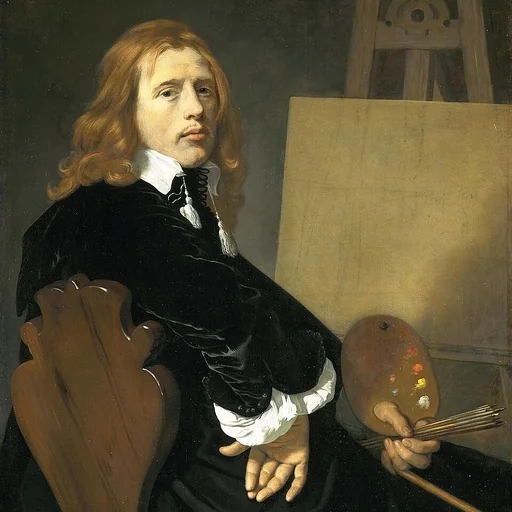
Artist
Paulus Potter (Dutch pronunciation: ; 20 November 1625 (baptised) – 17 January 1654 (buried)) was a Dutch painter who specialized in landscapes featuring animals, often from a low vantage point.