Artwork
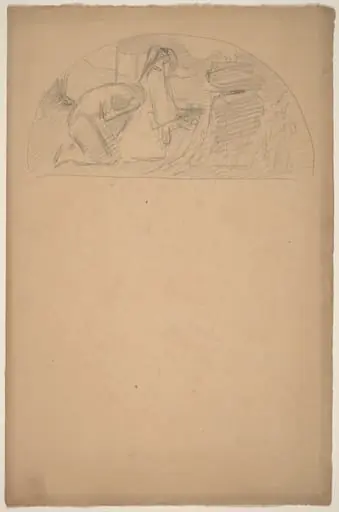
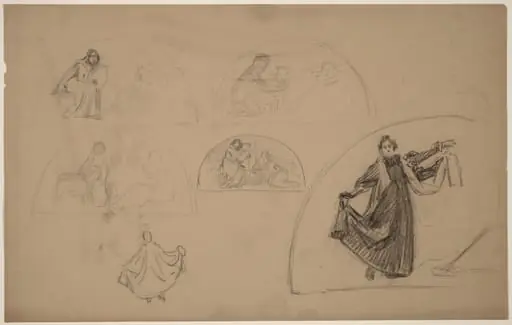
Studies for a Lunette [recto]
![Studies for a Lunette [recto], by Charles Sprague Pearce, charcoal, 1894](https://artifactworldgallery.com/img/charles-sprague-pearce--studies-for-a-lunette-recto--07c43c96c8ad1d74-w1024.webp)
Studies for a Lunette [recto] is a charcoal drawing by the Impressionist artist Charles Sprague Pearce. It dates from 1894 and is held in the collection of the National Gallery of Art.
About this work
Overview
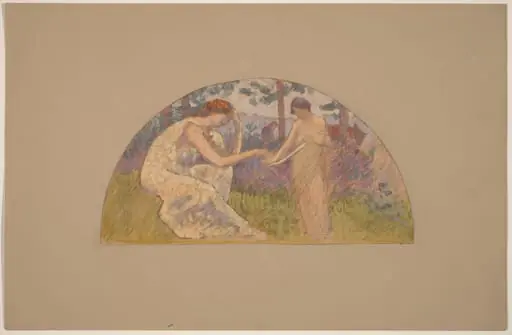
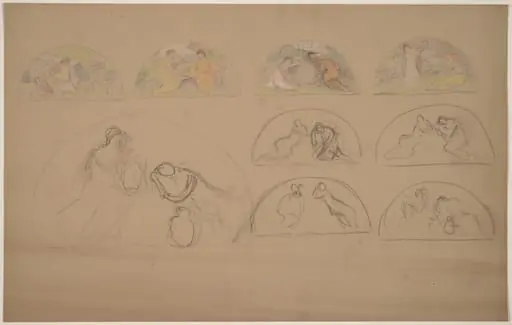
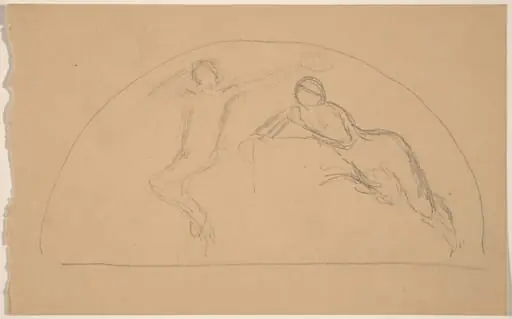
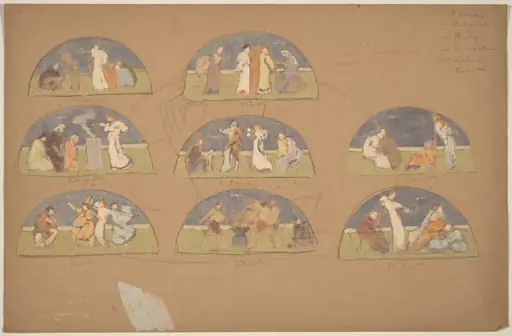
Created in 1894, this drawing by Charles Sprague Pearce is a preparatory study executed in colored pencils and charcoal on tan wove paper. It forms part of a series intended for a lunette—semi-circular decorative panel—likely destined for architectural integration. The work reflects Pearce’s practice of refining compositional elements before final execution in a larger medium.
Subject & Meaning
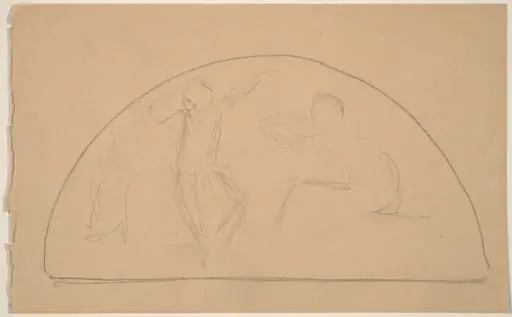
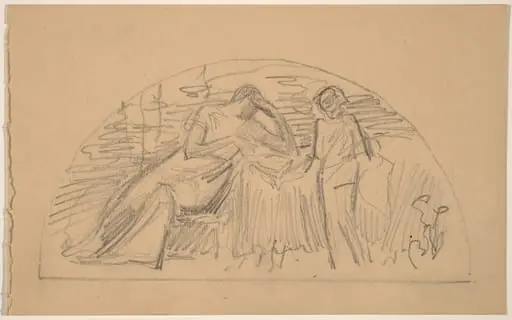
The drawing presents fragmented figures and drapery, suggesting a narrative scene under development. While the full context remains unspecified, the arrangement implies a ceremonial or allegorical theme common in late 19th-century decorative programs. The focus on gesture and form indicates an emphasis on human presence rather than detailed setting.
Technique & Style
Pearce employed layered charcoal for tonal depth and selective colored pencils to suggest hue and volume. The tan paper serves as a mid-tone ground, allowing both highlights and shadows to emerge with economy. Lines are deliberate yet fluid, revealing a process of revision and refinement typical of studio studies for mural projects.
History & Provenance
The drawing originated in Pearce’s studio during preparations for a commissioned architectural decoration. Its survival suggests it was retained as part of the artist’s archive rather than discarded after use. No public record of the final lunette’s installation or current location has been documented, leaving the study as a standalone artifact of his working method.
Context
In the 1890s, American artists like Pearce were increasingly engaged in public and institutional commissions requiring large-scale decorative schemes. Drawings such as this were essential in translating academic training into architectural integration, bridging the gap between easel practice and mural execution within the American Renaissance movement.
Legacy
This study exemplifies the quiet, iterative nature of preparatory work behind major decorative projects. Though the final lunette remains unlocated, the drawing preserves evidence of Pearce’s process—his attention to anatomy, rhythm, and spatial harmony—offering insight into the unseen labor of public art in the Gilded Age.
Artist & collection

Artist
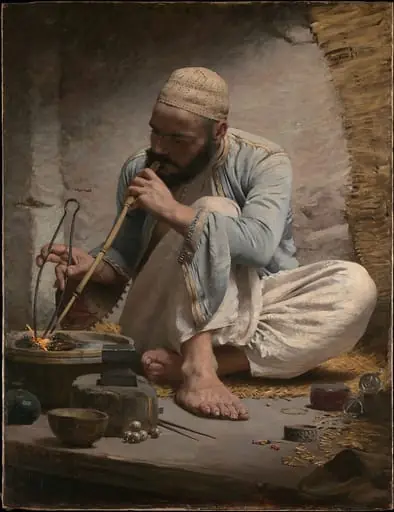
Charles Sprague Pearce (1851–1914) was an American artist, born in Boston.

![Study for a Lunette [recto], by Charles Sprague Pearce](https://artifactworldgallery.com/img/charles-sprague-pearce--study-for-a-lunette-recto--96fa9dd266d834e5-w320.webp)
![Studies for a Lunette [verso], by Charles Sprague Pearce](https://artifactworldgallery.com/img/charles-sprague-pearce--studies-for-a-lunette-verso--5d54507e74f08054-w320.webp)
![Studies for Lunettes [recto], by Charles Sprague Pearce](https://artifactworldgallery.com/img/charles-sprague-pearce--studies-for-lunettes-recto--eeb47a85391ba0e5-w320.webp)
![Sheet of Studies [recto and verso], by John Flaxman](https://artifactworldgallery.com/img/john-flaxman--sheet-of-studies-recto-and-verso--624ac0ec758f08e5-w320.webp)