Artwork
The Triumph of David
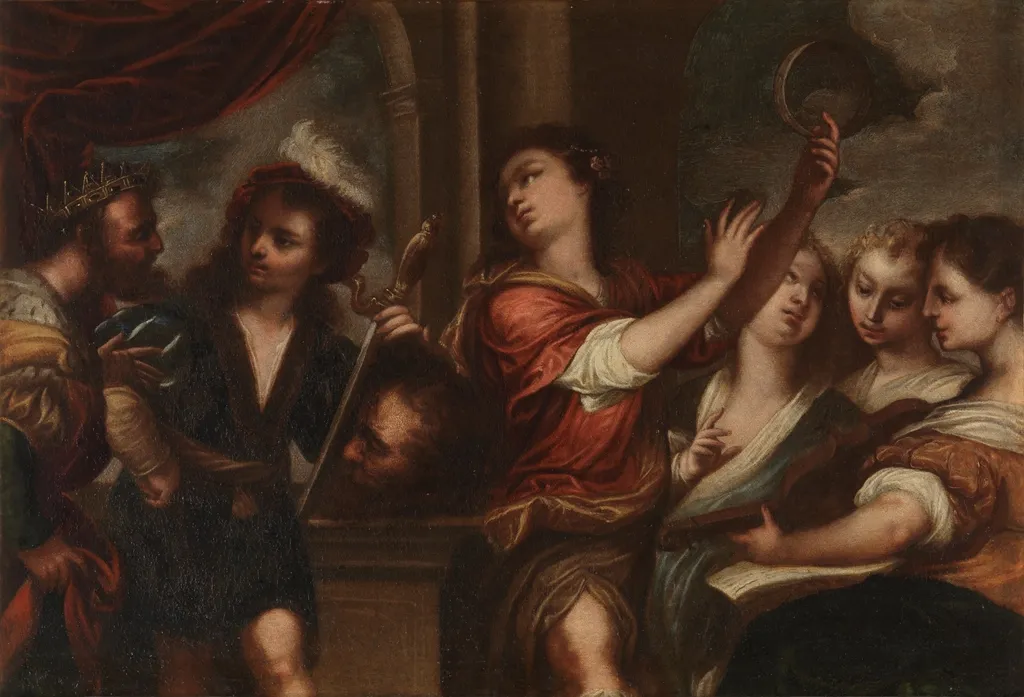
The Triumph of David is an oil painting by the Early Baroque Italian artist Pedro Atanasio Bocanegra. It dates from 1601 and is held in the collection of the Museo del Prado.
About this work
Overview
Pedro Atanasio Bocanegra’s oil on canvas, dated 1601, portrays a celebratory biblical moment now displayed in Madrid’s Museo del Prado. The composition centers on a figure in a red robe clutching a sword and a severed head, surrounded by attendants and architectural elements, all rendered with a dramatic contrast of light and shadow.
Subject & Meaning
The central character represents King David in the aftermath of his victory over Goliath, a theme common in Counter‑Reformation art. Flanking figures—two women holding a guitar and a rattle—suggest a festive atmosphere, while the crowned man on the left may symbolize royal authority acknowledging David’s triumph.
Technique & Style
Bocanegra employs chiaroscuro to model forms, allowing the illuminated figures to emerge from a darker, cloud‑filled sky and a muted architectural backdrop. The handling of light creates a three‑dimensional presence, while the rich reds and gold accents emphasize the ceremonial nature of the scene.
History & Provenance
Completed in the early seventeenth century, the work entered the Spanish royal collection before being transferred to the Prado Museum, where it remains part of the permanent display of Baroque religious paintings. Its provenance reflects the typical path of court‑commissioned works into national institutions.
Context
Created during Spain’s Golden Age, the painting aligns with contemporary devotional imagery that emphasized heroic biblical narratives as moral exemplars. Bocanegra’s approach mirrors the broader Baroque interest in theatricality and emotional engagement, reinforcing the triumph of faith through visual spectacle.
Own this work as a print
Artist & collection
Artist
Pedro Atanasio Bocanegra (1638–1689) was an artist, born in Granada.