Artwork
Saint Anthony of Padua
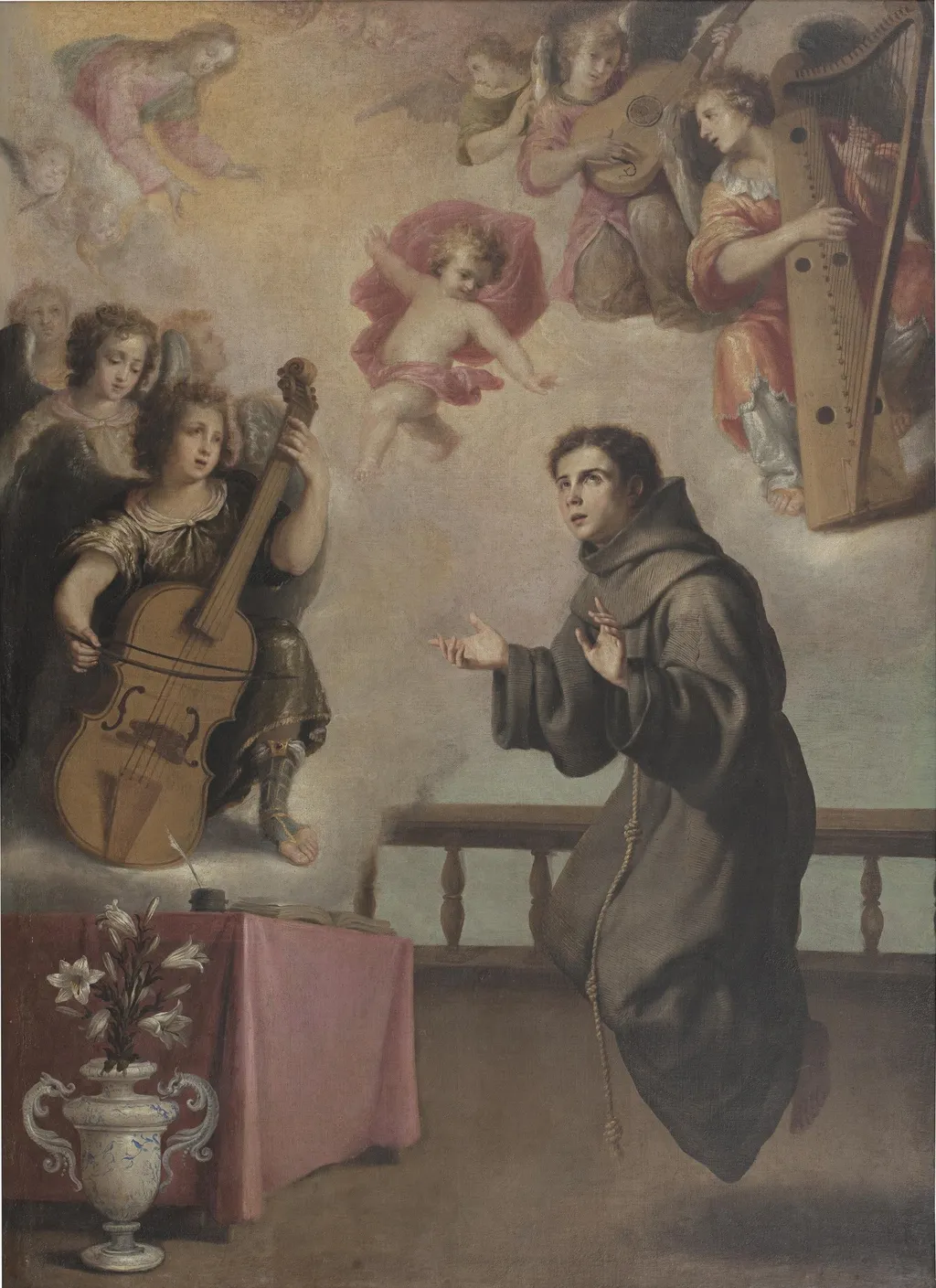
Saint Anthony of Padua is an oil painting by the Early Baroque Italian artist Pedro de Obregón. It dates from 1601 and is held in the collection of the Museo del Prado.
About this work
Overview
Created in 1601 by the Spanish artist Pedro de Obregón, this oil painting portrays Saint Anthony of Padua seated on a bench. The saint is shown in a dark habit, hands clasped in prayer, while three ethereal figures hover nearby, each playing a different stringed instrument. The composition balances the solemn figure of the saint with the lively, musical angels, set against a luminous sky.
Subject & Meaning
The central figure is Saint Anthony of Padua, a Franciscan friar renowned for his preaching and miracles. His upward gaze and folded hands suggest contemplation or intercession. The surrounding angels, each engaged with a cello, harp, or lute, may symbolize the harmony of divine praise, linking the saint’s spiritual devotion to the celestial music of the heavens.
Technique & Style
Obregón employs a chiaroscuro approach typical of early Baroque painting, using strong contrasts between the dark robe and the bright background to model form. The soft illumination on the angels’ wings and the subtle gradations of light on the instruments create a sense of depth. The overall handling reflects the influence of Italian Baroque, filtered through the artist’s Spanish training.
History & Provenance
A pupil of the Italian‑born painter Vincenzo Carducci, Obregón earned recognition from the 18th‑century chronicler Antonio Palomino for his drawing ability and religious subjects. The work entered the collection of Madrid’s Museo del Prado, where it remains on display, representing an example of early 17th‑century Spanish engagement with Italian Baroque aesthetics.
Own this work as a print
Artist & collection
Artist
Pedro de Obregón, (1597–1659) was a Spanish painter and printmaker. According to art historian Antonio Palomino, Pedro de Obregón was initially taught by Vincenzo Carducci, and became one of his best pupils, imitating…
