Artwork
Cutting and Turning a Big Gun
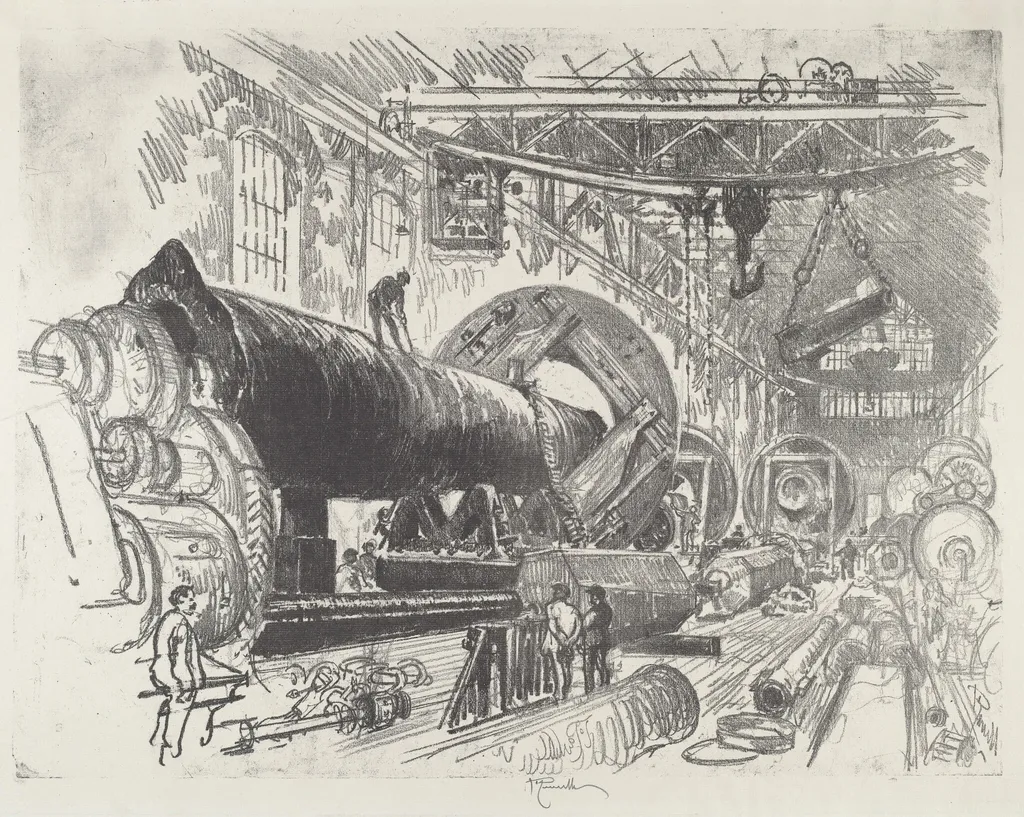
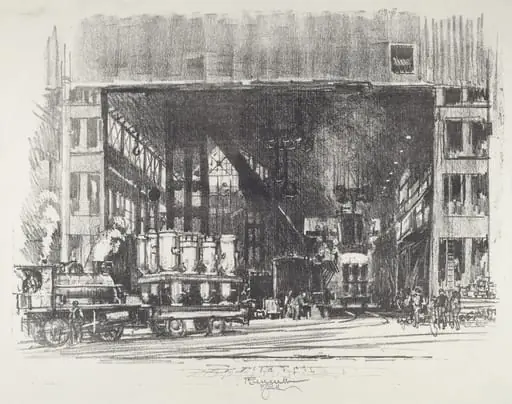
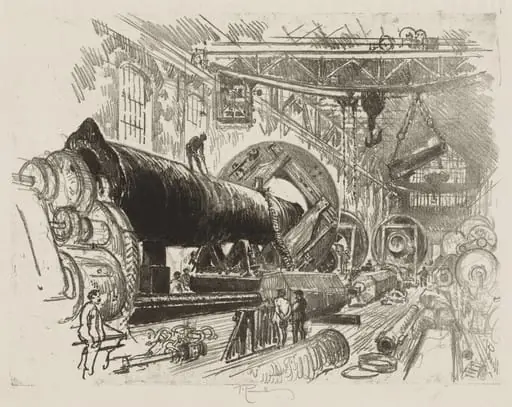
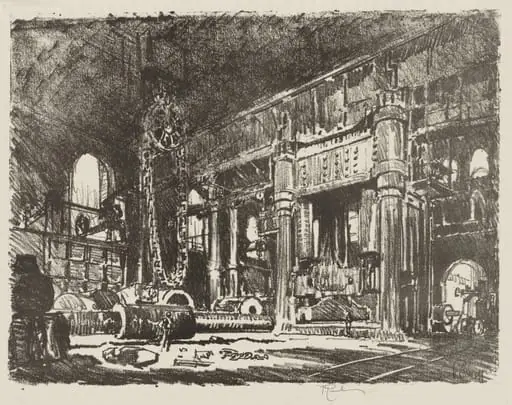
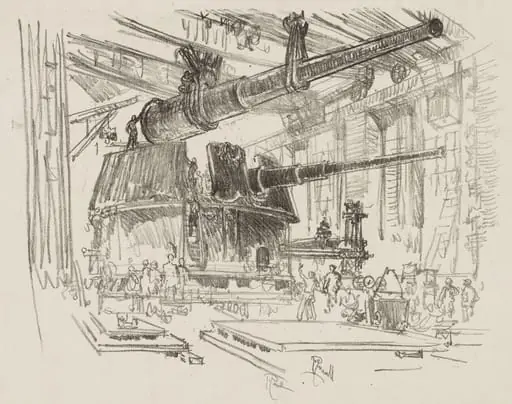
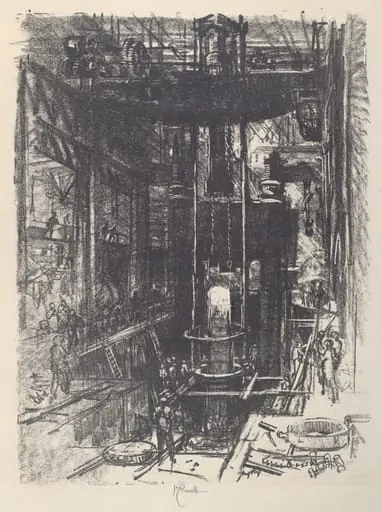
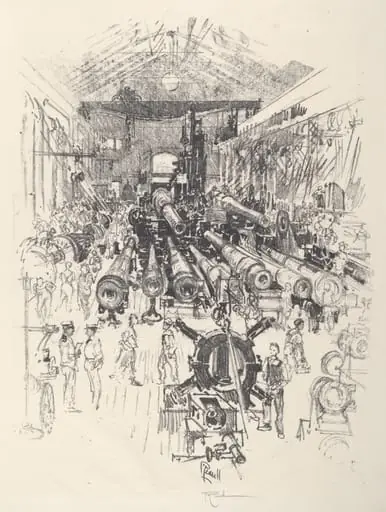
Cutting and Turning a Big Gun is an ink print by Joseph Pennell. It dates from 1916 and is held in the collection of the National Gallery of Art.
About this work
Overview
Pennell, known for his detailed depictions of modern industry, uses lithography to convey both the scale of machinery and the human effort sustaining it.
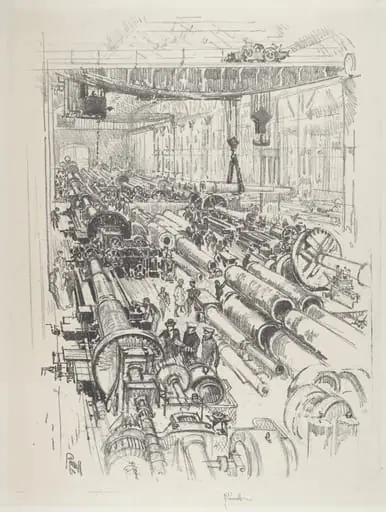
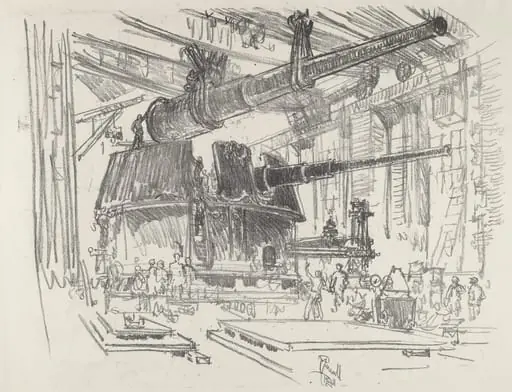
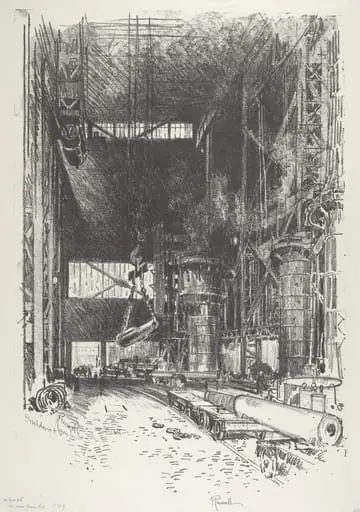
Joseph Pennell’s 1916 lithograph *Cutting and Turning a Big Gun* captures a moment in a wartime manufacturing facility, focusing on the precision labor involved in shaping heavy artillery. Rendered in monochrome tones, the print emphasizes the physicality of industrial work through stark contrasts and dynamic composition. Pennell, known for his detailed depictions of modern industry, uses lithography to convey both the scale of machinery and the human effort sustaining it.
Subject & Meaning
The central subject is a massive gun barrel under active machining, surrounded by workers in practical attire, each engaged in specific tasks. Their postures—bent, reaching, leaning—suggest coordinated effort and physical strain. The absence of facial detail universalizes the laborers, framing them as anonymous agents of industrial production. The image reflects wartime mobilization, honoring craftsmanship without romanticizing it.
Technique & Style
Pennell employed lithography to achieve subtle gradations of gray, using ink density and line weight to define form and depth. The gun, rendered in the darkest tones, anchors the composition, while the background recedes into softer, blurred machinery. Figures are rendered with economical strokes, emphasizing movement over individuality. The technique mirrors Whistler’s tonal discipline, prioritizing atmosphere and structure over narrative detail.
History & Provenance
Created during World War I, the print emerged from Pennell’s interest in documenting industrial processes as they supported national war efforts. He visited American and European factories to sketch directly from life, later translating these observations into prints. The work entered the National Gallery of Art’s collection through established acquisition channels, reflecting its recognition as a significant record of early 20th-century labor.
Context
In the mid-1910s, industrial imagery gained renewed relevance as nations mobilized for total war. Pennell’s work aligned with broader cultural efforts to visualize the machinery of conflict, distinguishing itself by focusing on the workshop rather than the battlefield. Unlike propagandistic depictions, his prints avoided heroism, instead presenting labor as methodical, necessary, and quietly monumental.
Legacy
Pennell’s lithographs, including this one, contributed to the acceptance of industrial subjects in fine art printmaking. His approach influenced later documentary artists who sought to portray labor with dignity and precision. Though less widely known than his European contemporaries, his body of work remains a vital archive of early industrial America, valued for its unembellished observation and technical mastery.
Artist & collection
Artist
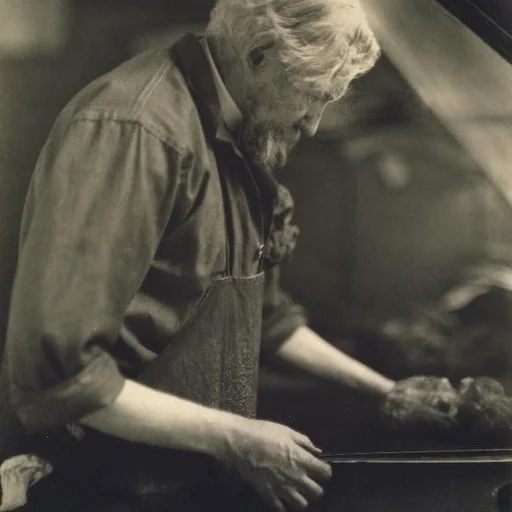
Joseph Pennell (July 4, 1857 – April 23, 1926) was an American draftsman, etcher, lithographer, and illustrator for books and magazines.