Artwork
The Start. I.
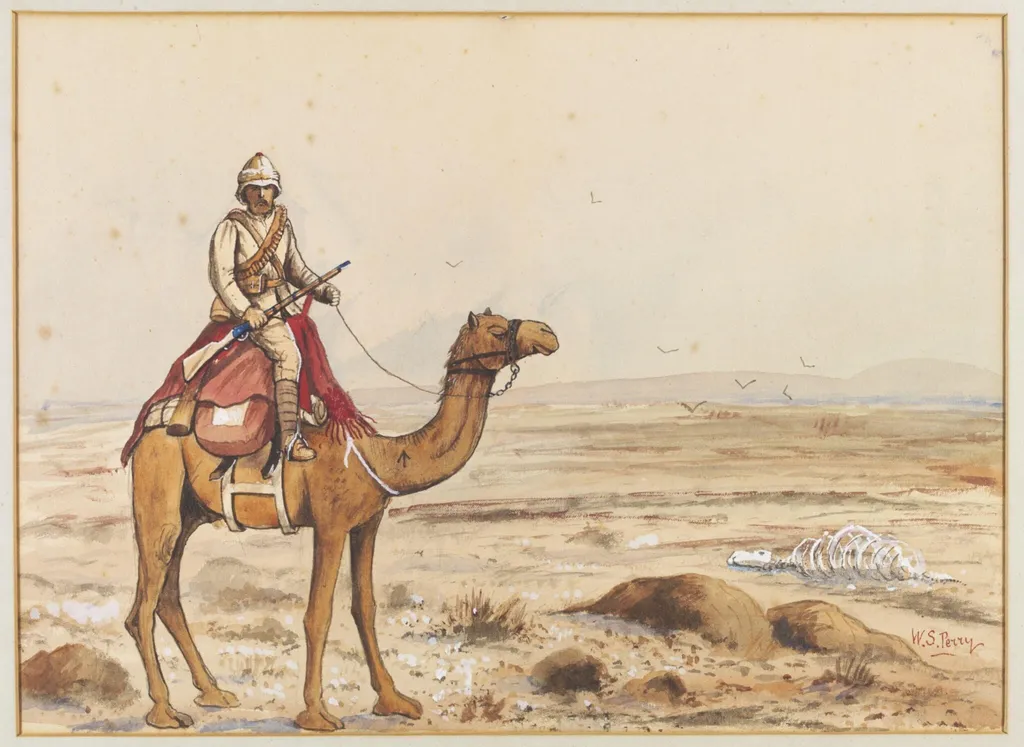
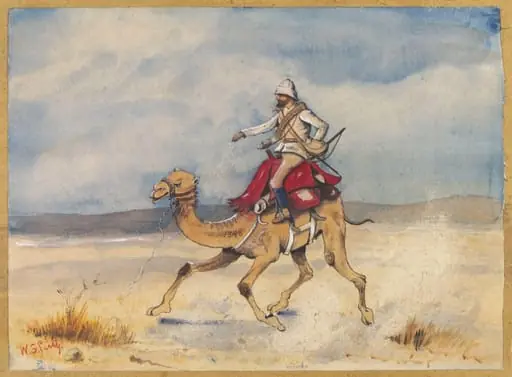
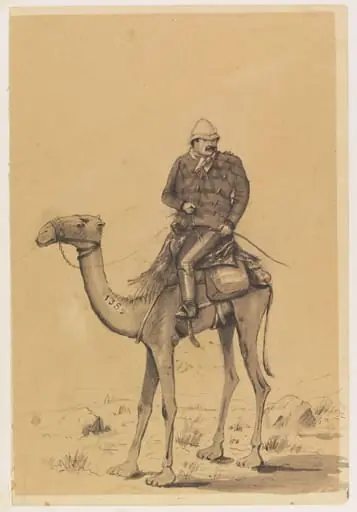
The Start. I. is a watercolor work on paper by the Impressionist artist William S. Perry. It dates from 1885 and is held in the collection of the Victoria and Albert Museum. Created by William S.
About this work
Overview
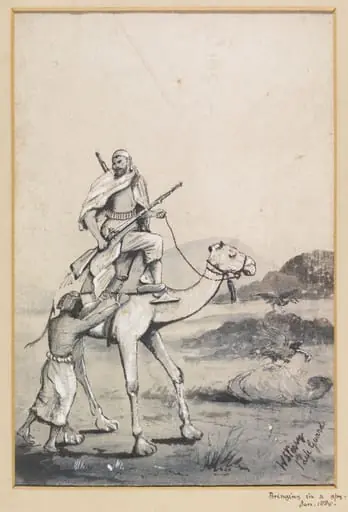
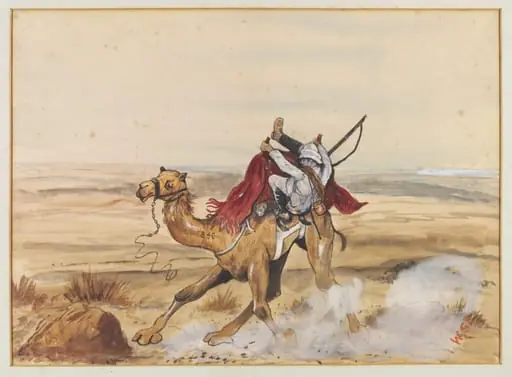
It captures a solitary figure on camelback traversing an arid landscape, part of a broader visual record commissioned to illustrate campaigns in the region.
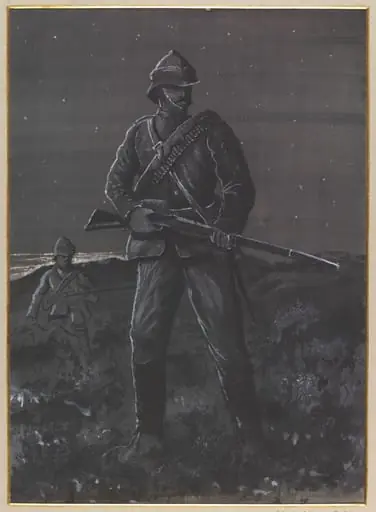
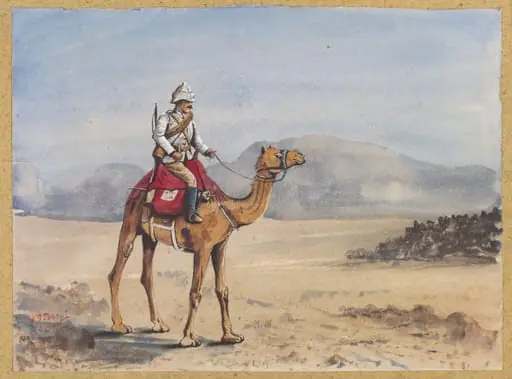
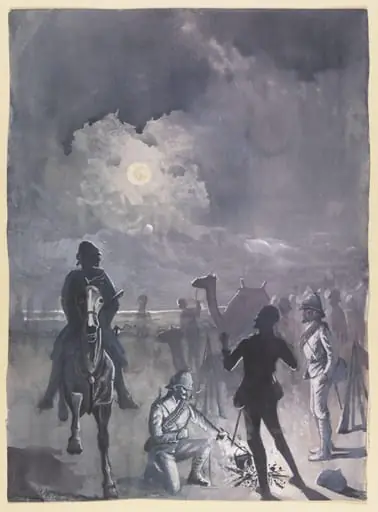
Created by William S. Perry, *The Start. I.* is a watercolour from a series of 27 works documenting British military operations in Egypt during the 1880s. It captures a solitary figure on camelback traversing an arid landscape, part of a broader visual record commissioned to illustrate campaigns in the region. The piece aligns with contemporary illustrated periodicals that disseminated images of imperial military activity to the British public.
Subject & Meaning
The scene depicts a British officer mounted on a camel, dressed in a light uniform with a red sash and helmet, guiding his mount through a barren desert. The calm demeanor of the animal and the solitary figure suggest movement rather than combat, emphasizing logistical travel over battle. The imagery reflects the routine yet demanding nature of desert campaigning, where mobility and endurance defined military success.
Technique & Style
Perry employed loose, fluid brushwork and muted, earth-toned watercolours to convey the heat and stillness of the desert. The rider and camel are rendered with subtle contrast against the pale landscape, their details—such as the red saddle pad and sash—drawing attention without overt drama. The soft edges and minimal detail in the background reinforce the vastness of the environment, prioritizing atmosphere over precision.
History & Provenance
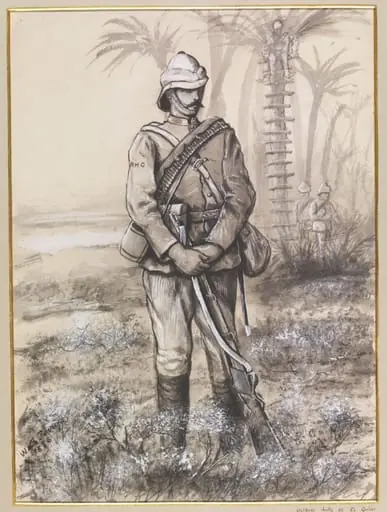
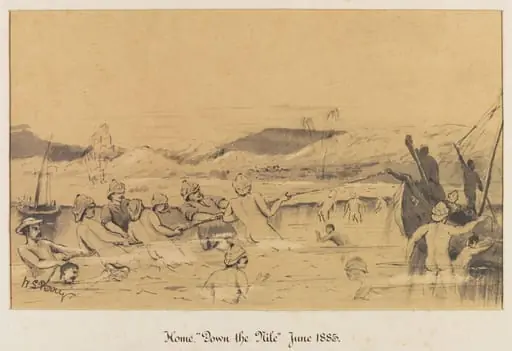
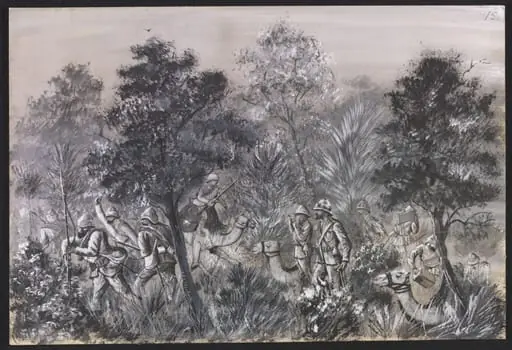
The work belongs to a documented series tied to British military campaigns in Egypt between 1882 and 1885. Perry’s sketches were likely produced for archival or journalistic purposes, paralleling illustrations in *The Illustrated London News* and *The Graphic*. Related works by artists such as Count Gleichen and O. Norie appear in the Searight Archive, suggesting a network of visual documentation maintained by military and civilian observers.
Context
During the 1880s, Britain’s involvement in Egypt was driven by strategic interests in the Suez Canal and regional stability. Visual records like Perry’s watercolours served both as field documentation and public propaganda, shaping perceptions of imperial duty. The desert setting, often romanticized in contemporary media, was here rendered with observational restraint, reflecting the practical realities of military transit.
Legacy
Perry’s series contributes to a broader archive of 19th-century military illustration, offering a quiet counterpoint to more dramatic battle scenes. These works remain valuable for their unembellished depiction of campaign life, preserving details of uniform, equipment, and terrain that inform historical understanding. They are held in institutional collections as primary sources of imperial visual culture.
Artist & collection
Artist
A British watercolour artist active in the 1880s, William S. Perry painted scenes from Egypt’s military outposts in vivid, portable washes. His sheets include Outpost duty at El Gubat. Night. (1886) and Outpost duty at…