Artwork
Too good to last. II.
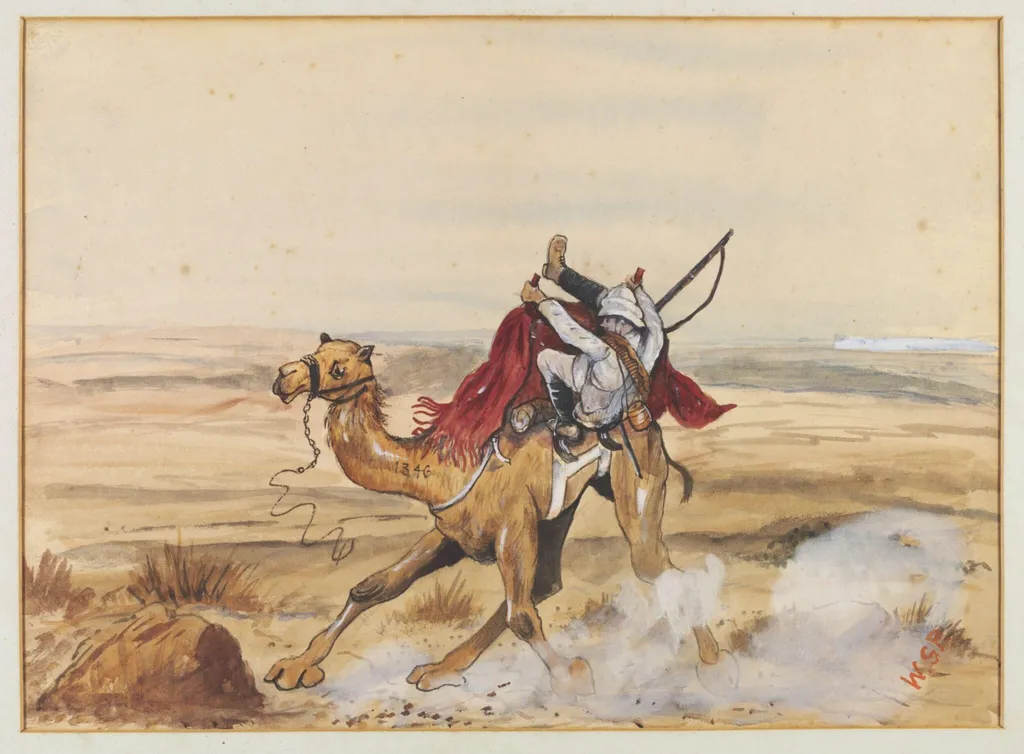
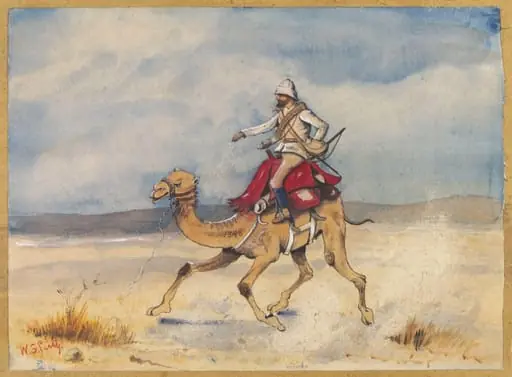
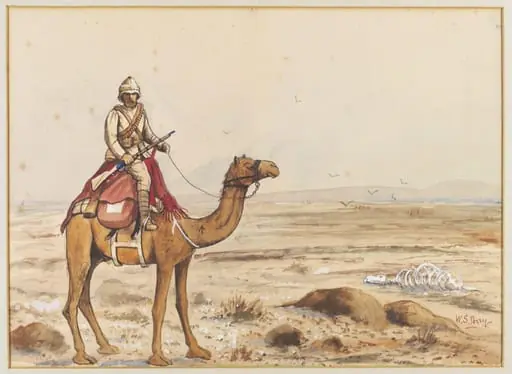
Too good to last. II. is a watercolor work on paper by the Impressionist artist William S. Perry. It dates from 1885 and is held in the collection of the Victoria and Albert Museum. Created in 1885 by William S.
About this work
Overview
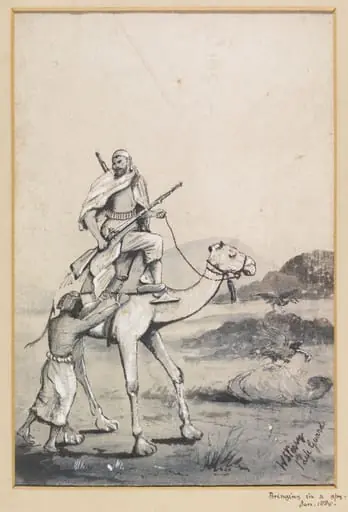
Executed in a loose, fluid style, the piece captures a solitary figure on camelback traversing a barren landscape.
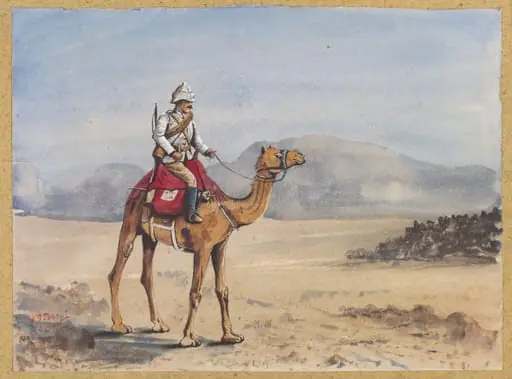
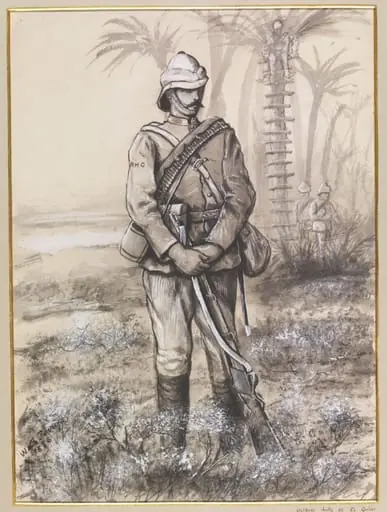
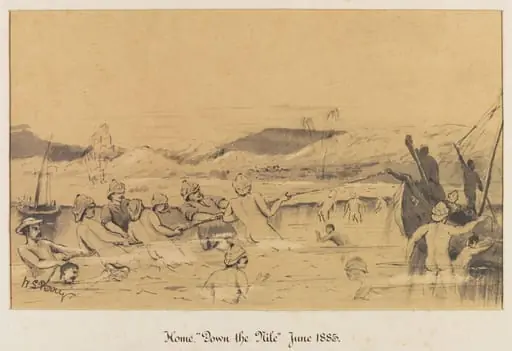
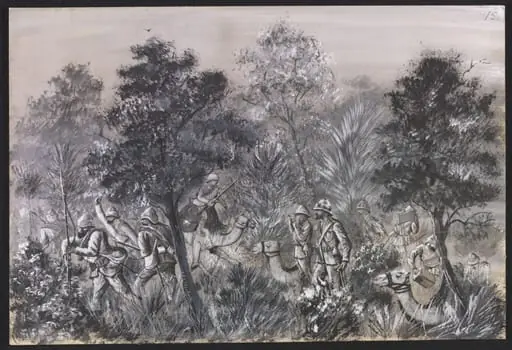
Created in 1885 by William S. Perry, *Too good to last. II.* is a watercolour sketch from a series of 27 works documenting British military operations in Egypt during the 1882 campaign and the subsequent Nile Expedition. Executed in a loose, fluid style, the piece captures a solitary figure on camelback traversing a barren landscape. It functions as a visual record rather than a polished composition, reflecting the artist’s role as an on-site observer during a period of imperial military activity.
Subject & Meaning
The scene portrays a lone Arab rider, clad in white robes and a red cloak, armed with a bow and arrow, mounted on a brown camel draped with a red blanket. Set against an expansive desert with sparse vegetation and rocky outcrops, the image evokes isolation and transience. The title, *Too good to last. II.*, suggests a fleeting moment—perhaps the quiet dignity of desert life amid the disruption of colonial campaigns—offering a contemplative counterpoint to the violence of the broader conflict.
Technique & Style
Perry employed watercolour with rapid, expressive brushwork to convey motion and atmosphere. The washes are layered lightly, allowing the paper’s texture to suggest sand and wind, while the rider and camel are defined with minimal, energetic strokes. There is no heavy chiaroscuro; instead, subtle tonal shifts and the transparency of the medium create a sense of heat and movement. The technique aligns with journalistic sketching practices of the era, prioritizing immediacy over detail.
History & Provenance
The work belongs to a documented series commissioned to visually chronicle British military efforts in Egypt. Perry’s sketches were contemporaneous with illustrated periodicals like *The Graphic* and the *Illustrated London News*, which published similar imagery by artists such as Count Gleichen and O. Norie. While the specific provenance of this piece is not fully recorded, its style and subject place it firmly within the archive of official war documentation produced during the 1880s.
Context
The British campaigns in Egypt during the early 1880s were part of a broader imperial strategy to secure the Suez Canal and suppress nationalist uprisings. Artists like Perry were deployed to visually document these operations for public consumption and military record. The desert setting and indigenous figures reflect colonial fascination with the region, yet Perry’s focus on a solitary rider suggests a quieter, more personal observation amid the larger machinery of conquest.
Legacy
Perry’s watercolours, including *Too good to last. II.*, remain as modest but valuable records of 19th-century military illustration. They offer insight into how war was visually mediated for British audiences—not through grand battle scenes, but through intimate, fleeting moments. Though overshadowed by more celebrated war artists, his work contributes to a broader understanding of how imperial campaigns were witnessed, recorded, and remembered through personal artistic practice.
Artist & collection
Artist
A British watercolour artist active in the 1880s, William S. Perry painted scenes from Egypt’s military outposts in vivid, portable washes. His sheets include Outpost duty at El Gubat. Night. (1886) and Outpost duty at…