Artwork
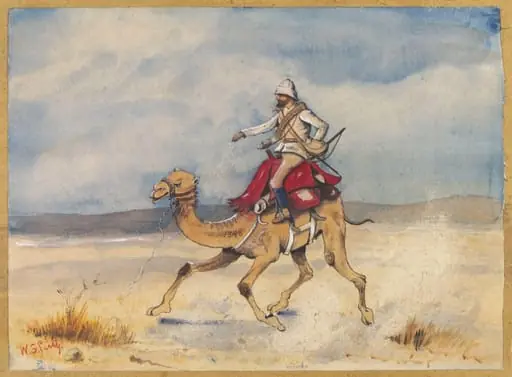
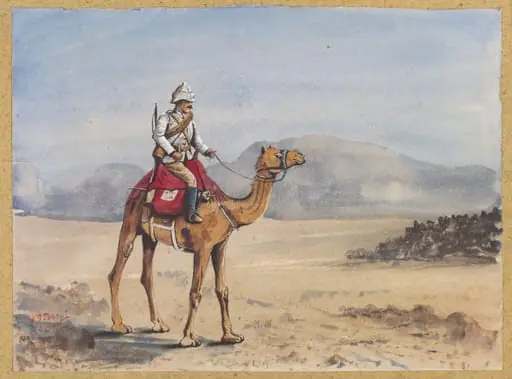
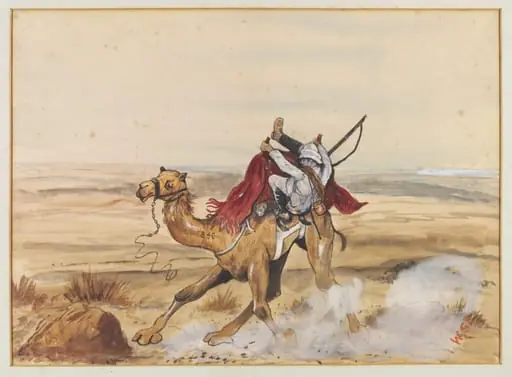
Trooper on A Camel
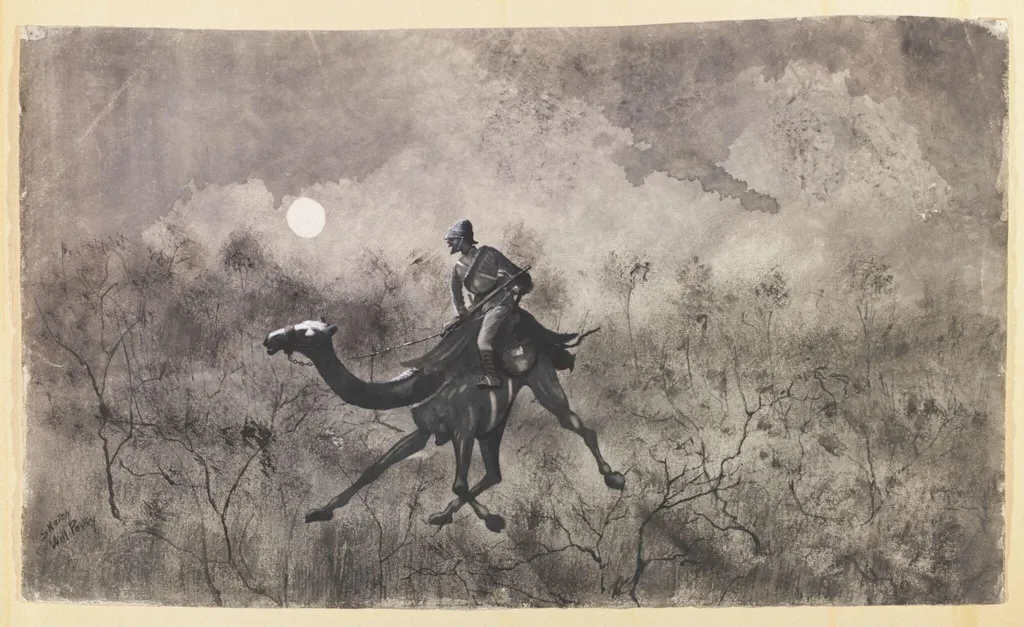
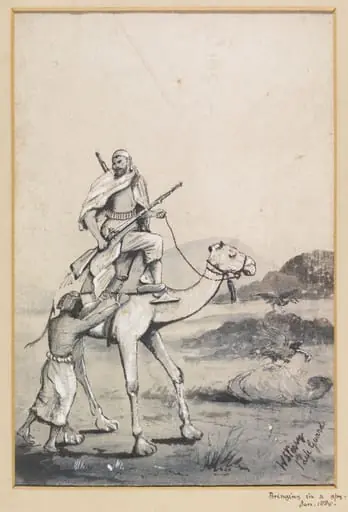
Trooper on A Camel is a watercolor work on paper by the Impressionist artist William S. Perry. It dates from 1885 and is held in the collection of the Victoria and Albert Museum. Created in 1885 by William S.
About this work
Overview
The piece captures a quiet moment of movement rather than combat, emphasizing the harshness of the environment and the isolation of the soldier.
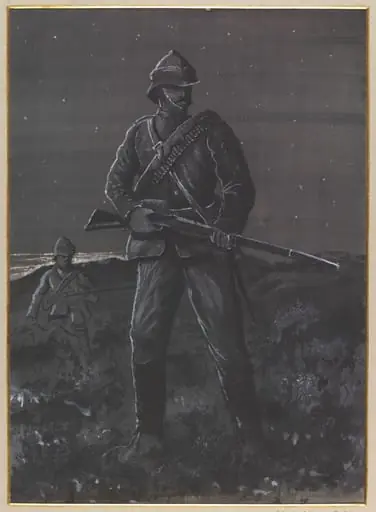
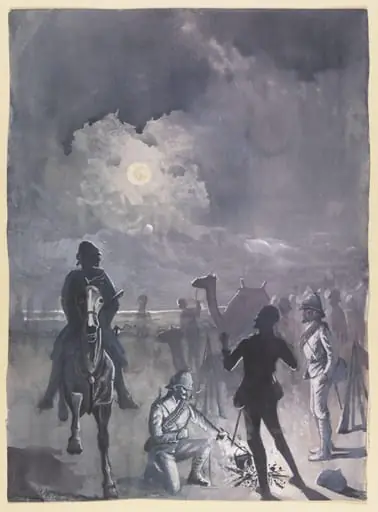
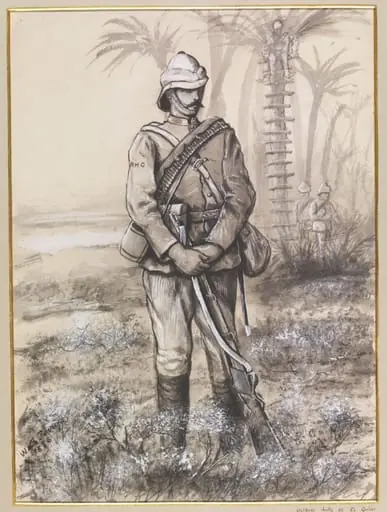
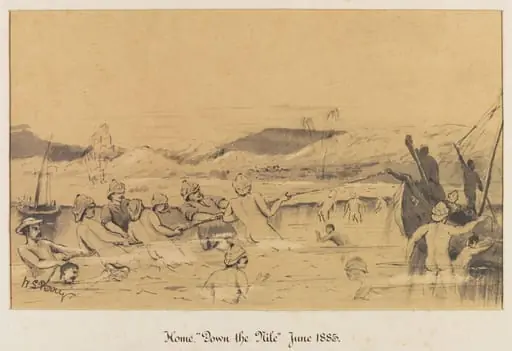
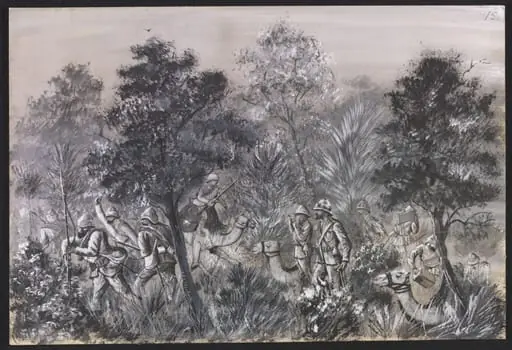
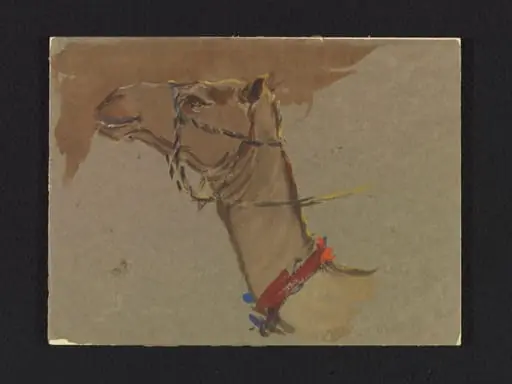
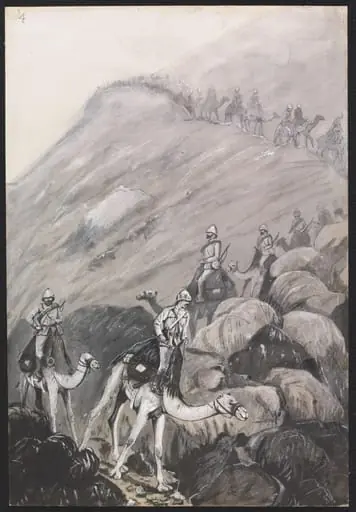
Created in 1885 by William S. Perry, this watercolour depicts a solitary British trooper mounted on a camel amid a barren landscape. It belongs to a series of 27 works documenting military operations in Egypt during the 1880s. The piece captures a quiet moment of movement rather than combat, emphasizing the harshness of the environment and the isolation of the soldier. Its subdued palette and delicate brushwork reflect the conventions of documentary illustration of the period.
Subject & Meaning
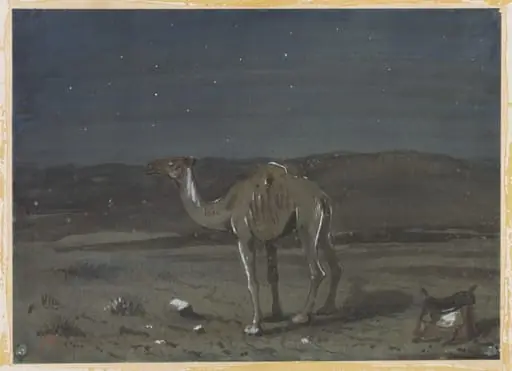
The trooper, clad in a dark helmet and cloak, rides alone through a sparse, arid terrain under a pale, moonlit sky. The scene suggests a nocturnal patrol or reconnaissance mission during the British campaigns in Egypt. The absence of other figures or action underscores the solitude and endurance required in desert warfare. The camel, a practical choice for mobility, becomes a symbol of adaptation to an unforgiving landscape.
Technique & Style
Perry employed watercolour with restrained tonality, using muted grays, browns, and faint greens to evoke the desert’s austerity. Fine, scratchy lines define the sparse vegetation and the camel’s sinewy form, while the sky is rendered with soft washes to suggest moonlight. The composition avoids dramatic contrast, favoring atmospheric subtlety. This approach aligns with journalistic illustration of the time, prioritizing observational accuracy over emotional intensity.
History & Provenance
The work was produced as part of a commissioned series documenting British military actions in Egypt between 1882 and 1885. Such illustrations were often circulated in periodicals like *The Illustrated London News* to inform public perception of imperial campaigns. While the exact provenance of this piece is not fully documented, its style and subject place it firmly within the archival visual culture of late Victorian military reporting.
Context
During the 1880s, Britain’s involvement in Egypt—particularly the suppression of the Urabi Revolt and the Nile Expedition—generated significant public interest. Illustrated newspapers relied on artists like Perry to translate battlefield reports into accessible imagery. These works served both as records and as tools of imperial narrative, shaping how distant conflicts were understood by audiences at home through carefully composed, restrained visuals.
Legacy
Perry’s watercolours contribute to a broader archive of 19th-century military illustration, offering a quiet counterpoint to more sensationalized depictions of empire. Though not widely exhibited today, they remain valuable for their documentary precision and understated aesthetic. Their preservation in institutional collections helps sustain understanding of how visual media mediated colonial encounters during the Victorian era.
Artist & collection
Artist
A British watercolour artist active in the 1880s, William S. Perry painted scenes from Egypt’s military outposts in vivid, portable washes. His sheets include Outpost duty at El Gubat. Night. (1886) and Outpost duty at…