Artwork
Untitled
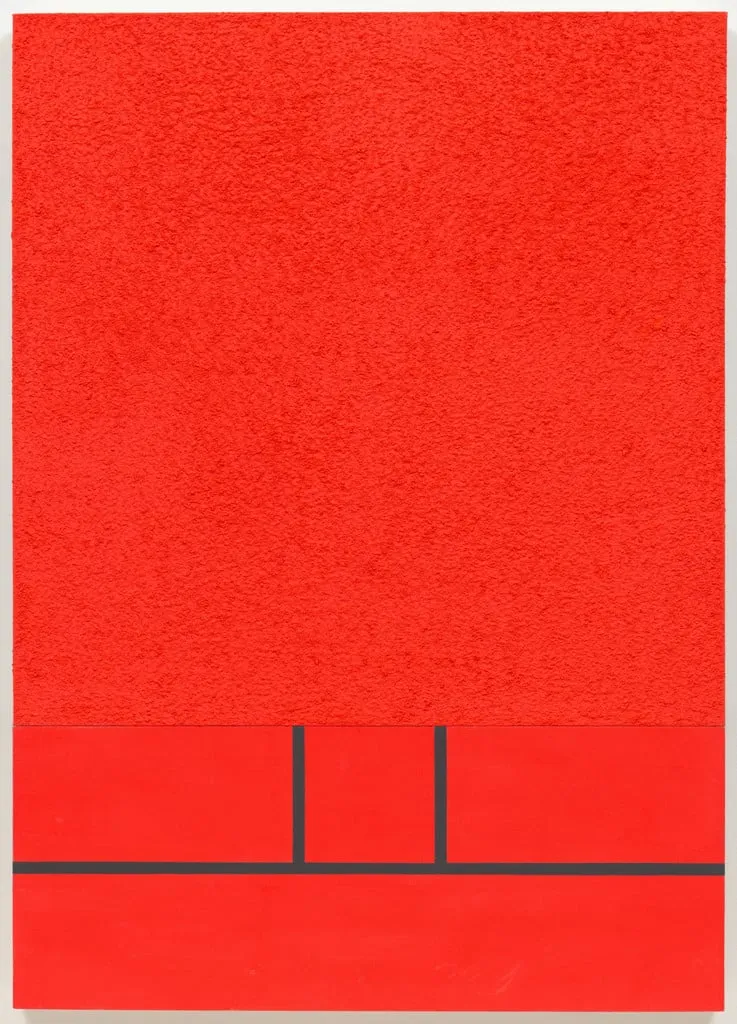
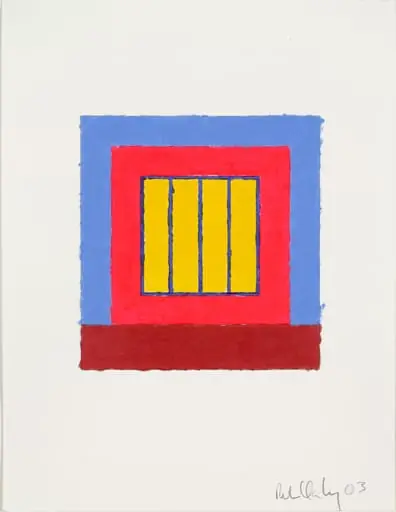
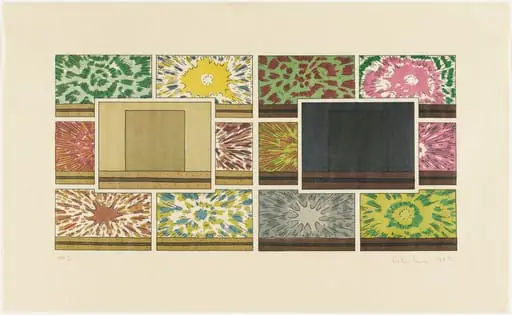
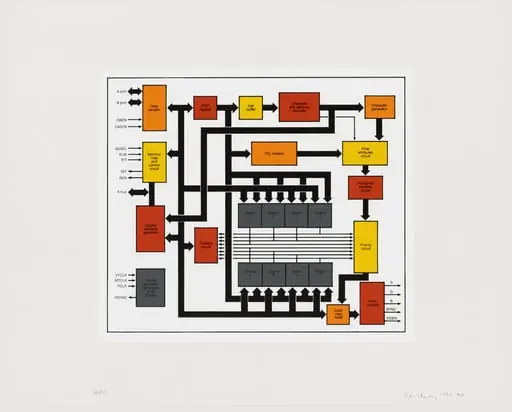
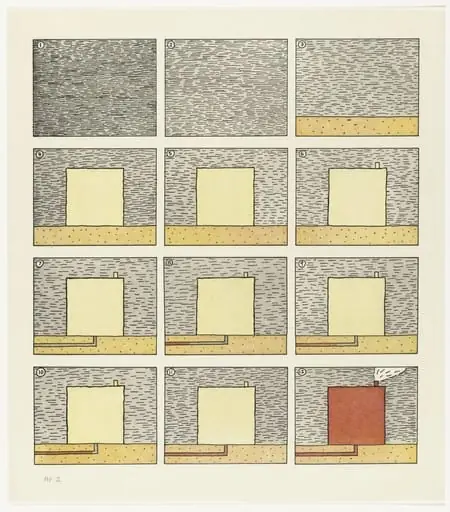
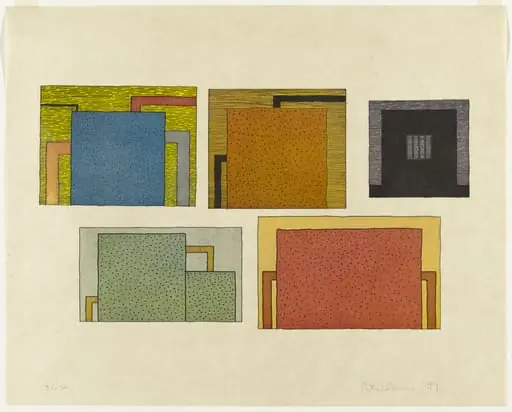
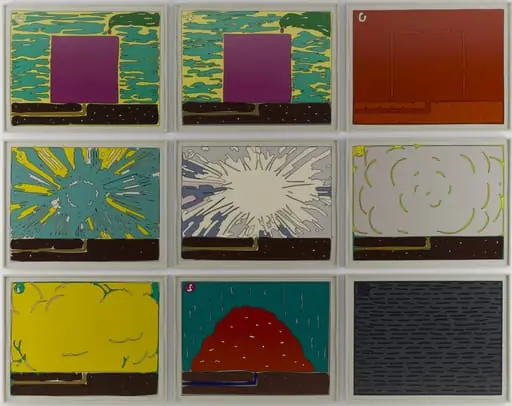
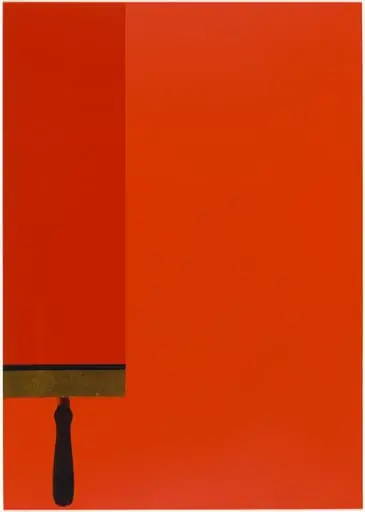
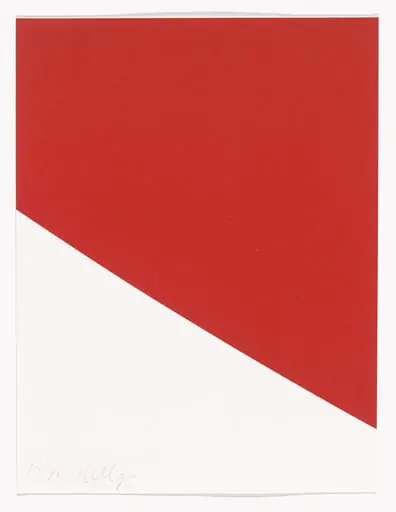
Untitled is an acrylic painting by Peter Halley. It dates from 1982 and is held in the collection of the Museum of Modern Art.
About this work
Overview
It features a dominant red field divided by a horizontal black line, with two vertical black rectangles positioned centrally below.
Created in 1982, this acrylic painting by Peter Halley combines flat, saturated color with geometric forms on canvas. It features a dominant red field divided by a horizontal black line, with two vertical black rectangles positioned centrally below. The use of Day-Glo acrylic and Roll-a-Tex introduces a luminous, slightly textured surface that enhances the work’s visual intensity without adding depth or shadow.
Subject & Meaning
The painting avoids representational imagery, instead presenting abstract architecture-like elements. The rigid lines and enclosed shapes suggest urban structures or institutional boundaries, reflecting Halley’s interest in systems of control and spatial organization. The stark contrast between glowing red and black evokes a sense of containment, as if the forms are markers within a regulated environment.
Technique & Style
Halley applied acrylic and Day-Glo paint with precision, creating uniform, edge-defined shapes. Roll-a-Tex was used to impart a subtle, uniform texture across the surface, adding tactile presence without disrupting the flatness. The absence of shading or perspective reinforces a deliberate detachment from illusionism, aligning the work with post-minimalist and conceptual tendencies of the early 1980s.
History & Provenance
The painting entered The Museum of Modern Art’s collection in the 1980s, shortly after its creation. It is part of a series in which Halley explored the visual language of modern architecture and social infrastructure. Its acquisition reflects the museum’s interest in contemporary artists redefining abstraction through industrial and urban motifs.
Context
Emerging in the early 1980s, Halley’s work responded to the rise of postmodern theory and the visual culture of urban environments. His use of fluorescent colors and grid-like forms paralleled discussions about surveillance, communication networks, and the psychological impact of built space. This piece aligns with a broader movement of artists using abstraction to critique institutional structures.
Legacy
Halley’s approach influenced subsequent generations of painters who merged conceptual frameworks with formal rigor. His integration of industrial materials and symbolic geometry expanded the possibilities of abstract painting beyond purely expressive or formal concerns. This work remains a reference point in discussions about art’s relationship to architecture and social systems.
Artist & collection

Artist
Peter Halley is an American artist and a central figure in the Neo-Conceptualist movement of the 1980s.