Artwork
Miracle of Saint Ignatius of Loyola
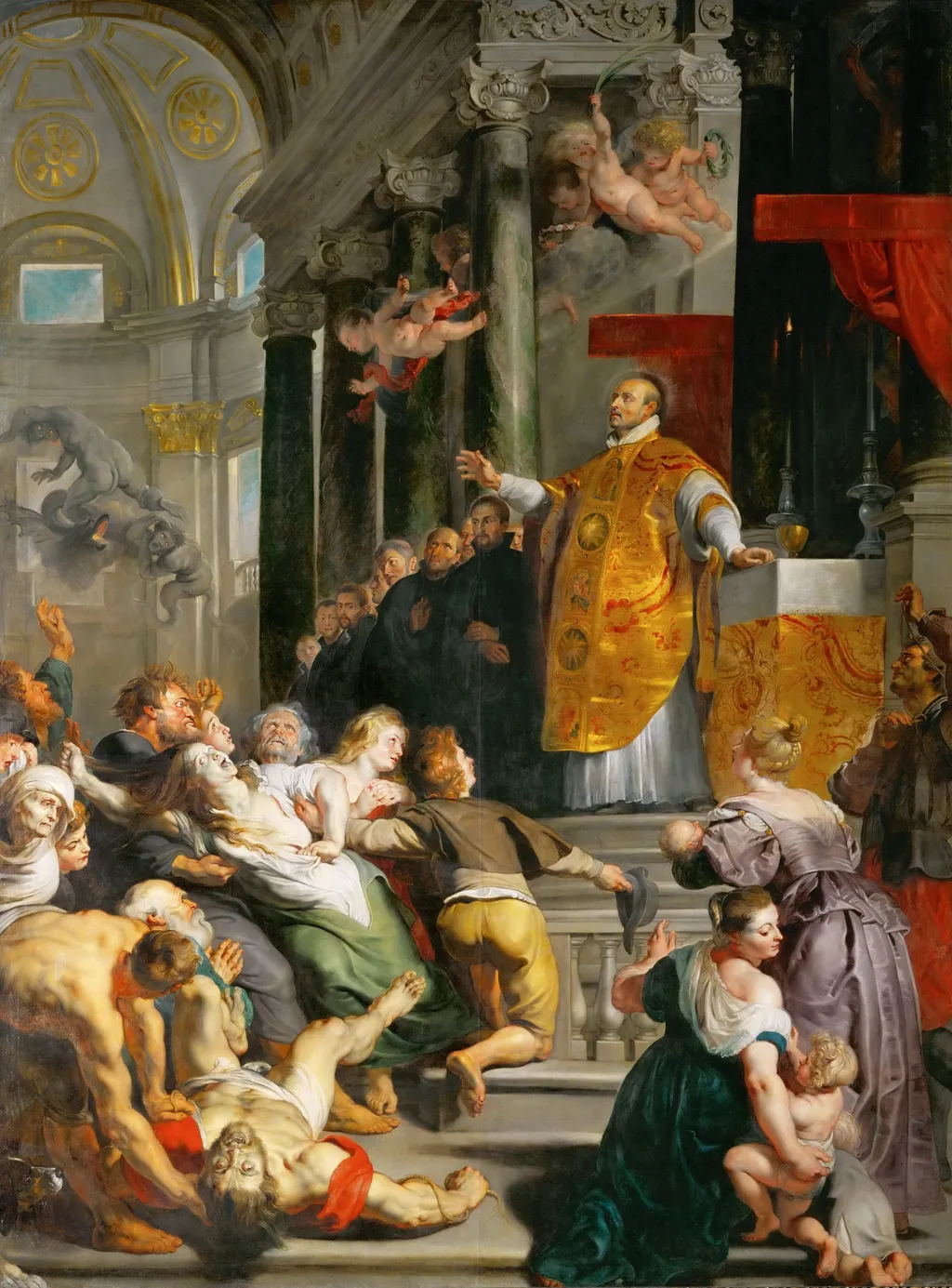
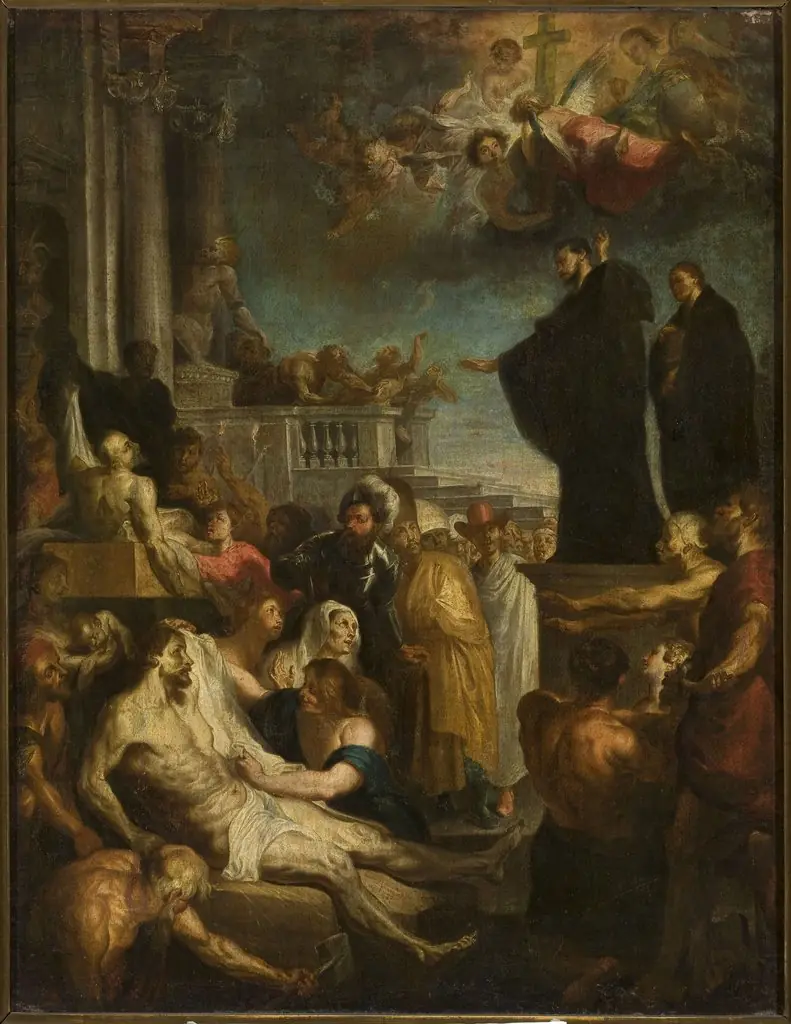
Miracle of Saint Ignatius of Loyola is an oil painting by the Flemish Baroque painting artist Peter Paul Rubens. It dates from 1618 and is held in the collection of the Kunsthistorisches Museum.
About this work
Overview
Peter Paul Rubens painted *Miracle of Saint Ignatius of Loyola* in 1618. Executed in oil on canvas, the work exemplifies the Flemish Baroque style that Rubens helped define. It is part of the religious genre and is currently displayed in Vienna’s Kunsthistorisches Museum.
Subject & Meaning
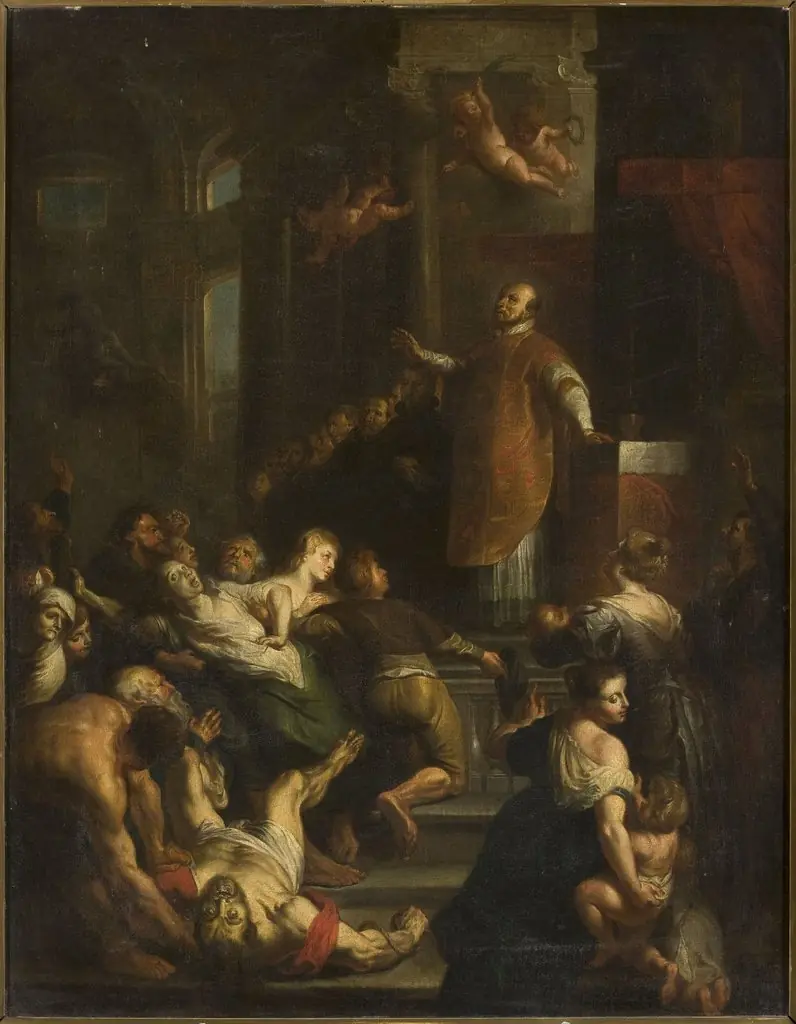
The composition centers on a figure in a vivid yellow habit, elevated on a platform and extending his arms toward a throng of supplicants. Below, worshippers kneel, reach, or lie prostrate, suggesting a miraculous intervention attributed to Saint Ignatius of Loyola. The presence of floating cherubs reinforces the divine nature of the event.
Technique & Style
Rubens employs vigorous movement, rich coloration, and dramatic chiaroscuro to heighten emotional intensity. The crowded interior of an ornate church is rendered with meticulous attention to textiles, facial expressions, and architectural detail, while the swirling gestures of the figures create a sense of kinetic energy typical of Counter‑Reformation art.
History & Provenance
Created during Rubens’s mature period, the painting reflects his diplomatic ties and his engagement with Catholic patronage. After its completion it entered the collection of the Habsburg court and eventually became part of the Kunsthistorisches Museum’s holdings, where it remains on public view.
Own this work as a print
Artist & collection
Artist
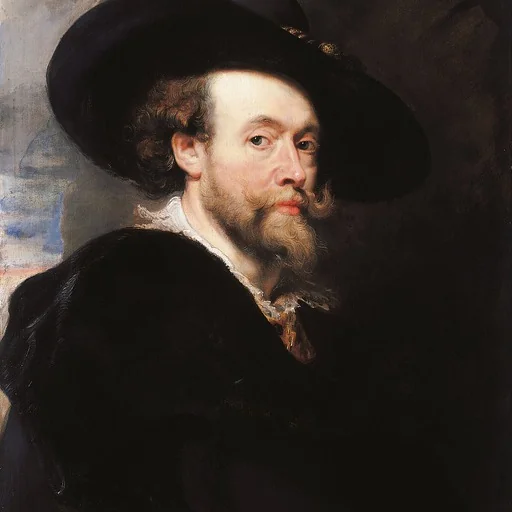
Sir Peter Paul Rubens ( ROO-bənz; Dutch: ; 28 June 1577 – 30 May 1640) was a Flemish artist and diplomat.