Artwork
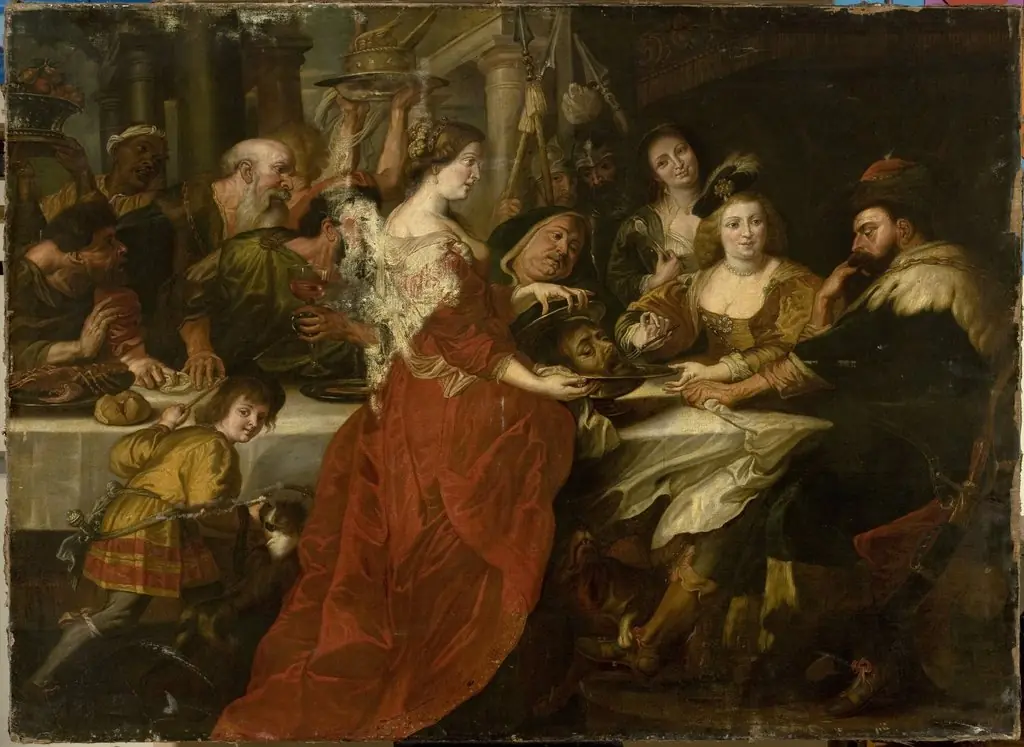
The Feast of Herod
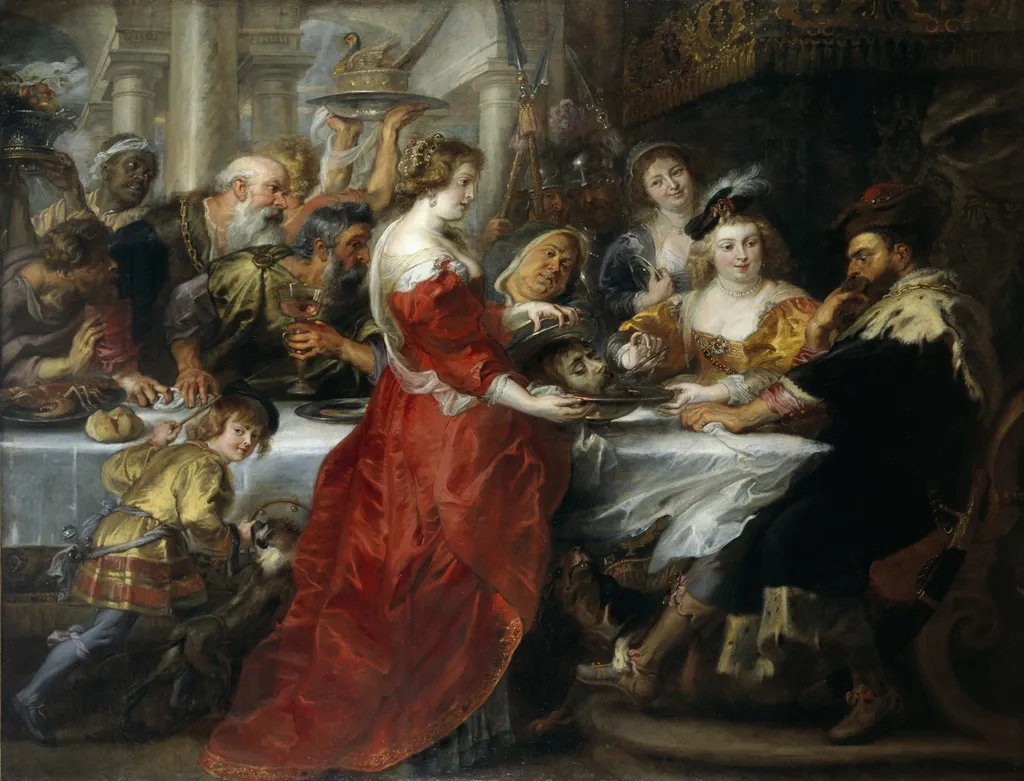
The Feast of Herod is an oil painting by the Flemish Baroque painting artist Peter Paul Rubens. It dates from 1636 and is held in the collection of the National Galleries Scotland.
About this work
The painting is called The Feast of Herod.
It was made by Peter Paul Rubens in 1636.
The artist created this work using oil paint, a common medium at the time.
The painting is now held at the Scottish National Gallery, which acquired it in 1958.
To learn more about the artist's style and techniques, look up Peter Paul Rubens.
Overview
Painted around 1636, The Feast of Herod is an oil on canvas work by Peter Paul Rubens, depicting a dramatic biblical moment from the Gospels.
Painted around 1636, The Feast of Herod is an oil on canvas work by Peter Paul Rubens, depicting a dramatic biblical moment from the Gospels. It is currently held by the National Galleries of Scotland, which acquired the painting in 1958. The composition presents a tense narrative scene with thirteen figures, distinguished by its tightened focus and reduced architectural setting compared to earlier treatments of the subject.
Subject & Meaning
The painting illustrates the moment when Salome, daughter of Herodias, presents the severed head of John the Baptist to her mother and King Herod, fulfilling a promise made after her dance entertained the court. The scene captures shock and moral unease among the guests, contrasting the opulence of the feast with the brutality of the reward. Rubens emphasizes psychological tension over spectacle, underscoring the consequences of vengeance and fleeting pleasure.
Technique & Style
Rubens employs rich, layered oil paint to render textures of fabric, skin, and stone with vivid immediacy. His brushwork varies from fluid to precise, guiding the viewer’s eye through the crowded composition. The figures are dynamically posed, their gestures and expressions conveying emotional intensity. The palette leans toward warm earth tones with accents of crimson, reinforcing the scene’s gravity without overt theatricality.
History & Provenance
The painting was likely commissioned by Gaspar Roomer, a Flemish collector active in Naples, and may have been part of a broader exchange of artistic ideas between the Low Countries and southern Italy. Its arrival in Naples coincided with a shift in local Baroque aesthetics, influencing regional painters through its compositional clarity and emotional realism. The work’s survival as an original, rather than a studio copy, marks it as a significant late production in Rubens’s career.
Context
During the 1630s, Rubens was refining his approach to narrative painting, moving away from the exuberant grandeur of his earlier years toward more restrained, psychologically nuanced scenes. The Feast of Herod reflects this evolution, aligning with contemporary interest in classical restraint and moral storytelling. Its subject, drawn from the New Testament, was a popular theme in Counter-Reformation art, used to illustrate divine justice and the dangers of worldly indulgence.
Legacy
Though multiple versions of the scene exist, often by Rubens’s assistants or followers, this painting is regarded as the most cohesive and mature iteration. Its influence extended beyond Rubens’s immediate circle, contributing to the development of a more introspective Baroque style in southern Italy. The work remains a key example of how religious narratives were rendered with psychological depth in 17th-century European painting.
Own this work as a print
Artist & collection
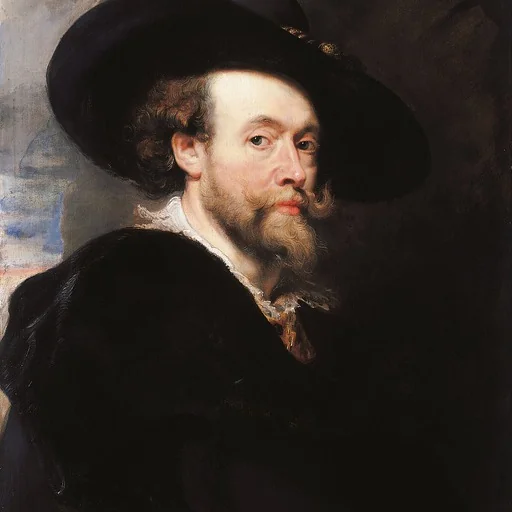
Artist
Sir Peter Paul Rubens ( ROO-bənz; Dutch: ; 28 June 1577 – 30 May 1640) was a Flemish artist and diplomat.