Artwork
Haman begging the mercy of Esther (Esther 7:6-7)
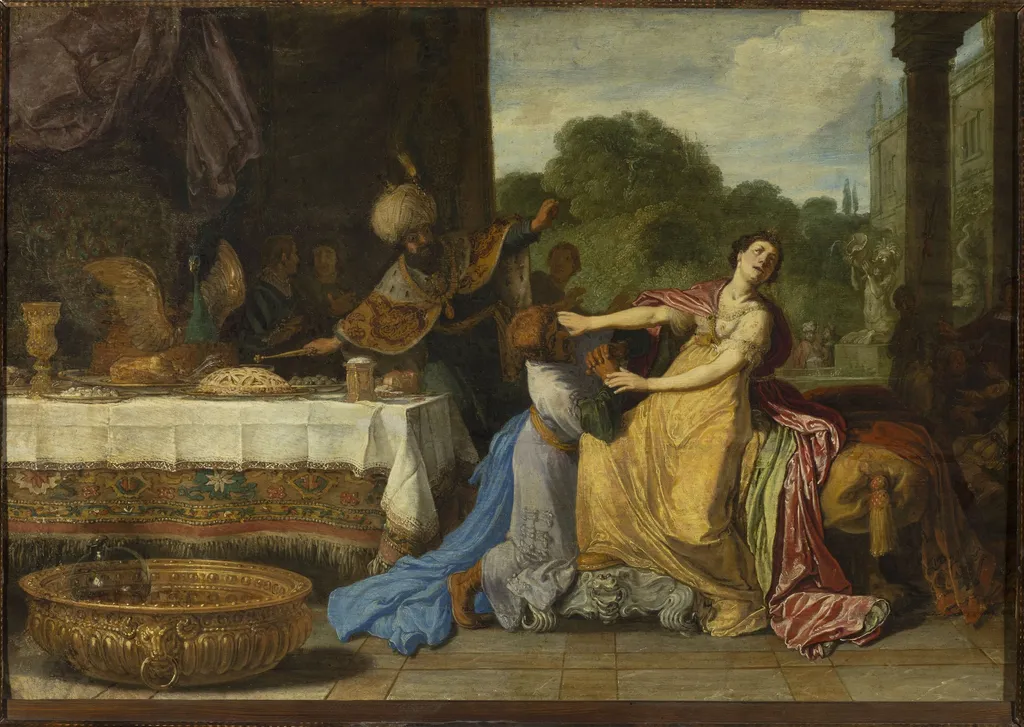
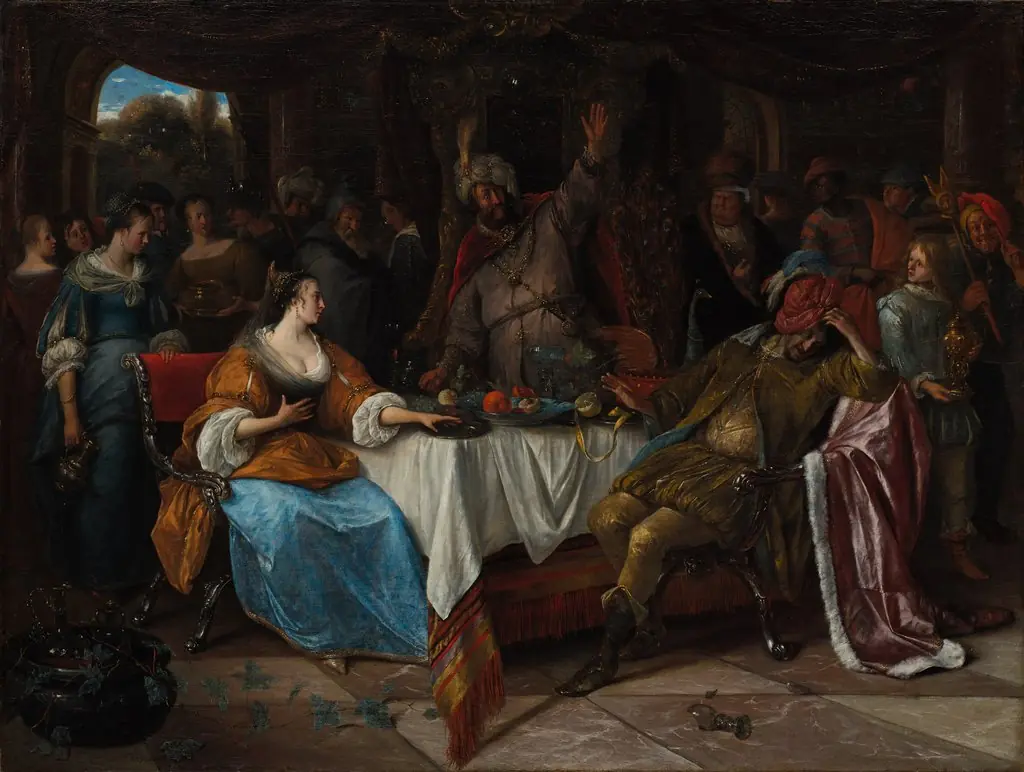
Haman begging the mercy of Esther (Esther 7:6-7) is an oil painting by the Early Baroque Italian artist Pieter Lastman. It dates from 1618 and is held in the collection of the National Museum in Warsaw. Created circa 1618, this oil painting portrays the biblical episode in which Haman implores Queen Esther for clemency.
About this work
Overview
Created circa 1618, this oil painting portrays the biblical episode in which Haman implores Queen Esther for clemency.
Created circa 1618, this oil painting portrays the biblical episode in which Haman implores Queen Esther for clemency. The composition centers on a richly dressed woman seated on a couch, her right arm outstretched and left hand gripping the kneeling man's head, while a blue‑robed figure bows before her. The setting includes a table draped with a white cloth, assorted objects, a turbaned attendant with a sword, and a prominent bowl on the floor, all contributing to a tense, dramatic atmosphere.
Subject & Meaning
The work visualizes the moment from the Book of Esther when Haman, having plotted against the Jews, seeks mercy from Esther, unaware of her influence. The juxtaposition of the queen’s commanding gesture with Haman’s supplicating posture underscores themes of power reversal, divine justice, and the pivotal role of intercession in biblical narratives.
Technique & Style
Executed in oil on canvas, the painting demonstrates early Baroque influences filtered through an Italianate lens, evident in its dramatic lighting, rich coloration, and dynamic arrangement of figures. The artist employs a palette of saturated yellows and deep blues to highlight status, while the detailed rendering of textiles and accessories reflects a meticulous approach to materiality.
History & Provenance
The canvas was produced by the Dutch artist Pieter Lastman, a prominent history painter of the early seventeenth century who later taught Rembrandt and Jan Lievens. After changing hands over the centuries, the painting entered the collection of the National Museum in Warsaw, where it remains on display as part of the museum’s Dutch Baroque holdings.
Context
Lastman's oeuvre frequently engaged with biblical and historical subjects, aligning with the period’s demand for moralizing narratives. This piece exemplifies his capacity to blend Northern European compositional rigor with the emotive vigor of Italian Baroque, situating the work within a broader cross‑cultural artistic exchange that shaped Dutch painting in the early 1600s.
Own this work as a print
Artist & collection
Artist
Pieter Lastman (1583–1633) was a Dutch painter. Lastman is considered important because of his work as a painter of history pieces and because his pupils included Rembrandt and Jan Lievens. In his paintings Lastman paid…

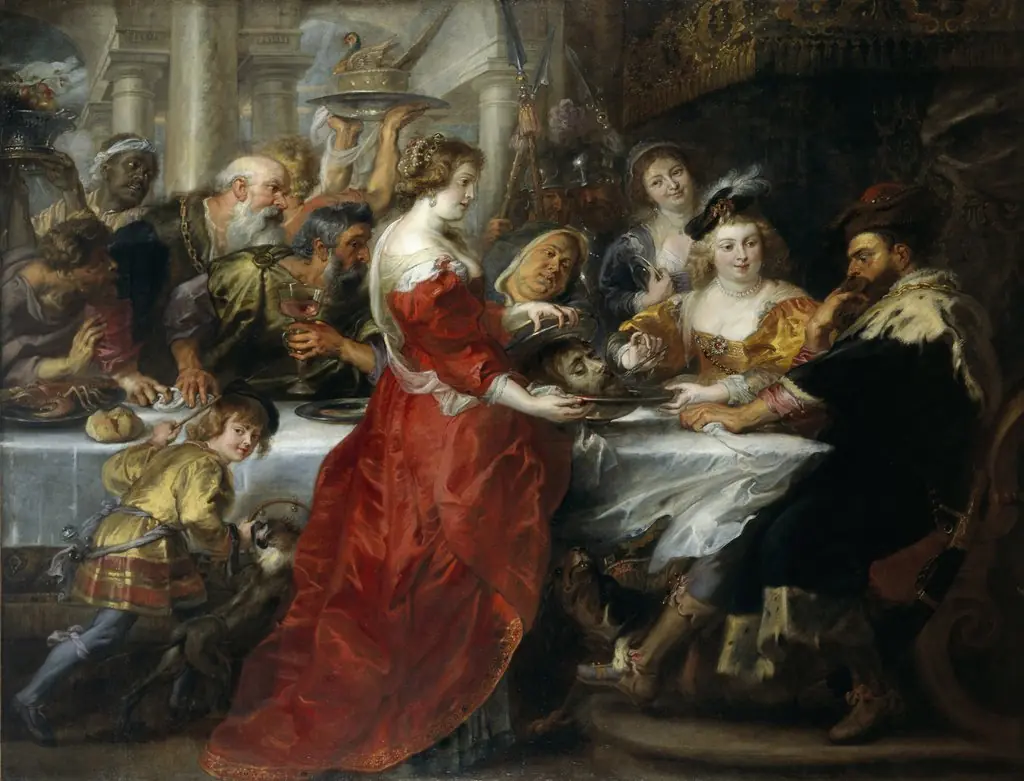 The Feast of Herod
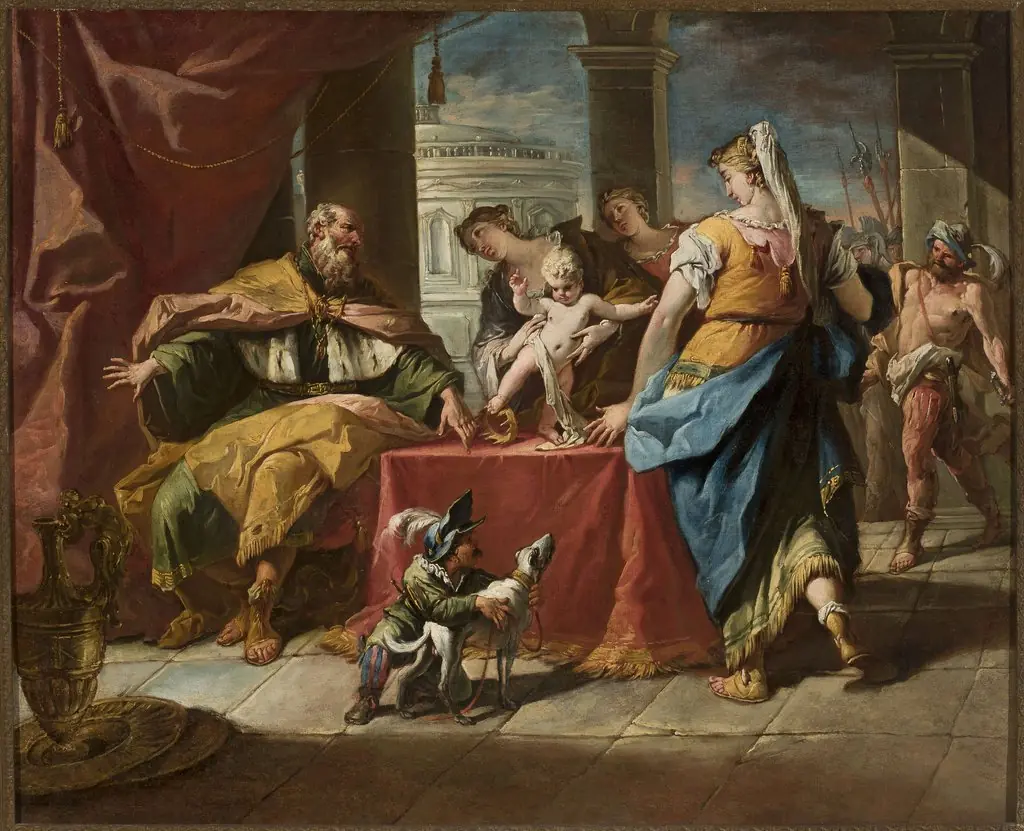 Moses trampling on the Pharaoh’s crown
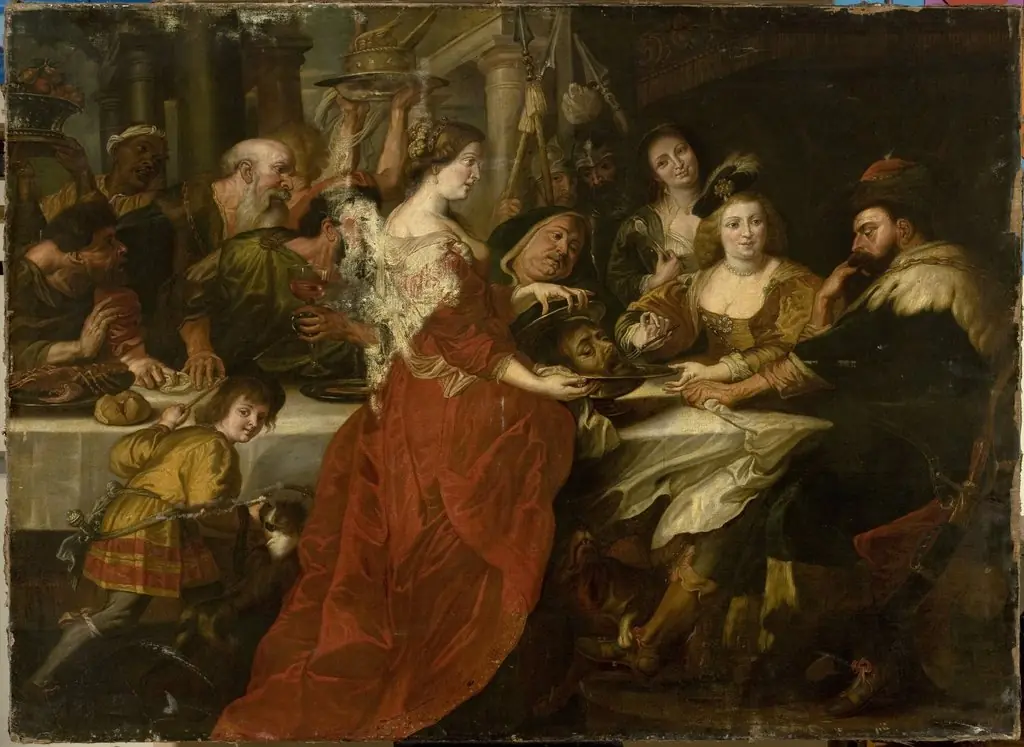 Salome with the head of St. John the Baptist at the banquet (Matthew 14:11; Mark 6:27-28)
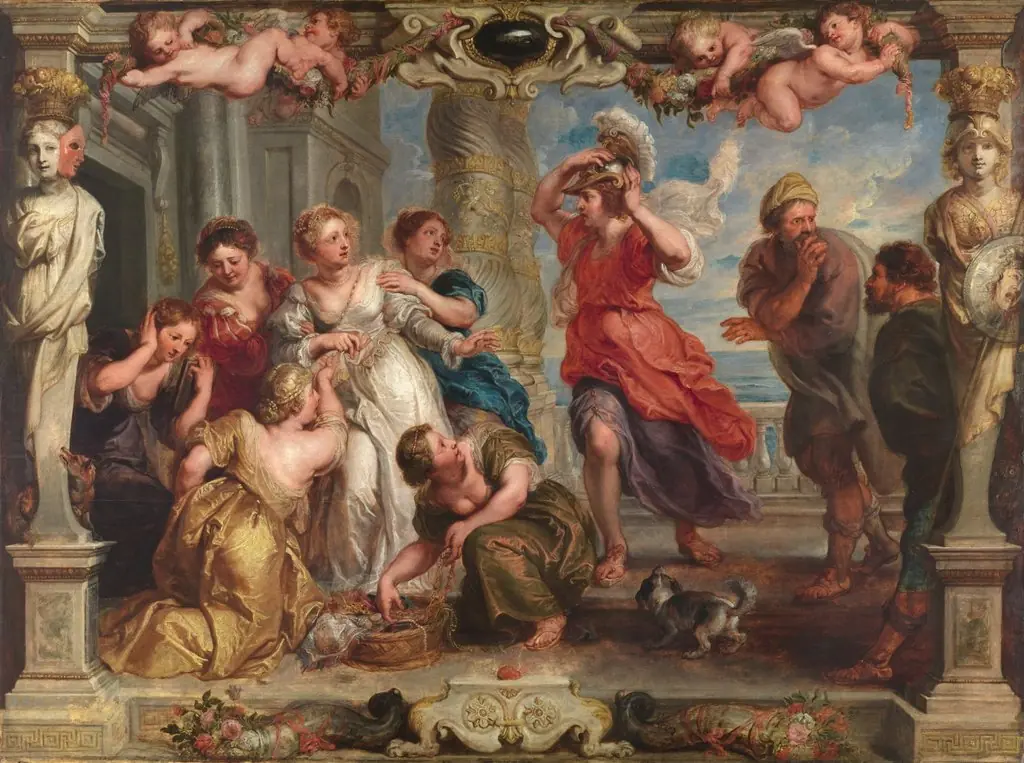 Achilles discovered Among the Daughters of Lycomedes
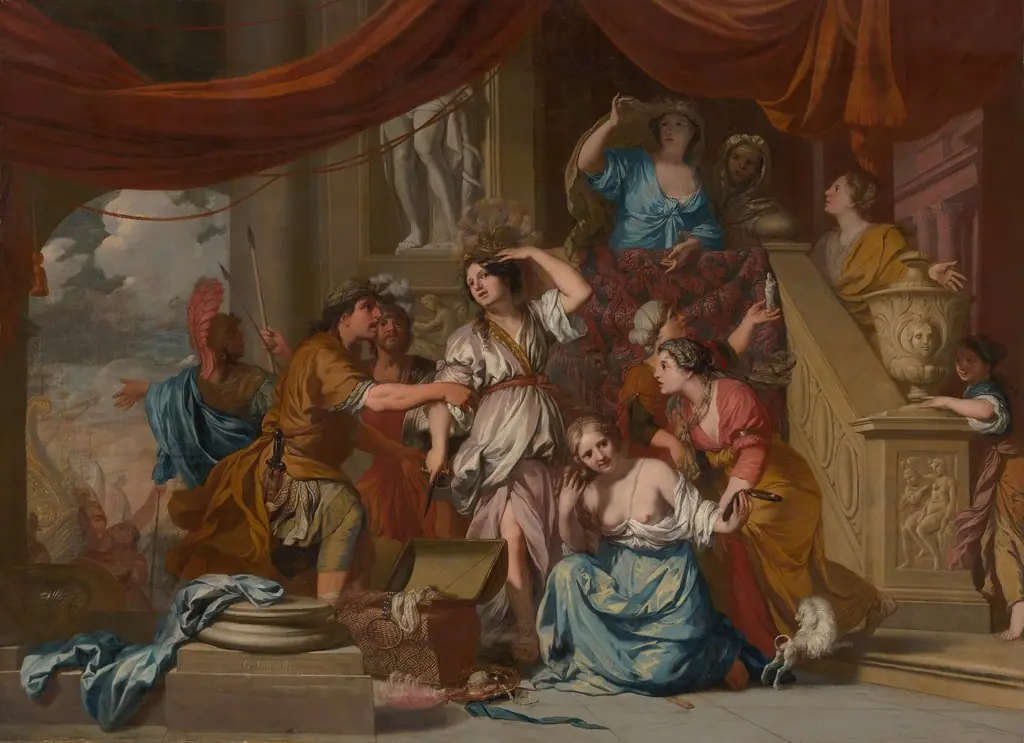 Achilles Discovered among the Daughters of Lycomedes
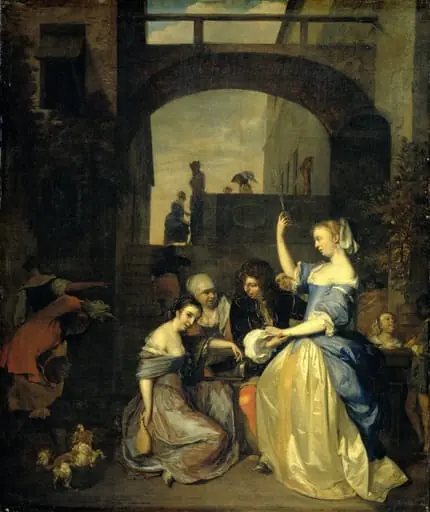 The Prodigal Son
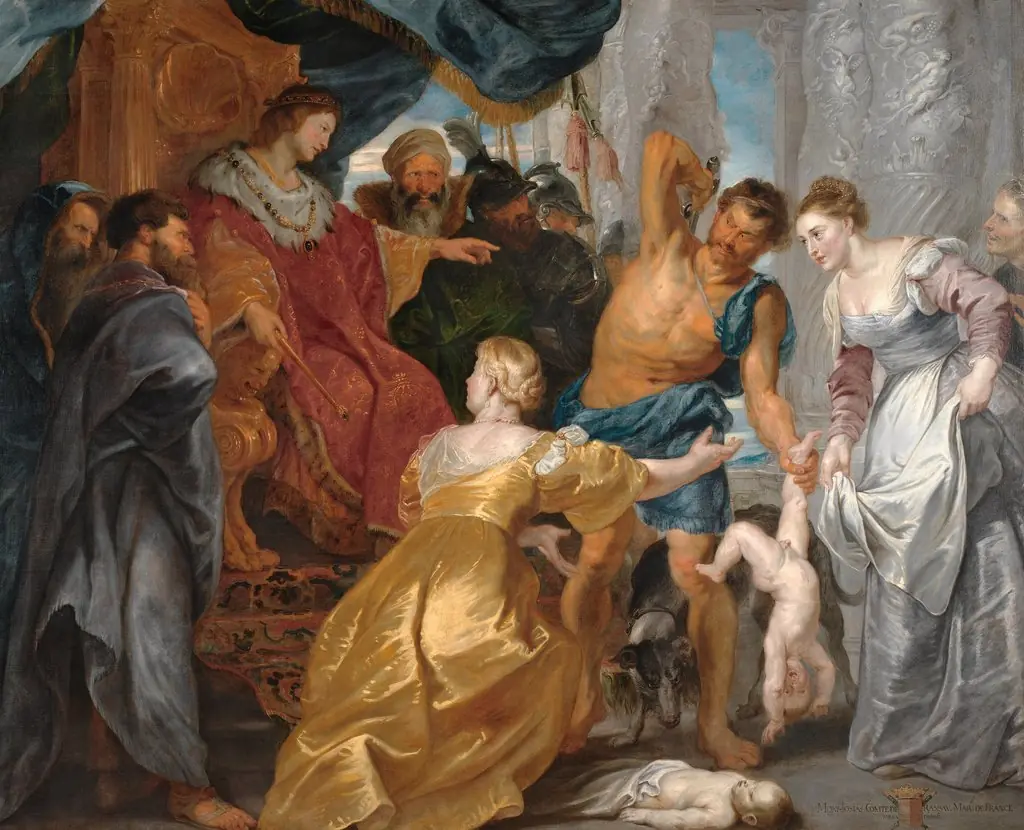 The Judgement of Solomon
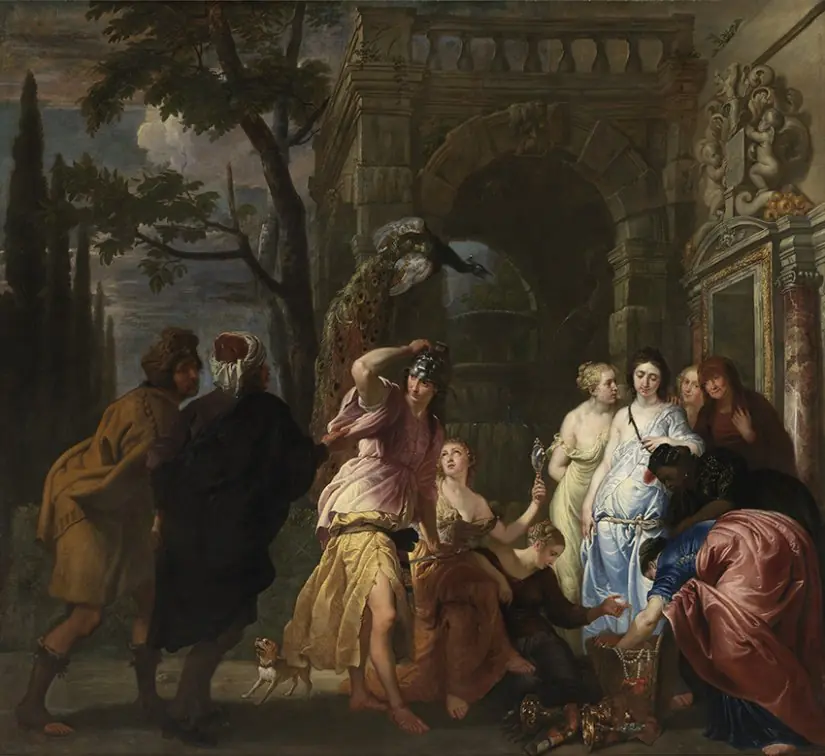 Achilles among the Daughters of Lycomedes
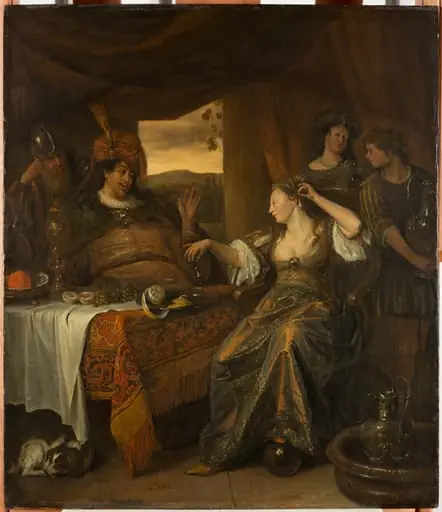 Antonius und Kleopatra
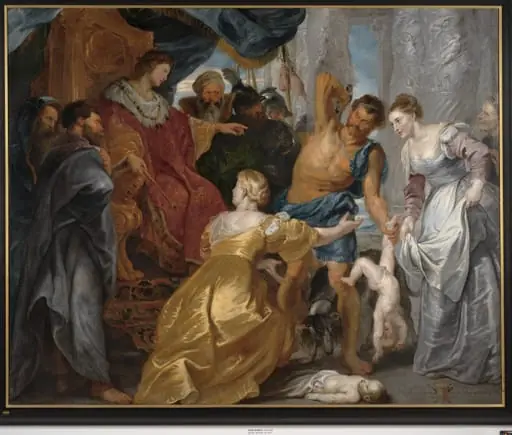 The Judgement of Solomon
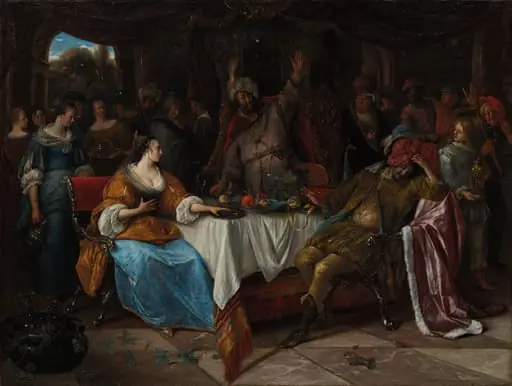 Esther, Ahasuerus, and Haman
 Esther, Ahasuerus, and Haman