Artwork
The Rape of Europa
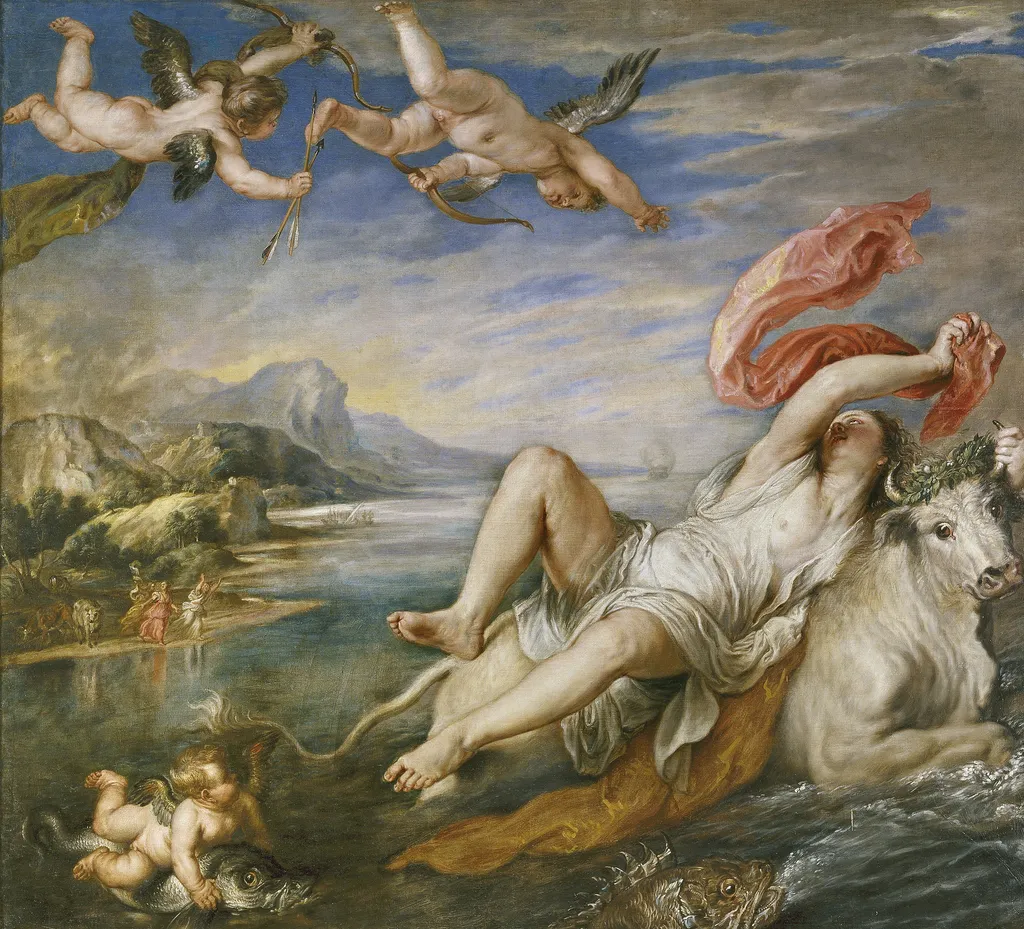
The Rape of Europa is an oil painting by the Flemish Baroque painting artist Peter Paul Rubens. It dates from 1628 and is held in the collection of the Museo del Prado. Created around 1560–1562 by the Venetian painter Titian, this oil on canvas measures roughly 178 by 205 centimetres.
About this work
Overview
Created around 1560–1562 by the Venetian painter Titian, this oil on canvas measures roughly 178 by 205 centimetres. It belongs to the permanent collection of Boston’s Isabella Stewart Gardner Museum. The composition captures a dramatic mythological episode set on a turbulent sea, rendered with a palette of muted earth tones punctuated by vivid reds and luminous highlights.
Subject & Meaning
The work illustrates the ancient tale of Europa’s abduction, where the Phoenician princess clings to a bull that is, in fact, the god Zeus in disguise. She is shown grasping the animal’s flank, her garments billowing as if caught in a wave, while celestial figures hover above and swimmers navigate the foaming water below, suggesting a blend of earthly peril and divine intervention.
Technique & Style
Subtle gradations of colour create atmospheric depth, and the red banner behind the figures functions as a visual sail, amplifying the sense of speed.
Titian employs a rich chiaroscuro, allowing light to strike Europa’s skin and the bull’s fur while deeper shadows define their muscular forms. The brushwork conveys movement: the tension in the animal’s body and the fluttering drapery suggest a swift, forceful motion. Subtle gradations of colour create atmospheric depth, and the red banner behind the figures functions as a visual sail, amplifying the sense of speed.
History & Provenance
After its creation in the early 1560s, the painting entered several private collections before being acquired by the Isabella Stewart Gardner Museum in the early twentieth century. Its presence in the museum’s core holdings reflects the institution’s focus on Renaissance masterpieces and its commitment to preserving works that exemplify Titian’s mature period.
Context
The composition belongs to a series of mythological scenes Titian produced for the Spanish court, where such narratives were prized for their allegorical resonance. The depiction of Europa aligns with contemporary humanist interests in classical antiquity, while the dramatic rendering of the sea and sky anticipates later Baroque explorations of movement and emotion.
Own this work as a print
Artist & collection
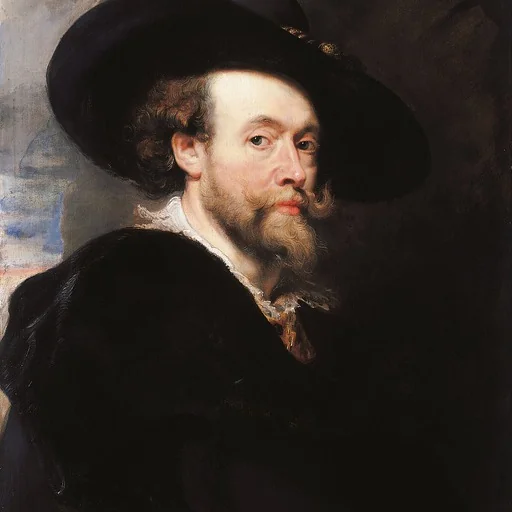
Artist
Sir Peter Paul Rubens ( ROO-bənz; Dutch: ; 28 June 1577 – 30 May 1640) was a Flemish artist and diplomat.