Artwork
Boys Paddling in the Ladegårds Stream (?).Gables In the Background
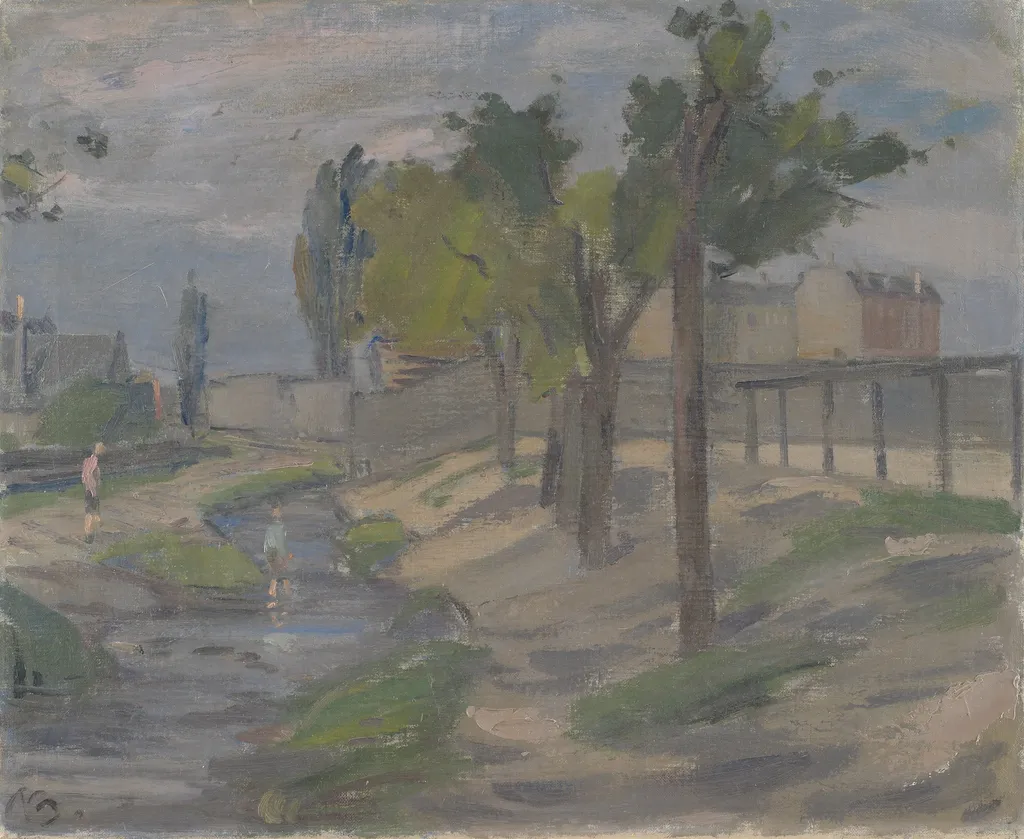
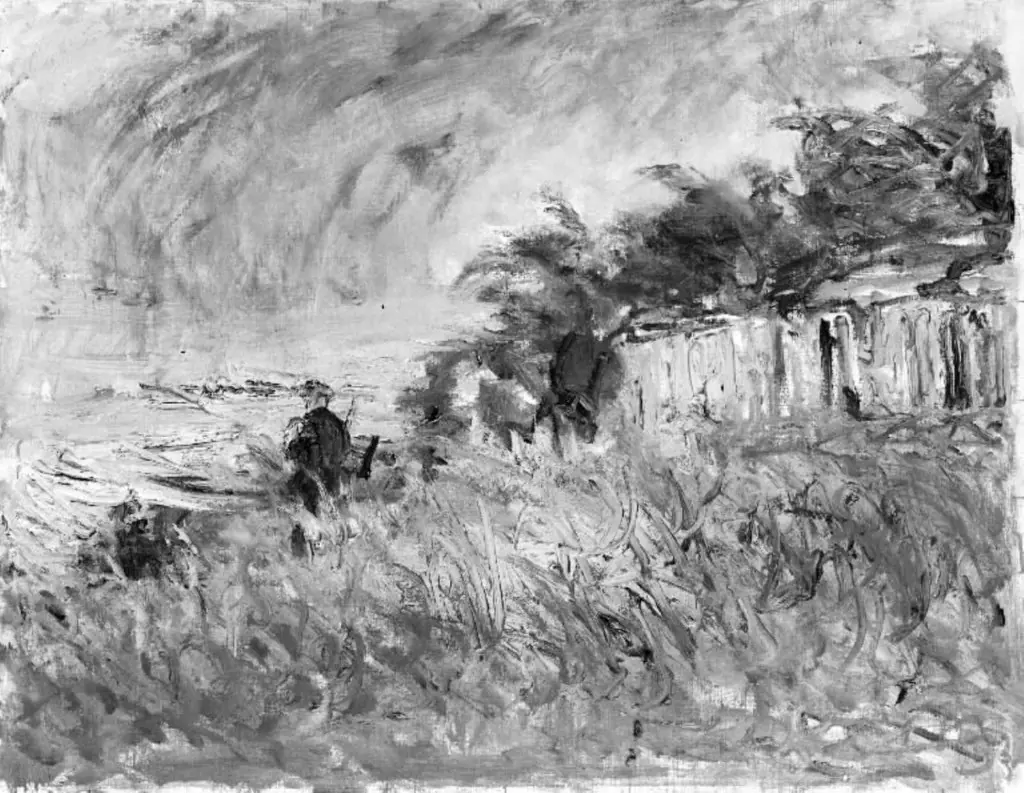
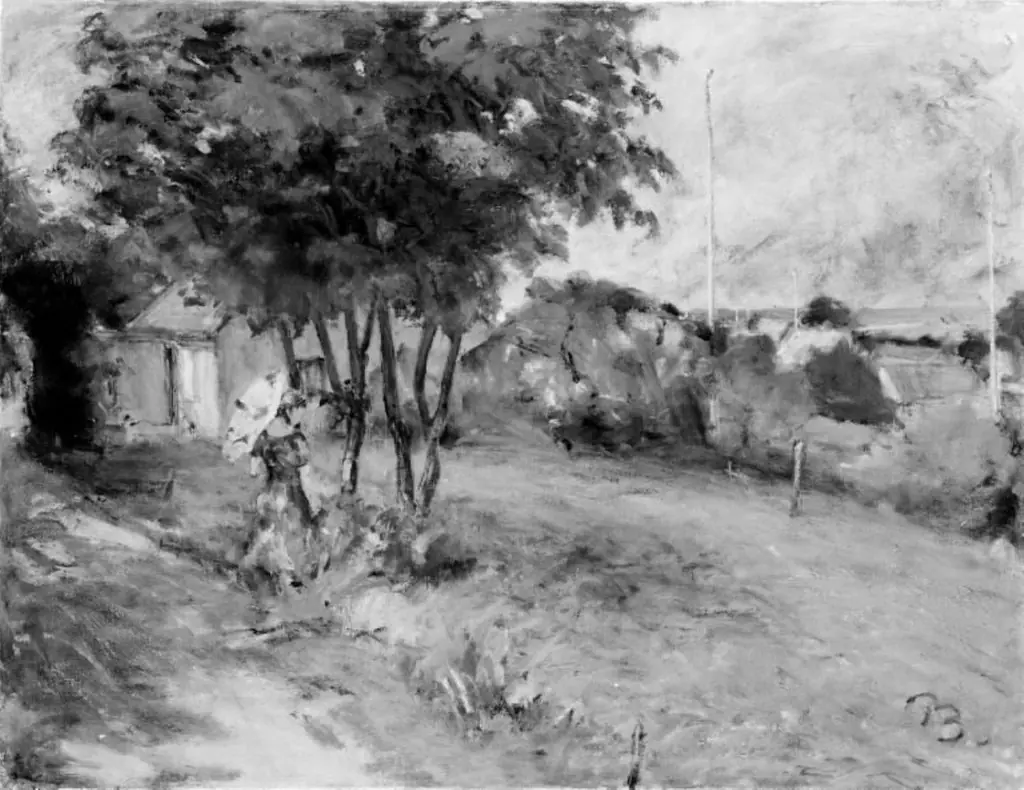
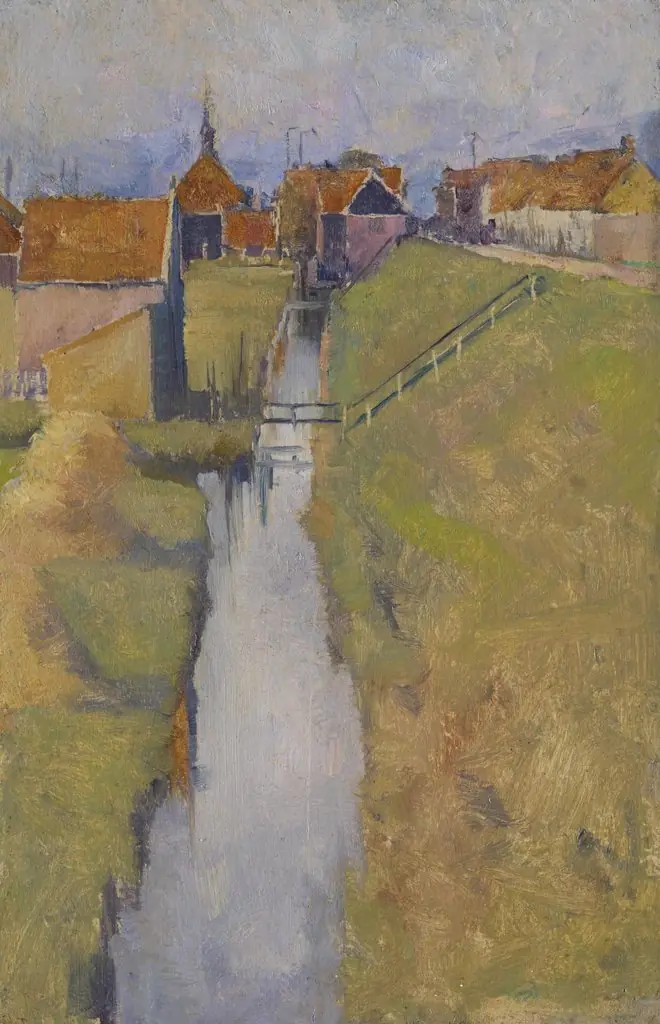
Boys Paddling in the Ladegårds Stream (?).Gables In the Background is an oil painting by Peter Rostrup Bøyesen. It dates from 1927 and is held in the collection of the Statens Museum for Kunst.
About this work
Overview
Painted around 1927 by Peter Rostrup Bøyesen, this oil work captures a quiet moment along the Ladegårds Stream in Copenhagen.
Painted around 1927 by Peter Rostrup Bøyesen, this oil work captures a quiet moment along the Ladegårds Stream in Copenhagen. The scene is unassuming, focusing on two boys engaged in casual play near the water’s edge. The composition is grounded in a subdued natural palette, with soft transitions between earth tones and muted greens. The painting resides in the collection of Statens Museum for Kunst, reflecting its status as a modest yet considered example of early 20th-century Danish landscape painting.
Subject & Meaning
The painting depicts two boys paddling in a shallow stream, their activity unremarkable yet intimate. The presence of distant gables suggests a residential setting, subtly anchoring the scene in everyday urban life. There is no overt narrative or symbolism; the value lies in the quiet observation of childhood leisure within a familiar environment. The work conveys a sense of stillness and routine, characteristic of Bøyesen’s interest in ordinary moments.
Technique & Style
Bøyesen employs loose, fluid brushwork to suggest movement in the water and texture in the foliage, avoiding sharp definition in favor of atmospheric suggestion. The palette is restrained, dominated by earthy greens, browns, and soft grays, enhancing the painting’s tranquil mood. Light is diffused and evenly distributed, creating depth without dramatic contrast. The technique prioritizes mood over detail, aligning with a broader Nordic tendency toward lyrical realism.
History & Provenance
The painting entered the collection of Statens Museum for Kunst shortly after its creation, likely acquired through direct purchase or donation. Its date is estimated based on stylistic comparison with Bøyesen’s other works from the late 1920s. No significant exhibition history or private ownership records are documented prior to its museum acquisition, suggesting it was not widely circulated outside Denmark during the artist’s lifetime.
Context
Created during a period when Danish artists increasingly turned to domestic, everyday subjects, this work reflects a broader cultural shift away from grand historical or romantic themes. Bøyesen’s focus on local landscapes and unposed human activity aligns with contemporaries like Vilhelm Hammershøi and Peder Severin Krøyer, who sought to capture the quiet rhythm of Danish life with sensitivity and restraint.
Legacy
Though not widely known outside Denmark, Bøyesen’s work contributes to a quiet tradition of Nordic realism that values observation over spectacle. This painting remains a representative example of his approach: unadorned, contemplative, and rooted in place. It continues to be studied for its understated composition and its reflection of interwar Danish sensibilities toward nature and daily life.
Own this work as a print
Artist & collection