Artwork
La fiancee du roi de Garbe: L'arbre
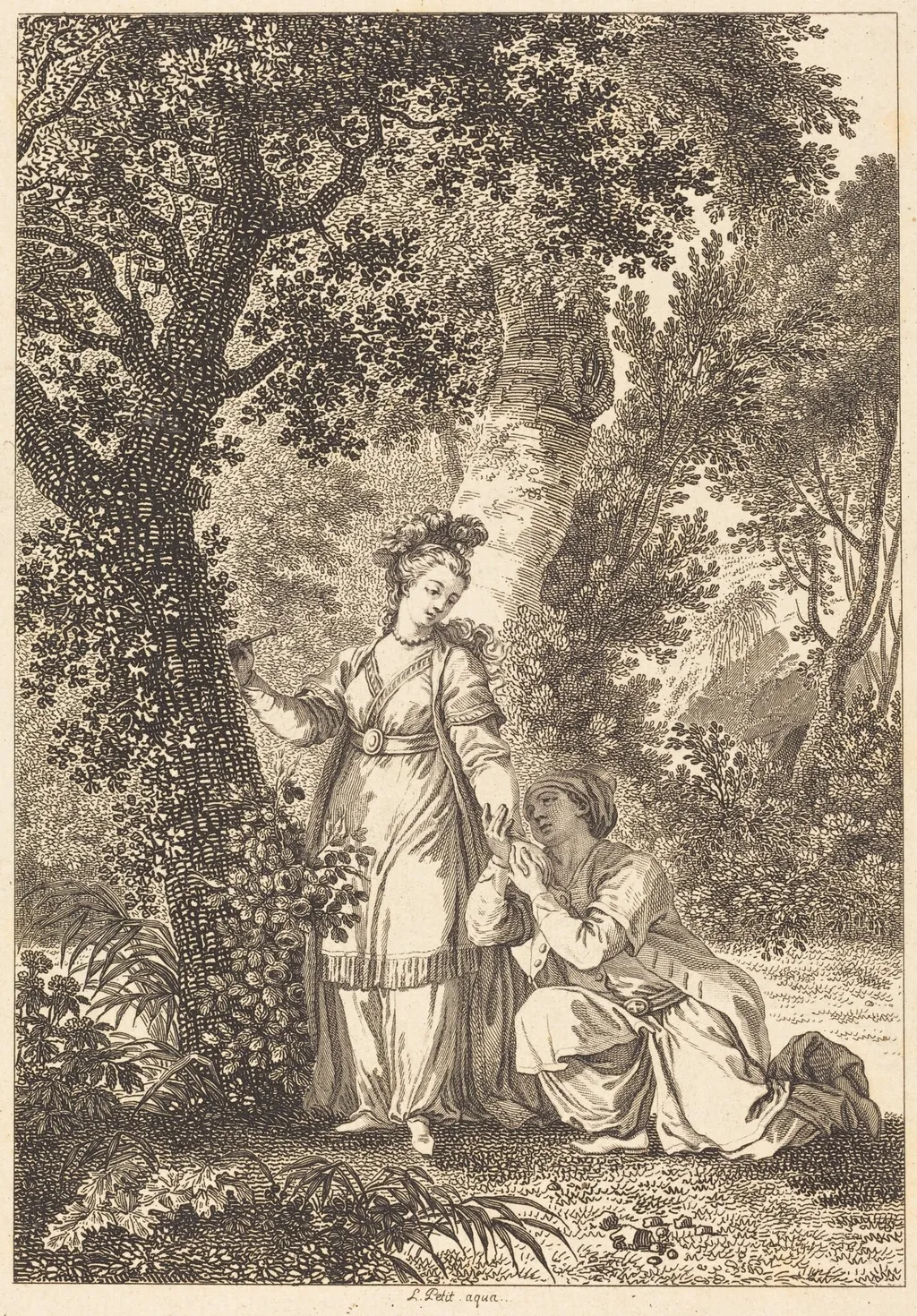
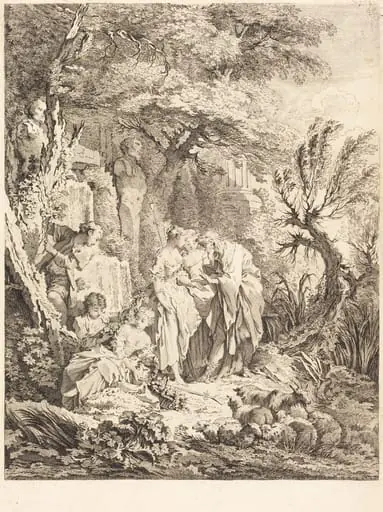
La fiancee du roi de Garbe: L'arbre is an ink print by the Romanticist artist Louis Petit. It dates from 1786 and is held in the collection of the National Gallery of Art.
About this work
Overview
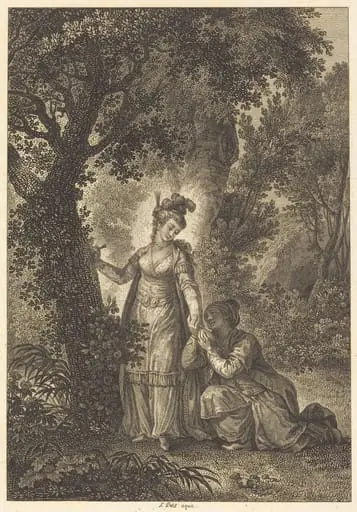
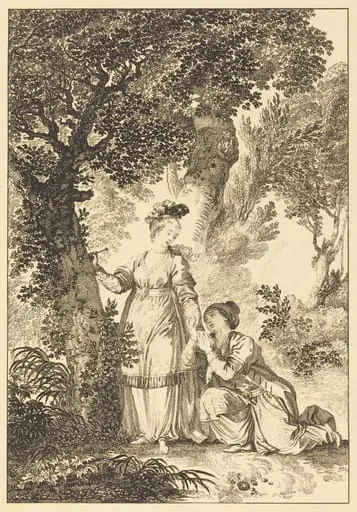
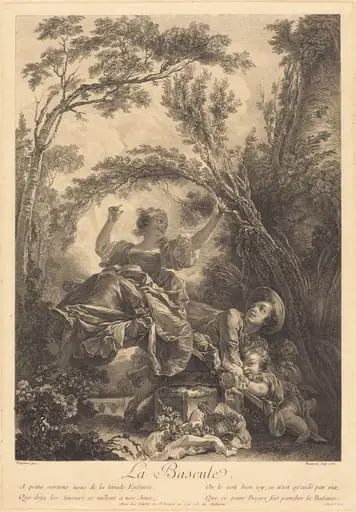
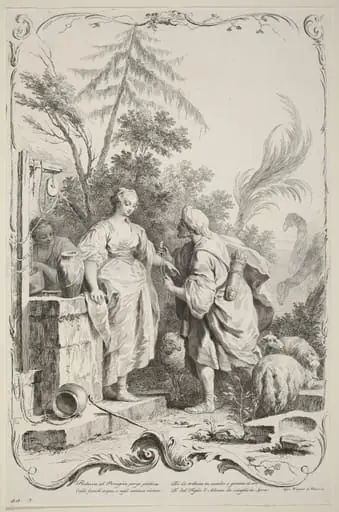
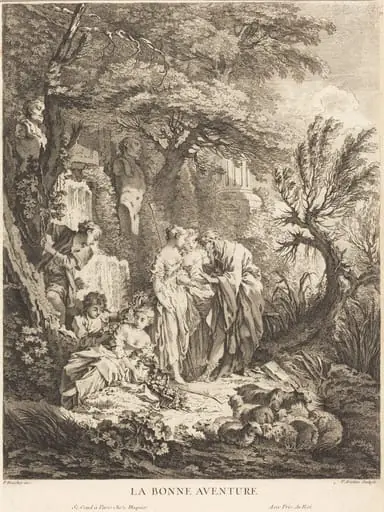
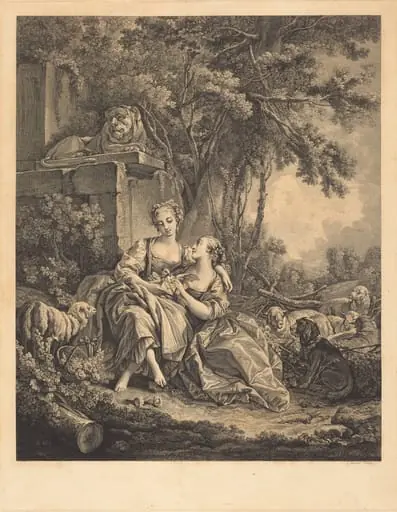
Created in 1786 by Louis Petit, this etching is part of a series titled La fiancée du roi de Garbe. Rendered in monochrome, the print captures a moment of quiet exchange between two figures in a dense woodland. The technique relies on fine lines and stippled shading to suggest texture and volume, characteristic of late 18th-century printmaking traditions in France.
Subject & Meaning
The scene depicts a standing figure offering a leafy branch to a kneeling individual, suggesting a ritual or symbolic gesture. The figures’ flowing garments and the forest setting imply a mythic or allegorical narrative, possibly tied to themes of nature, sovereignty, or initiation. The posture and gaze convey reverence or submission, inviting interpretation without explicit narrative clarity.
Technique & Style
Petit employed etching to achieve intricate detail, using delicate lines and dense stippling to render the forest’s foliage and the folds of clothing. The contrast between the smooth, elongated forms of the figures and the textured, chaotic background creates visual tension. Shading is subtle yet effective, guiding the viewer’s eye through the composition without overt modeling.
History & Provenance
The print was produced during a period of growing interest in literary and mythological subjects within French graphic arts. While little is documented about its early ownership, it appears in collections of 18th-century French prints, suggesting it was circulated among collectors familiar with allegorical imagery and the decorative arts of the ancien régime.
Context
Emerging in the years before the French Revolution, the work reflects a broader cultural fascination with pastoral and symbolic narratives, often used to explore power, nature, and hierarchy. Etching, as a medium, allowed artists to reach wider audiences than painting, making such imagery accessible to educated middle-class collectors interested in literature and allegory.
Legacy
Though not widely reproduced in modern scholarship, the print remains an example of how 18th-century printmakers translated literary themes into visual form. Its delicate execution and enigmatic subject matter contribute to a body of work that bridges the decorative and the narrative, offering insight into the symbolic language of pre-revolutionary French visual culture.
Artist & collection