Artwork
L'automne
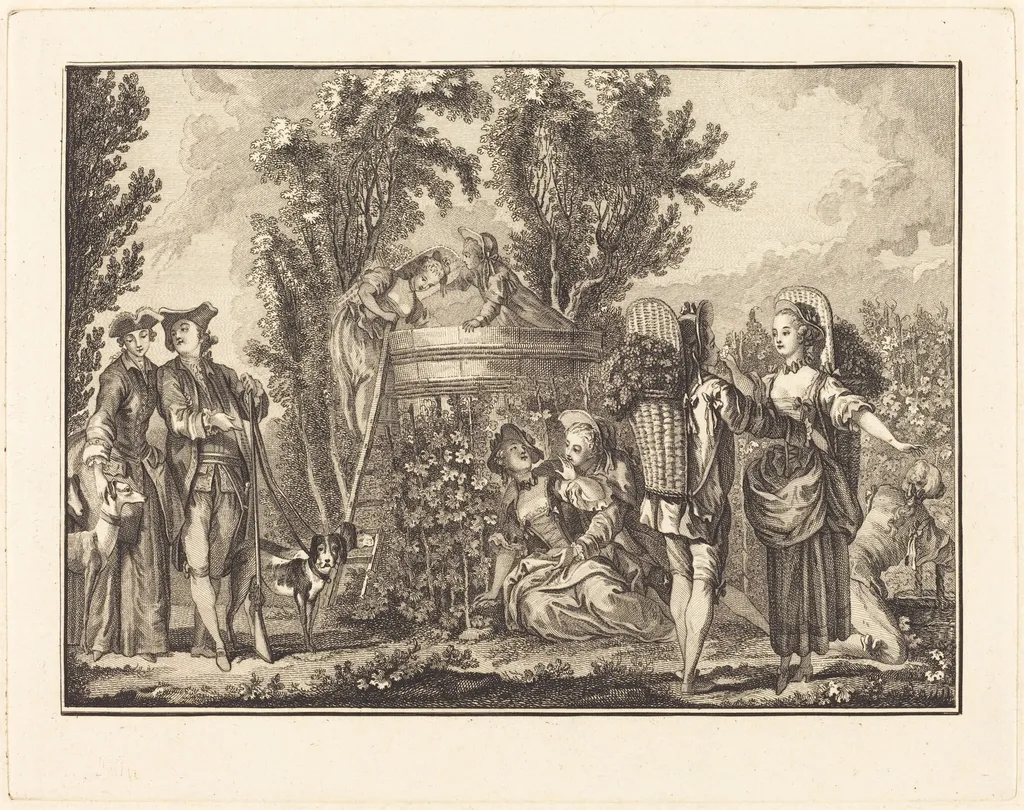
L'automne is an ink print by the Baroque artist Joseph de Longueil. It dates from 1761 and is held in the collection of the National Gallery of Art.
About this work
Overview
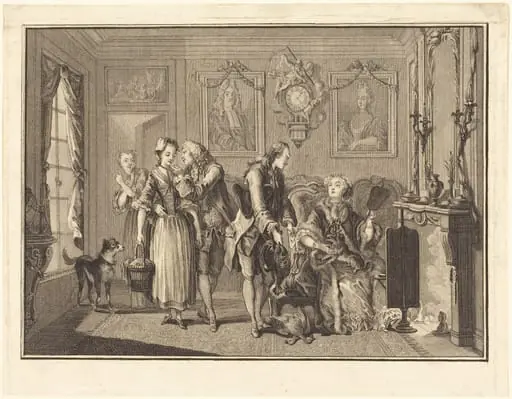
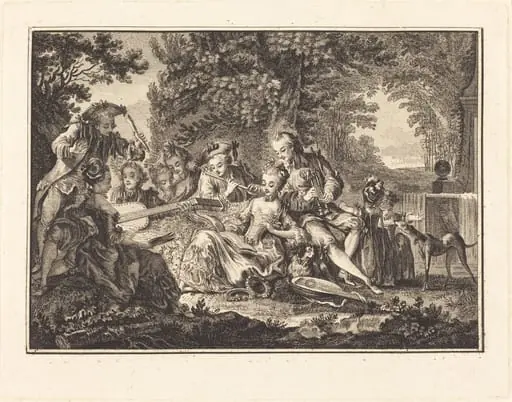
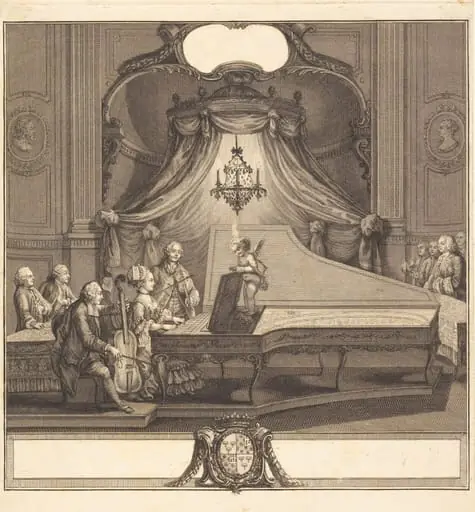
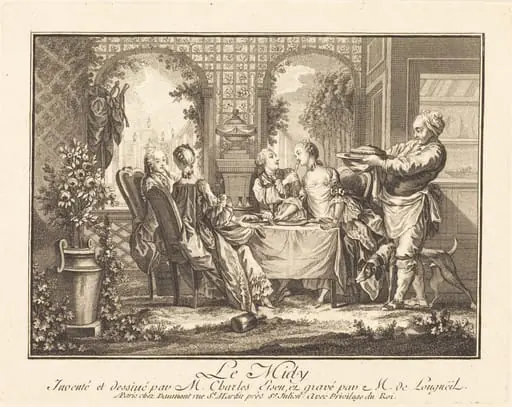
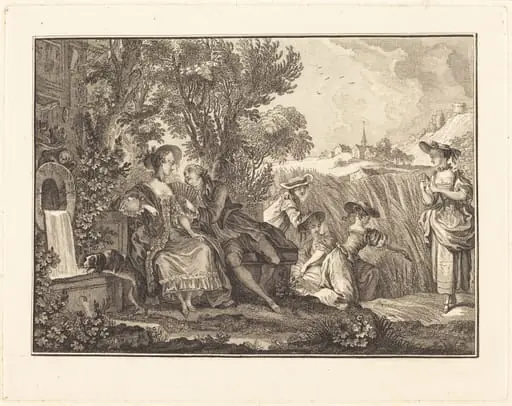
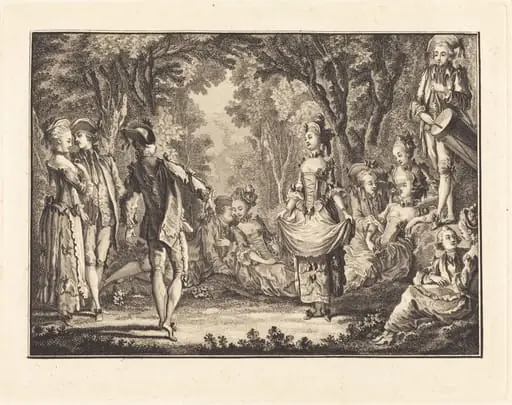
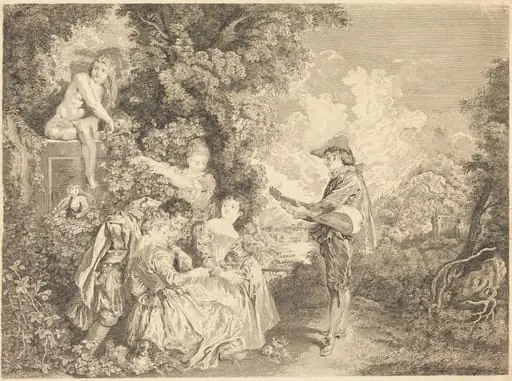
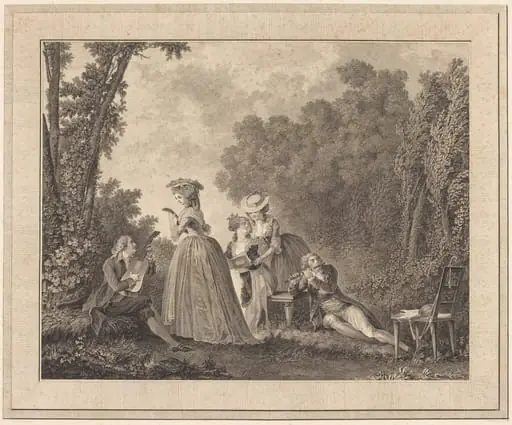
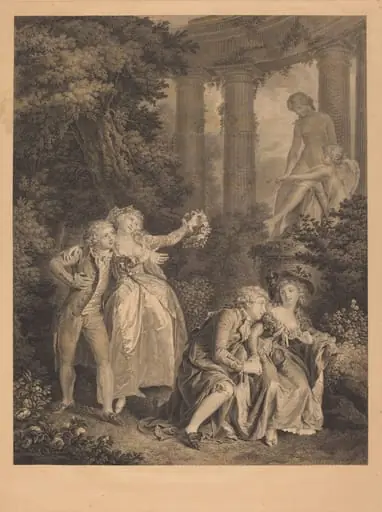
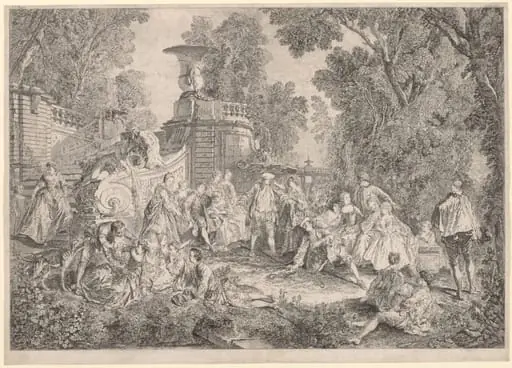
L'automne is a black-and-white print made in 1761 by Joseph de Longueil, combining etching and engraving techniques. It depicts a cultivated garden scene with five figures engaged in quiet, everyday activities. The composition balances natural elements with human presence, rendered through precise linear detail that defines textures and spatial depth without color.
Subject & Meaning
The scene portrays an autumnal moment in a formal garden, suggesting leisure among the upper class. Figures interact subtly: two men converse near a dog, a seated woman holds a fan, another carries flowers, and a child gazes upward at a cherub. The cherub, a classical symbol, may allude to seasonal change or the fleeting nature of time, reinforcing the theme of autumn without overt allegory.
Technique & Style
The background is densely filled with botanical detail, yet remains orderly, reflecting 18th-century ideals of cultivated nature.
Longueil employed fine, controlled lines typical of engraving for sharp contours and delicate shading, while etching allowed for softer, fluid strokes in foliage and fabric folds. The interplay of these methods creates texture in clothing, tree bark, and flower petals, enhancing realism. The background is densely filled with botanical detail, yet remains orderly, reflecting 18th-century ideals of cultivated nature.
History & Provenance
Created in 1761, the print was likely produced as part of a series on the seasons, common in European decorative arts of the period. Though little is documented about its early ownership, such prints were often collected by amateur connoisseurs and used to decorate private interiors, circulating widely through print shops in Paris and beyond.
Context
In mid-18th-century France, garden scenes in prints reflected Enlightenment interests in nature, order, and refined sociability. The depiction of aristocratic leisure in a structured landscape aligns with contemporary tastes, while the inclusion of mythological elements like the cherub nods to classical revival trends in visual culture. Printmaking offered accessible art, bridging elite themes and middle-class audiences.
Legacy
L'automne exemplifies the technical precision and thematic restraint characteristic of French printmaking before the Revolution. While not widely exhibited today, it remains a representative work of its genre, illustrating how seasonal symbolism and domestic tranquility were rendered in print for private contemplation rather than public display.
Artist & collection