Artwork
Annunciation
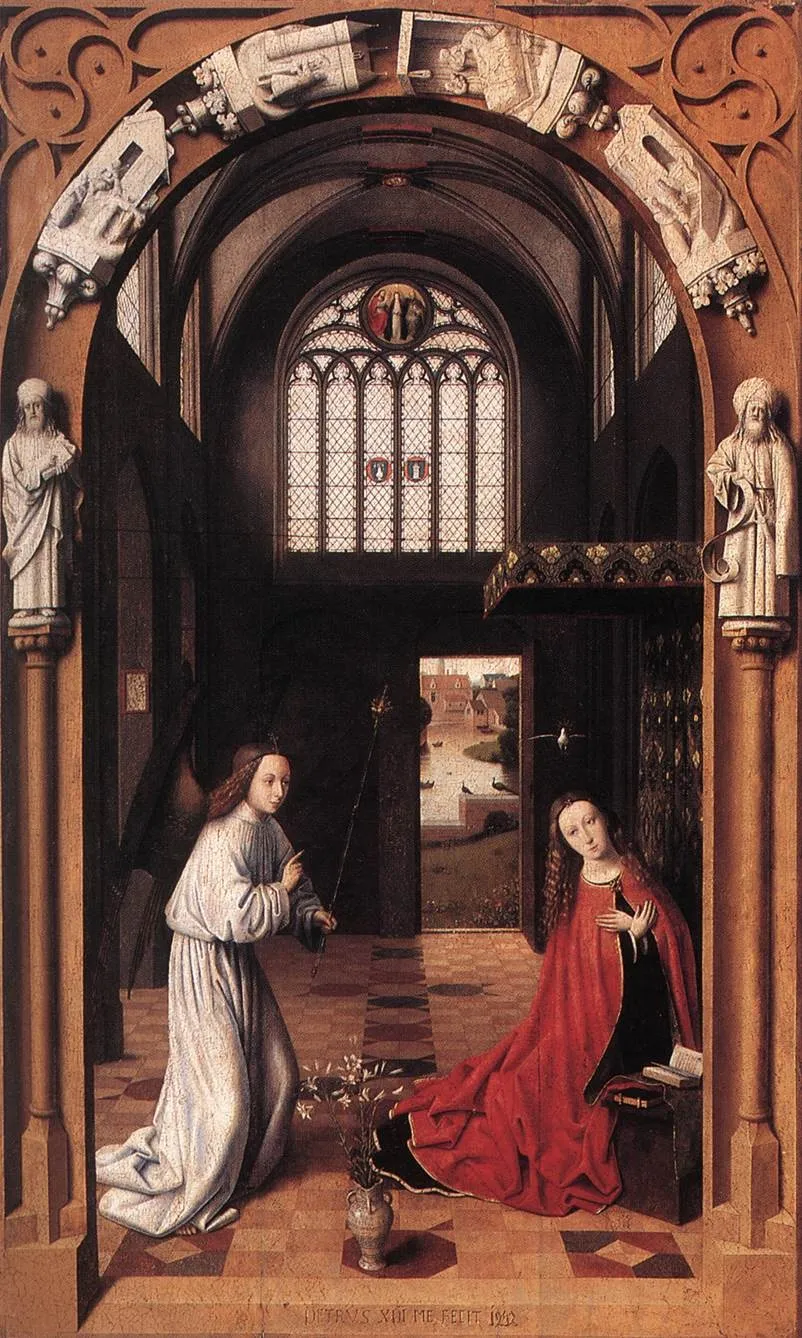
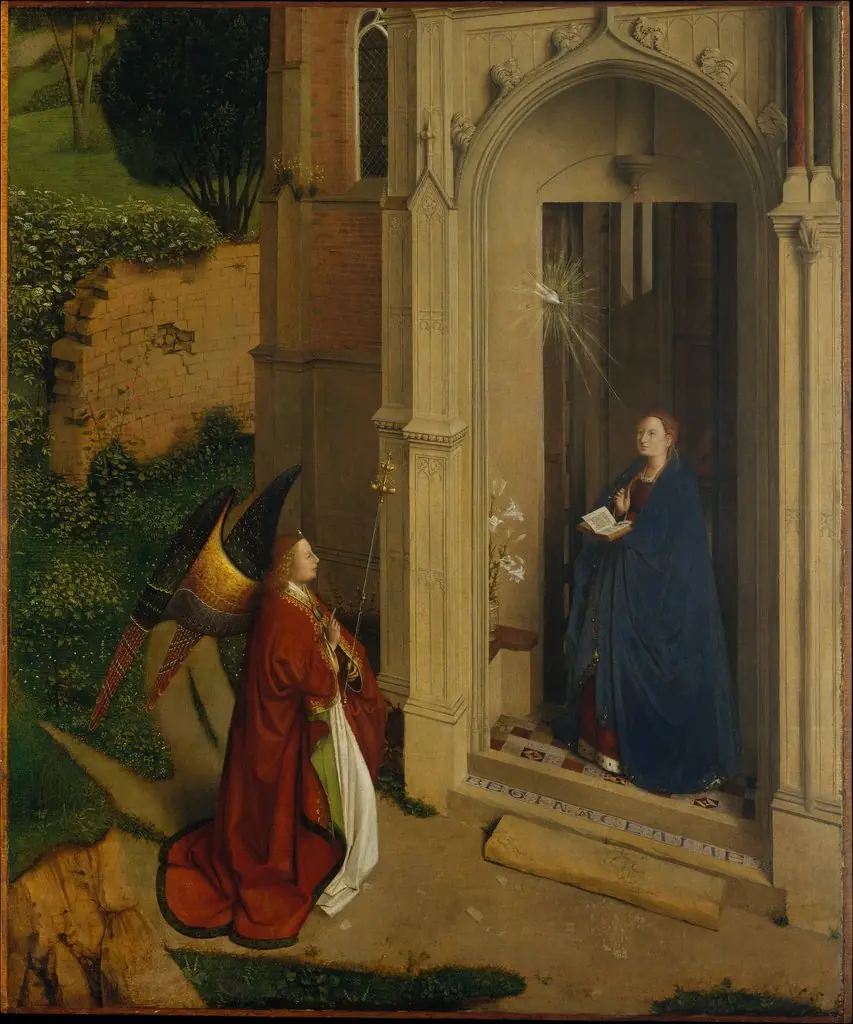
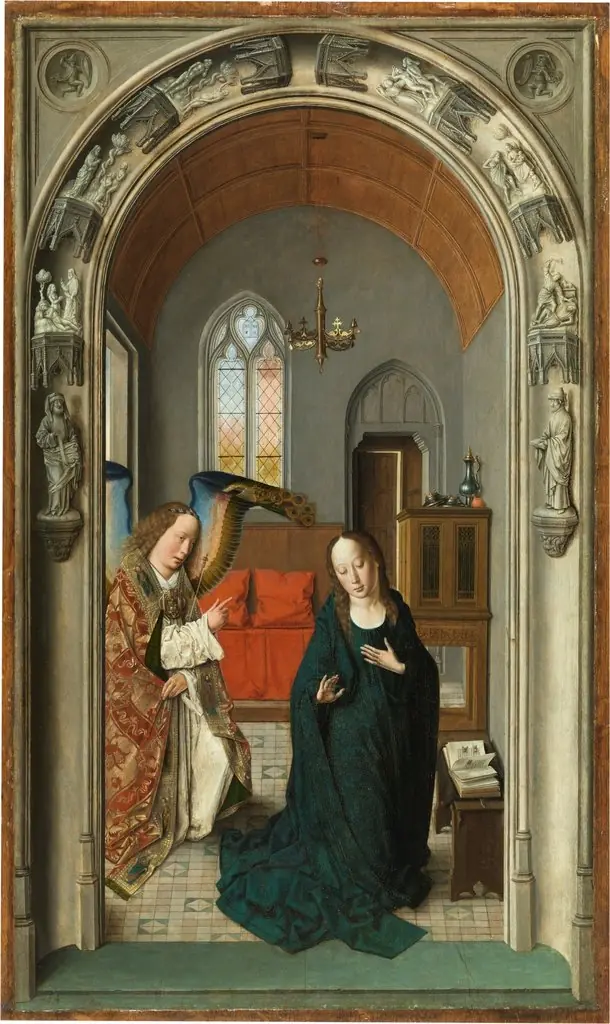
Annunciation is an oil painting by the Northern Renaissance artist Petrus Christus. It dates from 1452 and is held in the collection of the Groeningemuseum.
About this work
Overview
The painting belongs to the collection of the Groeningemuseum in Bruges and reflects the devotional focus characteristic of mid-15th-century Netherlandish art.
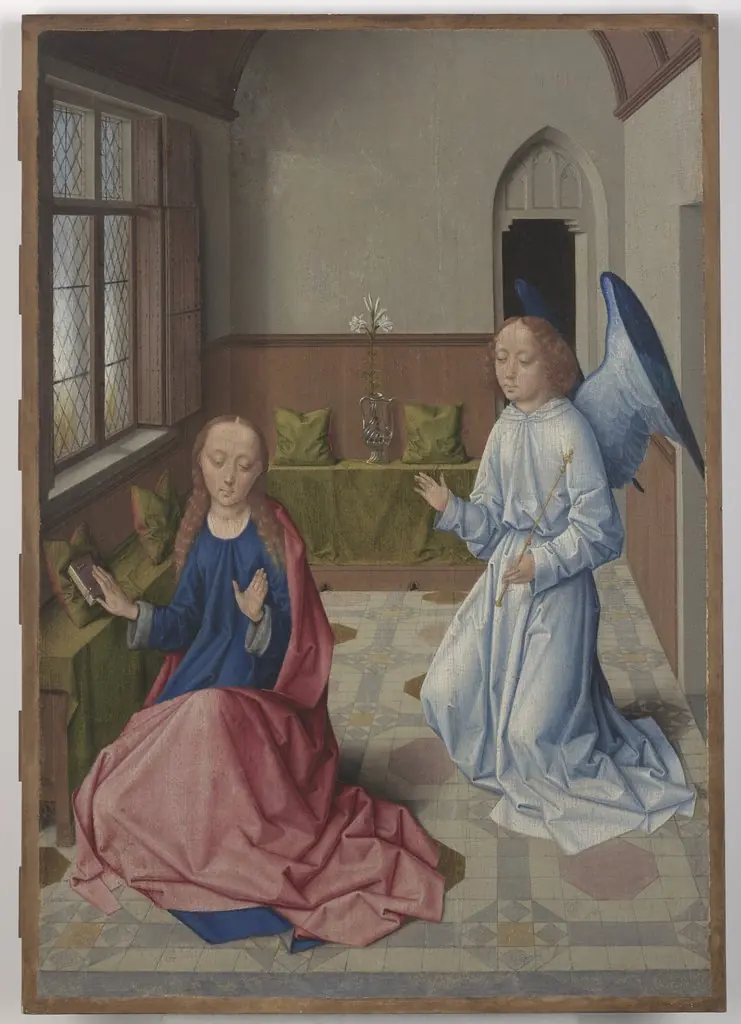
Painted in 1452 by Petrus Christus, this oil-on-panel work depicts the Annunciation within a meticulously rendered church interior. Christus, active in Bruges since 1444, was a key figure in the Northern Renaissance, known for his refined handling of oil paint and spatial precision. The painting belongs to the collection of the Groeningemuseum in Bruges and reflects the devotional focus characteristic of mid-15th-century Netherlandish art.
Subject & Meaning
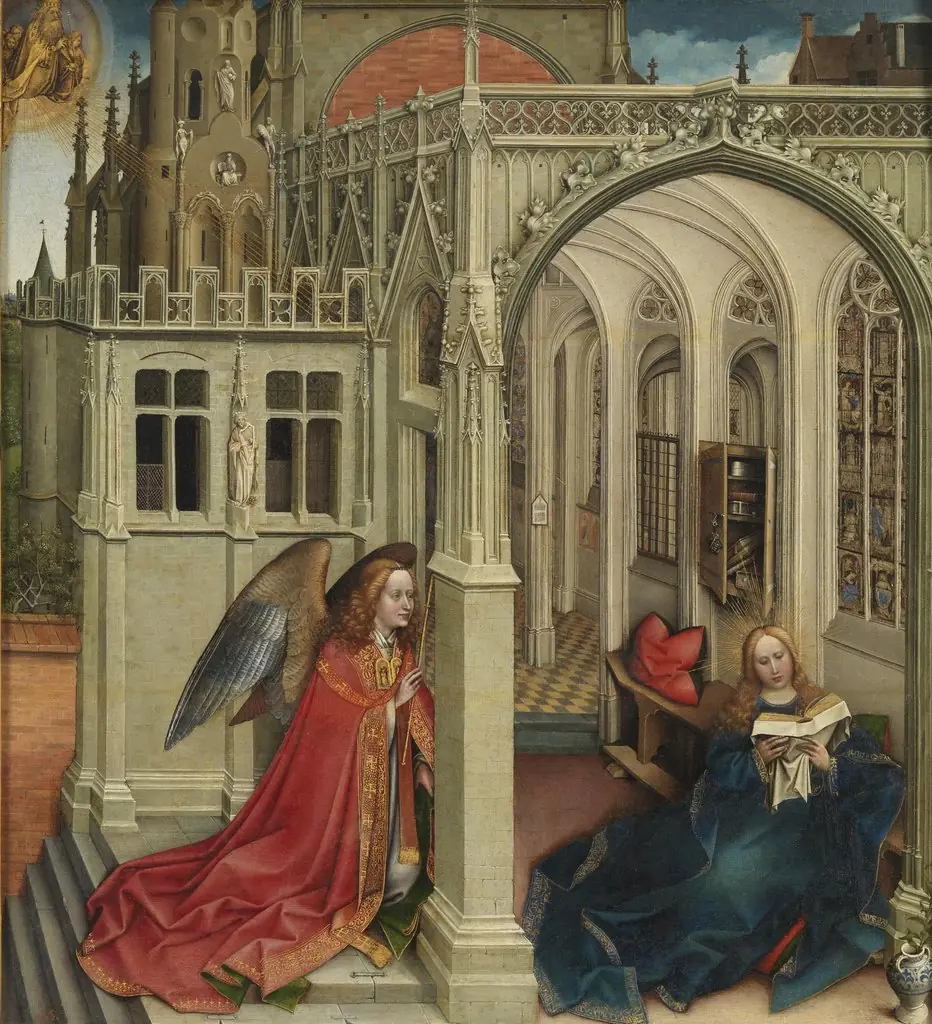
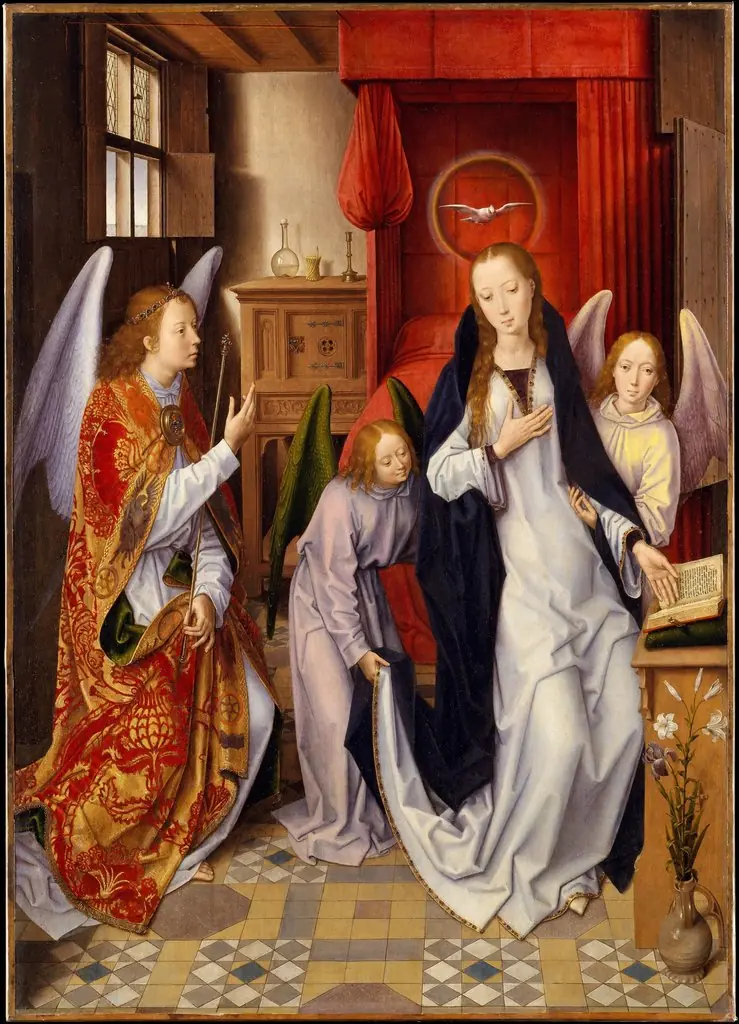
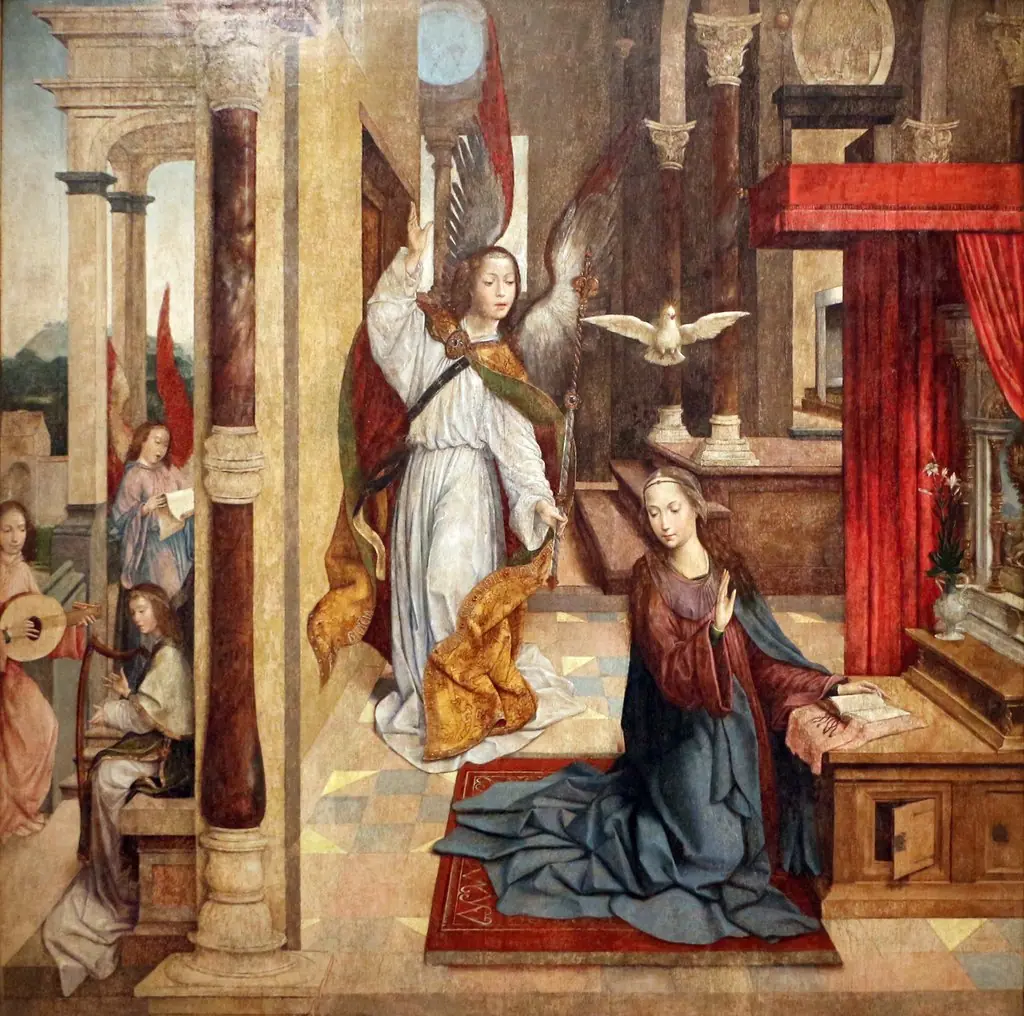
The scene illustrates the moment the Archangel Gabriel announces to the Virgin Mary that she will bear the Son of God. Gabriel, in white, stands with a staff, while Mary, clad in deep red and black, sits in quiet reception on a bench. The setting—a sacred space with stained glass and stone flooring—emphasizes divine presence. The small vase of flowers beside them symbolizes Mary’s purity, reinforcing the theological significance of the moment through subtle natural detail.
Technique & Style
Christus employs oil paint with exceptional clarity, capturing textures of fabric, stone, and glass with meticulous attention. His use of linear perspective creates a convincing sense of depth, guiding the viewer’s eye toward the vanishing point at the church’s far wall. The lighting is even and naturalistic, avoiding dramatic contrasts, which enhances the painting’s quiet, introspective mood. Figures are rendered with restrained gestures, underscoring solemnity over theatricality.
History & Provenance
The painting has remained in the Low Countries since its creation, eventually entering the Groeningemuseum’s collection in the 19th century. Its attribution to Christus is supported by stylistic parallels with his other signed works and documentary evidence linking him to Bruges’ artistic community. No significant alterations or reworkings are recorded, preserving its original composition and condition.
Context
Created during the height of the Northern Renaissance, the painting reflects the era’s emphasis on intimate religious devotion and detailed observation of the physical world. Bruges, a wealthy commercial center, fostered a market for private devotional images. Christus’s work responds to this demand by blending sacred narrative with domestic realism, making divine events feel present and tangible to the viewer.
Legacy
Christus’s *Annunciation* exemplifies the transition from the monumental style of Jan van Eyck toward a more intimate, psychologically nuanced approach. His innovations in spatial construction influenced later Netherlandish painters, particularly in the use of architectural settings to frame sacred moments. Though less widely known than his contemporaries, his work remains a touchstone for understanding the evolution of early Northern painting.
Artist & collection
Artist
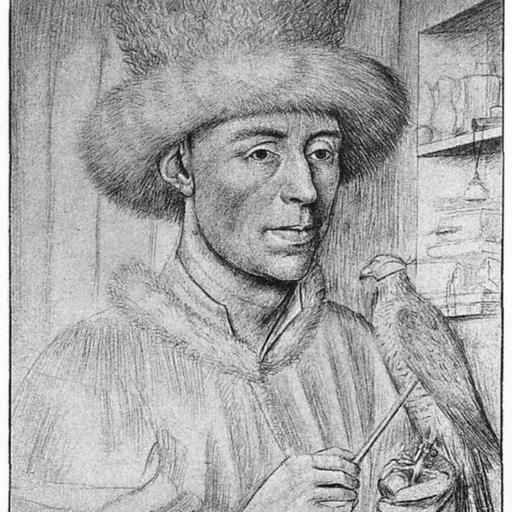
Petrus Christus (Dutch: ; c. 1410/1420 – c. 1475/1476) was an Early Netherlandish painter active in Bruges from 1444, where, along with Hans Memling, he became the leading painter after the death of Jan van Eyck. He was…