Artwork
Isabella of Portugal with Saint Elisabeth
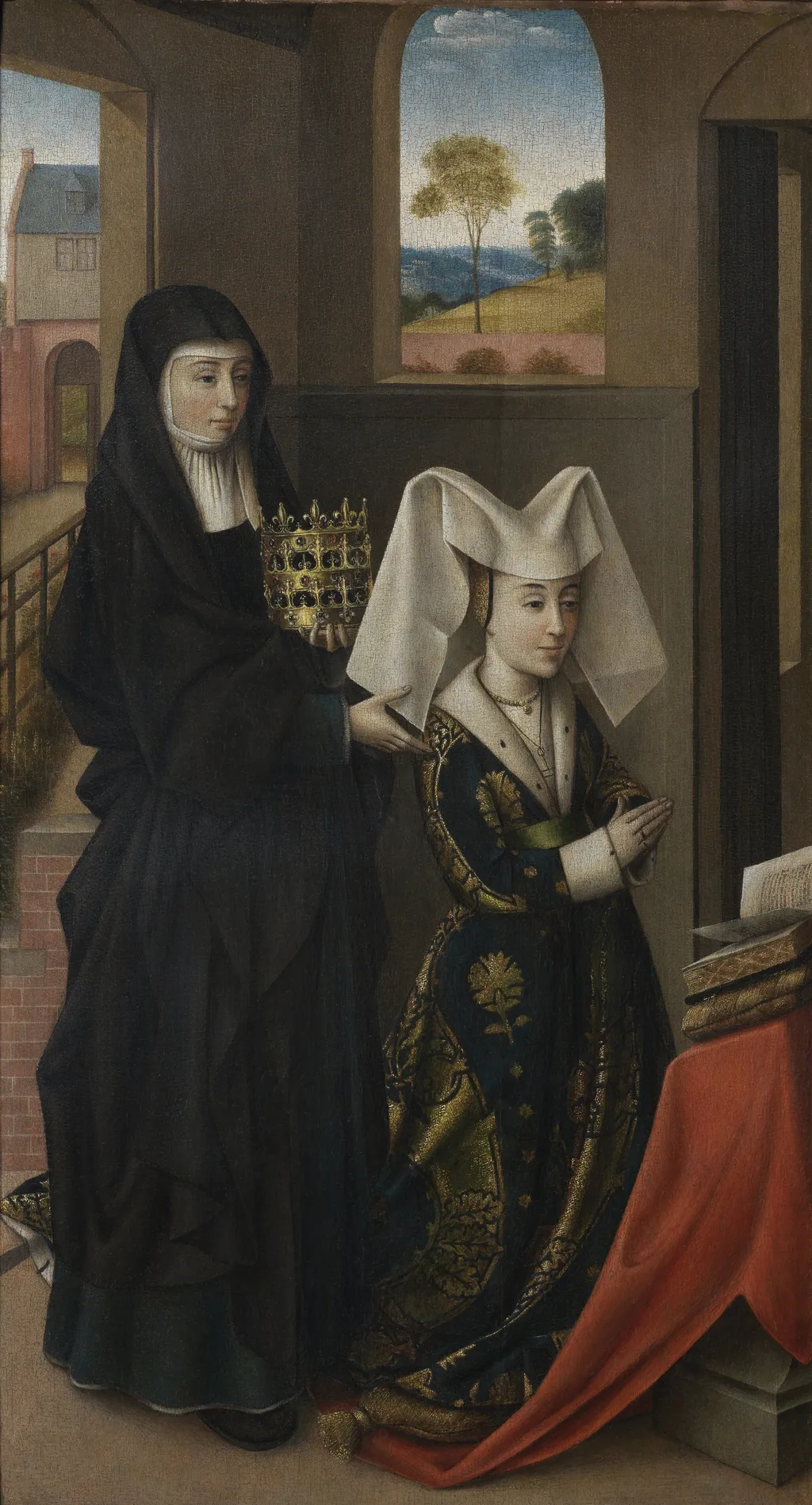
Isabella of Portugal with Saint Elisabeth is an oil painting by the Northern Renaissance artist Petrus Christus. It dates from 1457 and is held in the collection of the Groeningemuseum.
About this work
Overview
This oil-on-oak panel painting, dated circa 1457–1460, is attributed to Petrus Christus, an Early Netherlandish artist. Originally the left wing of a lost triptych, it depicts a devotional scene with two female figures against a detailed landscape background.
Subject & Meaning
The painting shows Isabella of Portugal, Duchess of Burgundy, kneeling in prayer, accompanied by her patron saint, Elizabeth of Hungary. Saint Elizabeth, dressed as a nun, holds three gold crowns symbolizing her piety and royal lineage. Isabella's facial features, however, cannot be definitively identified as hers.
Technique & Style
Characteristics reminiscent of Petrus Christus's style are evident, though specific techniques used in this work are not distinctly highlighted beyond the typical oil-on-oak panel method of the time. The composition features a contemplative atmosphere, with symbolic elements and a detailed background.
History & Provenance
Possibly commissioned by Isabella of Portugal before her 1457 retirement, the panel was later owned by her great-granddaughter, Margaret of Austria. It is now part of the Groeningemuseum collection in Bruges, Belgium, and was fully attributed to Christus in the 1960s.
Context
Both Isabella of Portugal and Petrus Christus were members of the confraternity of Our Lady of the Dry Tree, suggesting a personal connection that may have influenced the commission. The work reflects the devotional practices and patronage common among the nobility during the Early Netherlandish period.
Own this work as a print
Artist & collection
Artist
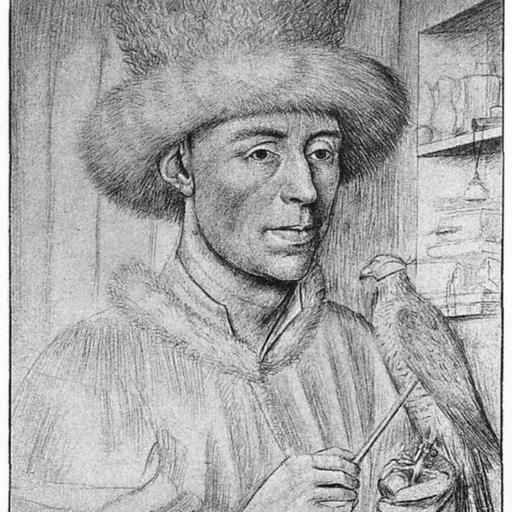
Petrus Christus (Dutch: ; c. 1410/1420 – c. 1475/1476) was an Early Netherlandish painter active in Bruges from 1444, where, along with Hans Memling, he became the leading painter after the death of Jan van Eyck. He was…

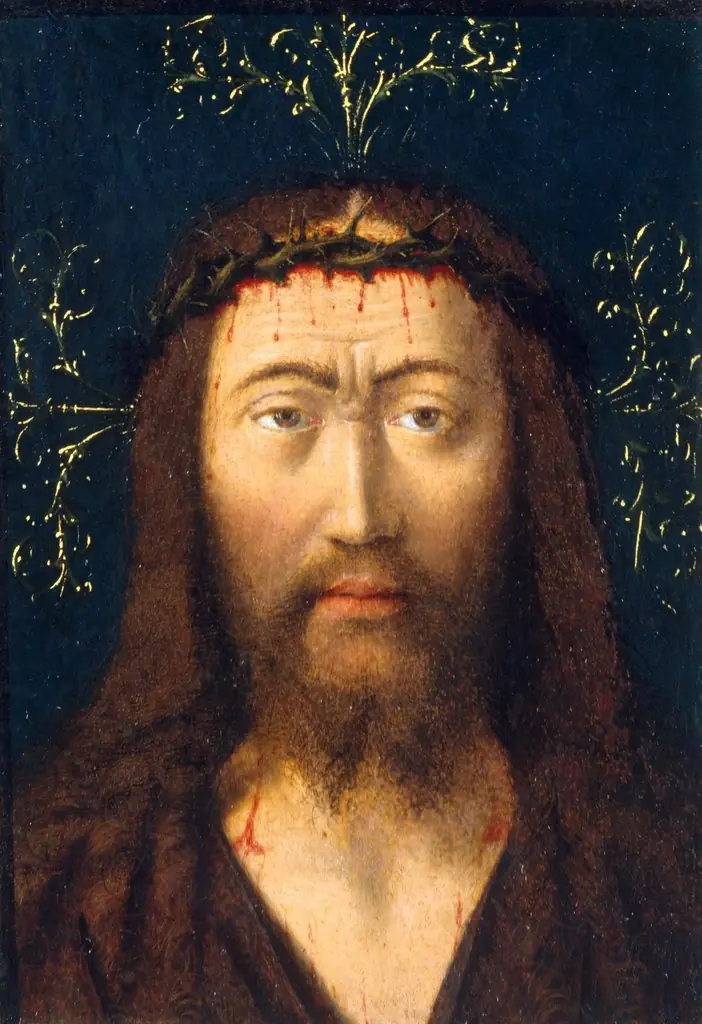

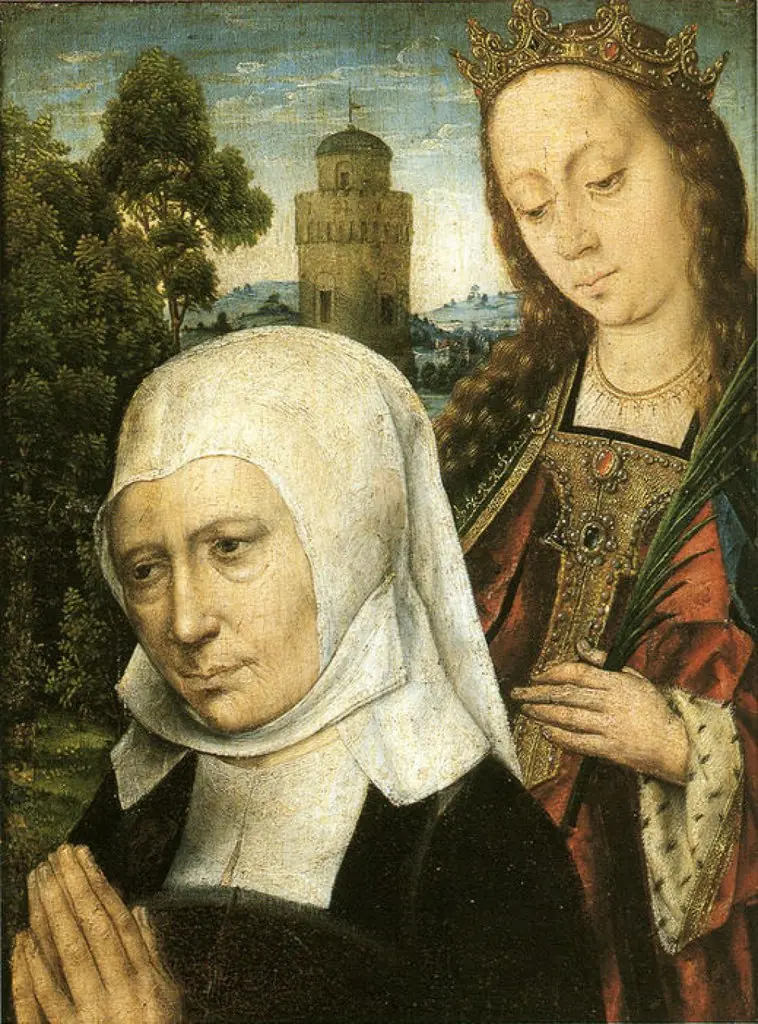 Donatrix with Saint Barbara
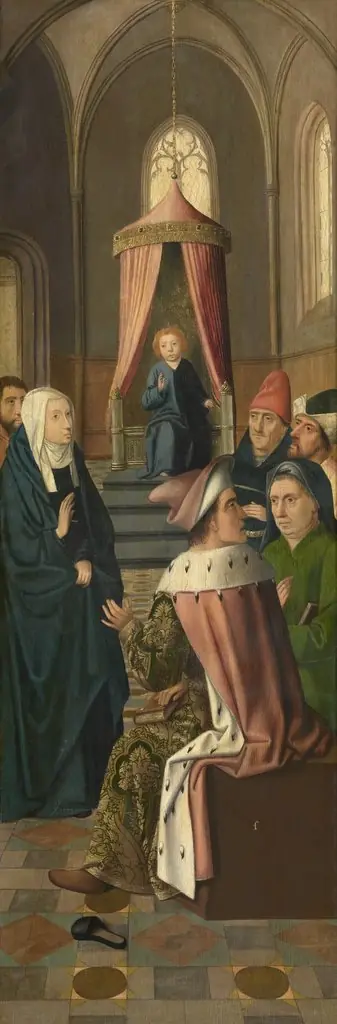 Christ's Dispute with the Doctors
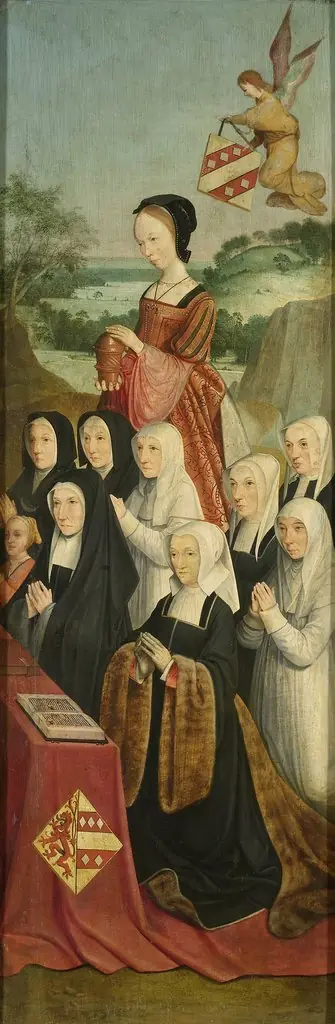 Memorial Panel with Nine Female Portraits, inner right wing of an altarpiece
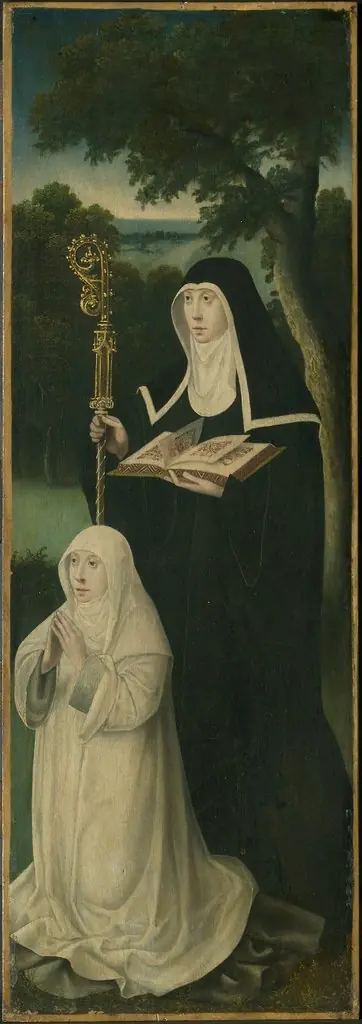 Saint Gertrude of Nivelles and an Augustinian Canoness
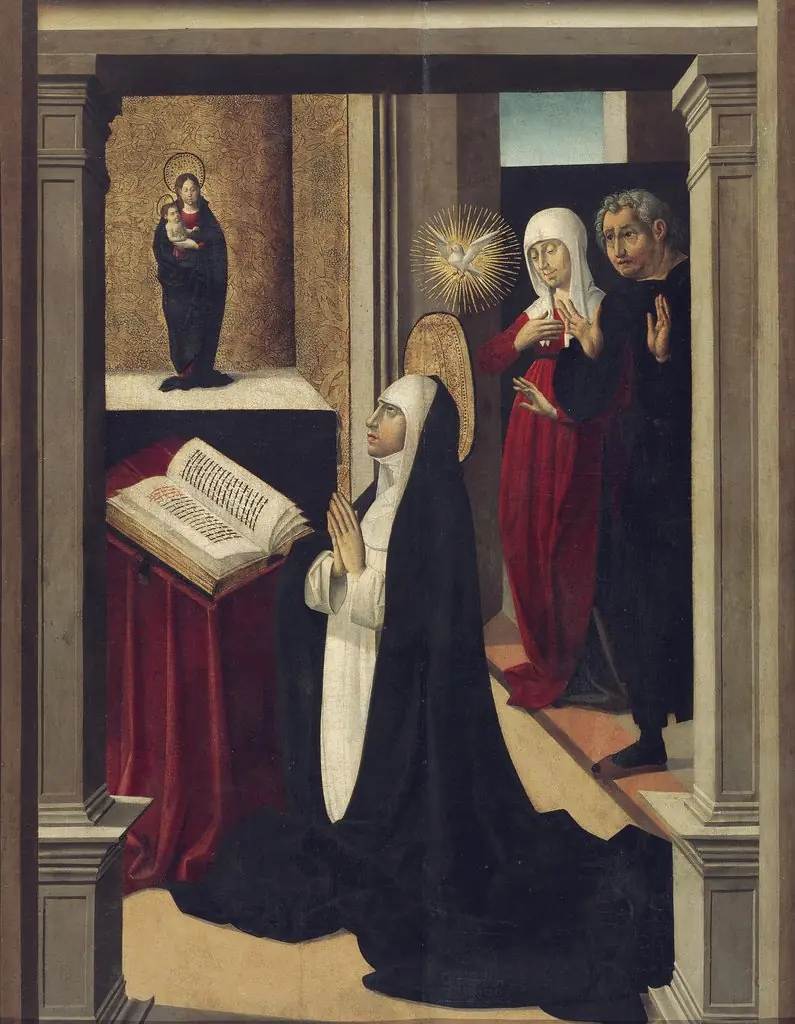 The Calling of Saint Catherine of Sienna
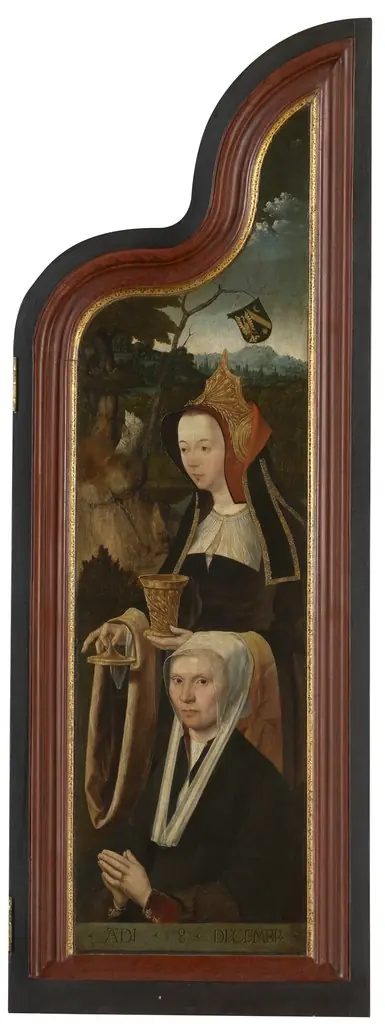 Portrait of Gerbrich Claesdr
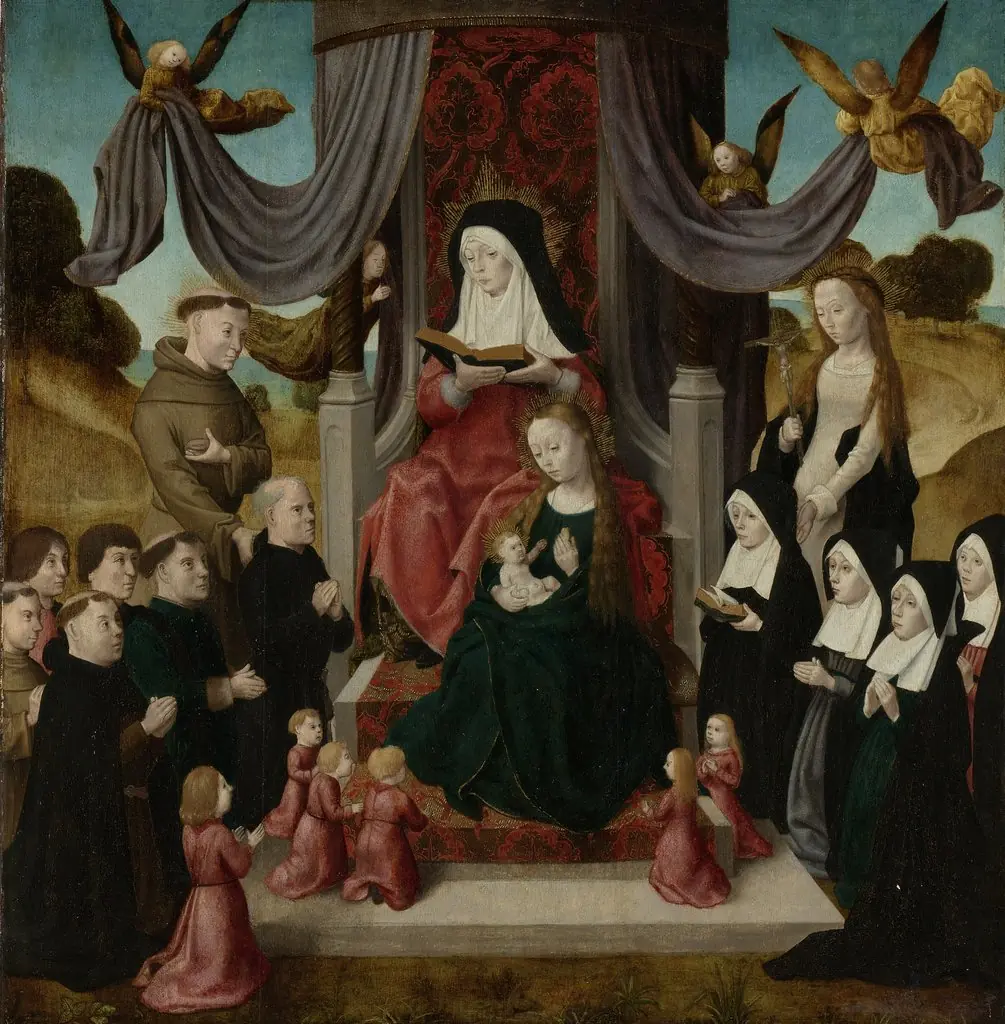 The Virgin and Child with St Anne, donors and Sts Francis and Lidwina
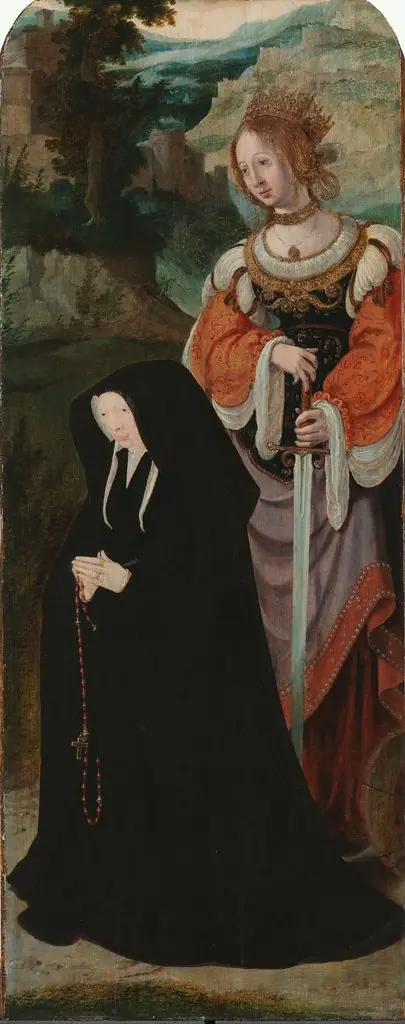 Wing of Lazarus tritptych with donor and Saint Catharine
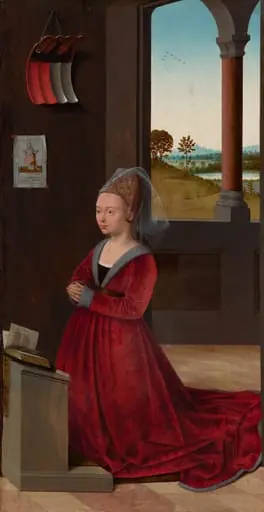 Portrait of a Female Donor
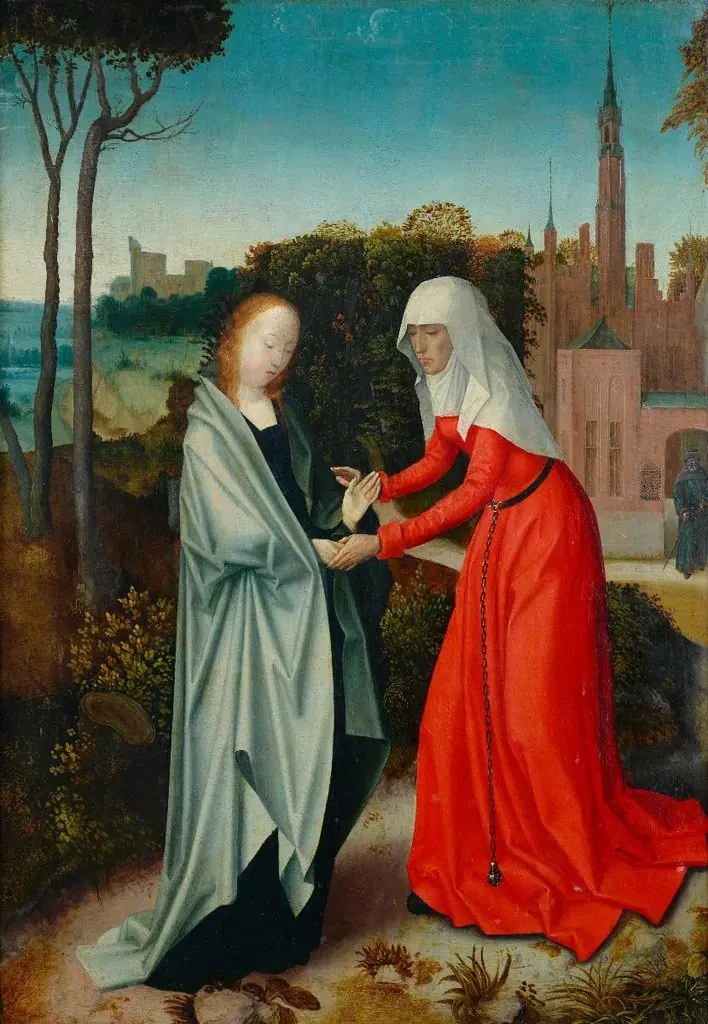 Heimsuchung Mariae zwischen St. Ursula mit den Zehntausend Jungfrauen und St. Martha. Aussenseiten der Flügel: Verkündigung Mariae