Artwork
Interior of the Former Church of Saint George in Antwerp
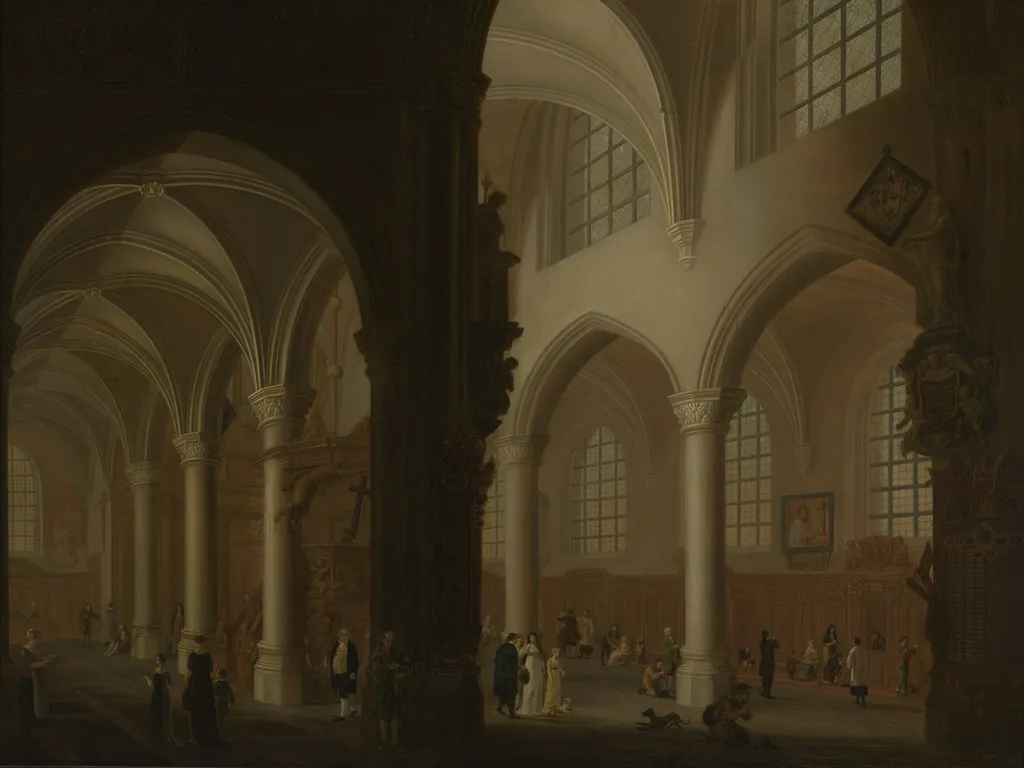
Interior of the Former Church of Saint George in Antwerp is an oil painting by the Rococo painting artist Petrus Johannes van Regemorter. It dates from 1768 and is held in the collection of the Royal Museum of Fine Arts Antwerp.
About this work
Overview
This work reflects his technical precision and interest in atmospheric effects within enclosed spaces.
Petrus Johannes van Regemorter painted the interior of the former Church of Saint George in Antwerp in 1768, capturing a quiet, emptying sacred space with careful attention to architectural detail. As a Flemish artist trained at the Royal Academy of Fine Arts, he specialized in interior scenes and nocturnal lighting, often drawing inspiration from private collections. This work reflects his technical precision and interest in atmospheric effects within enclosed spaces.
Subject & Meaning
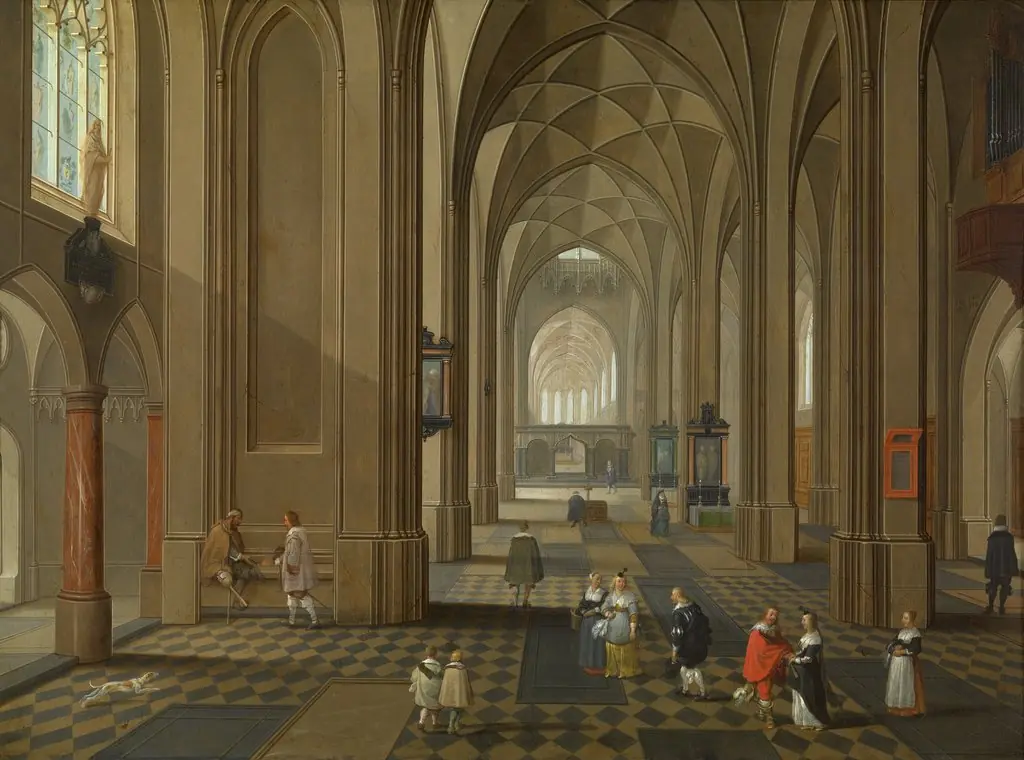
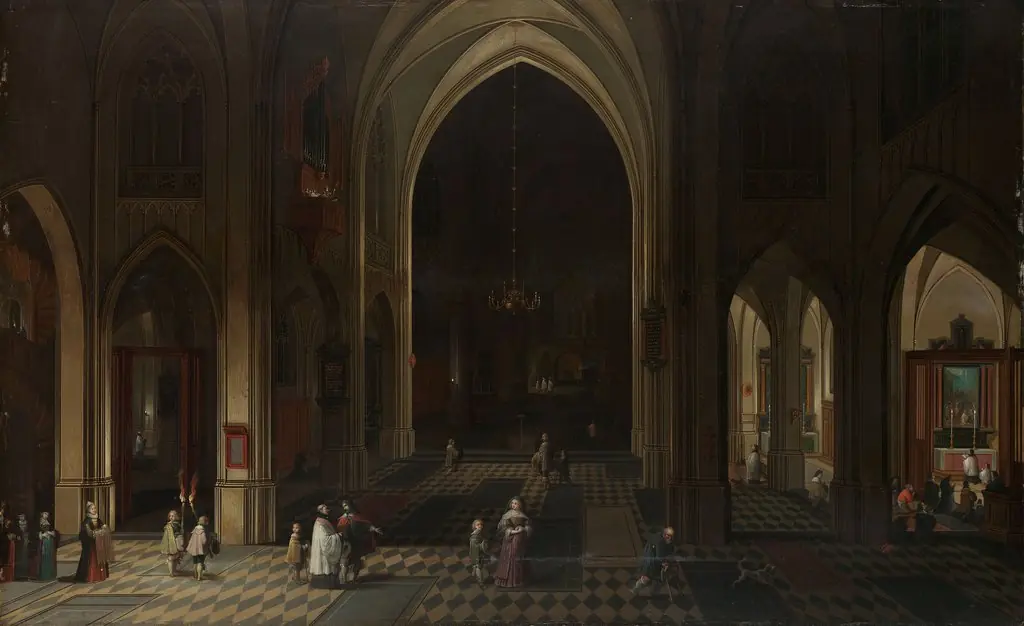
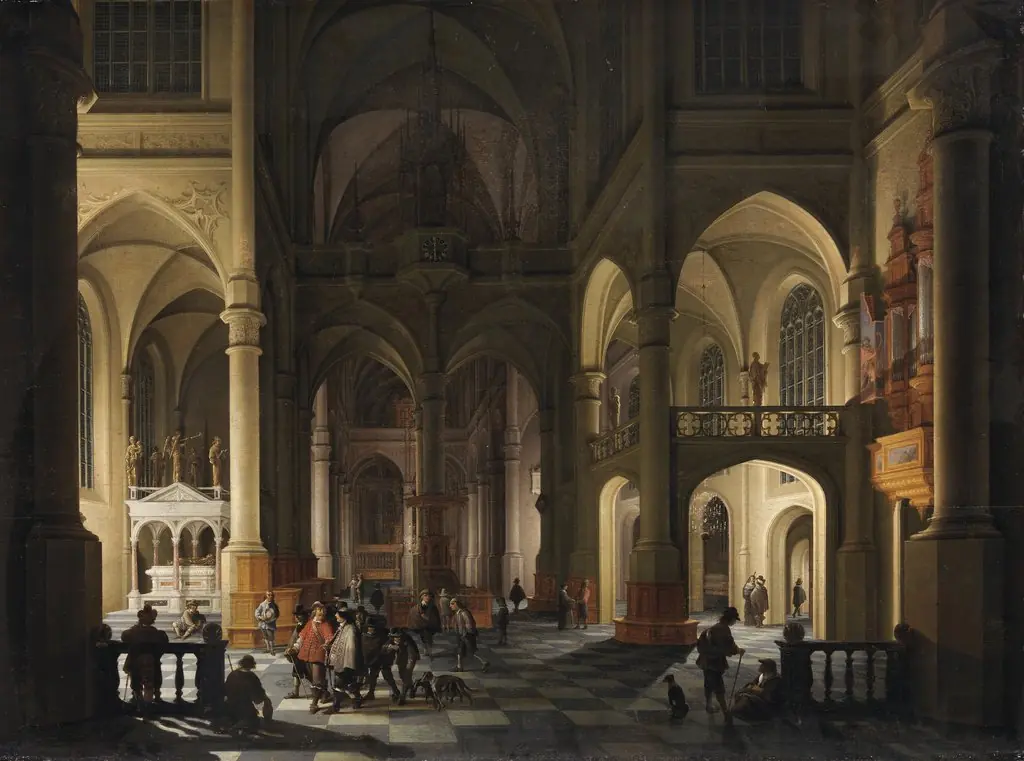
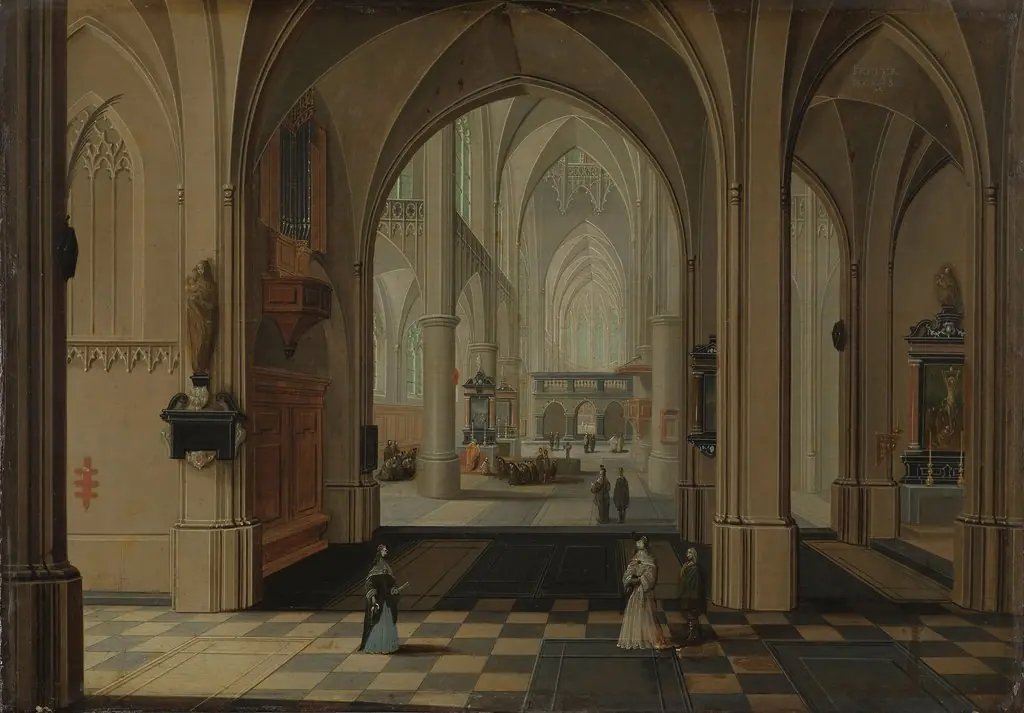
The painting portrays the church interior during a moment of stillness, with figures scattered in quiet repose—some seated, others standing—suggesting the aftermath of worship or a pause in daily ritual. The absence of overt religious symbolism shifts focus to the architecture itself, framing the space as a vessel of contemplation rather than doctrine. Light and shadow guide the viewer’s gaze, reinforcing a tone of reverent solitude.
Technique & Style
Van Regemorter employed chiaroscuro to model the vaulted ceiling and arched colonnades, enhancing the sense of spatial depth. Soft, diffused light enters through tall windows, illuminating stone floors and carved stonework with subtle gradations. The rendering of textures—weathered stone, stained glass, fabric folds—demonstrates meticulous observation. His approach aligns with Rococo sensibilities in its delicate handling of light, though the composition remains restrained and orderly.
History & Provenance
The painting was created during a period of transition for Antwerp’s religious architecture, as many churches were being repurposed or falling into disuse. Van Regemorter, who later became Dean of the Painters' Guild, likely had access to the site through professional networks. Its survival suggests it was valued by collectors interested in topographical accuracy and the quiet beauty of decaying sacred spaces.
Context
In late 18th-century Flanders, artists increasingly turned to secularized interiors as subjects, reflecting broader cultural shifts away from overt religious imagery. Van Regemorter’s focus on abandoned or underused churches resonated with a growing interest in architectural heritage and the passage of time. His moonlight scenes, though not present here, reveal a consistent fascination with light’s emotional and spatial influence.
Legacy
Though not widely exhibited today, the painting exemplifies a niche tradition of Flemish interior painting that prioritized atmosphere over narrative. Van Regemorter’s work contributed to a visual record of Antwerp’s ecclesiastical architecture before widespread renovation or demolition. His method of observing and recording spatial quietude influenced later genre painters interested in the poetry of empty rooms.
Own this work as a print
Artist & collection
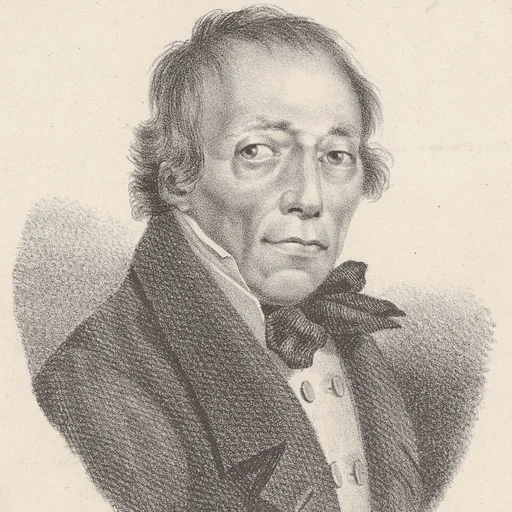
Artist
Petrus Johannes van Regemorter
Petrus Johannes van Regemorter (8 September 1755 – 17 November 1830) was a Flemish landscape and genre painter, born in Antwerp.

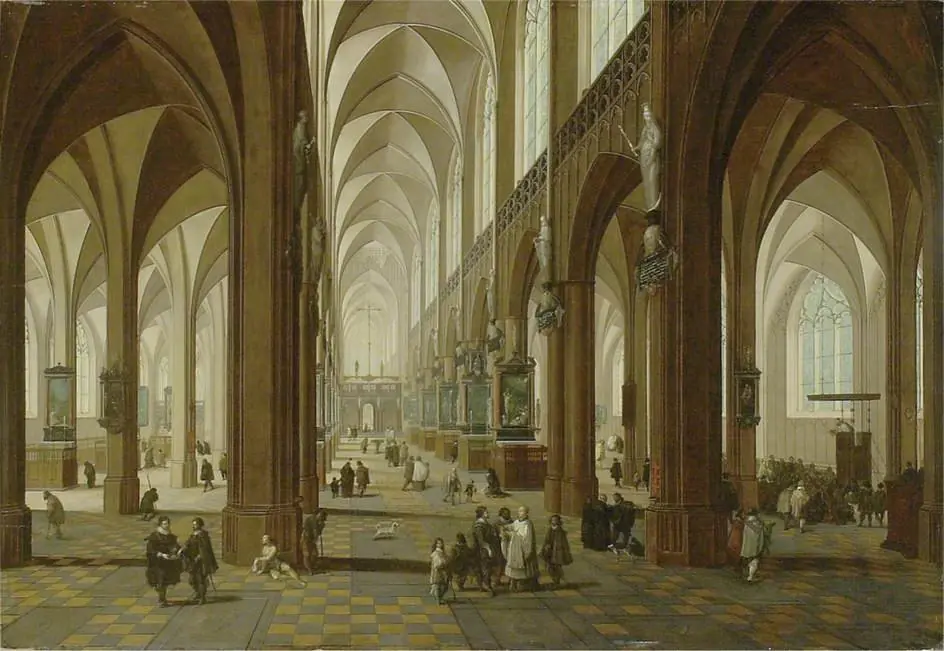 Interior of Antwerp Cathedral
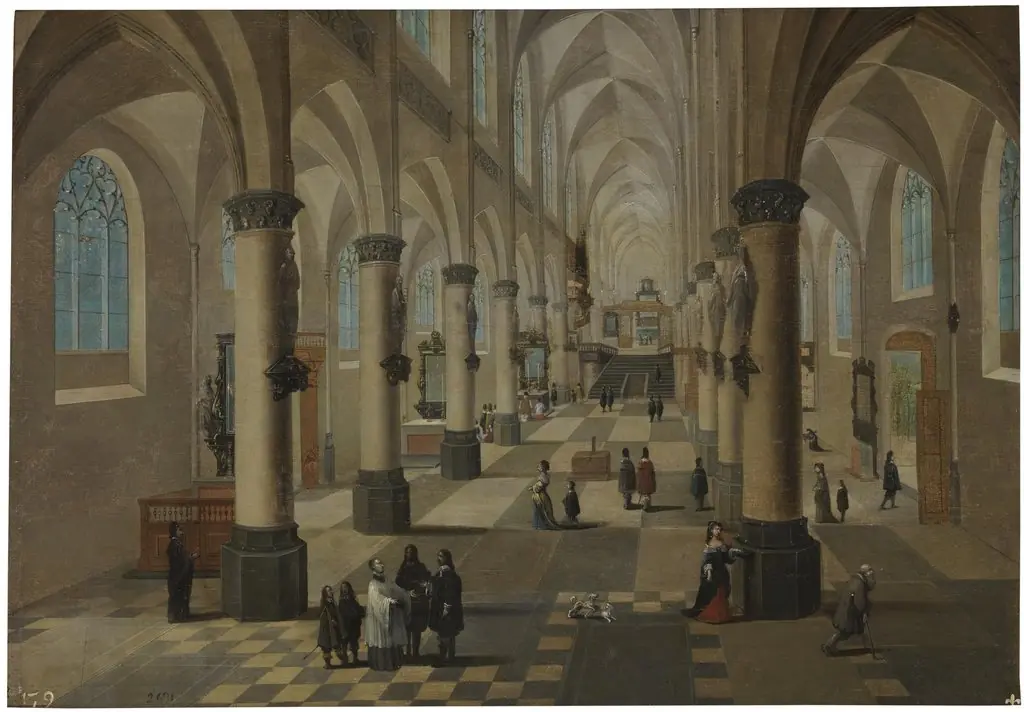 Interior of a church in Flanders
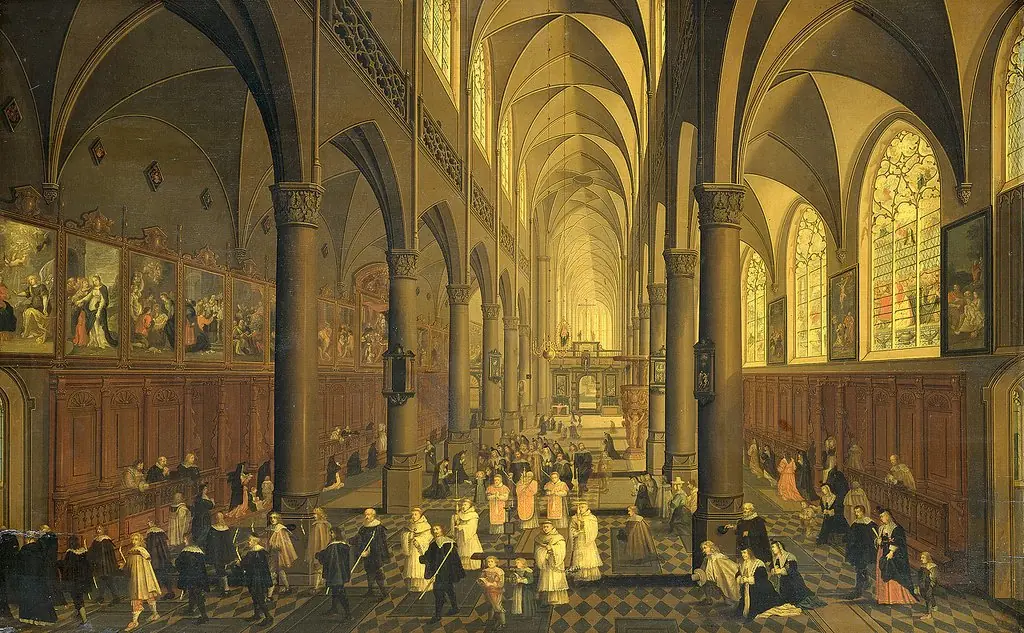 Interior of the Saint Paul's church of Antwerp
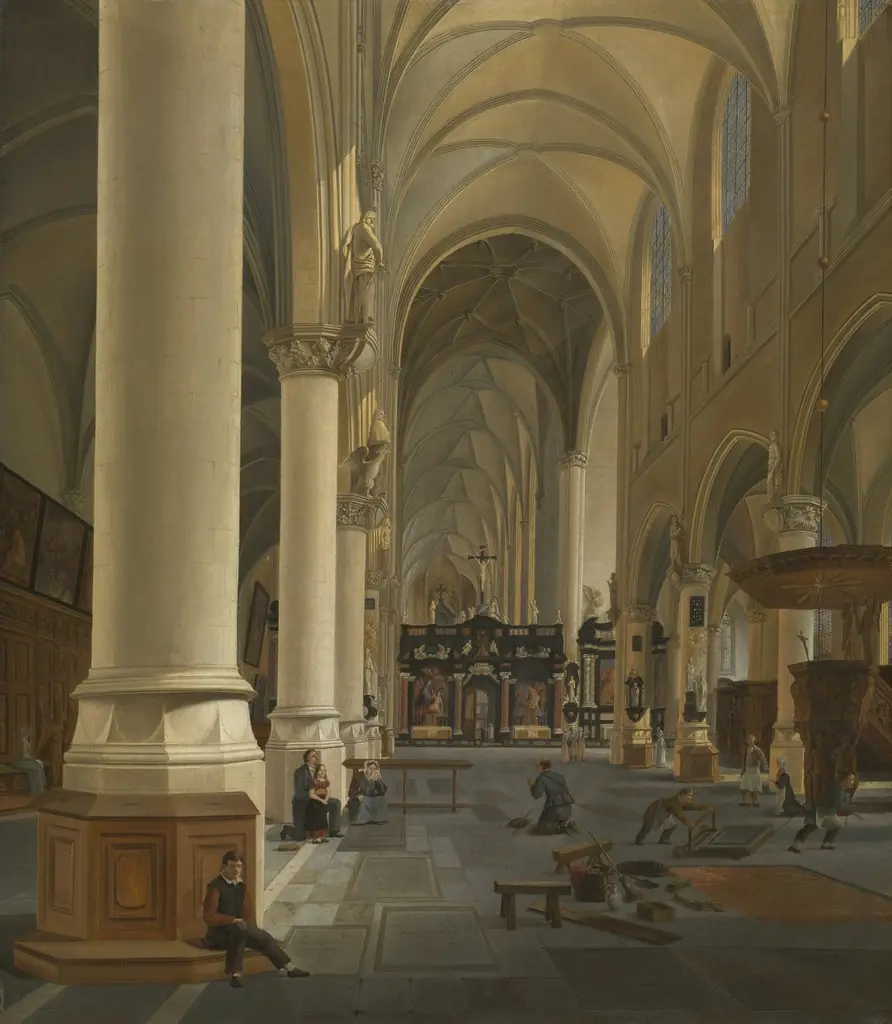 Interior of St. Paul's Church in Antwerp
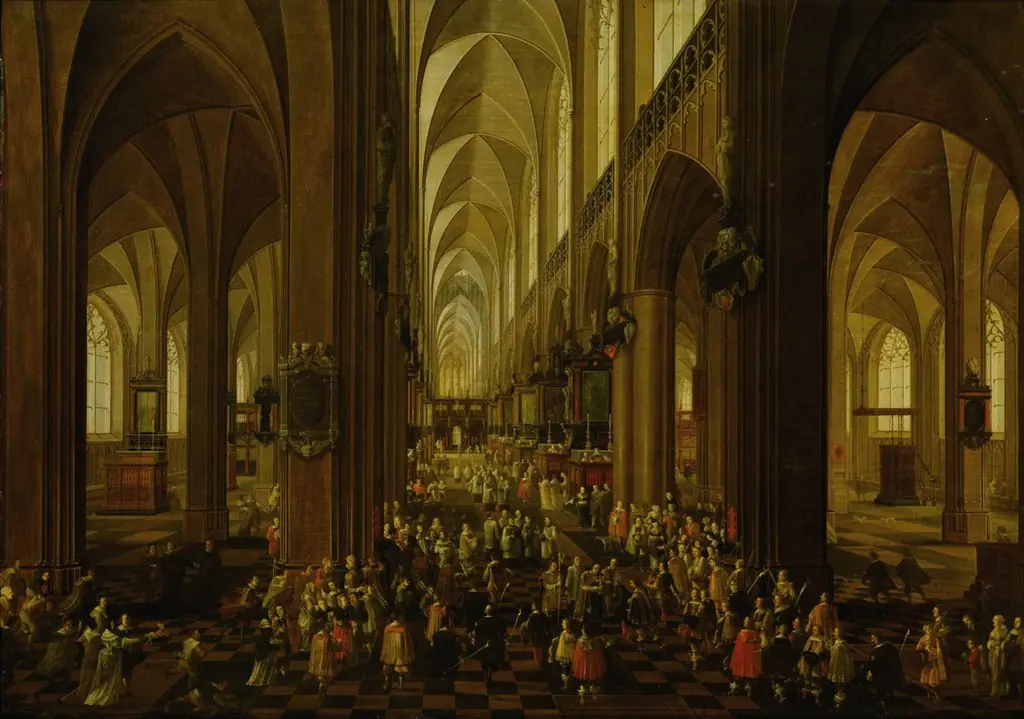 Interior of the Cathedral of Our Lady of Antwerp (Archduke Leopold Wilhelm received by the clergy)
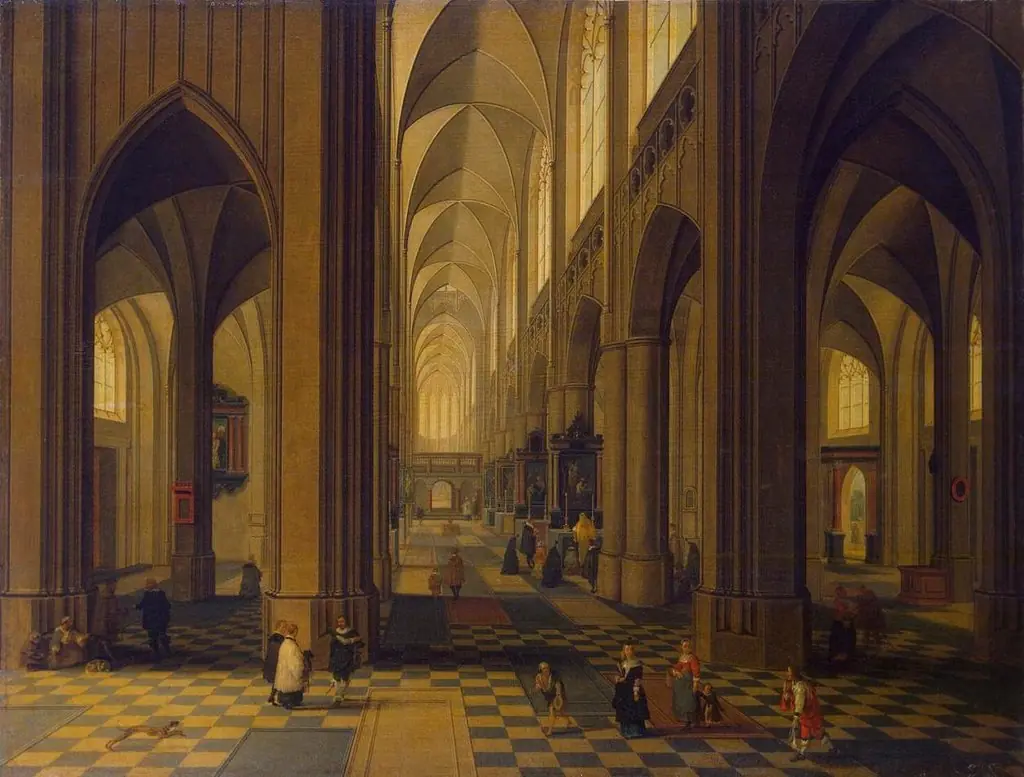 Interior of the Antwerp Cathedral
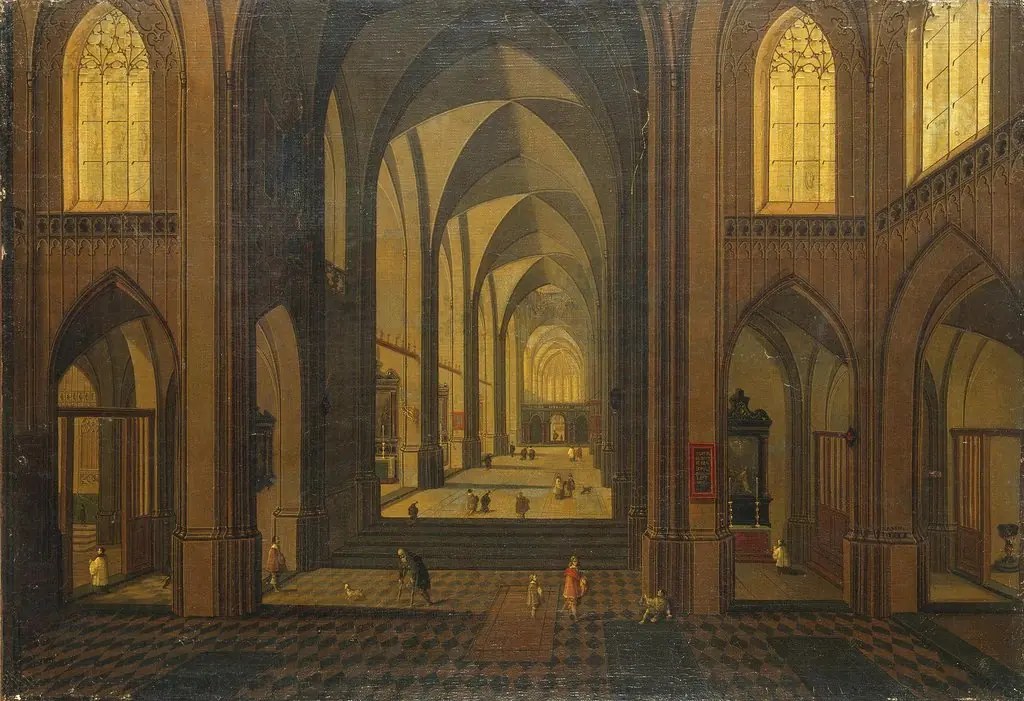 Interior of St Charles Borromeo Church in Antwerp
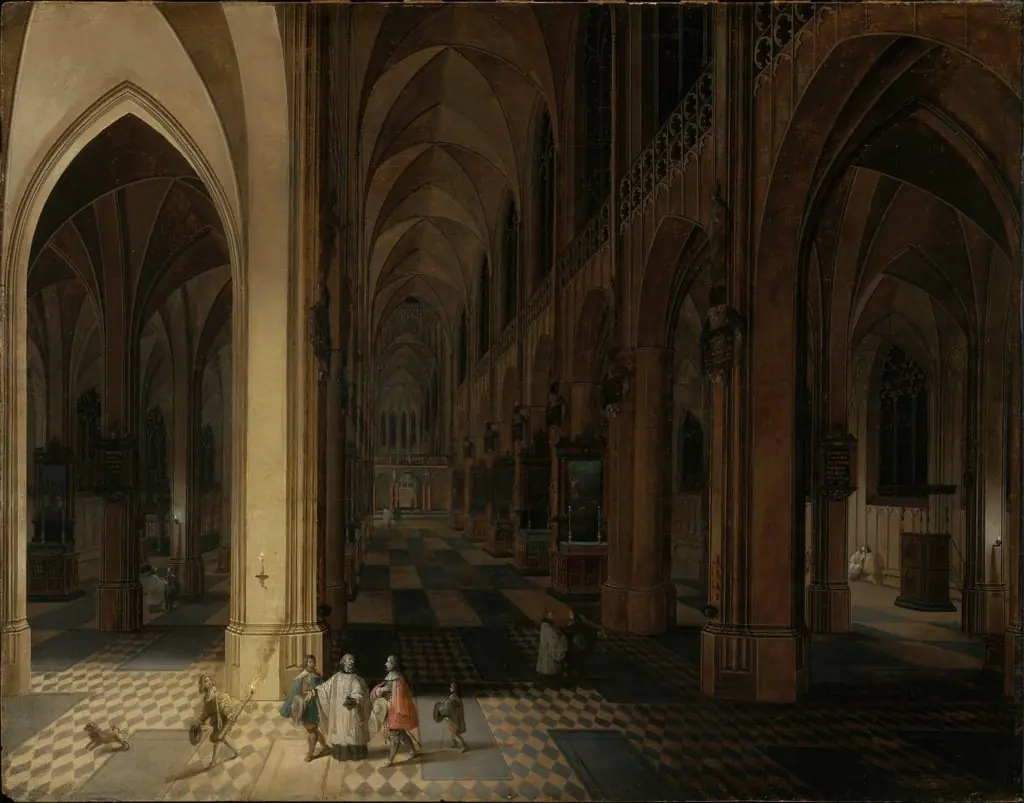 Interior of Antwerp Cathedral at Night