Artwork
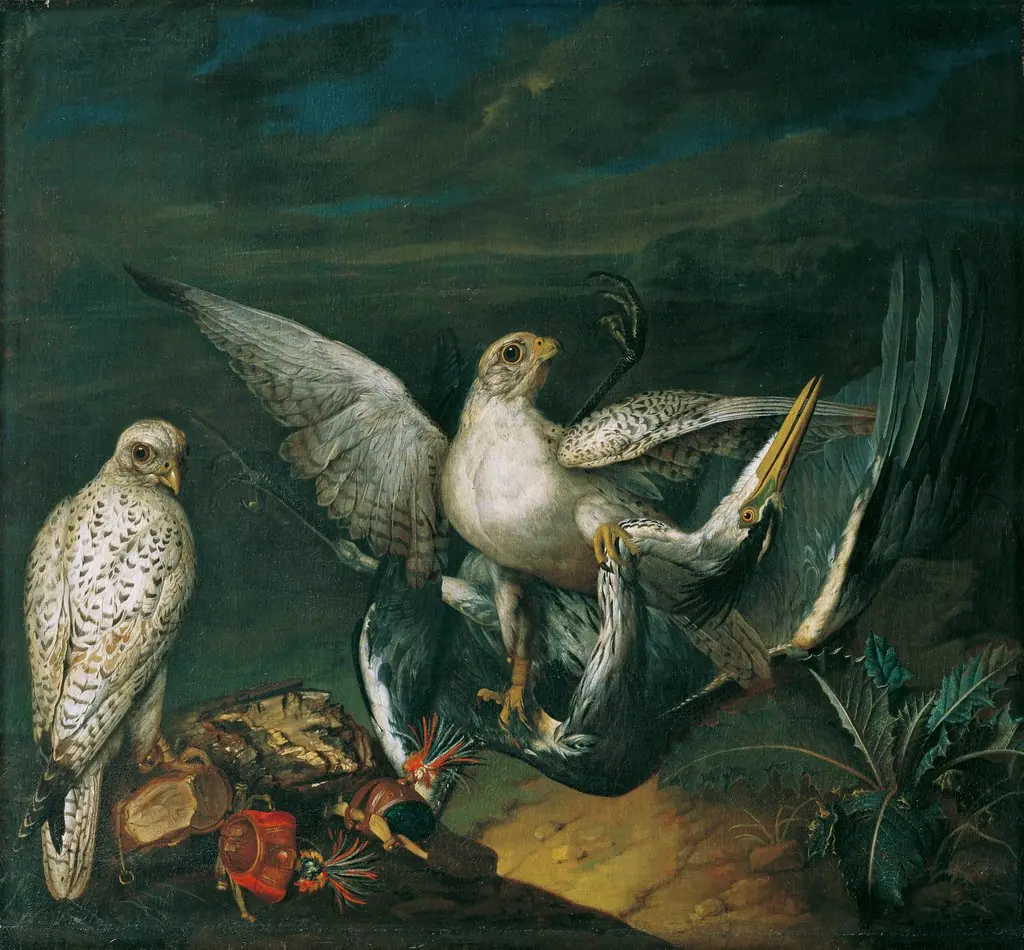
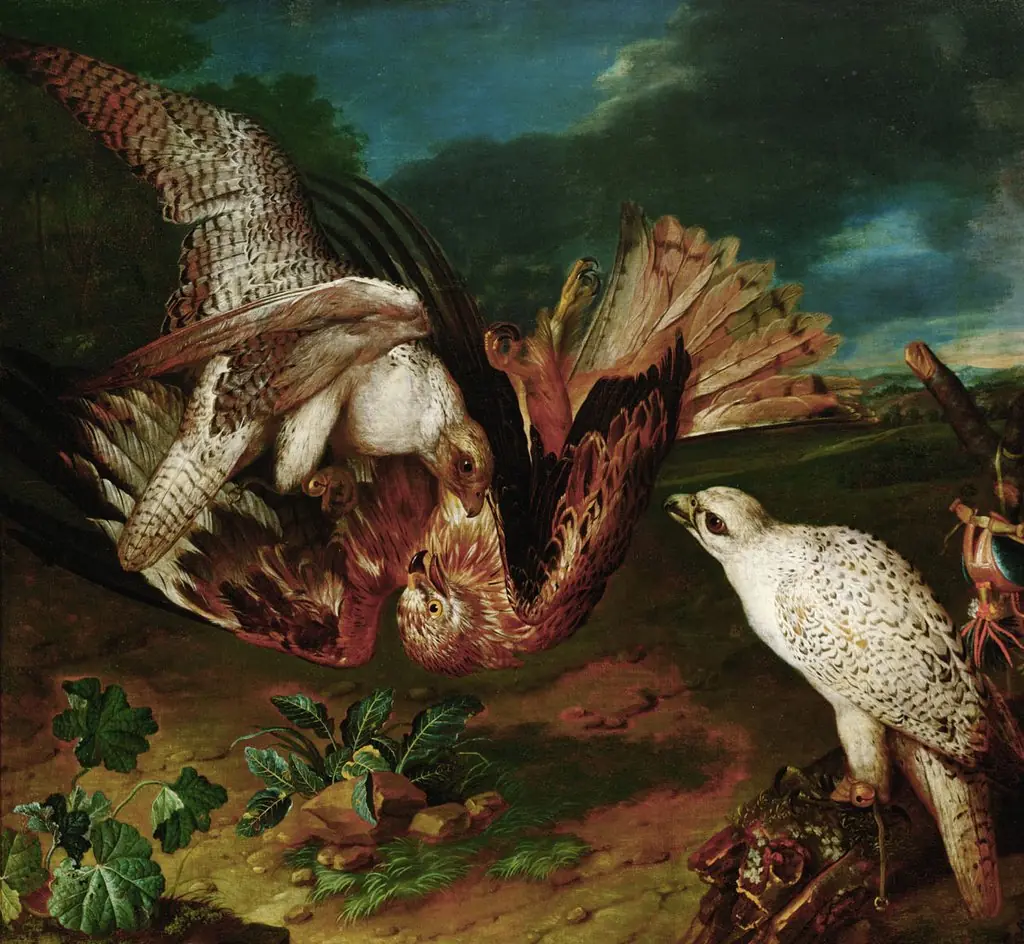
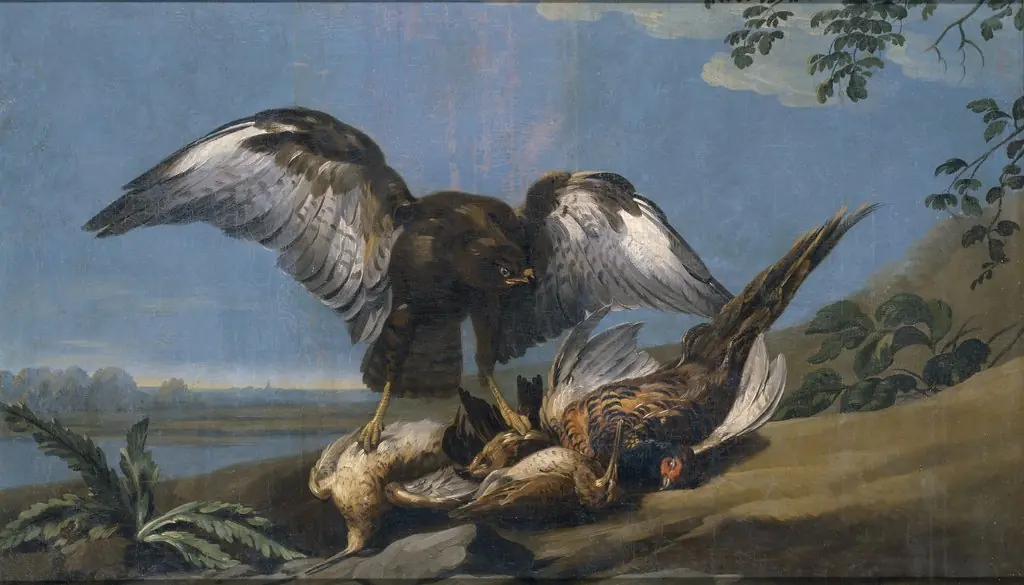
Bird of prey defeated by Iceland hawks
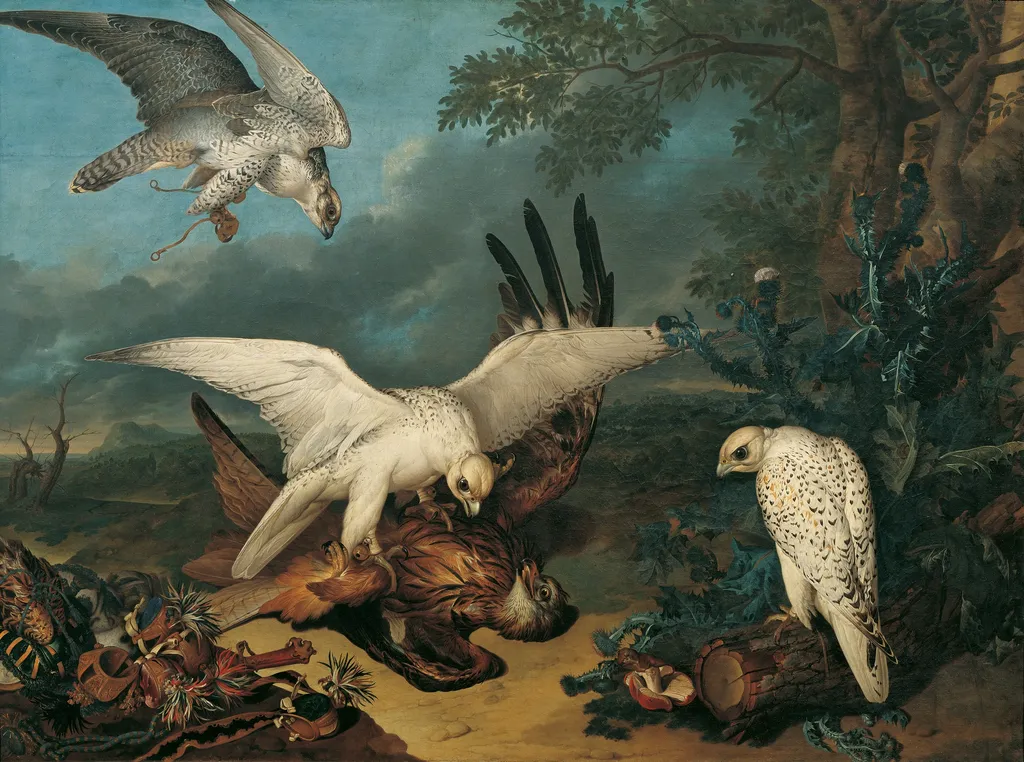
Bird of prey defeated by Iceland hawks is an oil painting by the Rococo painting artist Philipp Ferdinand de Hamilton. It dates from 1745 and is held in the collection of the Kunsthistorisches Museum.
About this work
Overview
The painting resides in the Kunsthistorisches Museum, Vienna, as part of its historical collection of animal studies and hunting scenes.
Painted in 1745 by Philipp Ferdinand de Hamilton, a Southern Netherlandish artist working in Austria, this oil-on-canvas work captures a violent encounter between birds of prey. Executed in the Rococo idiom, it diverges from the movement’s typical elegance by focusing on raw natural conflict. The painting resides in the Kunsthistorisches Museum, Vienna, as part of its historical collection of animal studies and hunting scenes.
Subject & Meaning
The scene portrays a brown raptor, possibly a buzzard or hawk, subdued on the ground by three white birds with dark wingtips—likely gyrfalcons, native to Iceland. The composition suggests a territorial or predatory struggle, with one bird mid-flight, another poised on the ground, and the victor standing over its fallen rival. No allegorical or symbolic intent is evident; the focus remains on the immediacy of the confrontation in nature.
Technique & Style
Hamilton employs chiaroscuro to model the birds’ forms, lending volume and weight to their feathers and musculature. The brushwork is precise yet fluid, capturing the texture of plumage and the dynamics of motion. The background, rendered with soft atmospheric perspective, contrasts with the sharp detail of the foreground figures, guiding attention to the central struggle without distracting from its intensity.
History & Provenance
Commissioned during Hamilton’s tenure at the Habsburg court, the painting reflects aristocratic interest in exotic wildlife and natural spectacle. It entered the Kunsthistorisches Museum’s collection in the 19th century, likely from imperial holdings. Its survival through centuries of reorganization suggests it was valued as a specimen of natural observation rather than as a decorative piece.
Context
In mid-18th-century Central Europe, depictions of animals in dramatic encounters were popular among collectors fascinated by natural history. Hamilton’s work aligns with a trend of scientific curiosity fused with artistic skill, where predators and prey were rendered with anatomical accuracy. Unlike mythological or allegorical animal paintings, this piece avoids human symbolism, emphasizing direct observation.
Legacy
Though not widely exhibited today, the painting remains a rare example of Rococo-era naturalism focused on avian combat. It contributes to the understanding of how European artists engaged with wildlife beyond idealized portraiture. Its preservation offers insight into the period’s fascination with the raw mechanics of nature, distinct from later Romanticized or sentimental treatments of animals.
Artist & collection
Artist
Philipp Ferdinand de Hamilton (c. 1664 – 1750), was an 18th-century painter from the Southern Netherlands active in Austria.