Artwork
Kaninchen
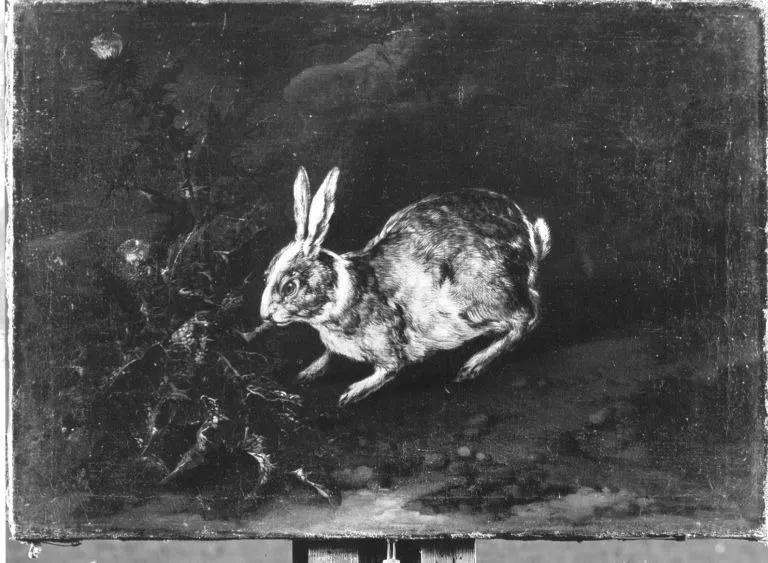
Kaninchen is an unspecified painting by the Flemish Baroque painting artist Philipp Ferdinand de Hamilton. It dates from 1707 and is held in the collection of the Bavarian State Painting Collections.
About this work
Overview
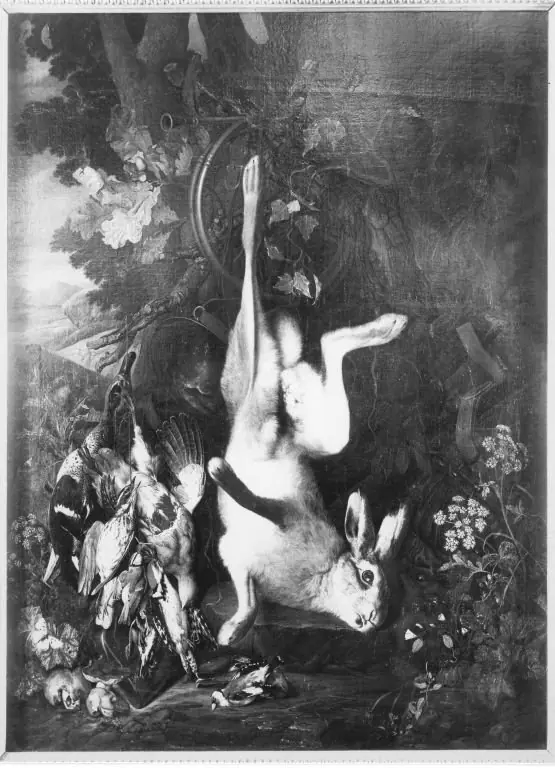
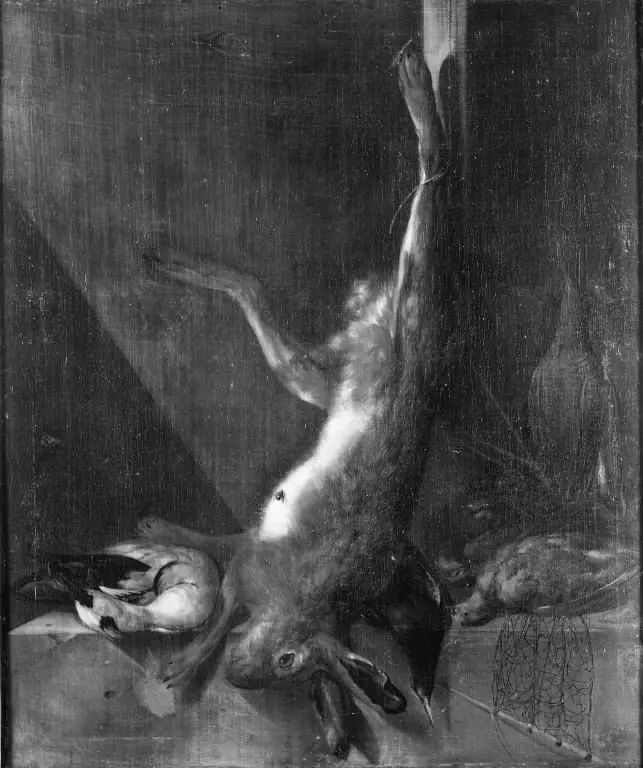
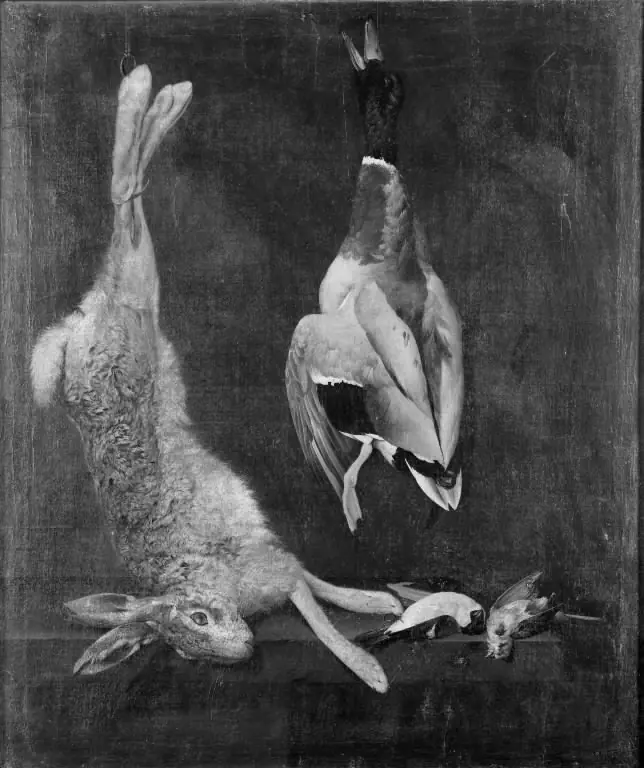
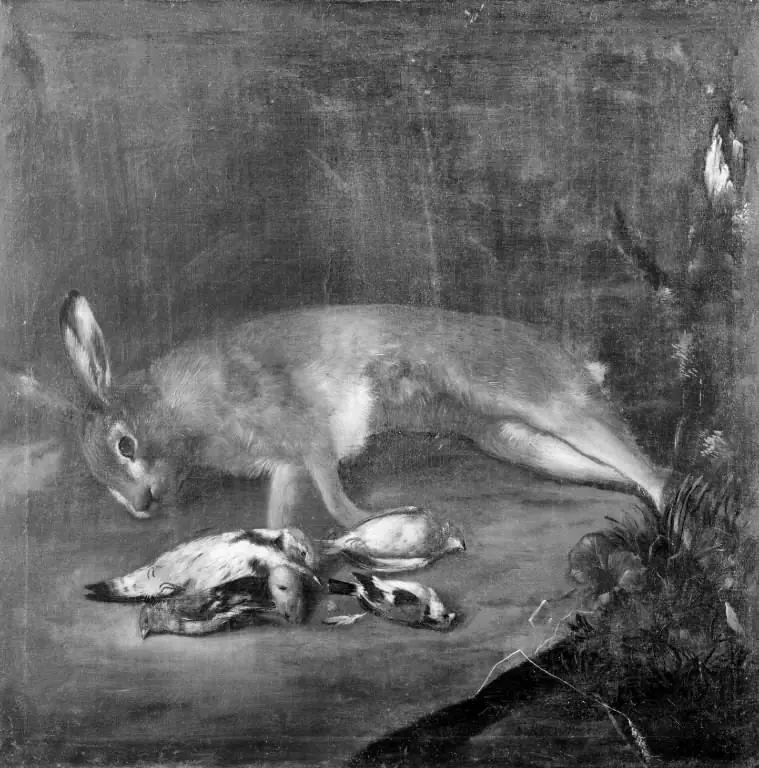
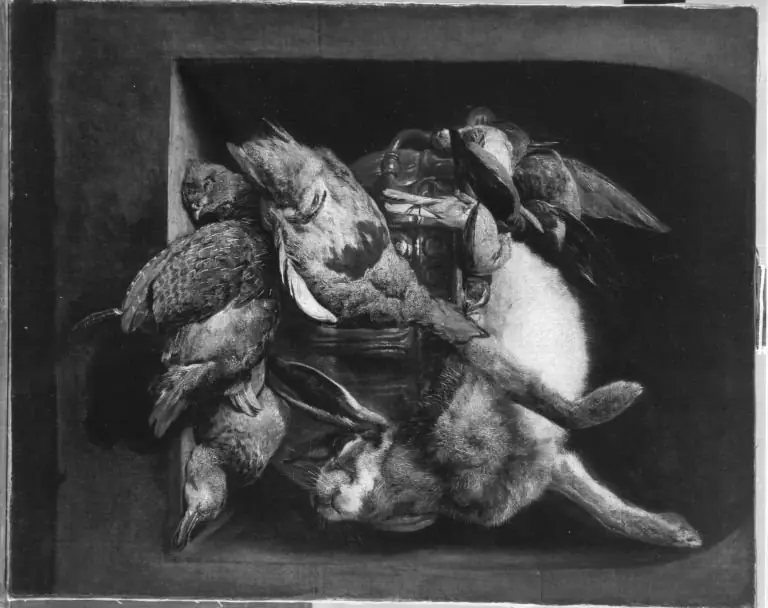
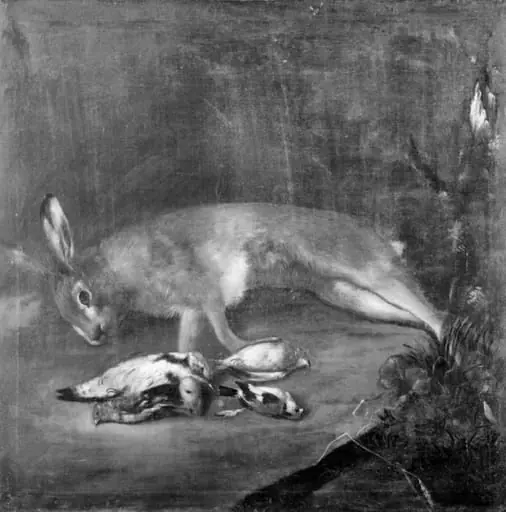
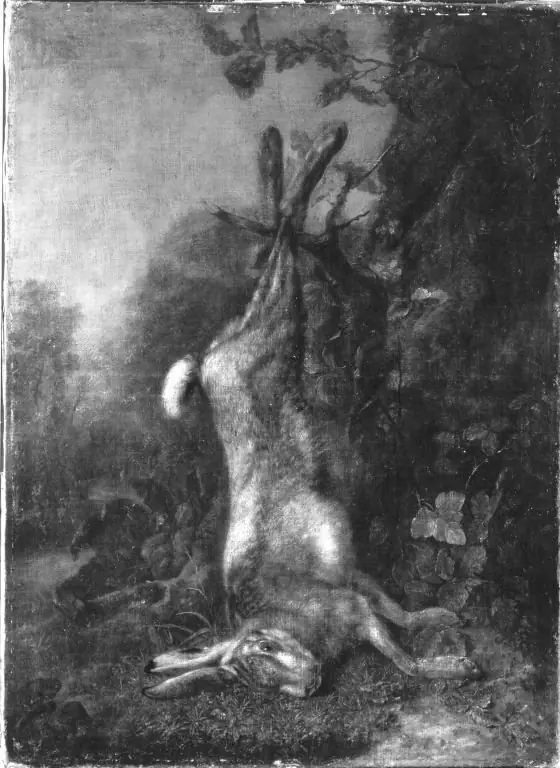
Created in 1707 by Philipp Ferdinand de Hamilton, a painter of Southern Netherlandish origin active in Austria, this work belongs to the Flemish Baroque tradition. It is a still‑life composition that presents a single dead hare as its focal point, and it is part of the Alte Pinakothek’s collection in Munich.
Subject & Meaning
The painting concentrates on a hare that lies in a relaxed, slightly twisted posture, its body turned left while the head looks to the right. The animal is rendered with meticulous attention to its fur, suggesting both the texture of the hide and the fleeting nature of hunted game, a common theme in early‑18th‑century still‑life.
Technique & Style
Hamilton employs a limited palette of chiaroscuro, setting the hare against a deep, almost black background that heightens the contrast between light and shadow. The fur is built up in layered brushstrokes that shift from dark tones in the shadows to lighter highlights, creating a sense of three‑dimensionality and tactile surface within the Baroque aesthetic.
History & Provenance
After its completion in the early 1700s, the painting entered the holdings of the Bavarian royal collection, eventually becoming part of the Alte Pinakothek’s permanent display. Its provenance reflects the artist’s career in the Habsburg territories and the continued interest of Germanic courts in Flemish still‑life works.
Artist & collection
Artist
Philipp Ferdinand de Hamilton (c. 1664 – 1750), was an 18th-century painter from the Southern Netherlands active in Austria.