Artwork
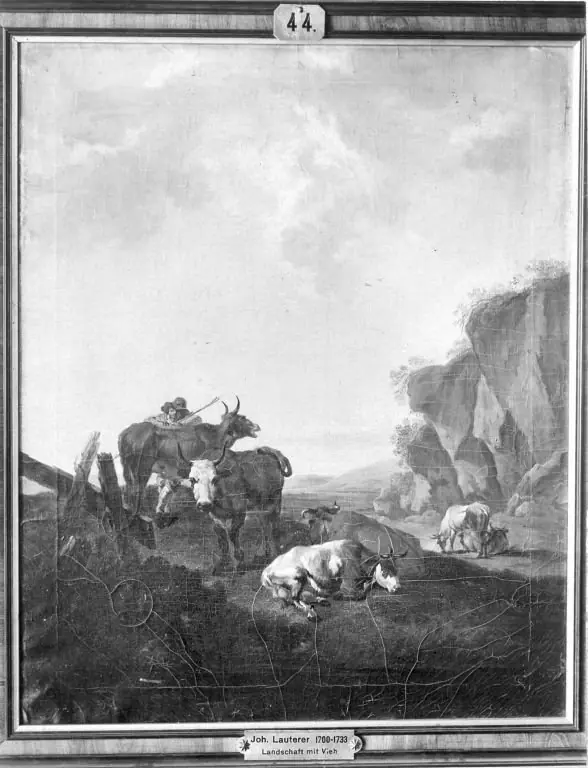
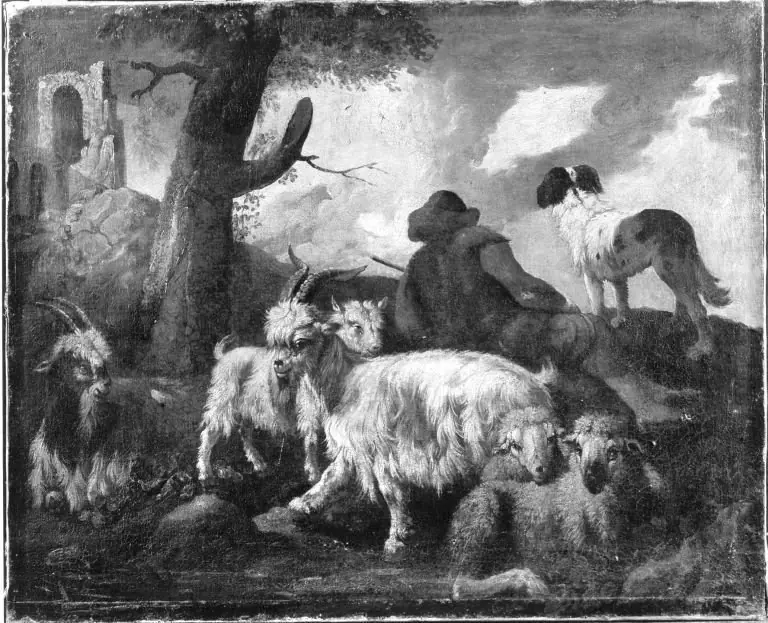
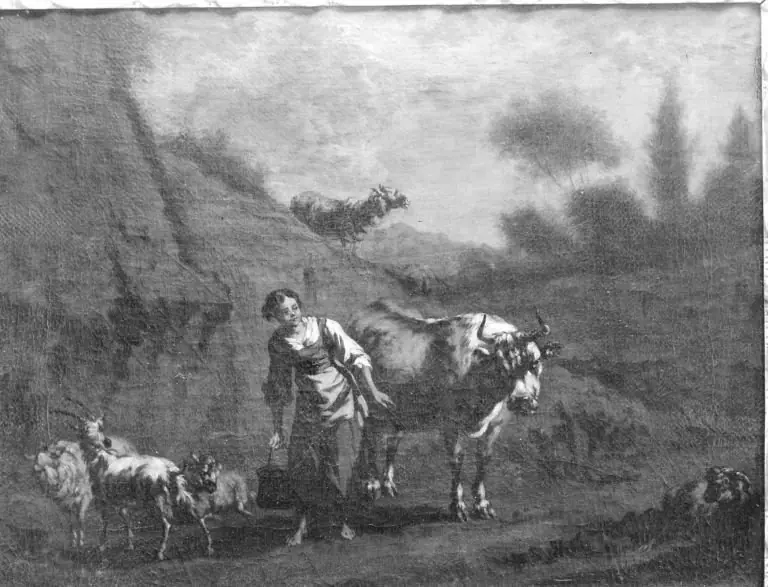
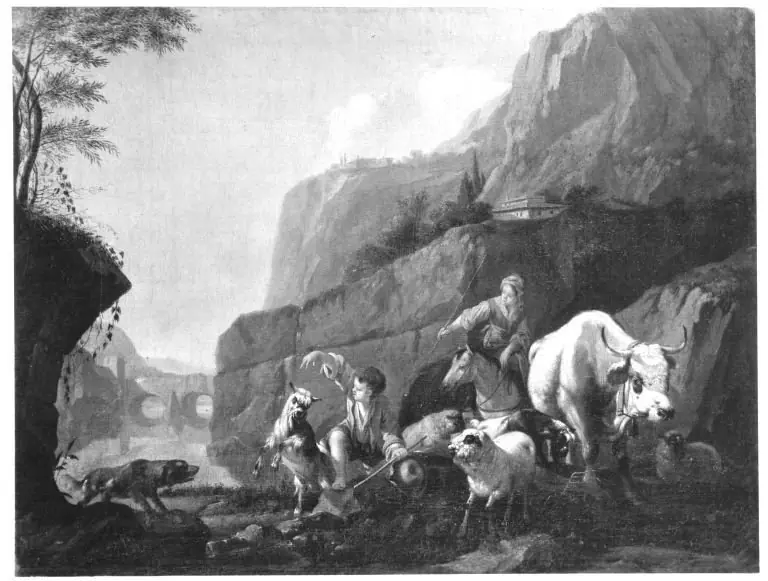
Viehstück
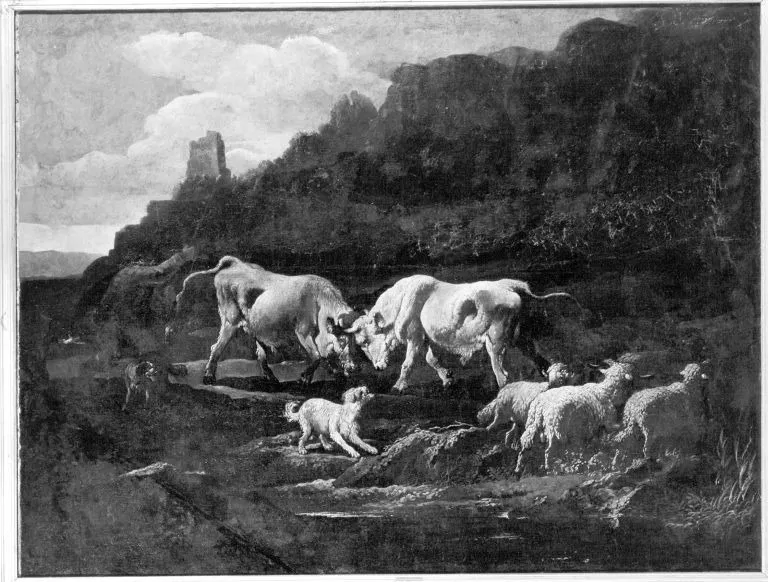
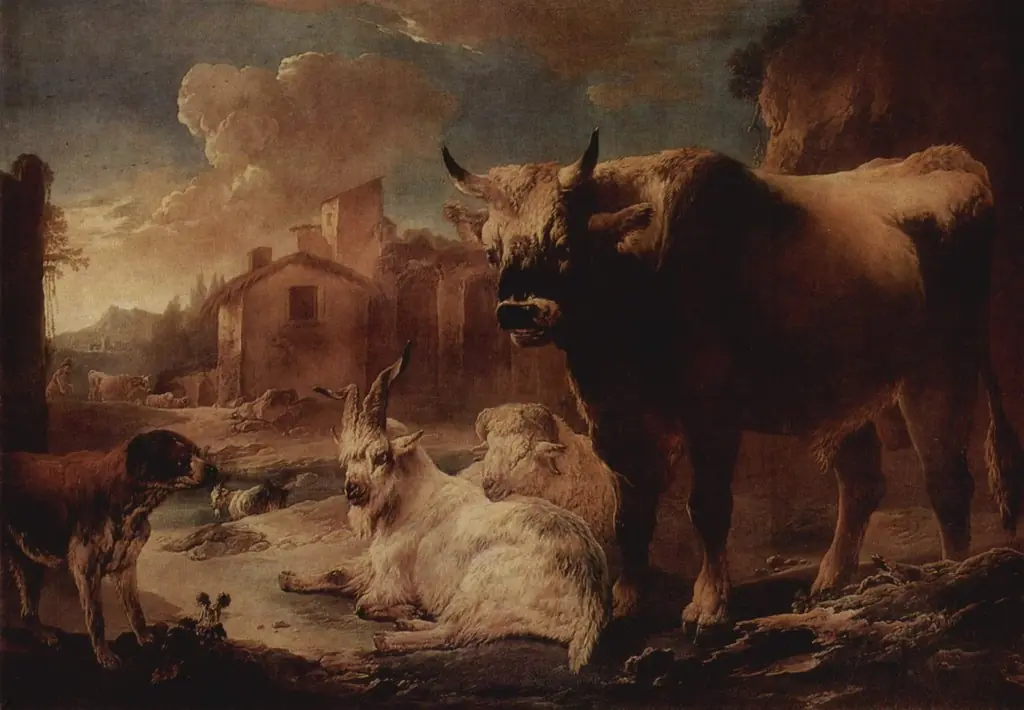
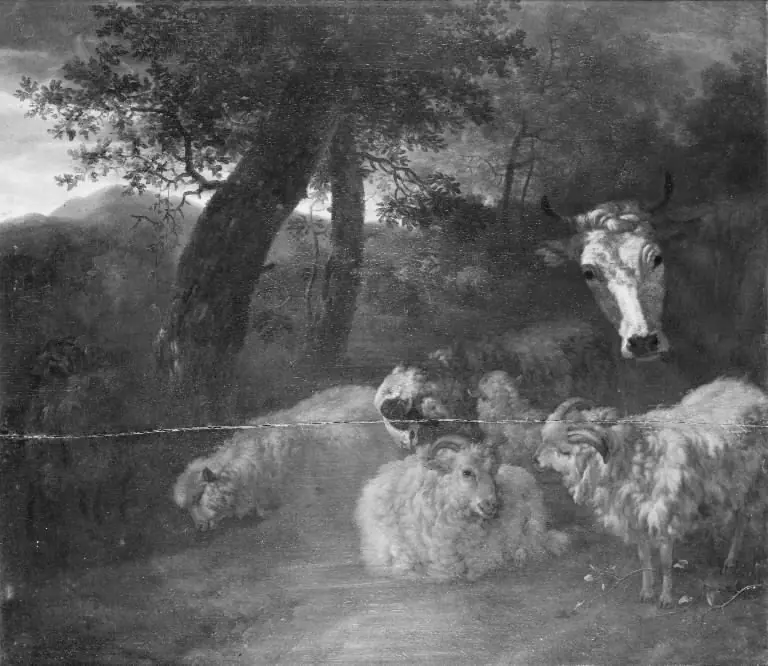
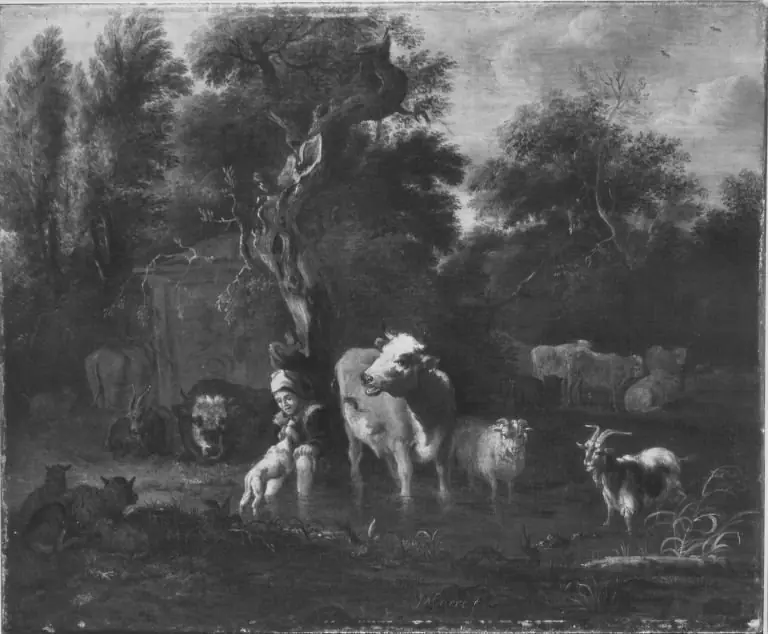
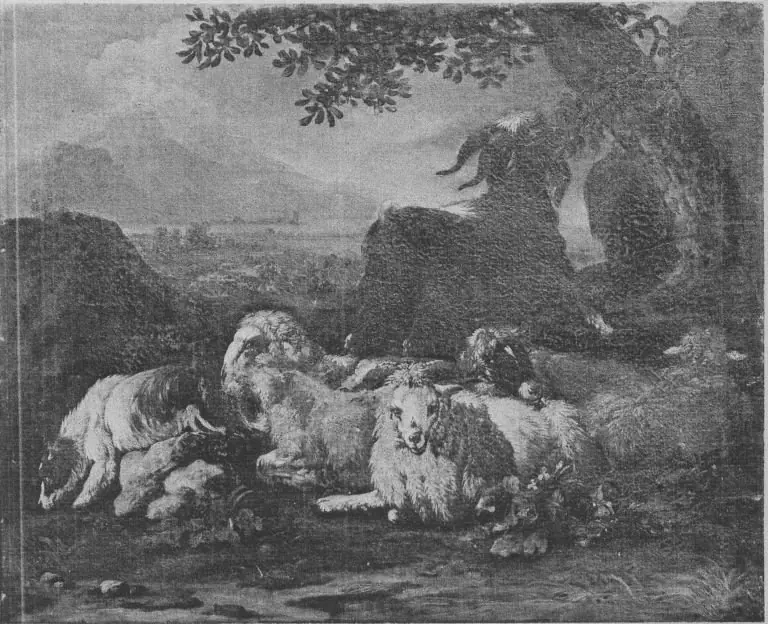
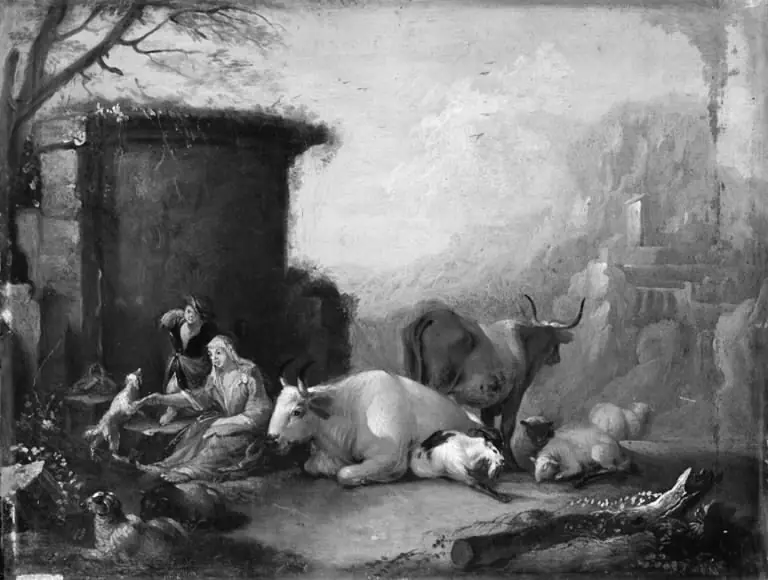
Viehstück is an unspecified painting by the Flemish Baroque painting artist Philipp Peter Roos. It dates from 1691 and is held in the collection of the Bavarian State Painting Collections.
About this work
Overview
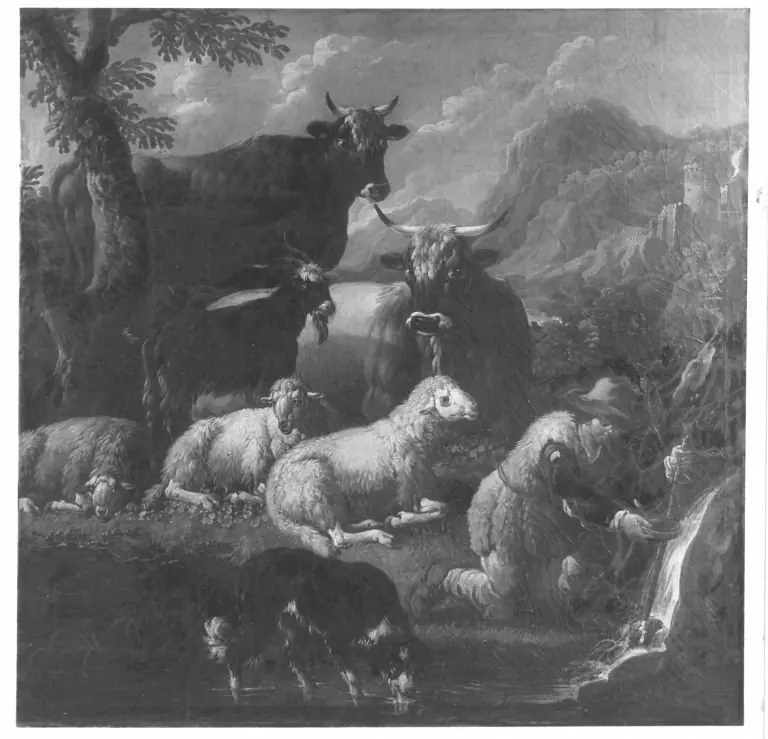
Philipp Peter Roos, a German painter active in the Roman artistic circles from the late 1670s, completed the work titled *Viehstück* in 1691. The canvas, now held by Munich’s Alte Pinakothek, belongs to the late Baroque period and presents a rural tableau populated by livestock and a small dog.
Subject & Meaning
The composition centers on three sizable oxen traversing a stony riverside track, trailed by two sheep and a vigilant canine. The animals are arranged in a linear progression that suggests movement toward a distant hill crowned by the ruins of a castle, evoking themes of pastoral labor and the passage of time.
Technique & Style
Roos employs a pronounced chiaroscuro, contrasting deep shadows on the rugged ground with illuminated bodies of the animals. This handling of light accentuates the muscular forms of the oxen and the alert posture of the dog, while the atmospheric sky and distant architecture are rendered with softer tonal transitions.
History & Provenance
Created during Roos’s Roman period, *Viehstück* entered the collection of the Alte Pinakothek in the 19th century, where it has remained on public display. Documentation traces its ownership through several private collectors before its acquisition by the museum, confirming its continuous presence in German collections.
Context
The painting reflects the Flemish Baroque influence that permeated northern European art in the late 17th century, especially in its detailed animal studies and dramatic lighting. Roos, known for his animal scenes, integrates the genre’s interest in naturalism with the grandiose sensibility of Baroque narrative.
Artist & collection
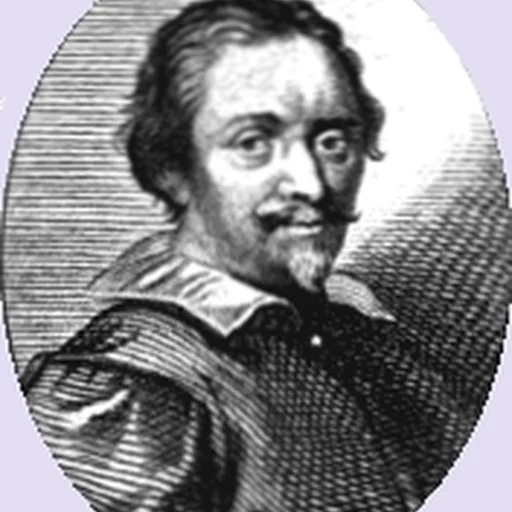
Artist
Philipp Peter Roos (later surnamed Rosa di Tivoli; 1655–1706) was a German Baroque painter, active in and near Rome from 1677 onward.