Artwork
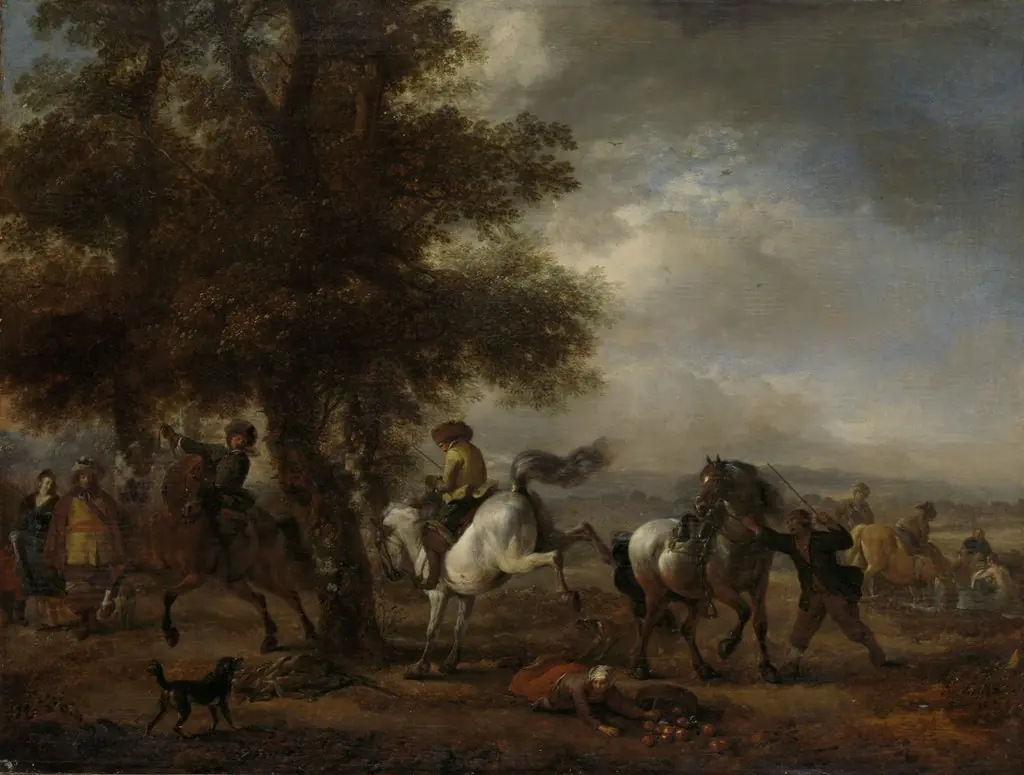
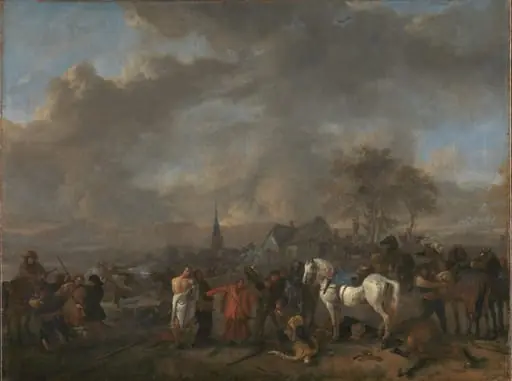
A peasant free-for-all near a village
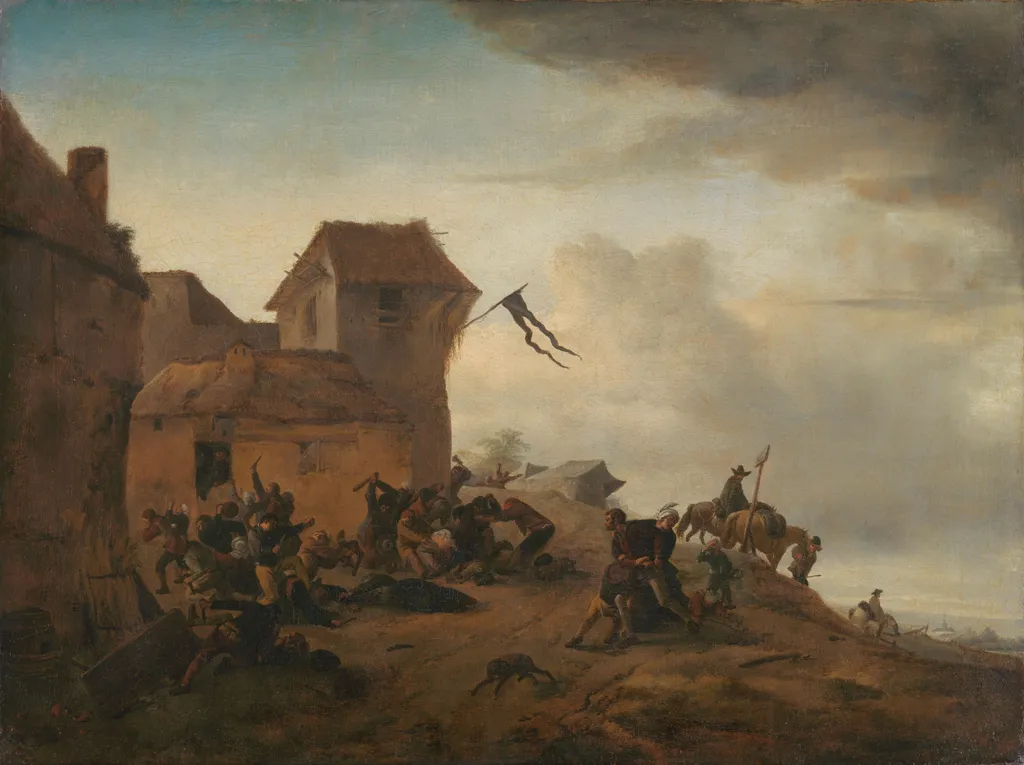
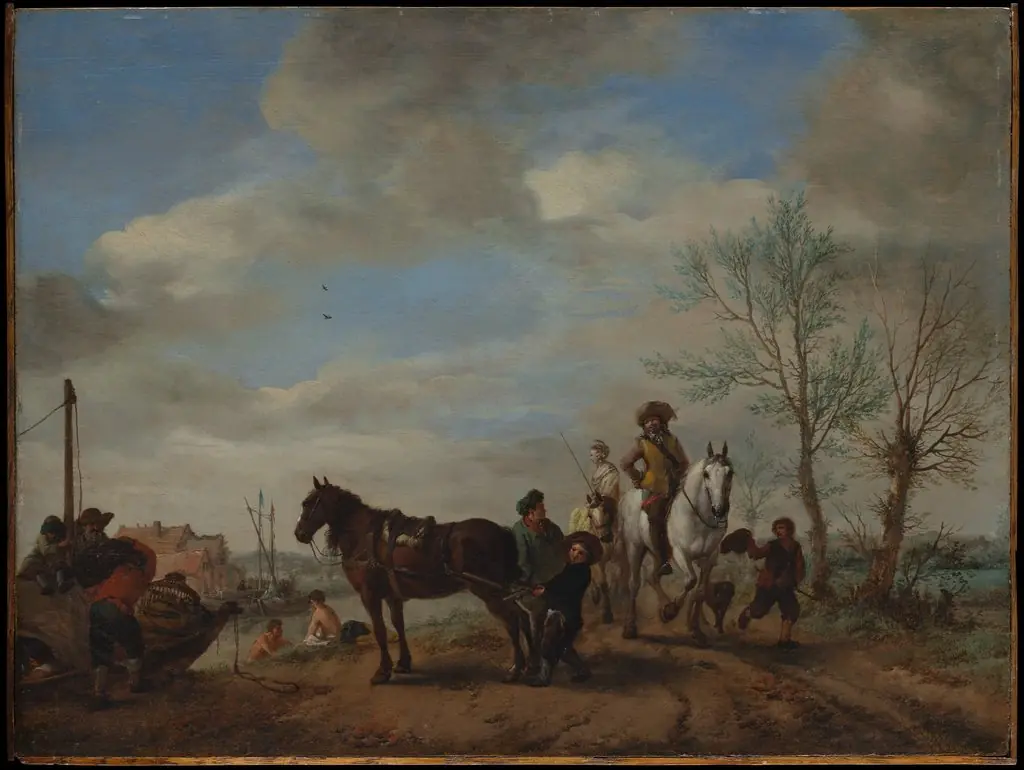
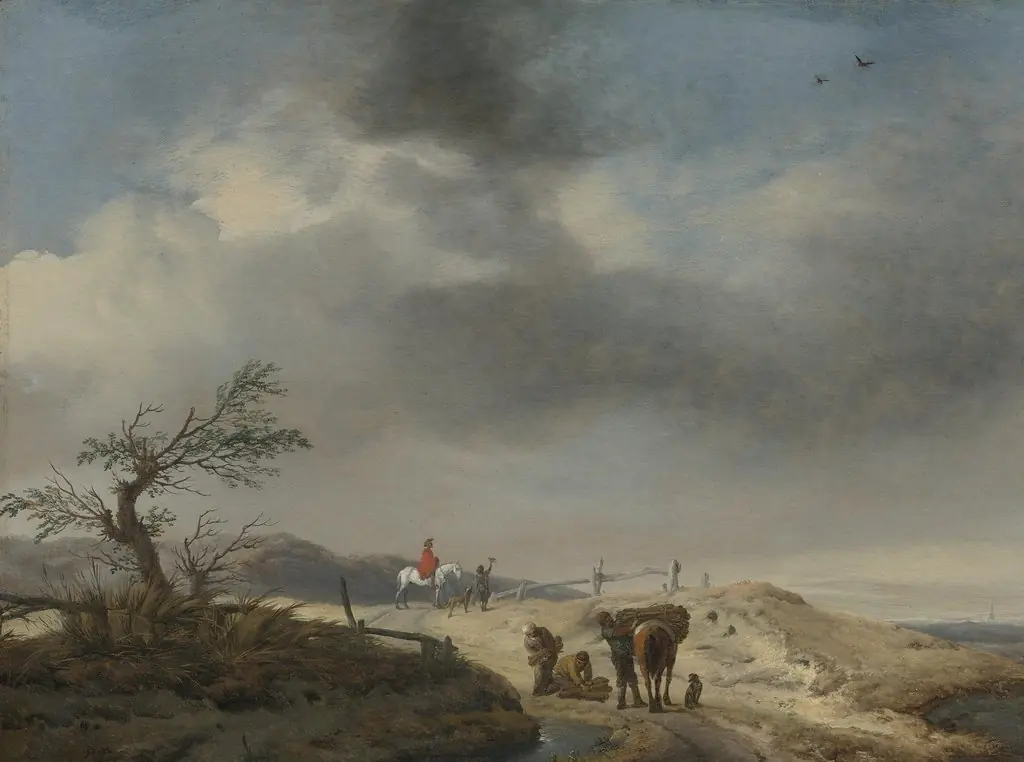
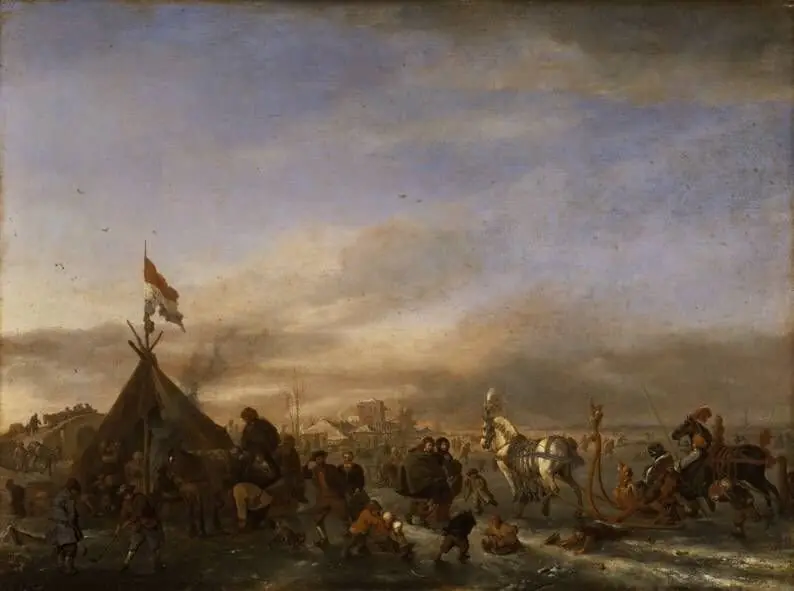
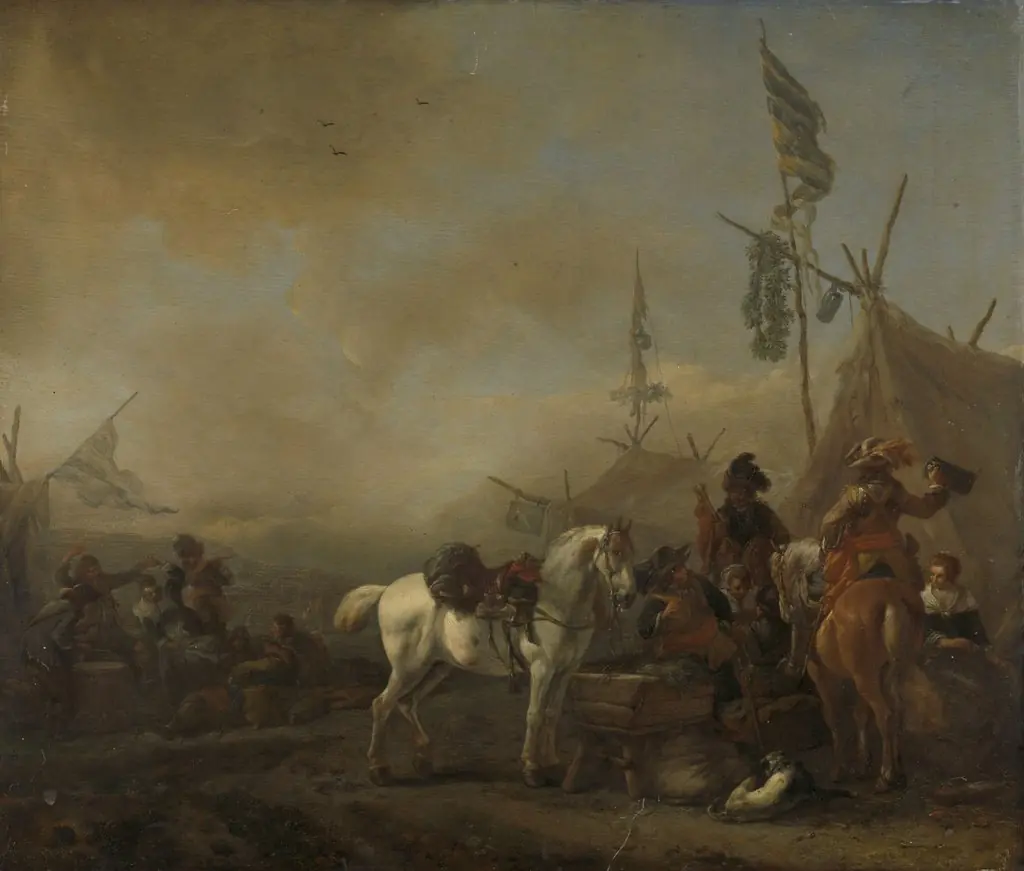
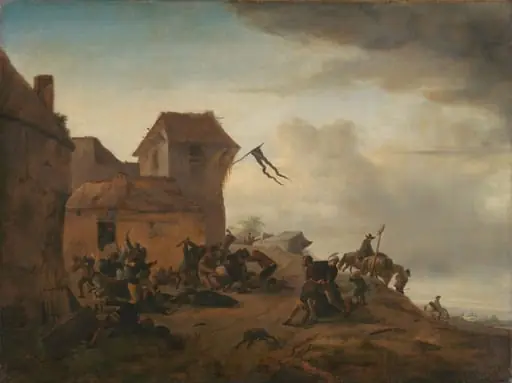
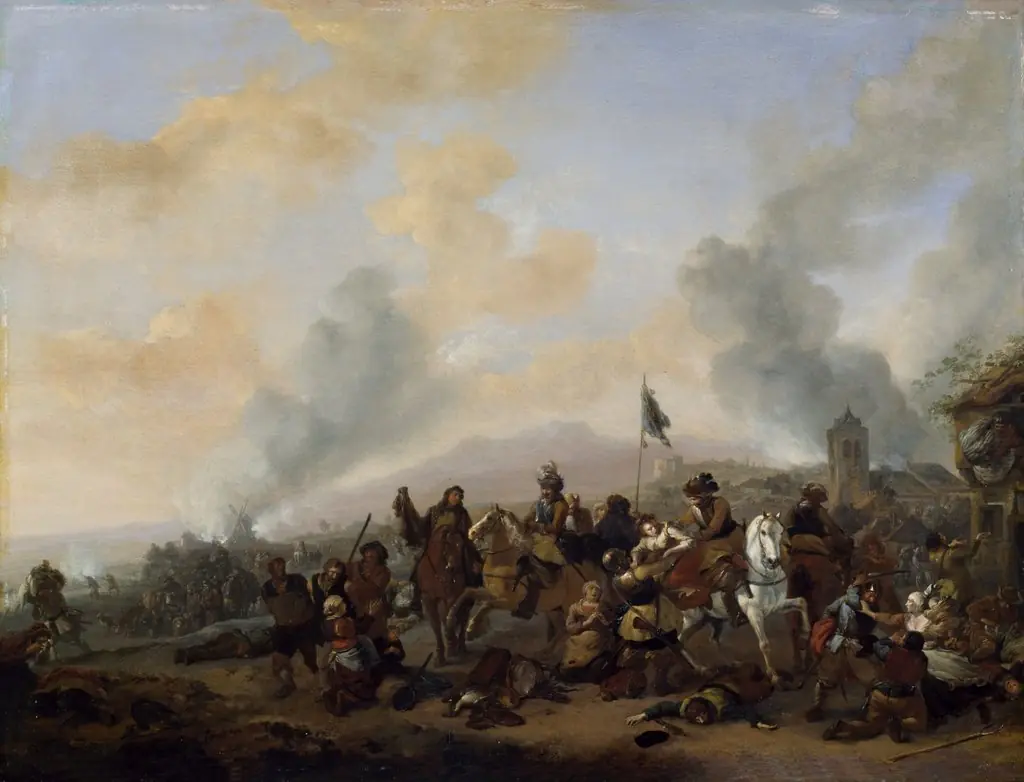
A peasant free-for-all near a village is an oil painting by the Dutch Golden Age artist Philips Wouwerman. It dates from 1650 and is held in the collection of the Rijksmuseum.
About this work
Overview
Philips Wouwerman, a Dutch artist active in the mid‑17th century, painted the work known as *A peasant free‑for‑all near a village* around 1650. Executed in oil on canvas, the picture belongs to the landscape tradition and is now part of the Rijksmuseum’s collection.
Subject & Meaning
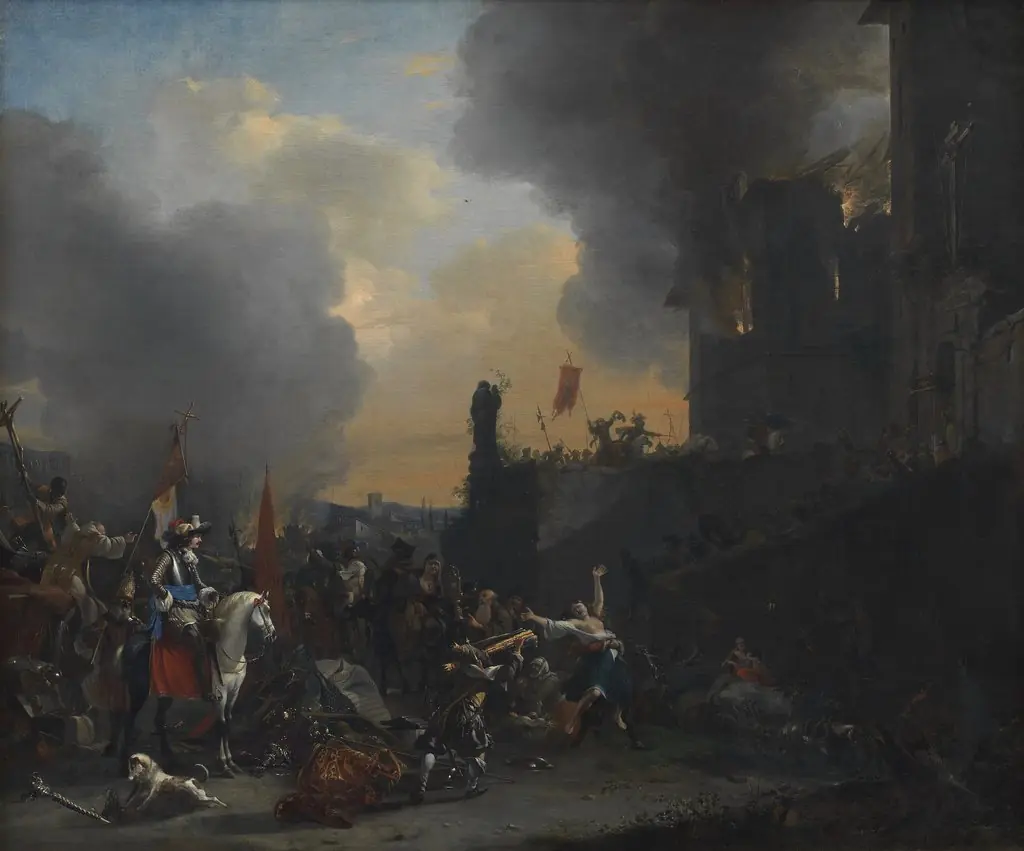
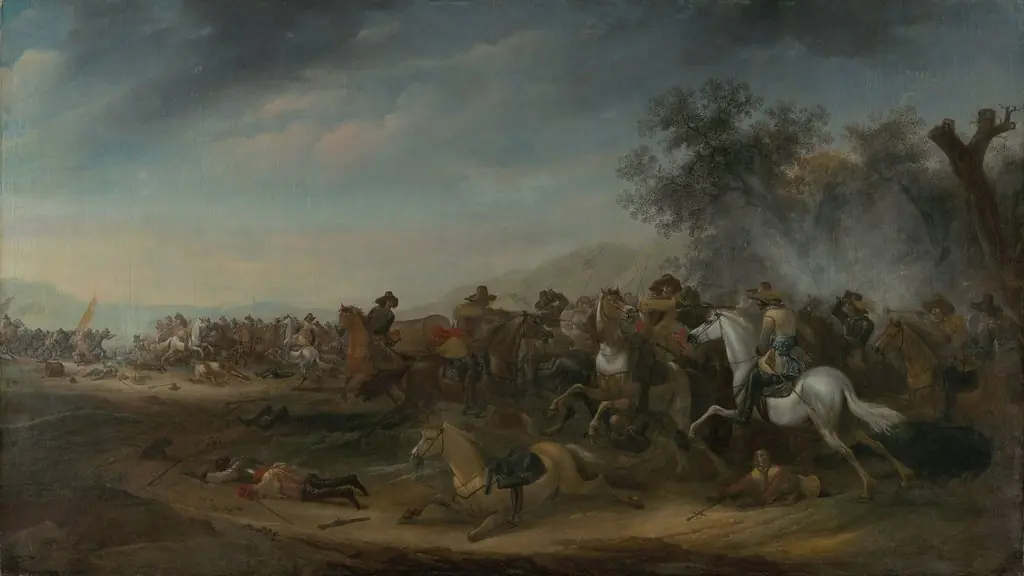
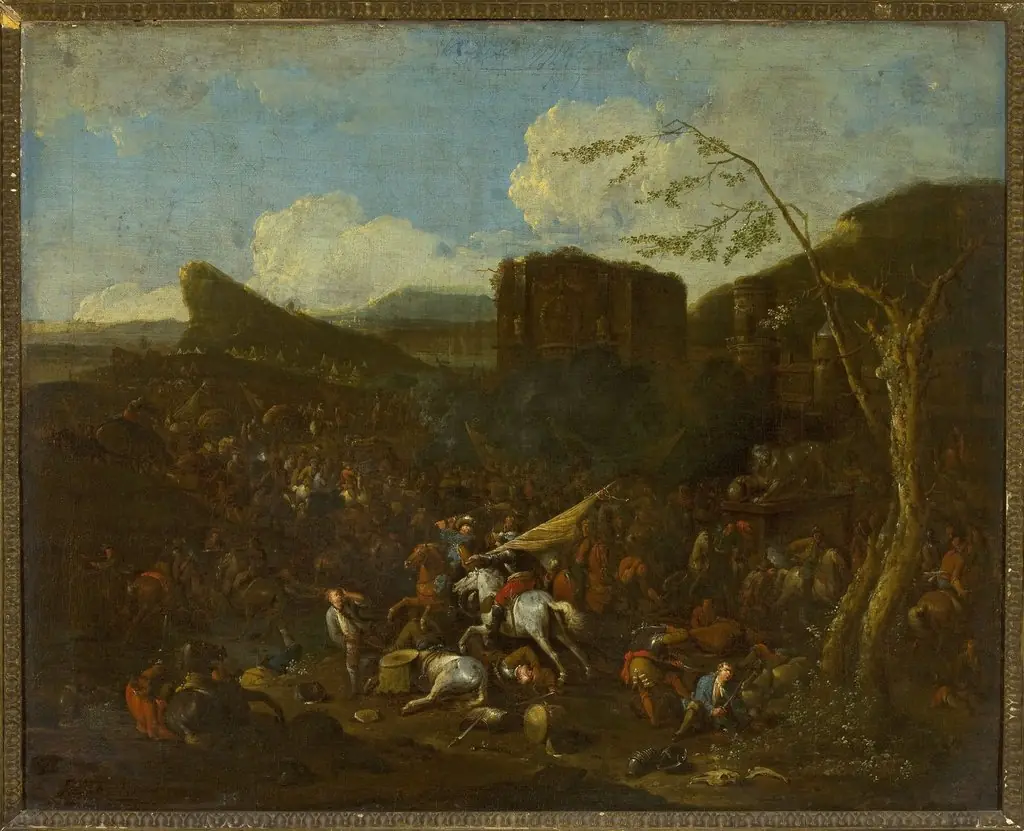
The composition captures a tumultuous melee taking place on the outskirts of a modest village. Foot soldiers and mounted riders clash with sticks, swords and clubs, while a flag flutters on a pole. The surrounding dwellings are simple stone structures topped with thatched roofs, set against a brooding, storm‑laden sky.
Technique & Style
Wouwerman employs brisk, energetic brushwork that conveys the urgency of the scene. In several areas, especially on the horses and garments, he applies the paint thickly, creating an impasto surface that adds tactile depth and emphasizes movement.
History & Provenance
A member of the Haarlem Guild of St. Luke, Wouwerman was prolific in depicting hunting, battle and rural subjects. This particular canvas entered the Rijksmuseum’s holdings, where it remains on public view as an example of his mid‑career output.
Context
The painting reflects the Dutch Golden Age’s fascination with genre scenes that combined everyday life with dramatic narrative. Though the event depicted is fictional, it echoes contemporary concerns about social disorder and the precariousness of rural existence.
Own this work as a print
Artist & collection
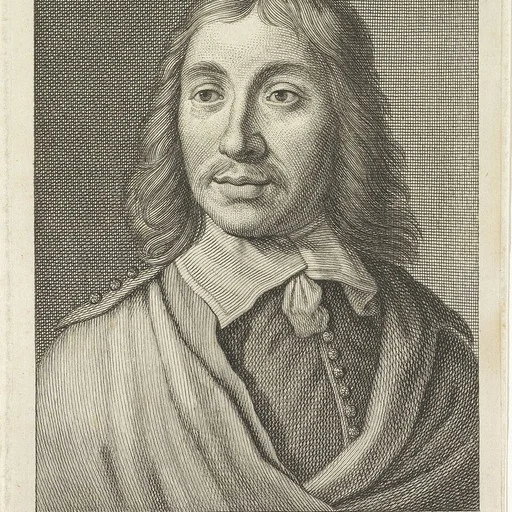
Artist
Philips Wouwerman (also Wouwermans) (24 May 1619 (baptized) – 19 May 1668) was a Dutch painter of hunting, landscape and battle scenes. He became prolific during the Dutch Golden Age and joined the Haarlem Guild of St. Luke.