Artwork
Cottage at Tonbridge
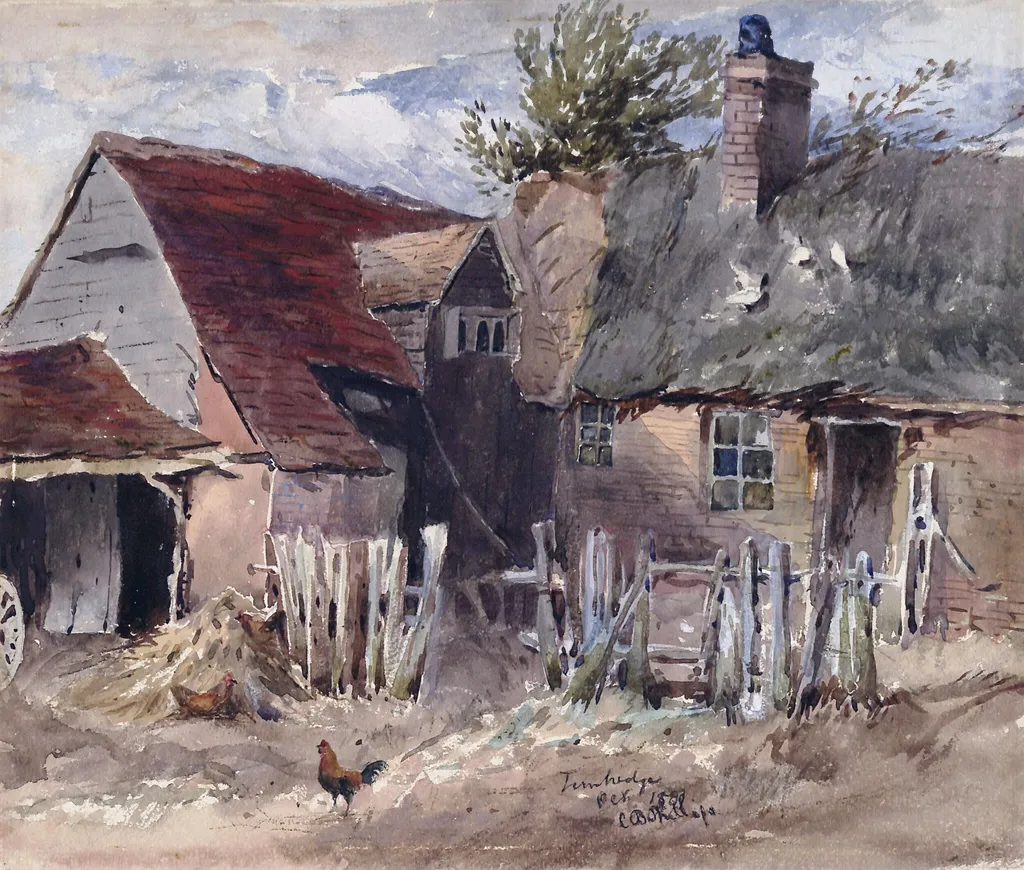
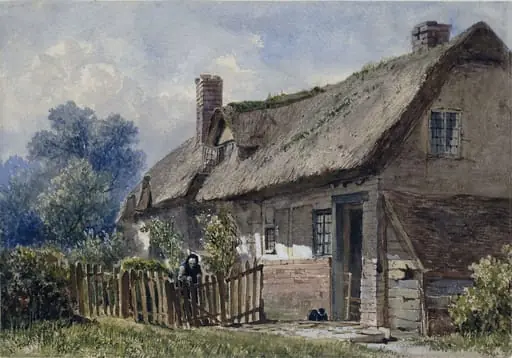
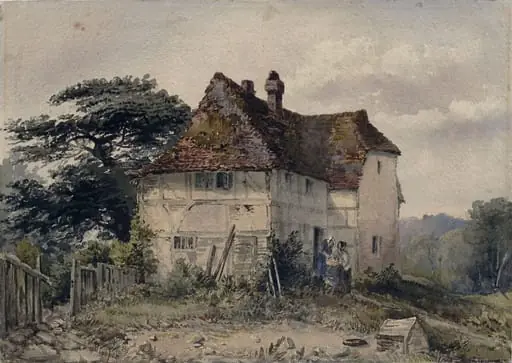
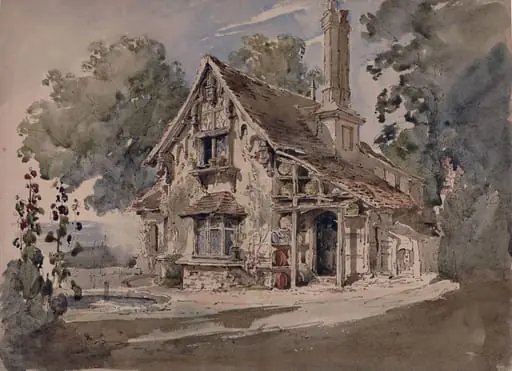
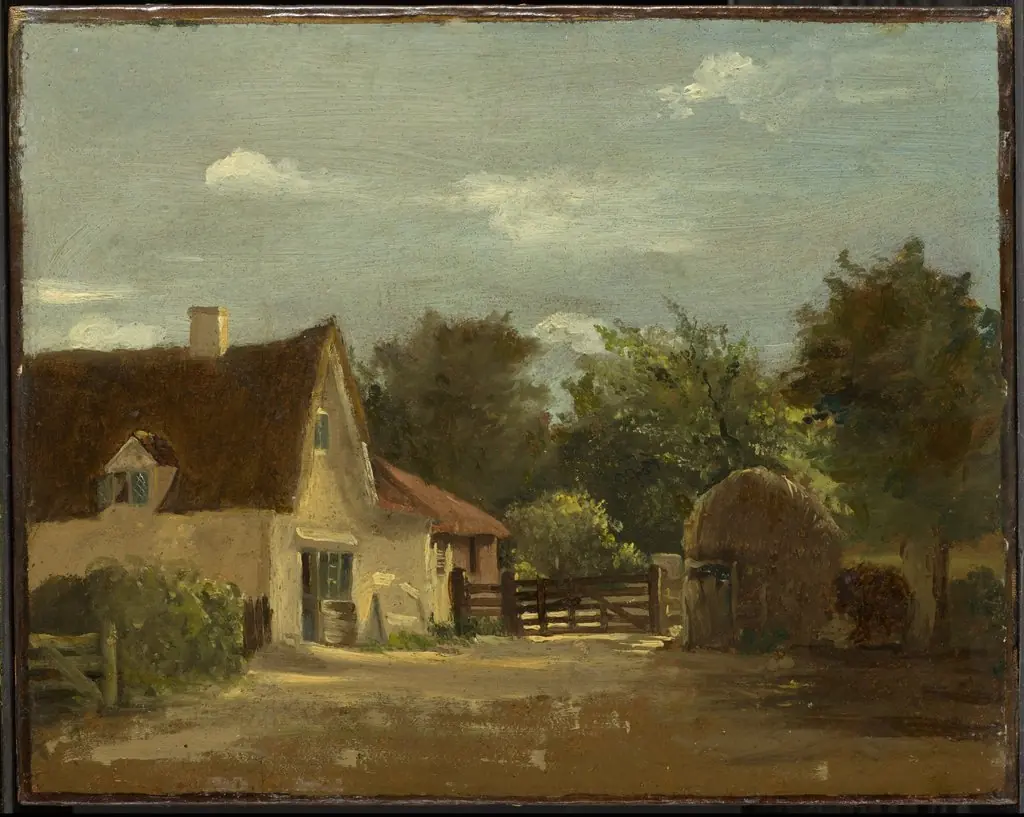
Cottage at Tonbridge is a watercolor work on paper by the Impressionist artist Lawrence Barnett Phillips. It dates from 1889 and is held in the collection of the Victoria and Albert Museum.
About this work
Overview
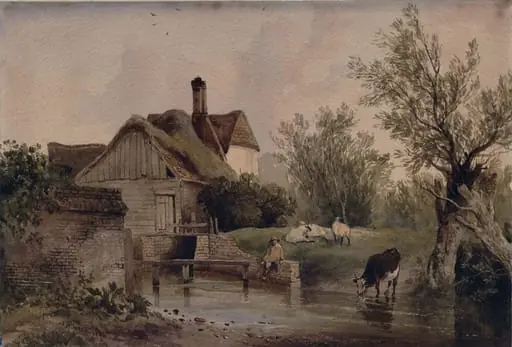
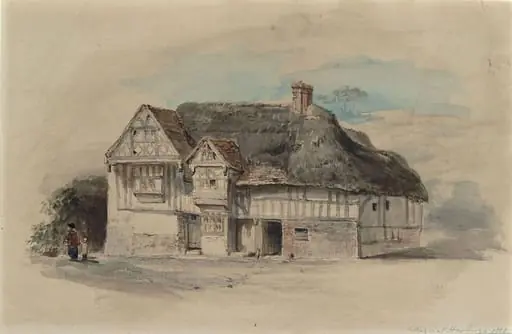
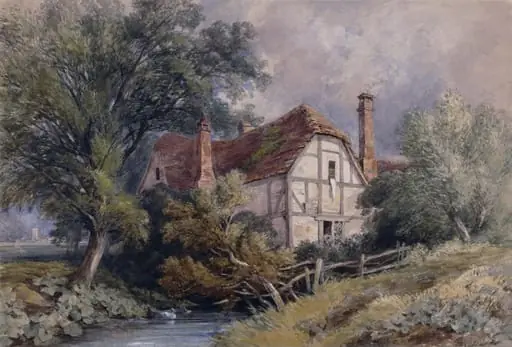
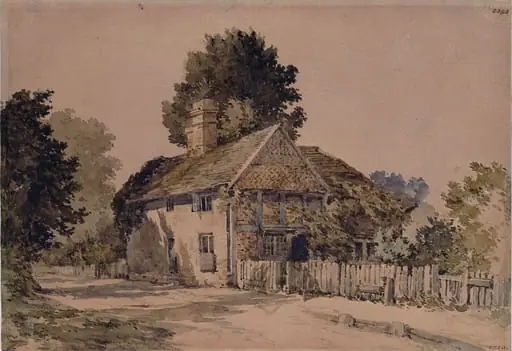
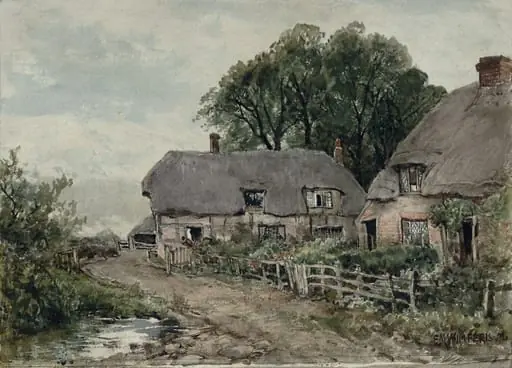
Painted in 1889 by Lawrence Barnett Phillips, this watercolour depicts a modest rural dwelling in Tonbridge. Executed with delicate washes and restrained tones, the work captures a quiet moment in a small English village. The artist’s hand is evident in the soft edges and subtle gradations of light, suggesting an outdoor session focused on atmosphere rather than detail.
Subject & Meaning
The scene centers on a thatched cottage flanked by neighboring structures, with a wooden fence and a rooster near the entrance.
The scene centers on a thatched cottage flanked by neighboring structures, with a wooden fence and a rooster near the entrance. These elements evoke daily rural life without narrative emphasis. The presence of the rooster hints at domesticity, while the surrounding buildings suggest a close-knit settlement. The composition invites contemplation of ordinary, unremarkable spaces rather than grandeur.
Technique & Style
Phillips employed transparent watercolour washes to build form through layered tints, avoiding heavy outlines. Brushwork is loose and responsive, capturing the diffuse quality of natural light. Shadows are rendered with cool greys and muted blues, while the thatch and foliage are suggested with dry-brush textures. The overall effect is one of quiet immediacy, aligned with plein air practices of the period.
History & Provenance
The painting is signed and dated by the artist in 1889, placing it within his active period. No documented exhibition history or notable prior owners are recorded. It remains a private work, likely created for personal or local circulation rather than public display. Its survival reflects its modest status as a study of place rather than a commissioned piece.
Context
Created during a time when English watercolourists were increasingly drawn to rural subjects, Phillips’s work reflects a broader interest in vernacular architecture and everyday landscapes. While not formally part of the Impressionist movement, his approach shares affinities with its emphasis on light and transient effects, situating him within a wider trend of observational painting in late Victorian Britain.
Legacy
Phillips’s *Cottage at Tonbridge* remains a quiet example of late 19th-century British watercolour practice. It contributes to the understanding of regional artistic responses to rural life, though it has not entered major institutional collections. Its significance lies in its unassuming fidelity to a specific place and moment, preserved through subtle technique rather than dramatic impact.
Own this work as a print
Artist & collection
Artist
Lawrence Barnett Phillips kept a tiny watercolor set in his coat pocket and painted whenever he had three spare minutes—train stations, pub gardens, even the back of a horse-drawn bus.