Artwork
Study from Nature, South K
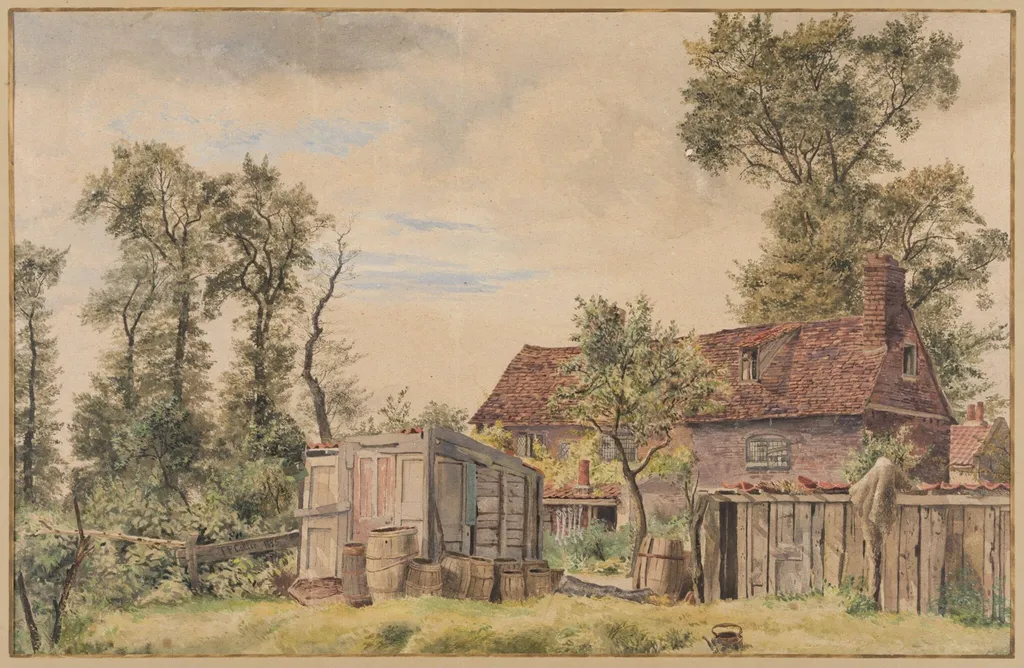
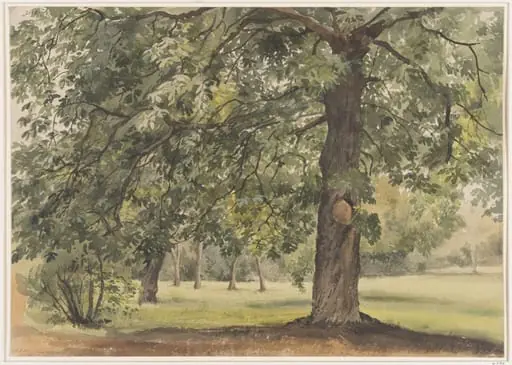
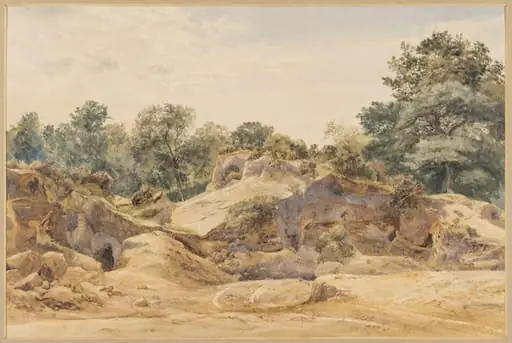
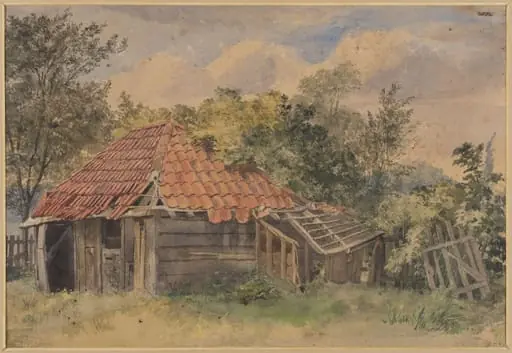
Study from Nature, South K is a watercolor work on paper by the British Romanticist artist Thomas Frederick Collier. It dates from 1855 and is held in the collection of the Victoria and Albert Museum.
About this work
Overview
The work captures a modest stone house with a brown tiled roof, flanked by trees and shrubs, and foreground elements like wooden barrels and a low fence.
Thomas Frederick Collier created this watercolour in 1855, depicting a quiet residential scene in South Kensington. The work captures a modest stone house with a brown tiled roof, flanked by trees and shrubs, and foreground elements like wooden barrels and a low fence. Executed in transparent watercolour, the piece emphasizes atmospheric tone over sharp definition, reflecting a quiet observational approach common in mid-19th-century British landscape studies.
Subject & Meaning
The scene presents an unremarkable domestic setting—neither grand nor dramatic—yet rendered with care. The house, likely a middle-class residence, is framed by natural growth, suggesting harmony between built and organic environments. The absence of human figures invites contemplation of place and time, emphasizing stillness and the quiet rhythms of everyday life in Victorian London’s expanding suburbs.
Technique & Style
Collier employed light washes and controlled brushwork to suggest texture and form without heavy detail. The play of light across the house’s surface and foliage is achieved through subtle gradations of tone, not outline. Watercolour’s transparency allows underlying paper to contribute to highlights, enhancing the sense of natural illumination. The composition avoids dramatic contrast, favoring a muted, harmonious palette aligned with topographical tradition.
History & Provenance
Created in 1855, the work belongs to Collier’s series of topographical studies made during his time in London. It was likely produced as a personal record or preparatory sketch rather than for public exhibition. No documented exhibition history exists, and its early ownership remains unrecorded. The piece entered institutional collections in the 20th century, preserved as an example of amateur and professional landscape practice of the period.
Context
In mid-19th-century Britain, watercolour was widely used for both artistic and scientific documentation. Collier’s work aligns with the tradition of topographical artists who recorded urban and suburban landscapes as London expanded. Unlike the later Impressionists, he did not seek to capture fleeting light effects but rather stable, observed reality—reflecting the era’s emphasis on accuracy and quiet observation over emotional expression.
Legacy
Though not widely exhibited or reproduced, the work contributes to understanding the breadth of British watercolour practice beyond major artistic movements. It exemplifies how artists engaged with their immediate surroundings through careful, unembellished observation. Today, it serves as a quiet testament to the value placed on everyday landscapes in Victorian visual culture, preserved for its historical and technical modesty.
Artist & collection
Artist
Thomas Frederick Collier painted quiet, detailed watercolours of English trees and landscapes in the 1850s.


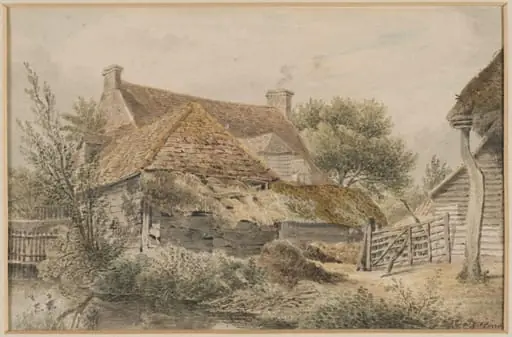 Near Esther, Surrey
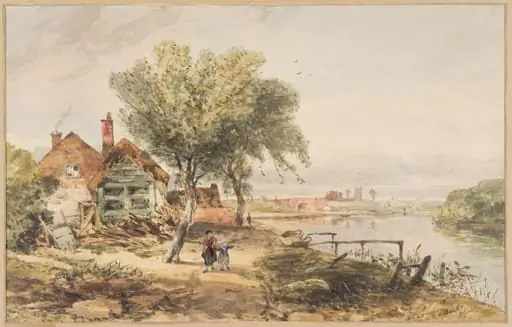 View on the Thames near Sonning
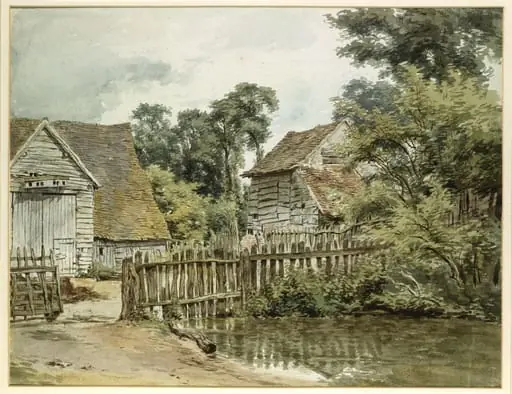 Farmyard with a pool
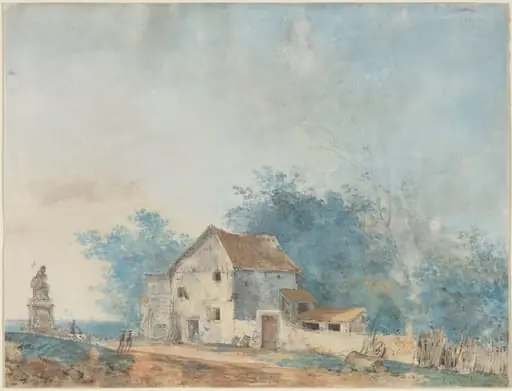 Landscape
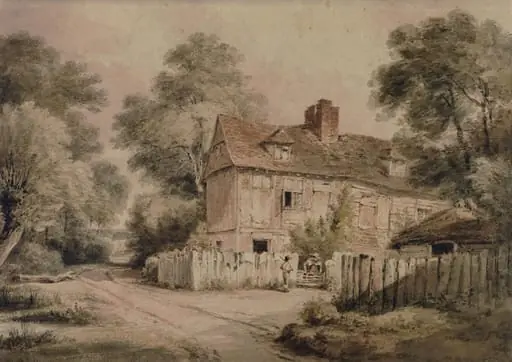 Farmhouse, Buckinghamshire
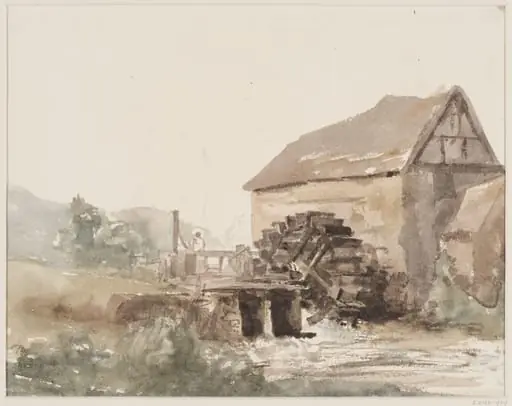 View of a water-mill near Ridware
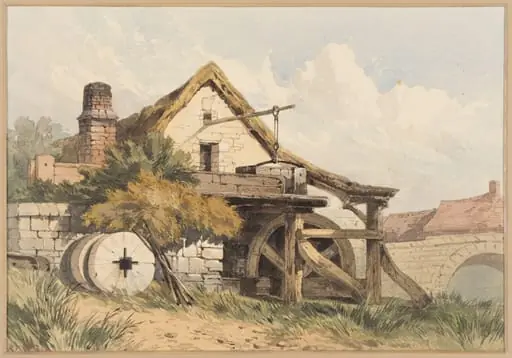 Untitled
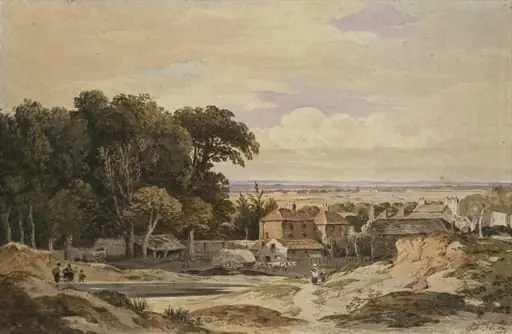 Frognal, Hampstead
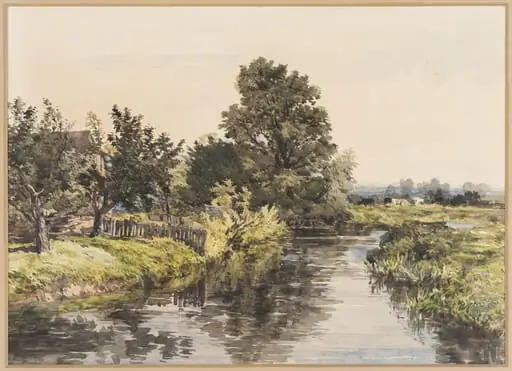 Millpond and Cottage
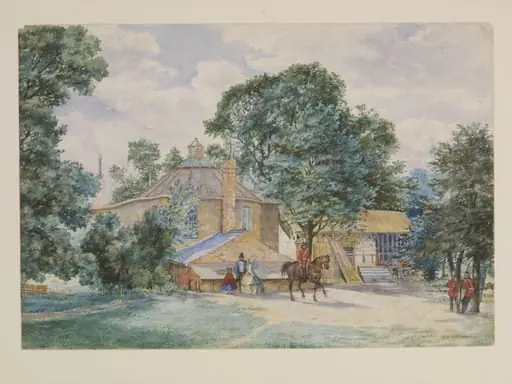 The first lecture theatre at the South Kensington Museum, later the Victoria and Albert Museum
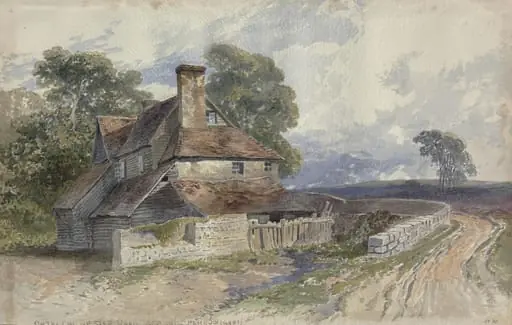 View on the Chichester Road