Artwork
Λυκαβηττός
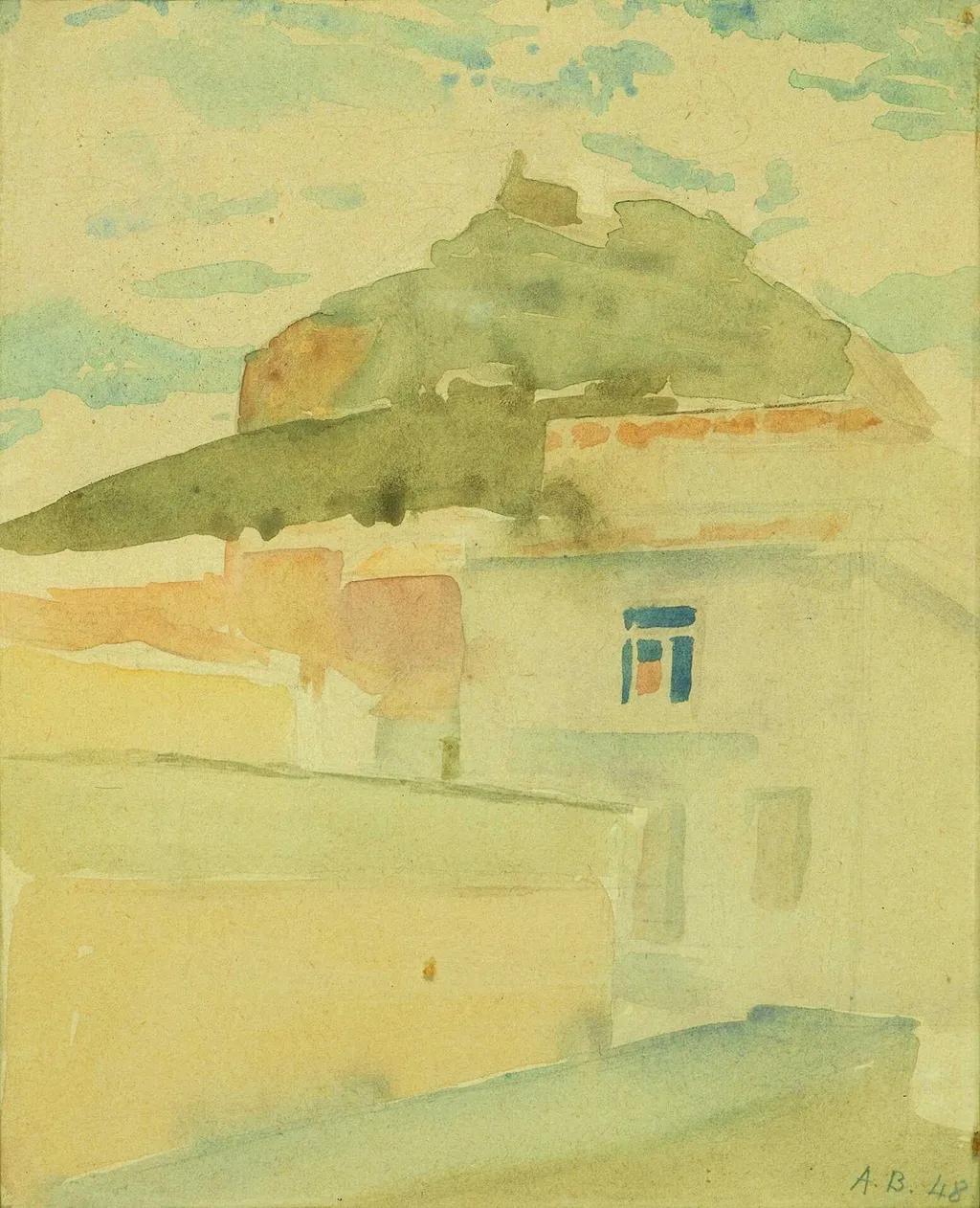
Λυκαβηττός is an unspecified work on paper by Andreas Vourloumis. It dates from 1948 and is held in the collection of the Metropolitan Organisation of Museums of Visual Arts of Thessaloniki – MOMus.
About this work
That trick gives the hill a living, breathing feel—like it’s glowing from inside.
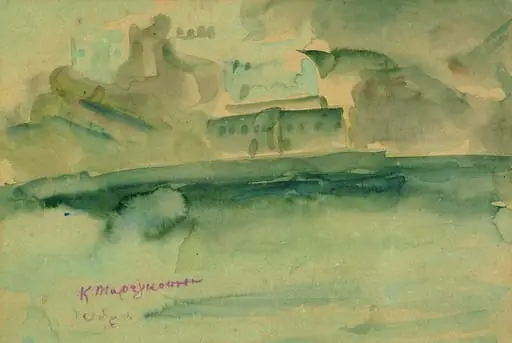
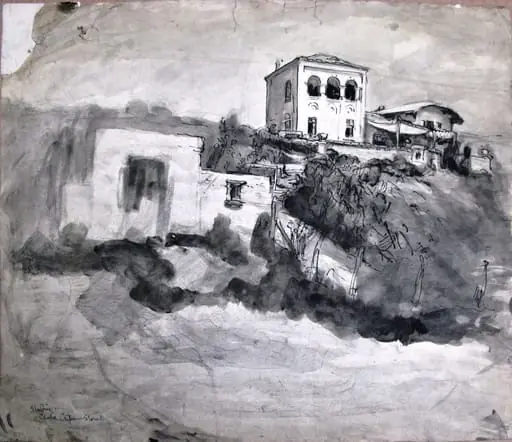
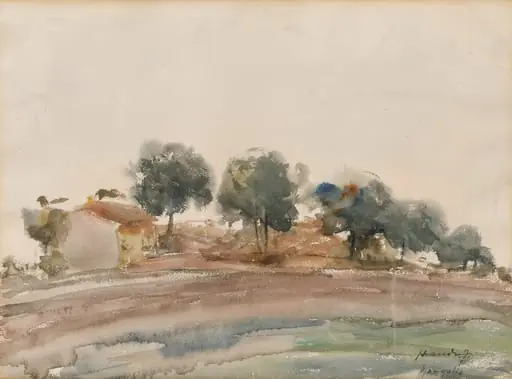
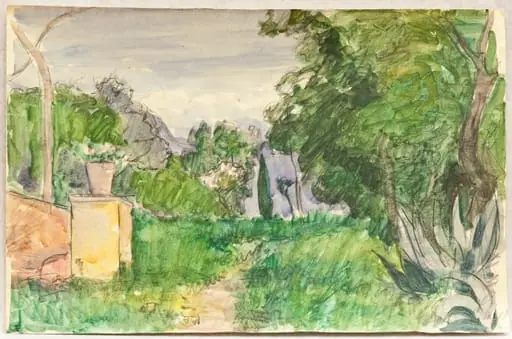
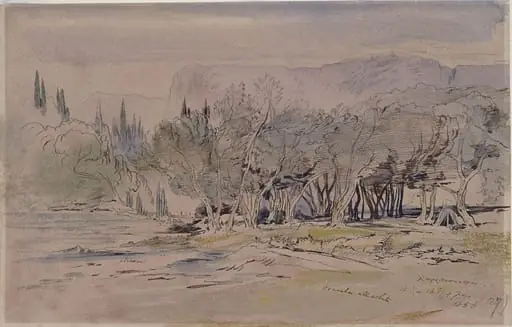
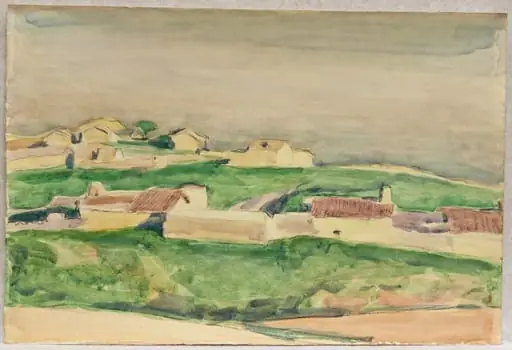
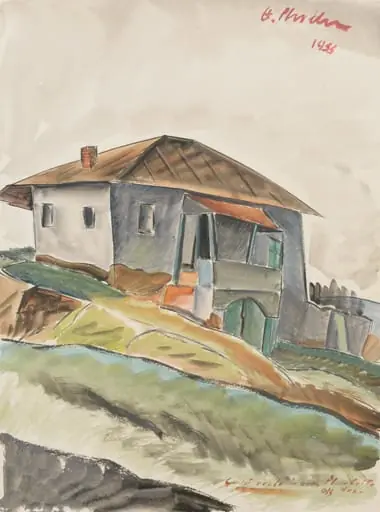
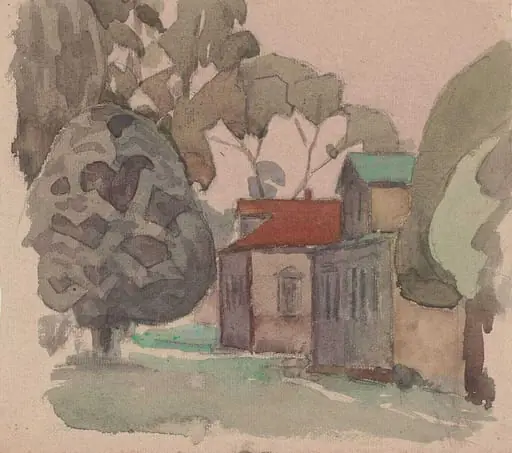
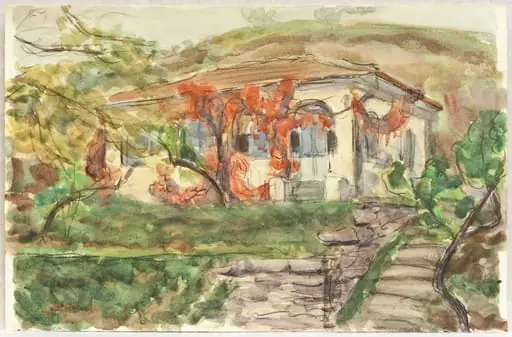
This watercolor shows a soft, blurry view of Athens’ Lycabettus hill at dusk. Warm pinks and purples fade into cool blues near the top. The trees and buildings melt together in washes of color.
Vourloumis painted this by laying down color straight onto wet paper. His edges blur and shift instead of staying sharp. That trick gives the hill a living, breathing feel—like it’s glowing from inside.
Try looking up Vourloumis, Andreas (1910-1999) next.
Overview
Andreas Vourloumis created this watercolor of Lycabettus Hill as part of a series capturing Athens’ urban landscapes. Executed in the mid-20th century, the work exemplifies his refined approach to watercolor, emphasizing atmospheric effects over precise detail. The painting reflects his deep engagement with the city’s changing light and topography, rendered without rigid outlines or conventional structure.
Subject & Meaning
The painting depicts Lycabettus Hill at dusk, a quiet moment when the city’s edges soften under fading light. Rather than documenting architecture or terrain literally, Vourloumis conveys the hill’s presence through shifting hues and blurred forms. The absence of sharp boundaries suggests a landscape in transition—neither fully day nor night—evoking a meditative, almost ephemeral sense of place.
Technique & Style
Vourloumis applied pigment directly onto damp paper, allowing colors to bleed and merge organically. This method eliminated hard contours, replacing them with subtle gradations of pink, purple, and blue that suggest form through tone alone. The resulting surfaces resemble luminous veils, where buildings and trees dissolve into the air. His technique echoes Vuillard’s sensitivity to ambient light, though applied to outdoor, rather than interior, scenes.
History & Provenance
Created during Vourloumis’s mature period, this watercolor belongs to a body of work produced between the 1940s and 1970s, when he focused on Athenian landscapes. Though not widely exhibited internationally, it was recognized in Greece for its technical innovation. Art historian Alexandros Xydis highlighted its departure from traditional watercolor methods in a 1963 lecture, noting its poetic abstraction of form.
Context
In postwar Greece, many artists turned to landscape as a means of reconnecting with national identity. Vourloumis, however, avoided romanticized or nationalist imagery. Instead, he pursued quiet, intimate observations of Athens’ hills and neighborhoods, using watercolor’s fluidity to mirror the city’s impermanent, layered character. His work stood apart from both academic realism and overt modernist abstraction.
Legacy
Vourloumis’s watercolors influenced a generation of Greek artists who sought to expand the expressive potential of the medium. His emphasis on color as structure, rather than outline, helped redefine watercolor as a vehicle for atmospheric expression rather than mere illustration. Though less known abroad, his approach remains a touchstone in Greek modernist watercolor practice.
Artist & collection
Museum
Metropolitan Organisation of Museums of Visual Arts of Thessaloniki – MOMus
Continue through works from the same source collection.