Artwork
STUDIU DE FEMEIE
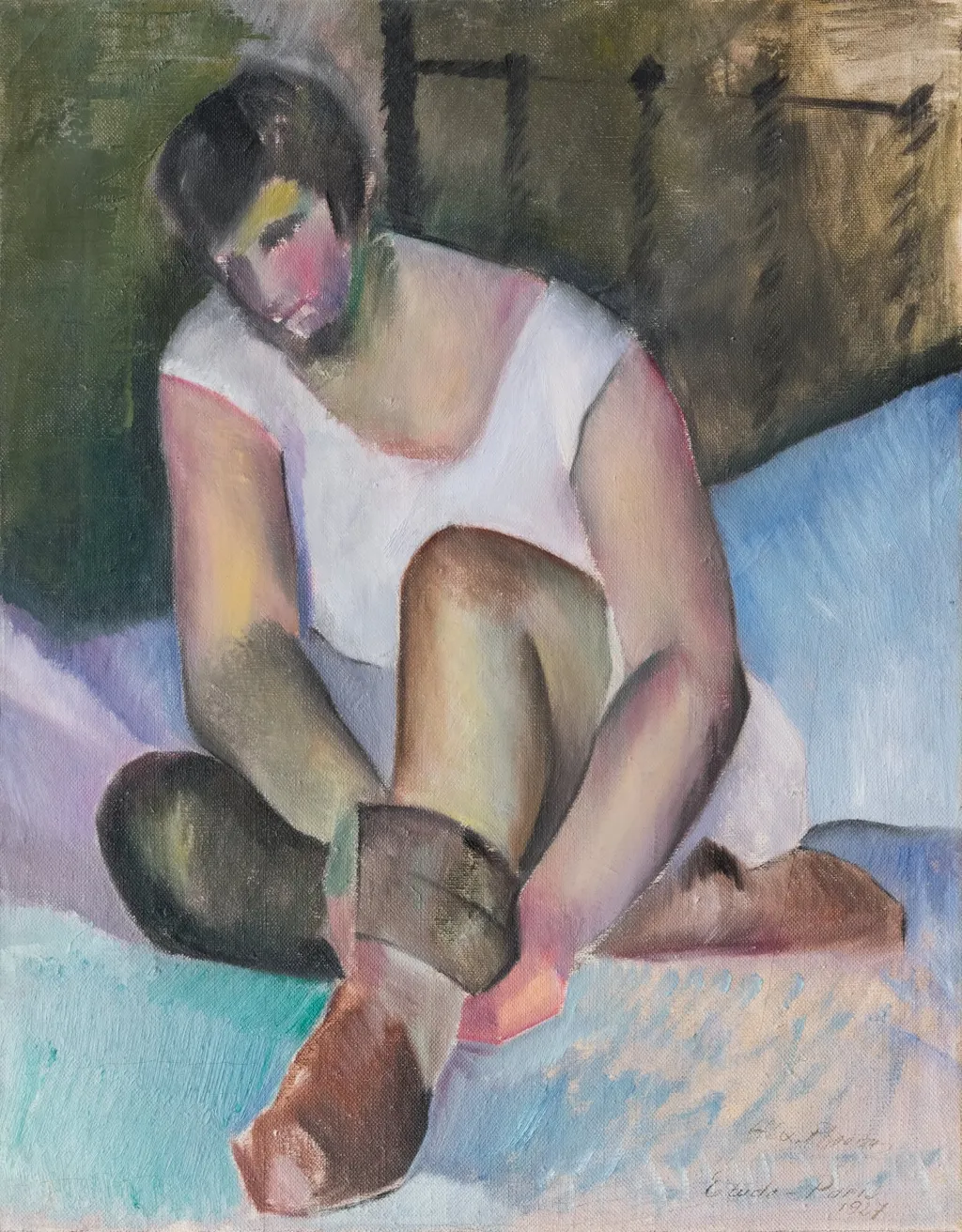
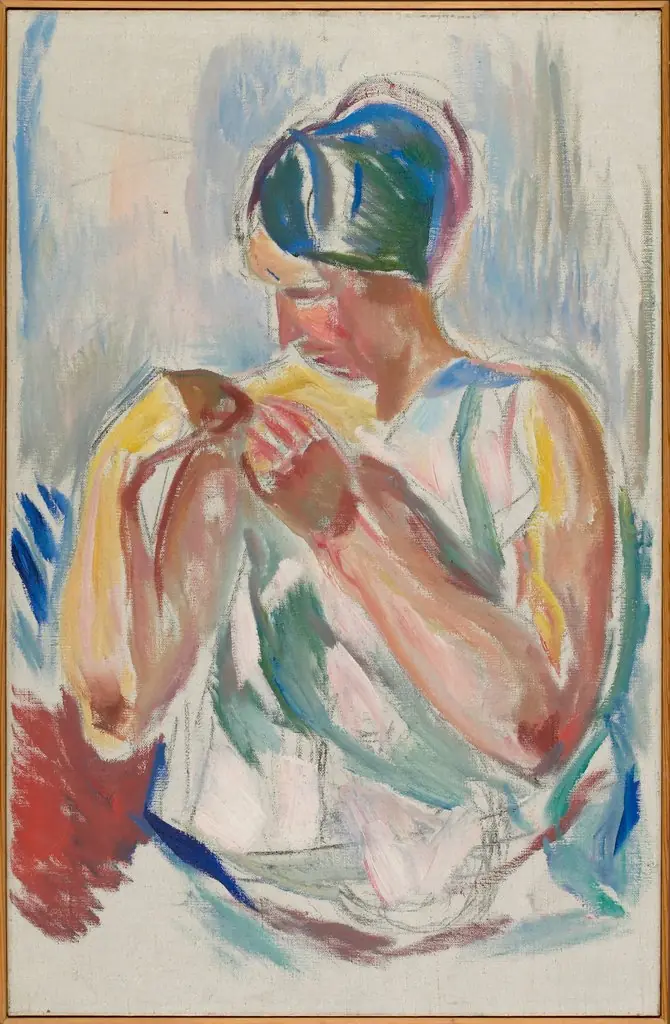
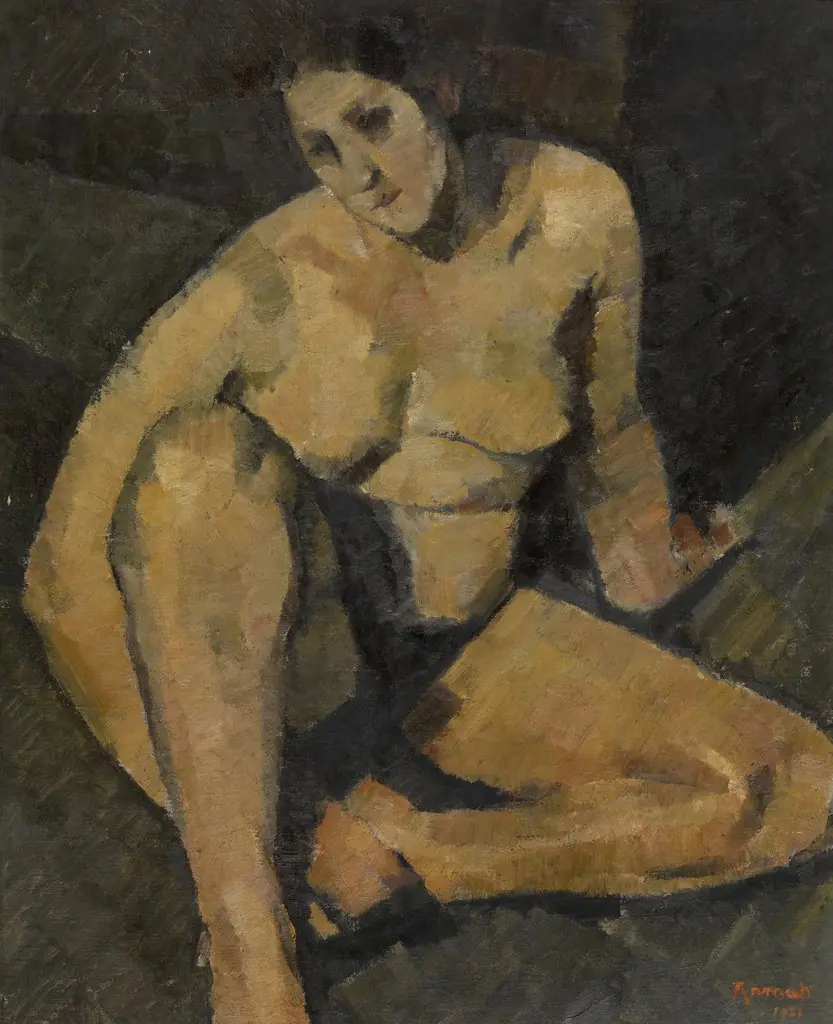
STUDIU DE FEMEIE is a print by Alexandru Phoebus. It dates from 1927 and is held in the collection of the National Museum of Art of Romania.
About this work
Overview
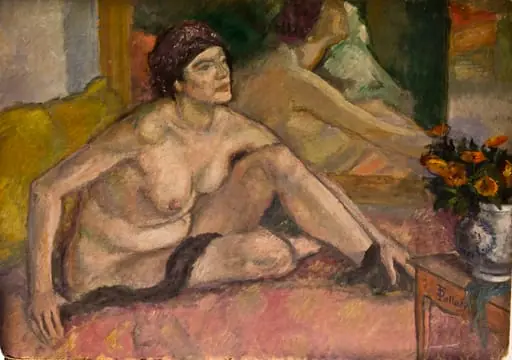
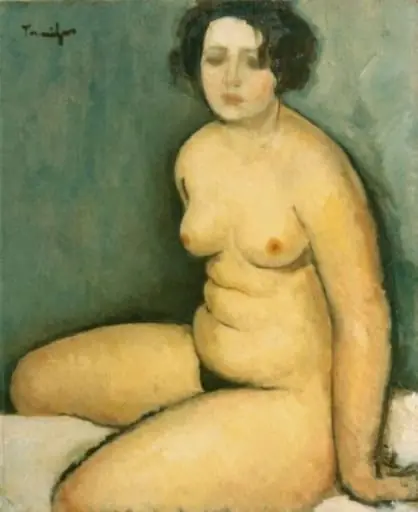
Studiu de femeie, painted in 1927 by Alexandru Phoebus, is a modestly scaled portrait focusing on a woman in a private, unposed moment.
Studiu de femeie, painted in 1927 by Alexandru Phoebus, is a modestly scaled portrait focusing on a woman in a private, unposed moment. Executed in oil, the work prioritizes mood over detail, using loose brushwork and muted tones to convey stillness. The subject’s anonymity and informal posture suggest an intimate study rather than a formal commission, aligning with early 20th-century tendencies toward psychological realism.
Subject & Meaning
The figure, seated on the floor with legs drawn up and hands resting gently on her knees, embodies quiet introspection. Her blurred facial features and simplified form shift emphasis from identity to presence. The absence of narrative context or symbolic elements invites contemplation of inner state rather than external story, reflecting a broader interest in the quiet dignity of everyday life during the interwar period.
Technique & Style
Phoebus employs a restrained palette of green, blue, and brown, layered with visible, uneven brushstrokes that suggest texture without defining form rigidly. The woman’s clothing and skin are rendered with soft edges, while the background remains loosely suggested, avoiding sharp delineation. This approach prioritizes atmospheric effect over precision, aligning with post-impressionist and early modernist sensibilities that valued emotional resonance over detail.
History & Provenance
The painting’s early ownership history is undocumented, and it has not been widely exhibited. It remains within private collections, with no public record of institutional acquisition. Its survival as a single, unattributed study suggests it was not intended for public display, possibly serving as a personal exercise or preparatory work for larger compositions now lost or unknown.
Context
Created in Romania during the late 1920s, the work emerges amid a cultural moment when local artists were engaging with European modernism while resisting academic conventions. Phoebus, like contemporaries such as Ștefan Luchian, explored intimate subjects with expressive brushwork, balancing national identity with broader artistic currents. This piece reflects a quiet rebellion against rigid portraiture norms of the time.
Legacy
Studiu de femeie stands as a quiet example of Phoebus’s lesser-known body of work, offering insight into his experimental approach to form and mood. Though not widely recognized in major art histories, it contributes to understanding the diversity of Romanian modernism beyond its more prominent figures. Its endurance in private hands underscores its role as a personal, rather than public, artistic statement.
Own this work as a print
Artist & collection