Artwork
TURNUL ALB DIN SALONIC – GRECIA
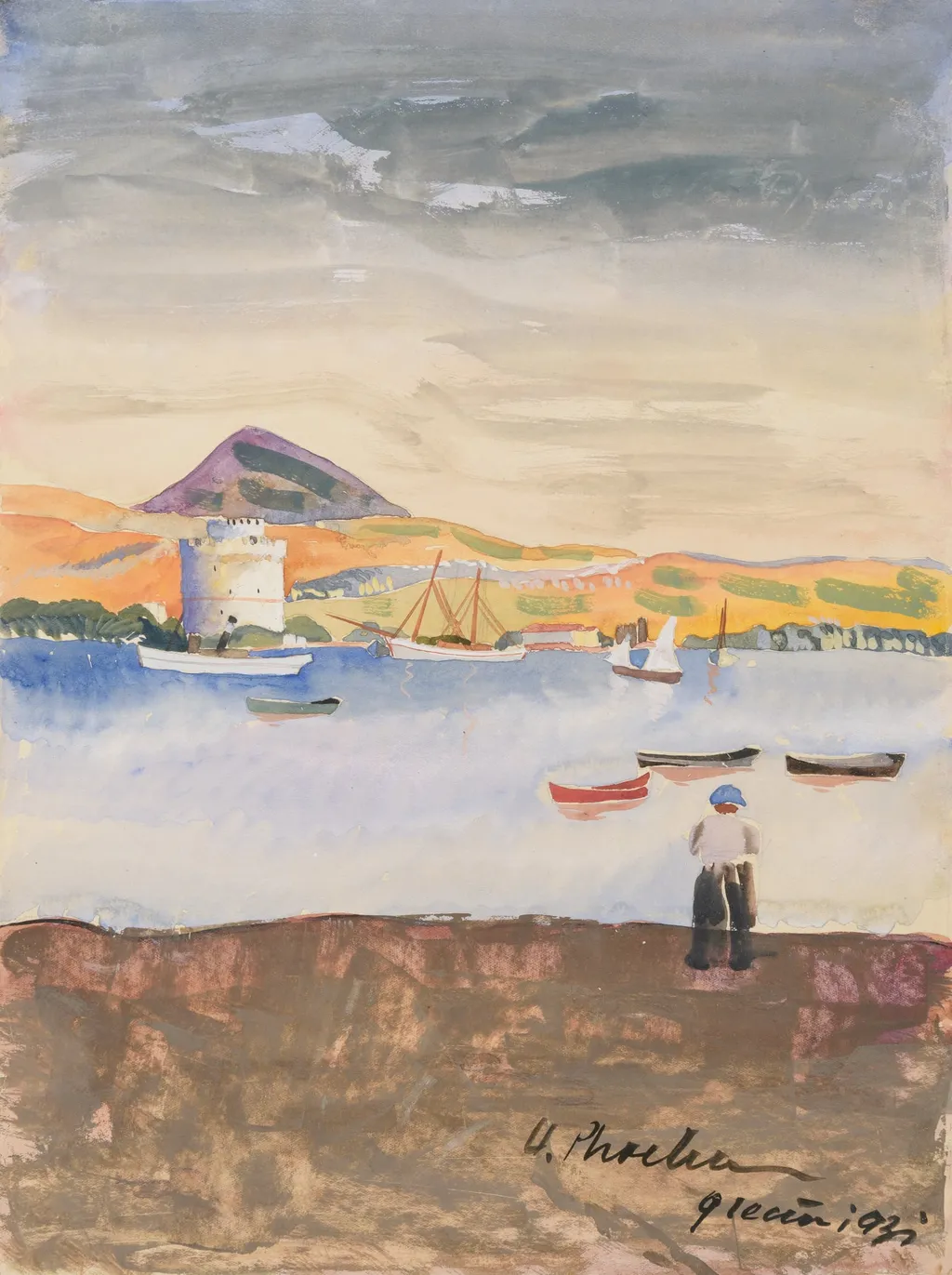
TURNUL ALB DIN SALONIC – GRECIA is an unspecified painting by the Byzantine icon painting artist Alexandru Phoebus. It dates from 1931 and is held in the collection of the National Museum of Art of Romania.
About this work
Overview
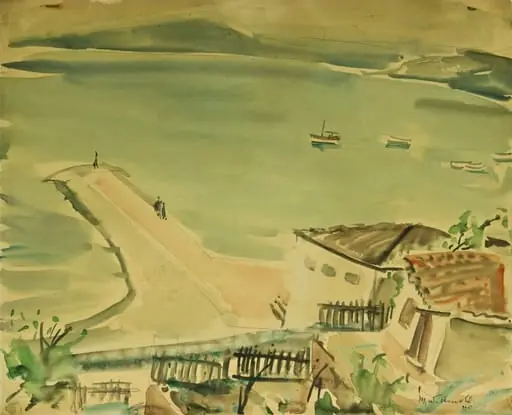
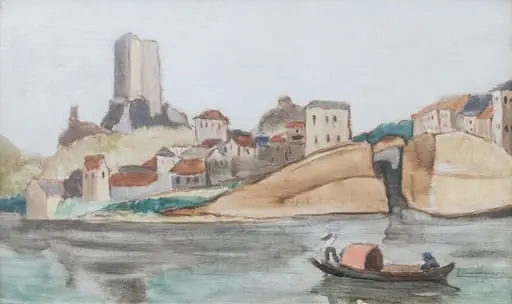
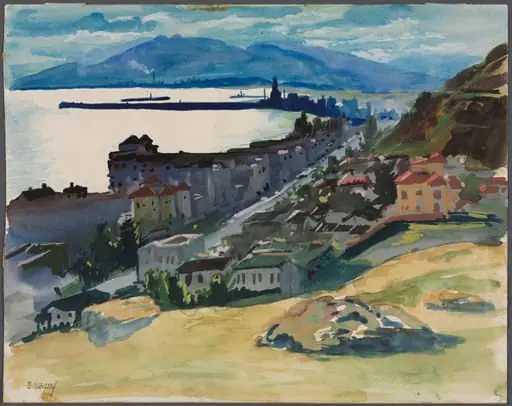
Painted in 1931 by Alexandru Phoebus, this work depicts a quiet coastal scene in Thessaloniki, Greece.
Painted in 1931 by Alexandru Phoebus, this work depicts a quiet coastal scene in Thessaloniki, Greece. The composition centers on a solitary figure on a rocky shoreline, with modest boats scattered across the water and a prominent white tower rising on a distant hill. The palette is restrained yet vivid, dominated by blues, yellows, greens, and ochres, rendered with deliberate, tactile brushwork that emphasizes surface over depth.
Subject & Meaning
The lone figure, dressed in light garments and a hat, appears detached from the landscape, suggesting introspection or solitude. The white tower, a local landmark, anchors the scene without dominating it. The absence of human activity beyond the figure and boats evokes a sense of stillness, as if capturing a moment suspended between observation and memory, rather than a bustling port.
Technique & Style
Phoebus employed thick impasto strokes, particularly in the sky and shoreline, creating a rough, tactile texture that resists smooth realism. Colors are applied in flat, unmodulated planes, enhancing the painting’s two-dimensionality. The brushwork is energetic yet controlled, prioritizing emotional resonance over precise detail, aligning with early modernist tendencies toward expressive form.
History & Provenance
The painting was completed during Phoebus’s period of travel in the Balkans, reflecting his interest in regional landscapes and vernacular architecture. It remained in private collections in Romania until the late 20th century, with limited public exposure. Its title, referencing the white tower of Thessaloniki, ties it to a specific place, though the work avoids topographical accuracy in favor of atmospheric suggestion.
Context
Created in the early 1930s, the painting emerged amid broader European movements that favored emotional expression over academic realism. Phoebus, influenced by Post-Impressionism and regional modernism, sought to convey the essence of place through simplified forms and bold color. Unlike tourist-oriented depictions, this work avoids spectacle, focusing instead on quiet, personal observation.
Legacy
Though not widely exhibited, the painting is recognized in Romanian modernist circles for its restrained lyricism and technical economy. It exemplifies Phoebus’s ability to merge local subject matter with modernist techniques, contributing to a quieter strand of interwar Eastern European art that valued introspection over grand narrative.
Own this work as a print
Artist & collection