Artwork
Blonde Bather
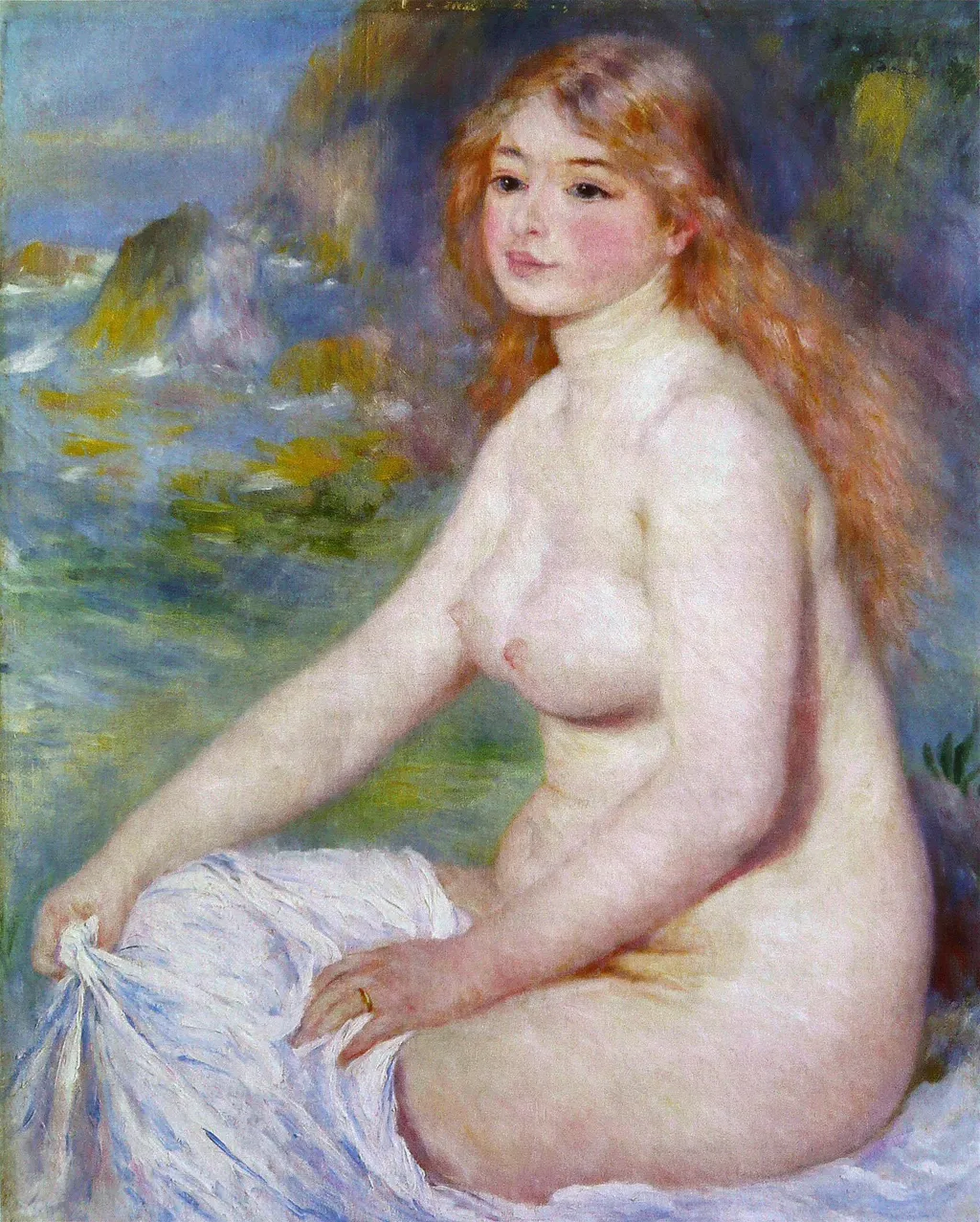
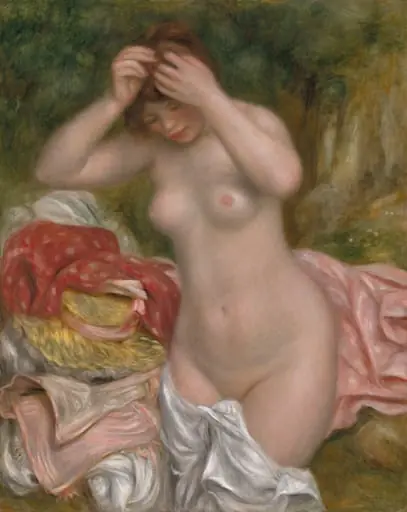
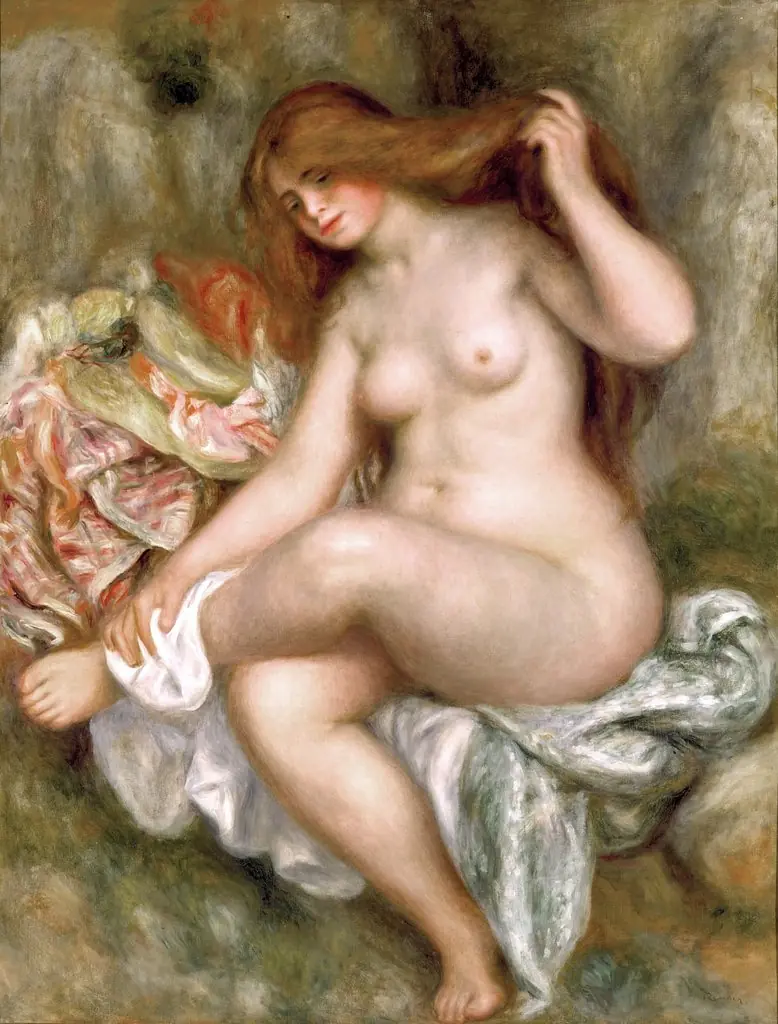
Blonde Bather is an oil painting by the Impressionist artist Auguste Renoir. It dates from 1891 and is held in the collection of the Clark Art Institute.
About this work
Overview
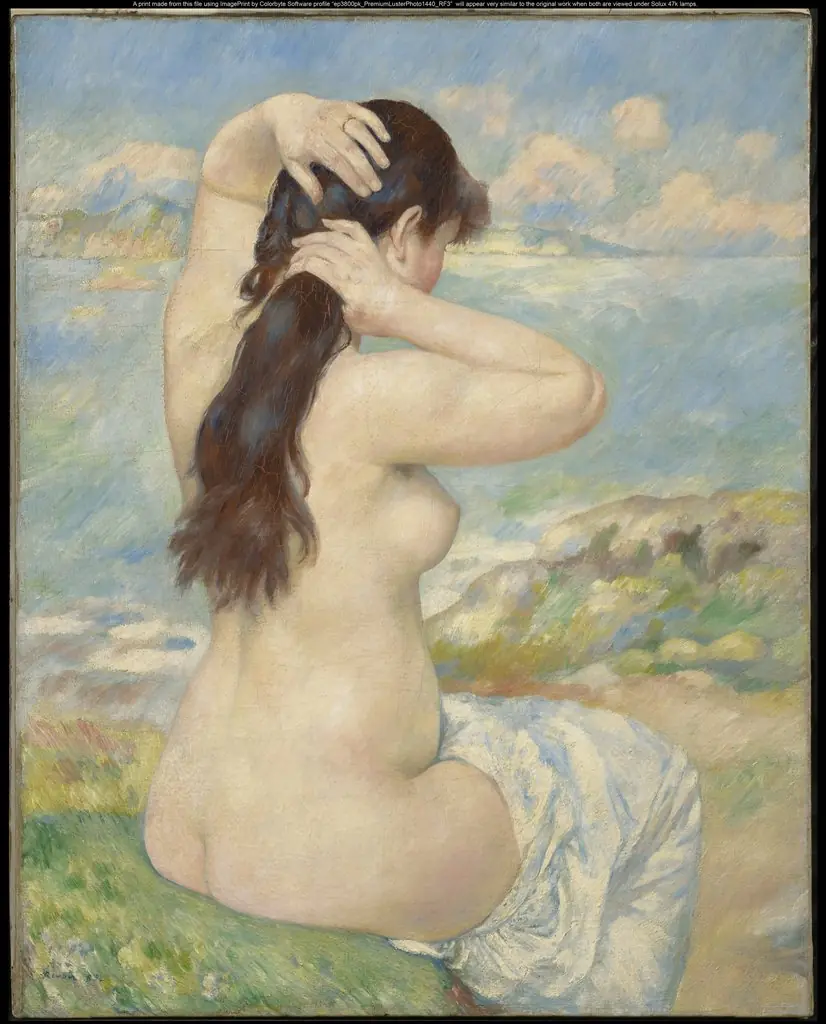
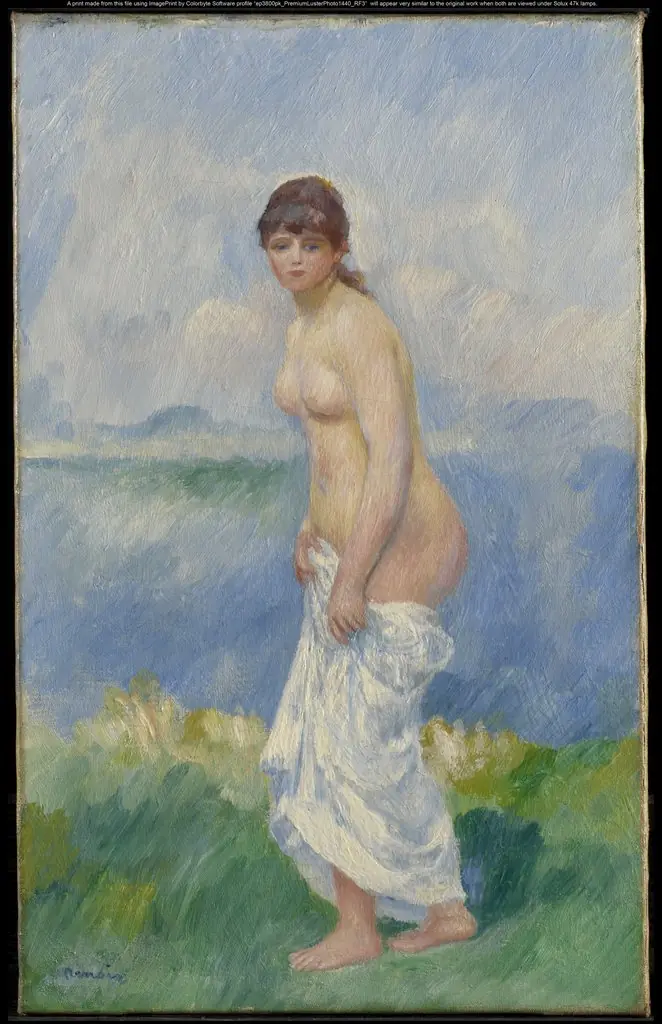
Painted in 1891, Blonde Bather is an oil-on-canvas work by Pierre-Auguste Renoir, portraying his future wife, Aline Charigot. The painting presents a solitary female figure in a natural setting, rendered with soft brushwork and warm tonalities. It belongs to the Clark Art Institute’s collection, where it remains a key example of Renoir’s late-period exploration of the human form in landscape.
Subject & Meaning
The subject is Aline Charigot, Renoir’s companion and later wife, depicted in a candid, unidealized moment of repose. Her posture and relaxed demeanor suggest intimacy rather than theatricality. Renoir avoids classical mythological references, instead focusing on the quiet dignity of everyday presence. The figure’s identity as a personal figure adds emotional weight without overt narrative.
Technique & Style
Renoir employs loose, fluid brushstrokes to model the figure’s form, blending skin tones with the surrounding foliage in a seamless chromatic harmony. Light filters through the trees, casting dappled shadows that animate the surface. The palette favors muted golds, pinks, and earth tones, avoiding sharp contours in favor of atmospheric transitions that evoke tactile warmth and movement.
History & Provenance
Created during a period when Renoir was refining his approach to the nude, the painting remained in his personal collection until his death. It passed through private hands before being acquired by the Sterling and Francine Clark Art Institute in 1955. Its provenance reflects Renoir’s enduring connection to the work and its gradual transition into institutional care.
Context
Painted after Renoir’s trip to Italy, where he studied Renaissance art, Blonde Bather reflects a shift toward more structured forms while retaining Impressionist light effects. It emerges alongside other late nudes that balance classical composition with modern sensibility, positioning the figure not as an ideal but as a lived presence within nature.
Legacy
The painting contributes to Renoir’s broader redefinition of the female nude in modern art, moving away from academic conventions toward personal, intimate portrayals. It influenced later artists seeking to merge naturalism with emotional resonance, and remains a touchstone in discussions of how domestic life and artistic vision intersect in late 19th-century painting.
Own this work as a print
Artist & collection
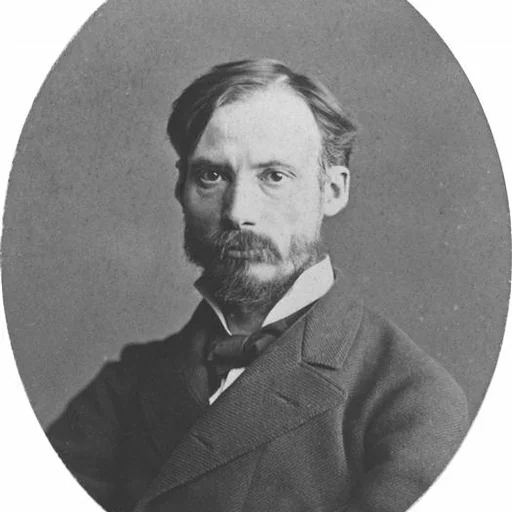
Artist
Pierre-Auguste Renoir was born on 25 February 1841 in Limoges, the son of a tailor and a seamstress.