Artwork
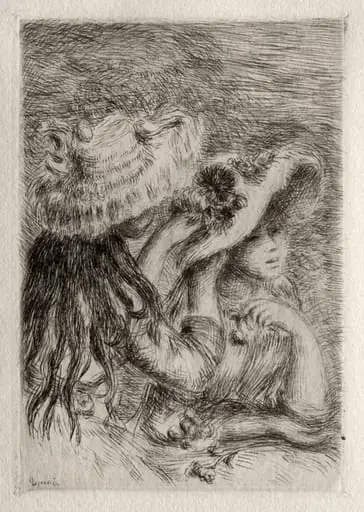
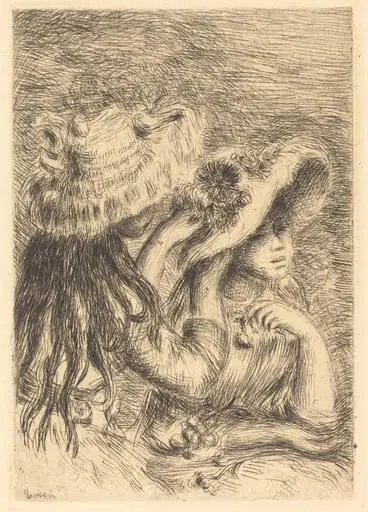
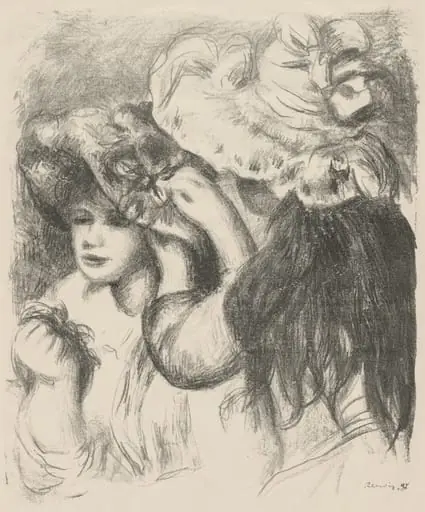
The Hatpin (Berthe Morisot's Daughter and Her Cousin), 1st plate
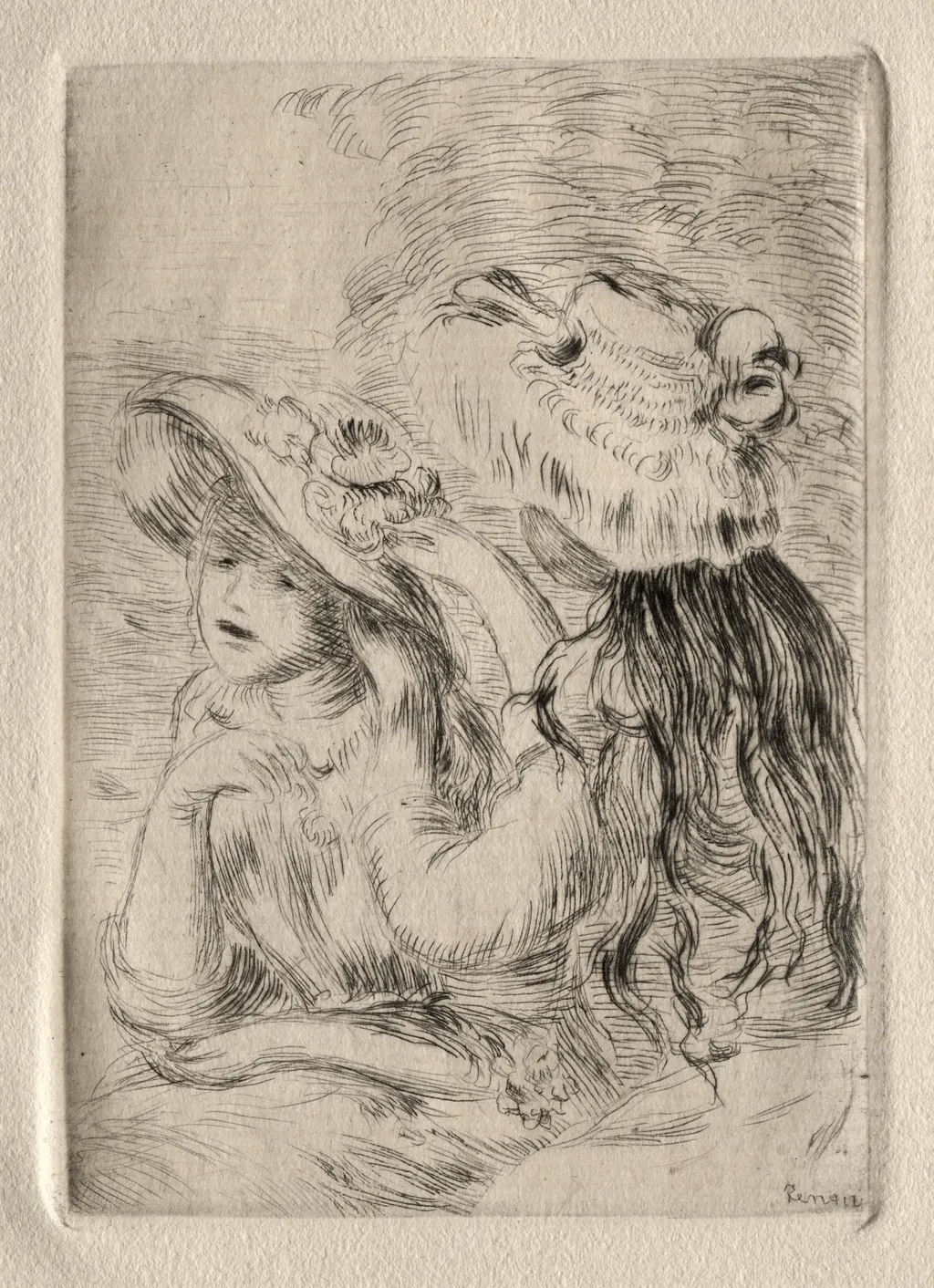
The Hatpin (Berthe Morisot's Daughter and Her Cousin), 1st plate is a print by the Impressionist artist Auguste Renoir. It dates from 1894 and is held in the collection of the Cleveland Museum of Art.
About this work
Overview
Created around 1894, this ink drawing by Pierre-Auguste Renoir depicts two young women seated closely, their postures intimate and relaxed. Rendered entirely in line without shading or color, the work captures a fleeting moment of quiet companionship. It is part of a small series of drawings focused on domestic scenes, and is currently held in the collection of The Cleveland Museum of Art.
Subject & Meaning
The figures are Berthe Morisot’s daughter, Julie, and her cousin, Paule Gobillard, both adolescents at the time. Their subdued gestures—heads bowed, hands resting—suggest a moment of stillness amid daily life. The proximity of their bodies and matching attire imply familial closeness, while the absence of narrative detail invites contemplation rather than storytelling.
Technique & Style
Renoir employed fluid, rapid ink strokes to define form and movement, avoiding tone or color entirely. The hats, rendered with swirling, rhythmic lines, appear weightless, as if caught in a breeze. The loose, sketch-like quality reflects Impressionist concerns with spontaneity and perception, translating the ephemeral feel of a moment into pure linear energy.
History & Provenance
The drawing was made during Renoir’s later years, when he frequently visited the Morisot family. It was likely created as a private study, not for public exhibition. Acquired by The Cleveland Museum of Art in the 20th century, it remains one of the few surviving ink drawings from this intimate phase of his work.
Context
Renoir’s focus on domestic interiors and female figures in this period aligns with broader Impressionist interests in everyday life. His use of line here echoes the spontaneity of his brushwork in paintings, but strips away color to emphasize gesture and rhythm. The drawing reflects his deep engagement with the Morisot family, who were central to his social and artistic circle.
Legacy
This work exemplifies Renoir’s ability to convey emotional nuance through minimal means. Though less known than his paintings, such drawings reveal his sustained interest in capturing transient moments with sensitivity. They influenced later artists exploring the expressive potential of line in modern drawing practices.
Artist & collection
Artist
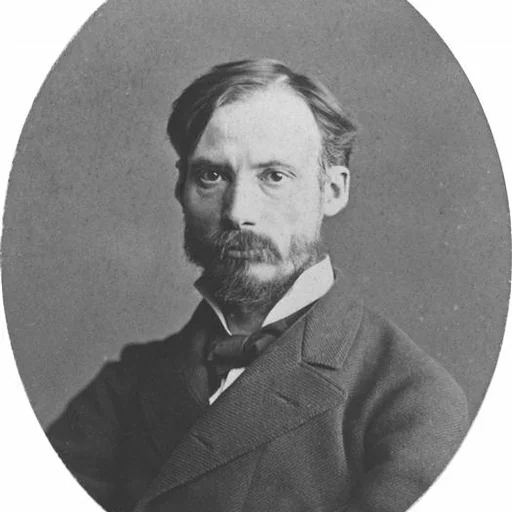
Pierre-Auguste Renoir was born on 25 February 1841 in Limoges, the son of a tailor and a seamstress.

 Le Chapeau epinglé
 The Hat Pin (Le chapeau epingle)
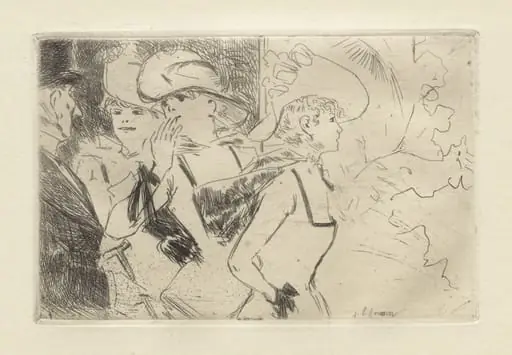 The Folies-Bergère
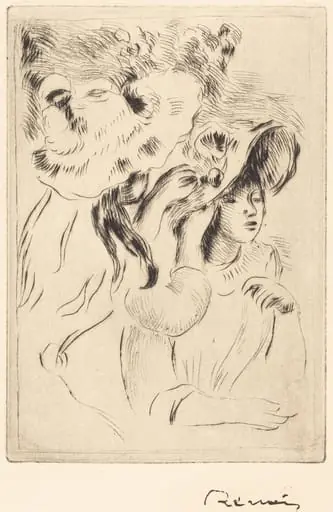 The Hat Pin (Le chapeau epingle)
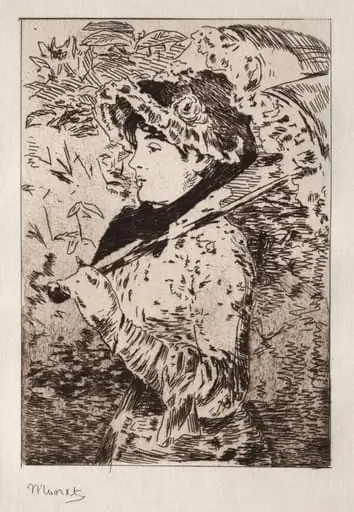 Jeanne: Spring
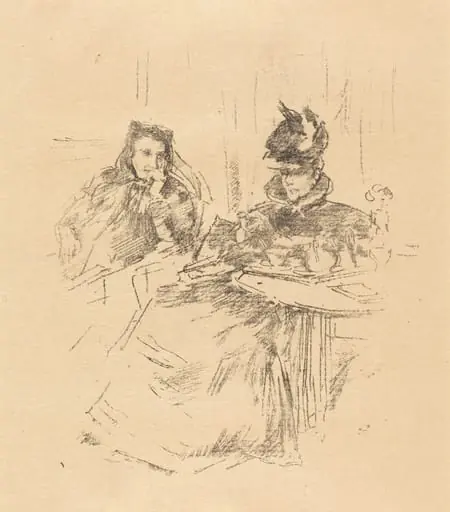 Afternoon Tea
 Pinning the Hat
 A Bullier (To Bullier's)
 Miss May Belfort in the Irish and American Bar, rue Royale (Miss Belfort Belfort au Irish and American Bar, Rue Royale)
 The Artist's Wife in Profile Facing Right
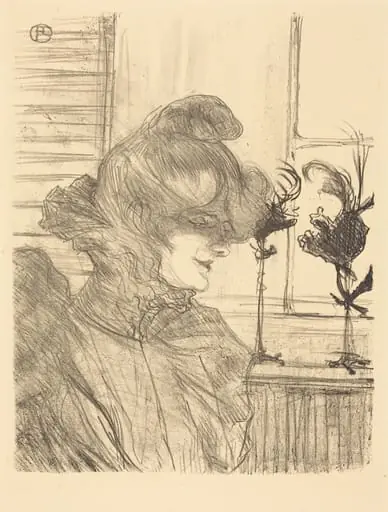 Mme. Le Marguoin, Milliner (Mme. Le Marguoin, modiste)
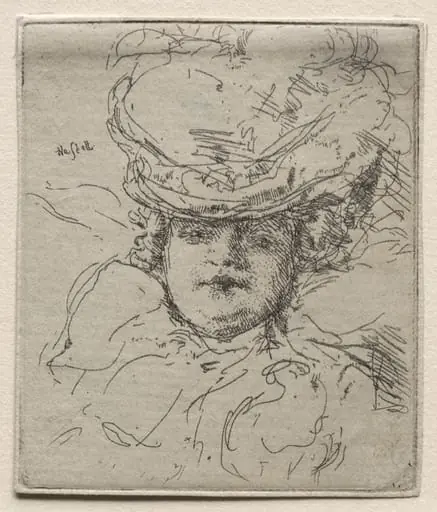 Paris: Boul Miche