Artwork
Lunch at the Restaurant Fournaise (The Rowers' Lunch)
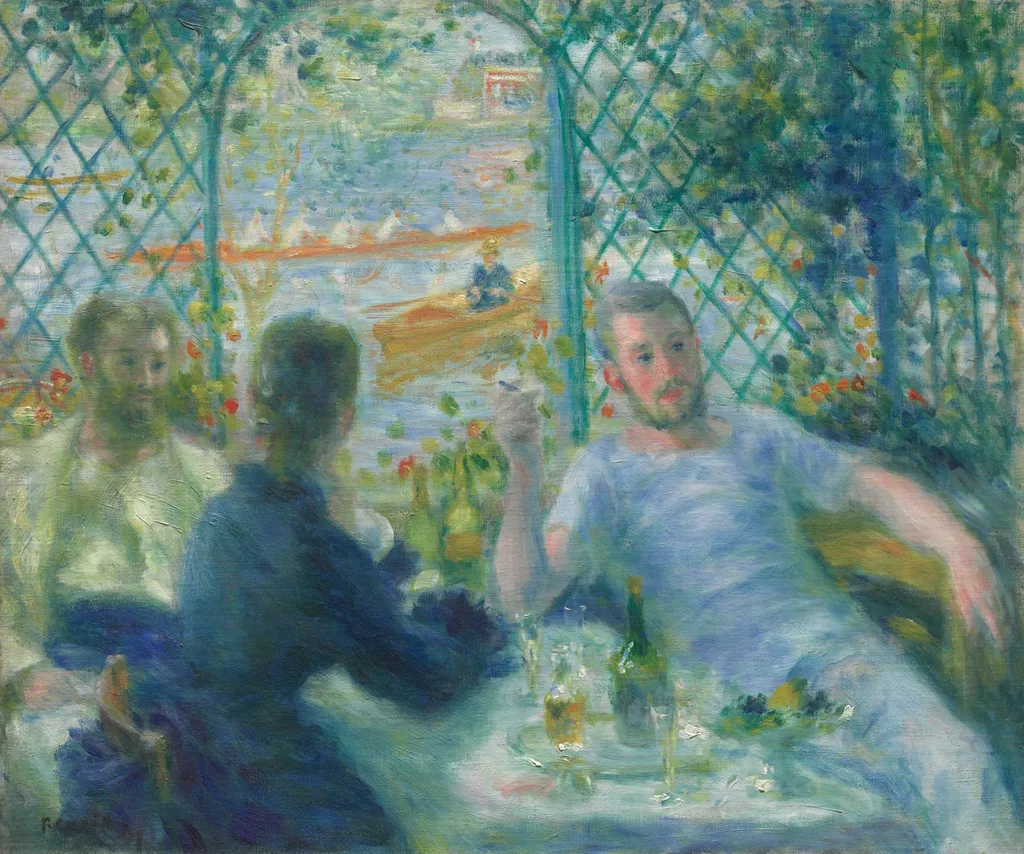
Lunch at the Restaurant Fournaise (The Rowers' Lunch) is an oil painting by the Impressionist artist Auguste Renoir. It dates from 1875 and is held in the collection of the Art Institute of Chicago.
About this work
Overview
The scene unfolds on a wooden terrace overlooking the Seine, where two figures share a meal under the shifting light of trees.
Painted in 1875, this oil on canvas work by Pierre-Auguste Renoir captures a quiet midday meal at the Restaurant Fournaise, a riverside establishment near Paris. The scene unfolds on a wooden terrace overlooking the Seine, where two figures share a meal under the shifting light of trees. Renoir’s approach prioritizes the immediacy of the moment over formal composition, reflecting his interest in everyday life as a subject worthy of artistic attention.
Subject & Meaning
The figures are not idealized patrons but acquaintances of the artist—ordinary people at ease in their surroundings. The woman in white and the man in a striped shirt sit without pretense, their posture relaxed, their interaction unscripted. The painting avoids narrative drama, instead conveying the quiet dignity of leisure among the working and middle classes. It reflects Renoir’s belief in the beauty of ordinary, unguarded moments.
Technique & Style
Renoir employed rapid, broken brushwork to render the play of sunlight through foliage onto skin, fabric, and tableware. Colors are applied in loose dabs, allowing the eye to blend them optically rather than through meticulous blending. The surface vibrates with ambient light, a hallmark of Impressionist practice. The composition is deliberately informal, with figures cropped at the edges, suggesting the scene extends beyond the frame.
History & Provenance
The painting was created during Renoir’s most active period of outdoor painting, alongside contemporaries like Monet and Sisley. It remained in private hands until acquired by the Art Institute of Chicago in 1922. Its provenance includes early exhibitions in Paris and later recognition in American collections, where it became a key example of French Impressionism for public audiences.
Context
The Restaurant Fournaise was a popular gathering spot for boaters and artists along the Seine. Renoir frequented it during summers, sketching and painting the patrons and landscape. This work emerged amid broader cultural shifts: urban leisure became accessible to non-elites, and artists sought to depict modern life without historical or mythological framing. The painting aligns with the Impressionist movement’s break from academic traditions.
Legacy
The painting endures as a representative example of Impressionist concerns—light, atmosphere, and the depiction of contemporary life. It influenced later artists interested in candid social scenes and the transient effects of nature. Its presence in a major American museum helped solidify the movement’s acceptance outside France, contributing to its global recognition in the 20th century.
Own this work as a print
Artist & collection
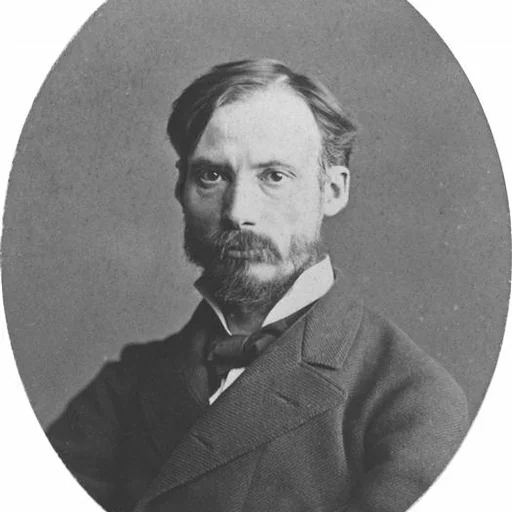
Artist
Pierre-Auguste Renoir was born on 25 February 1841 in Limoges, the son of a tailor and a seamstress.

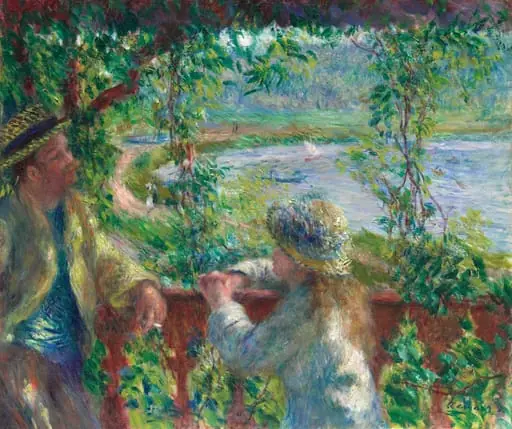 Near the Lake
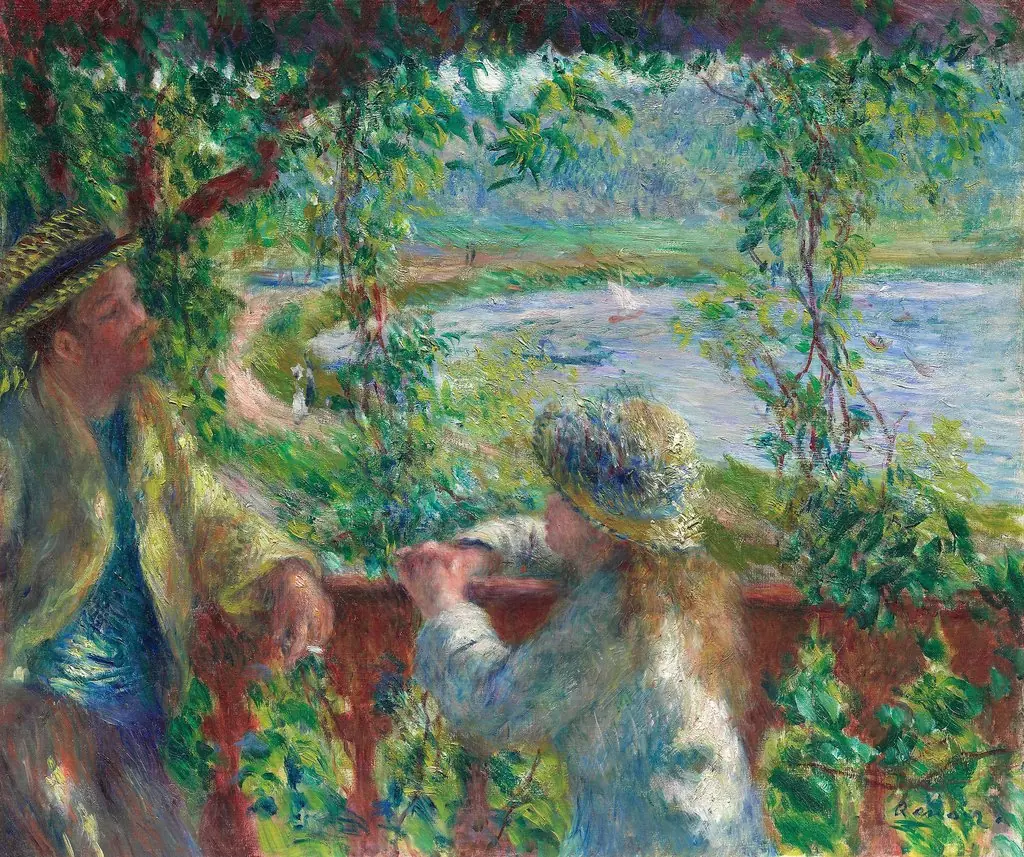 Near the Lake
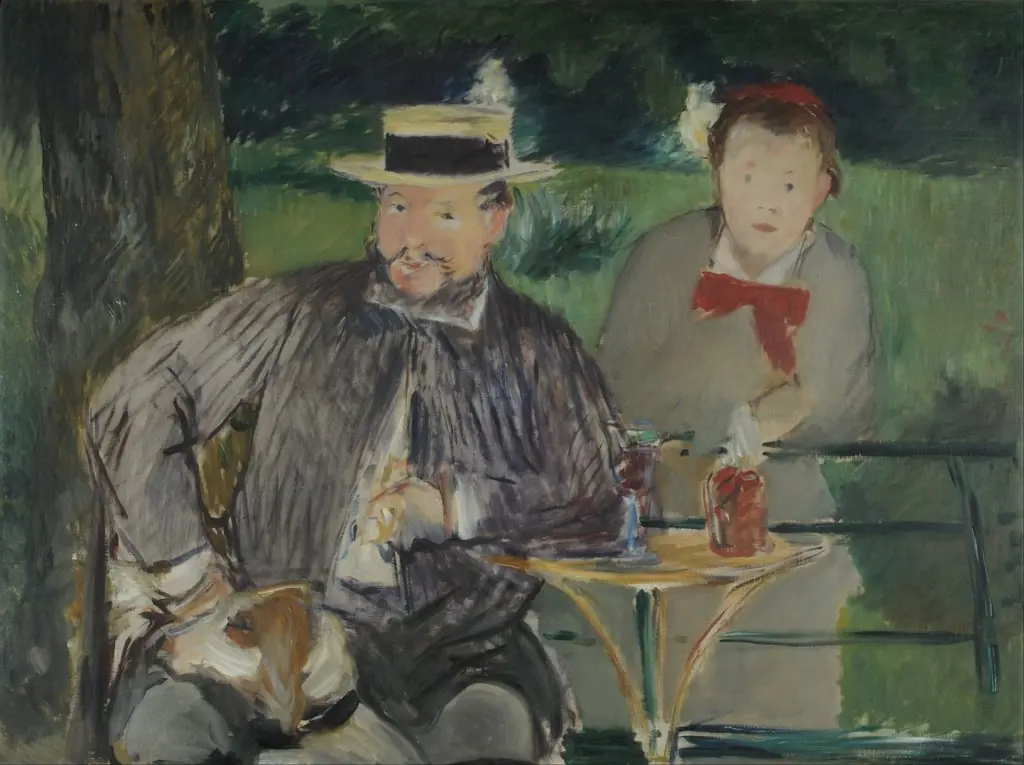 Portrait d'Ernest Hoschedé et sa fille Marthe
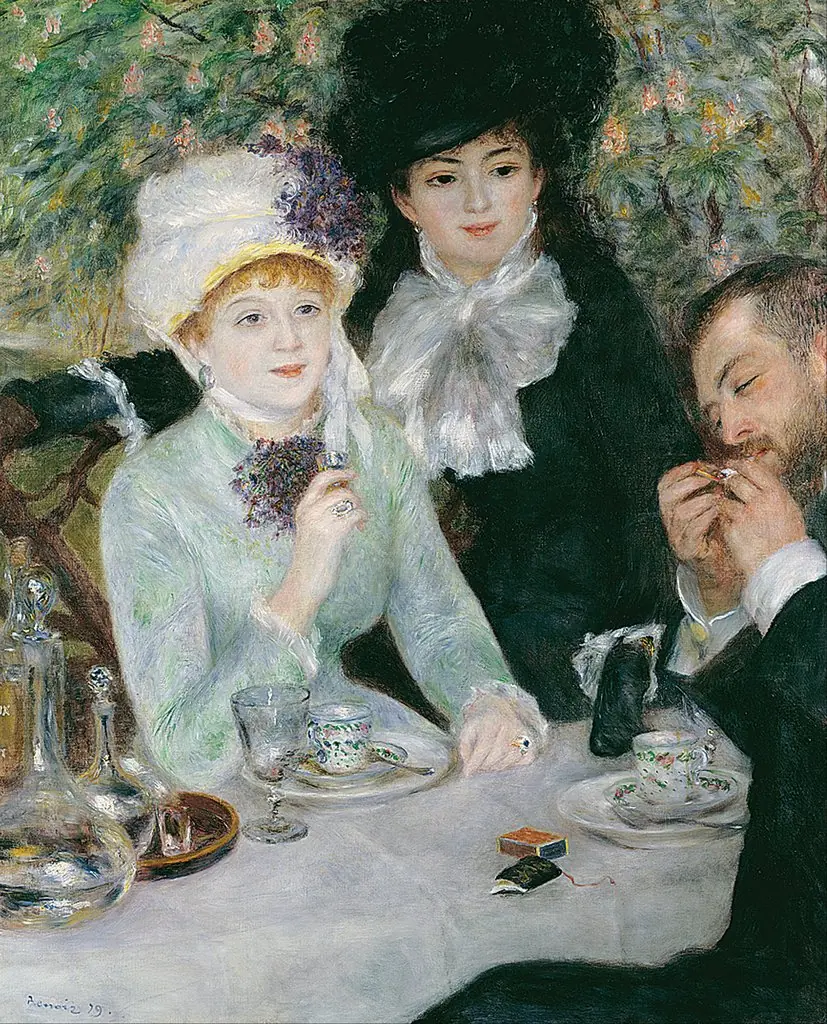 After the Luncheon
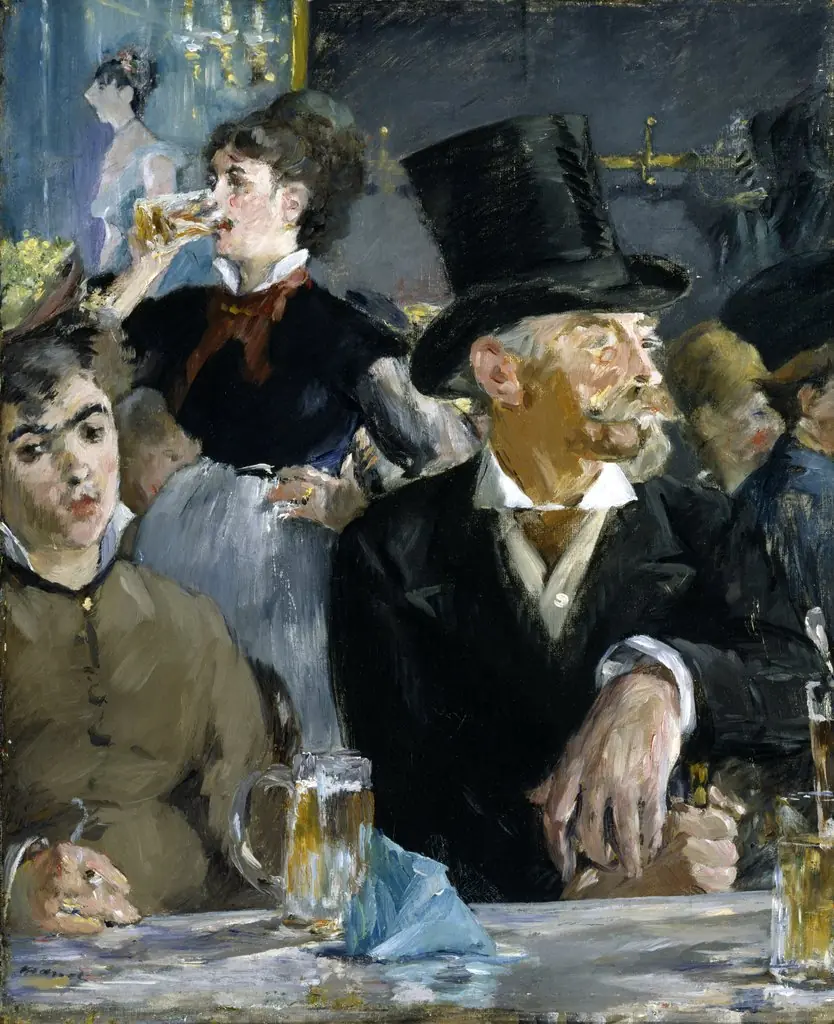 The Café-Concert
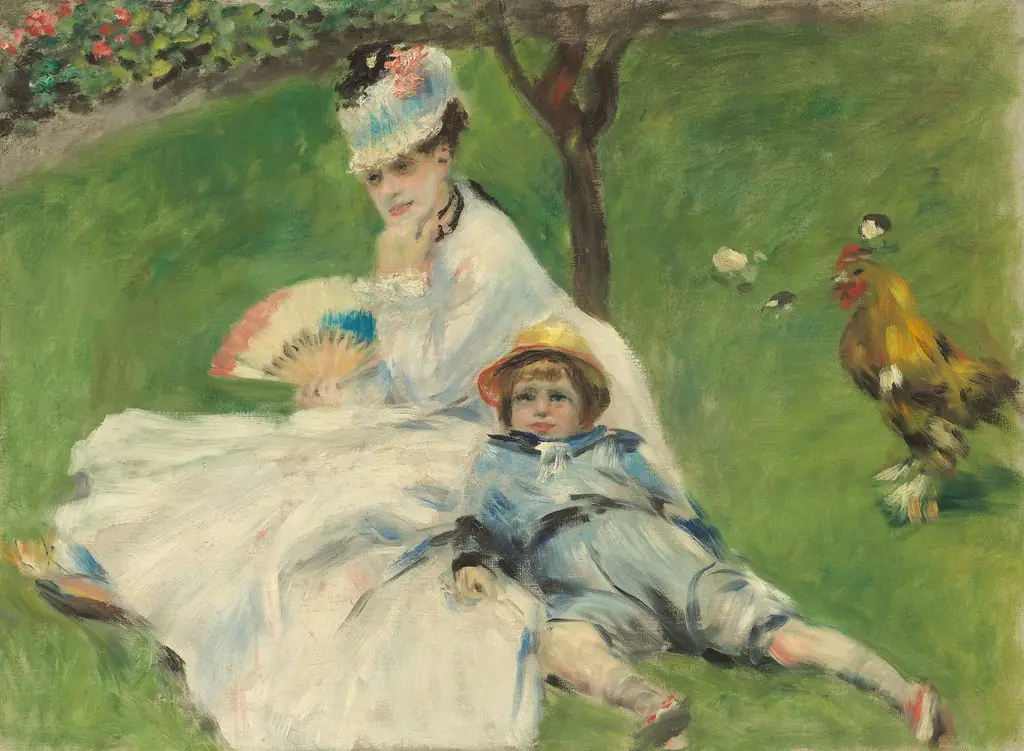 Camille Monet und ihr Sohn Jean in Argenteuil
 Final Study for "Bathers at Asnières"
 Final Study for "Bathers at Asnières"
 The Basket Chair
 The Monet Family in Their Garden at Argenteuil
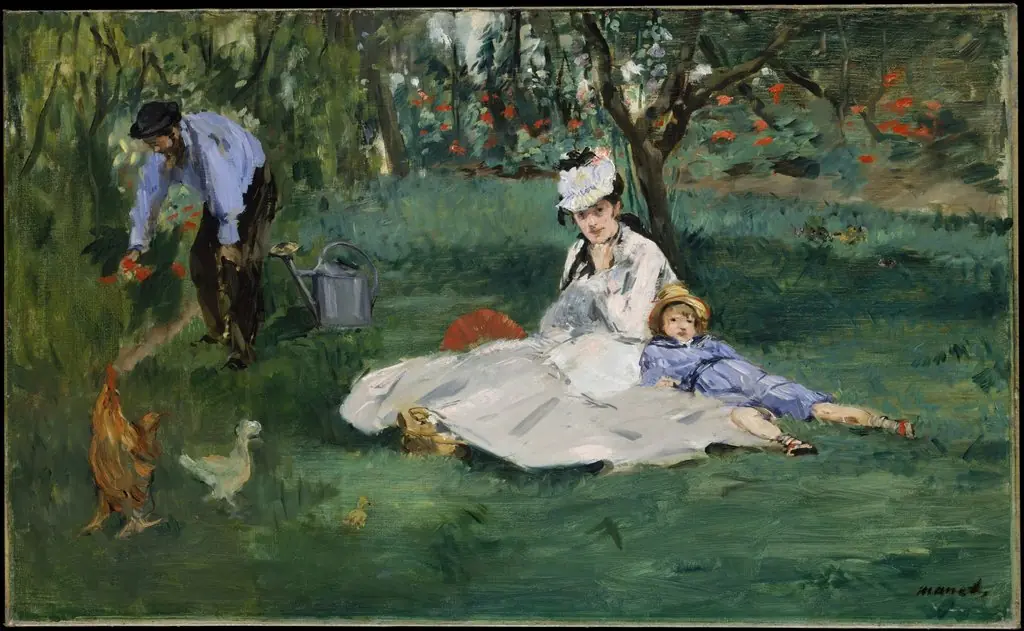
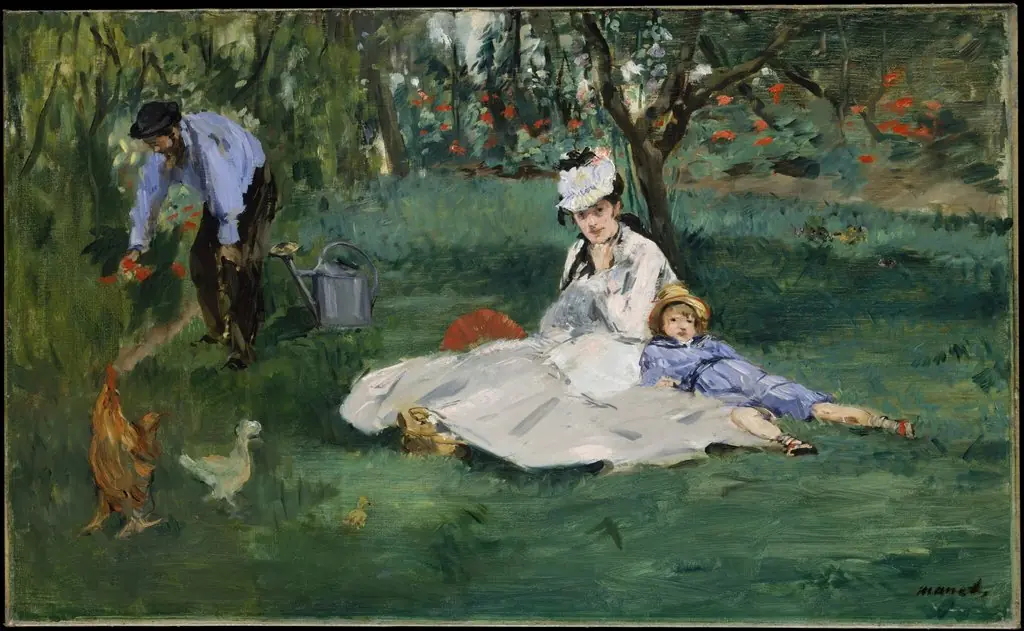 The Monet Family in Their Garden at Argenteuil