Artwork
Peonies
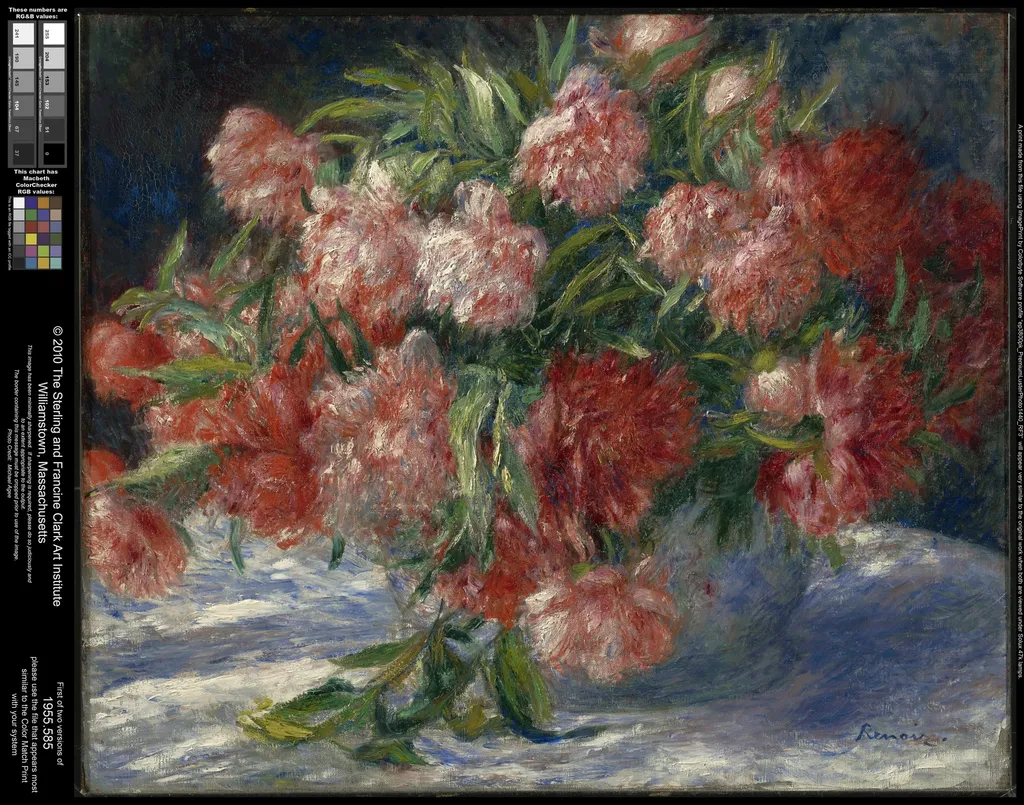
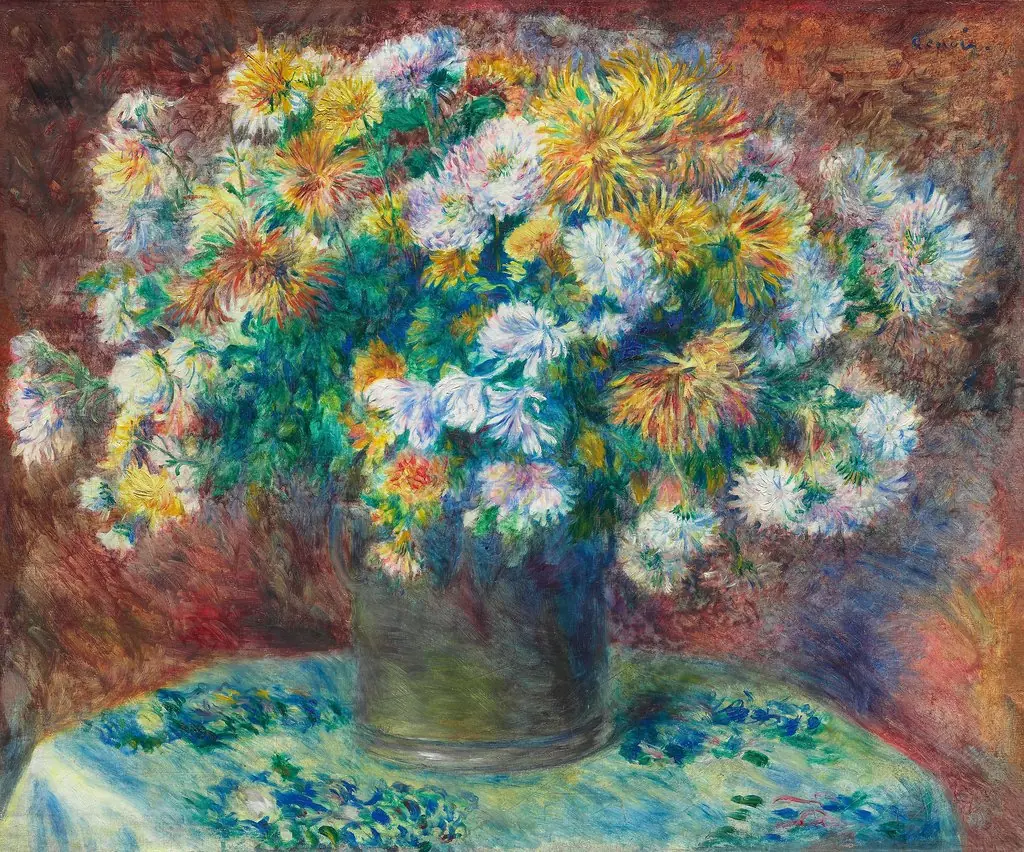
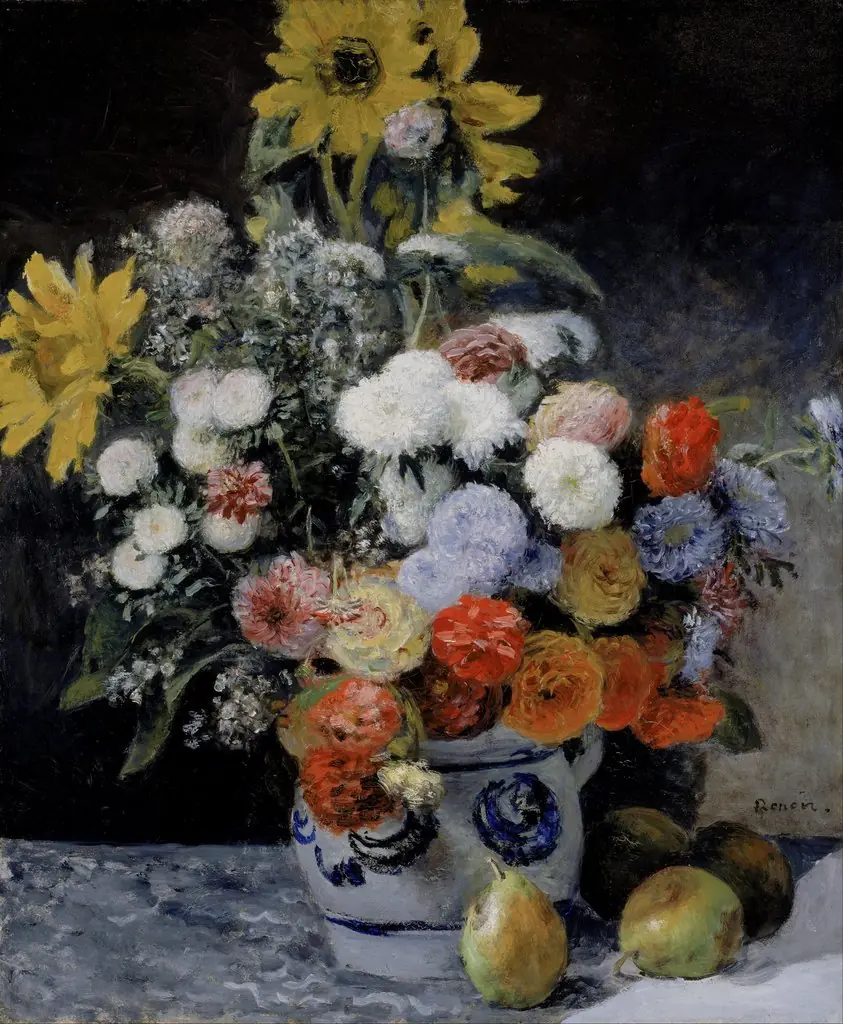
Peonies is an oil painting by the Impressionist artist Auguste Renoir. It dates from 1890 and is held in the collection of the Clark Art Institute.
About this work
Overview
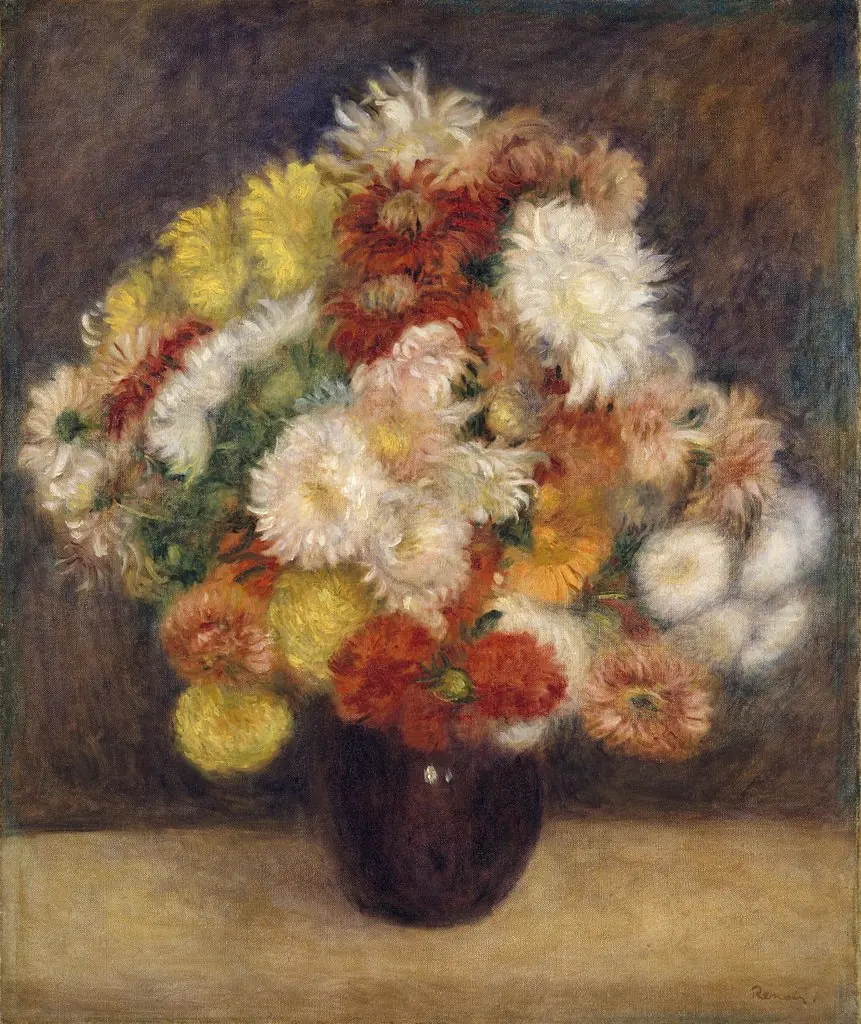
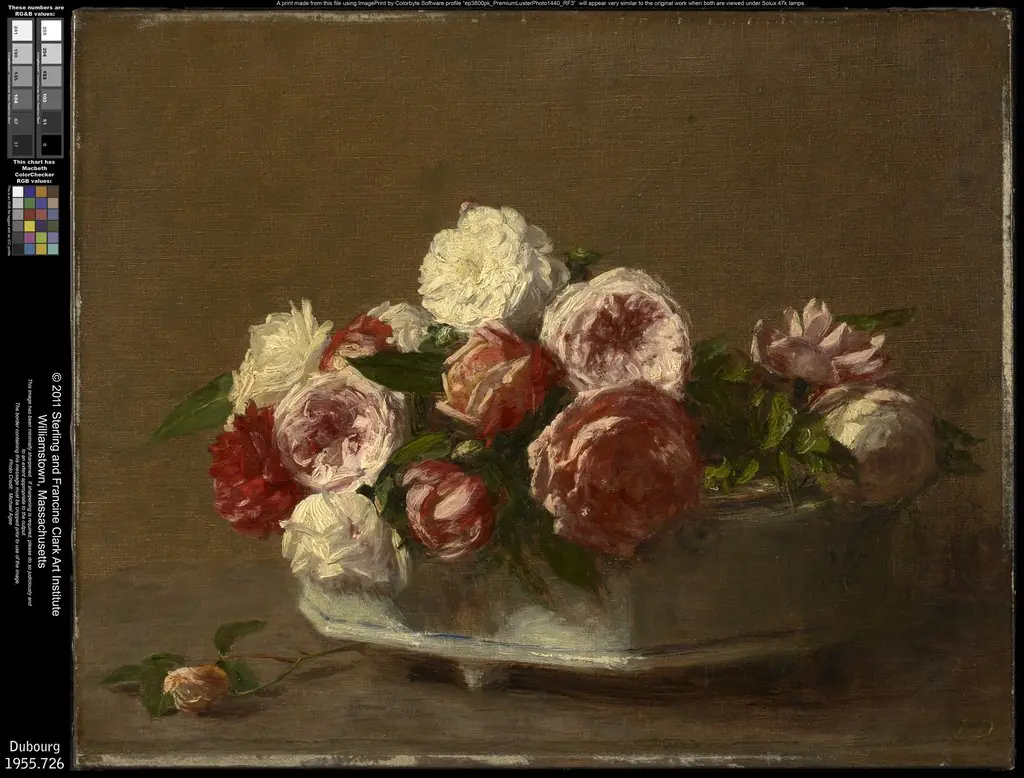
Created in 1890, this oil work by Pierre‑Auguste Renoir depicts a generous arrangement of peonies set within a decorative vase. The composition is dominated by vibrant pink and red blossoms, framed by deep green foliage, against a muted, darker backdrop that hints at blues and greens. The painting resides in the collection of the Clark Art Institute.
Subject & Meaning
The central focus is a lush bouquet of peonies, a flower often associated with wealth and honor, rendered in a way that emphasizes their full, blooming vitality. The contrast between the bright floral tones and the subdued background draws attention to the fleeting beauty of the blossoms, suggesting a celebration of natural abundance.
Technique & Style
Renoir employs thick, impasto brushstrokes that give the petals a tactile, almost three‑dimensional quality. The palette is saturated, with vivid pinks and reds set against cool greens and blues, creating a sense of luminosity. The handling of paint reflects his late‑period Impressionist approach, balancing loose gesture with careful color modulation.
History & Provenance
Executed toward the end of Renoir’s career, the painting entered the holdings of the Clark Art Institute, where it is displayed as part of their European painting collection. Its acquisition history reflects the museum’s focus on acquiring significant works by late 19th‑century French artists.
Artist & collection

Artist
Pierre-Auguste Renoir was born on 25 February 1841 in Limoges, the son of a tailor and a seamstress.