Artwork
Nature morte au melon et aux pêches
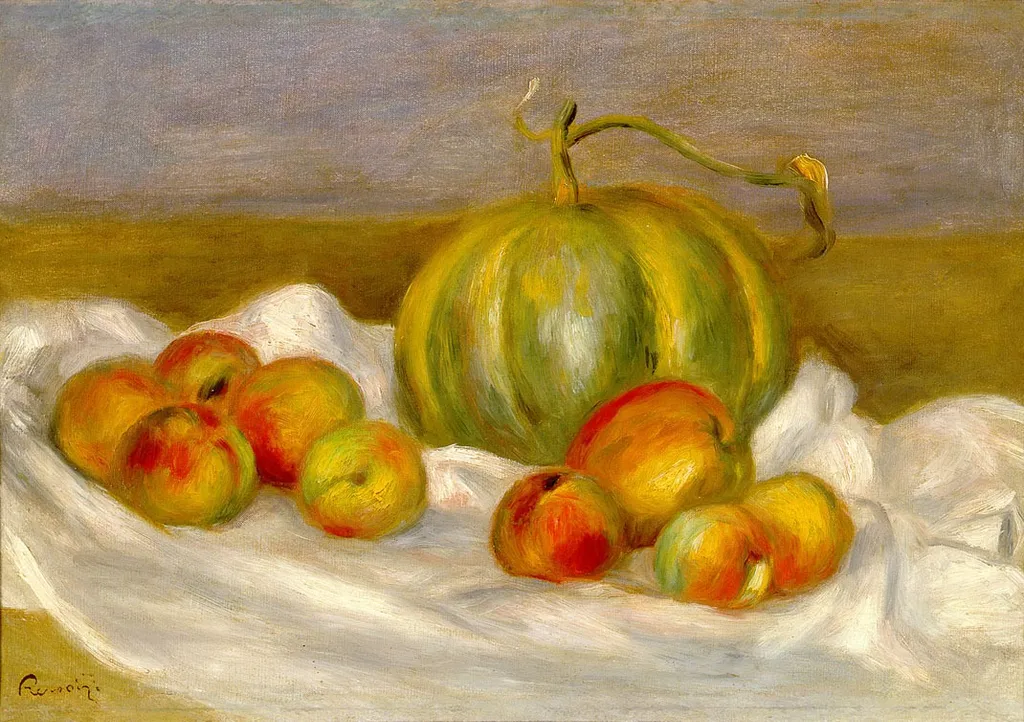
Nature morte au melon et aux pêches is an oil painting by the Impressionist artist Auguste Renoir. It dates from 1905 and is held in the collection of the Montreal Museum of Fine Arts.
About this work
Overview
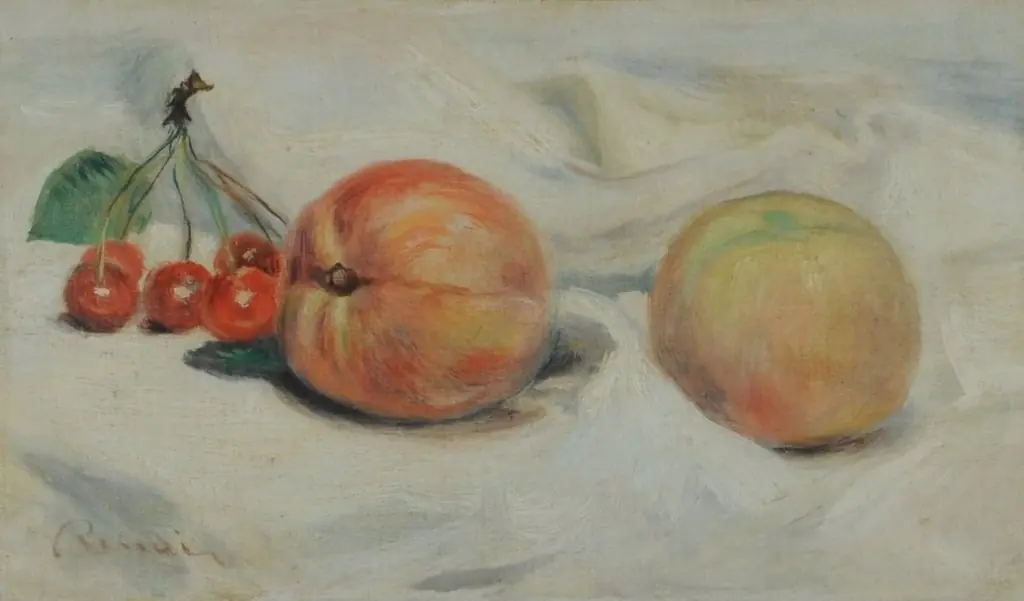
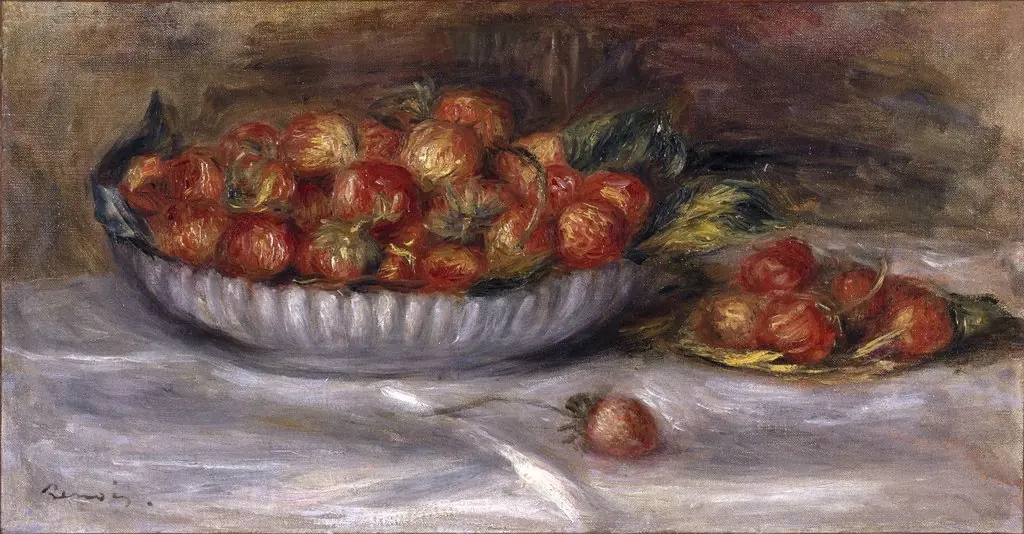
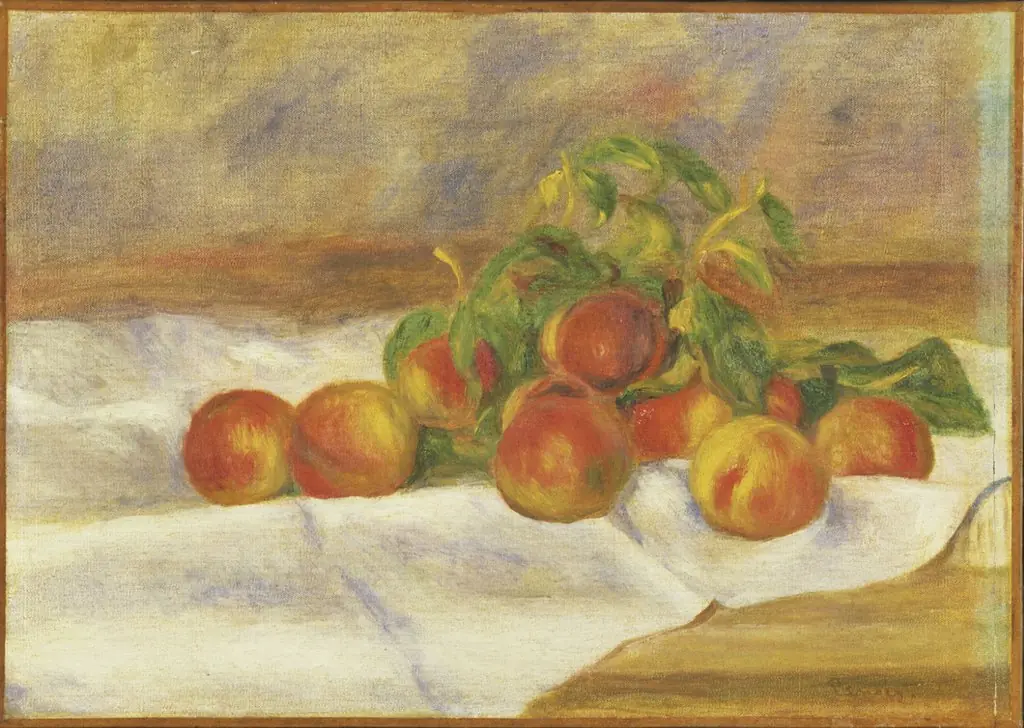
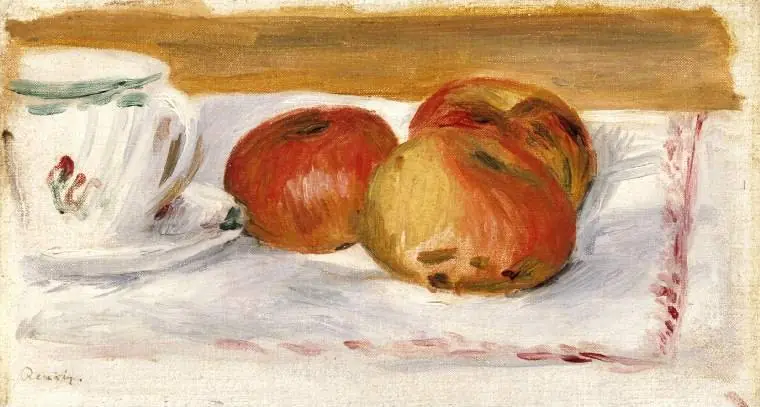
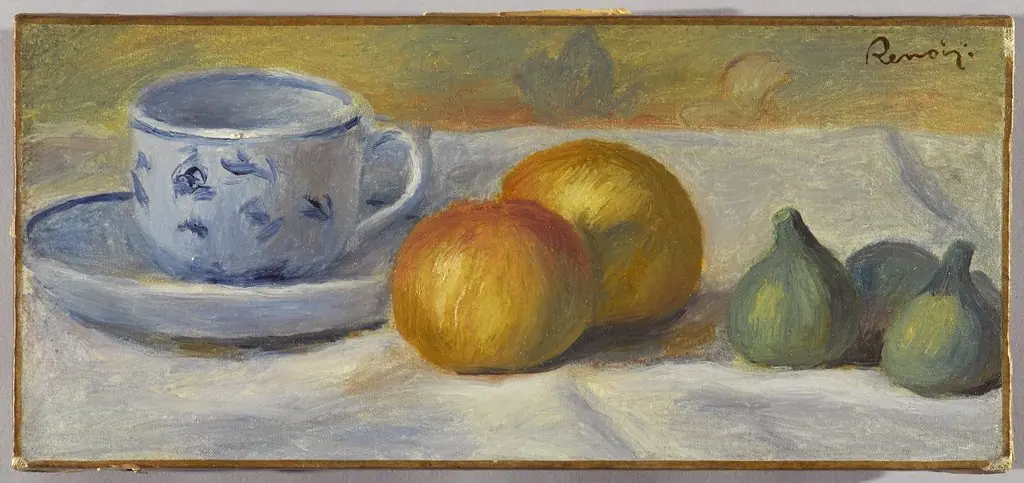
It depicts a modest arrangement of fruit and a gourd on a draped table, rendered with soft brushwork and a restrained palette.
Painted in 1905, Nature morte au melon et aux pêches is an oil on canvas still life by Pierre-Auguste Renoir. It depicts a modest arrangement of fruit and a gourd on a draped table, rendered with soft brushwork and a restrained palette. The work resides in the collection of the Montreal Museum of Fine Arts, representing one of Renoir’s later explorations of everyday objects through light and color.
Subject & Meaning
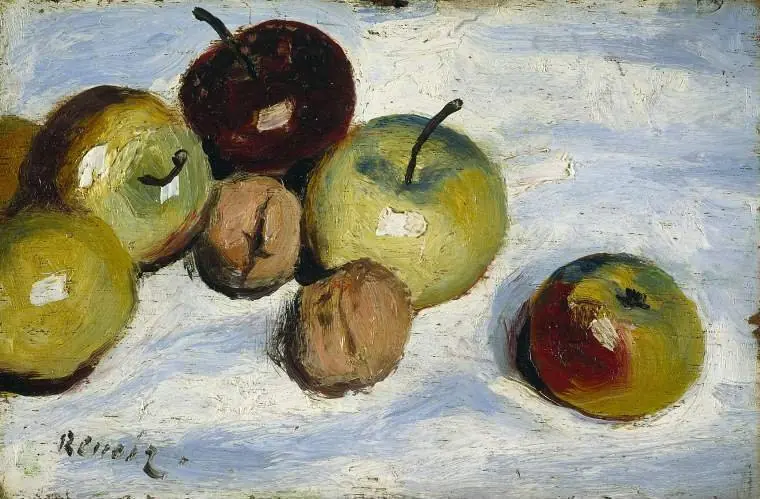
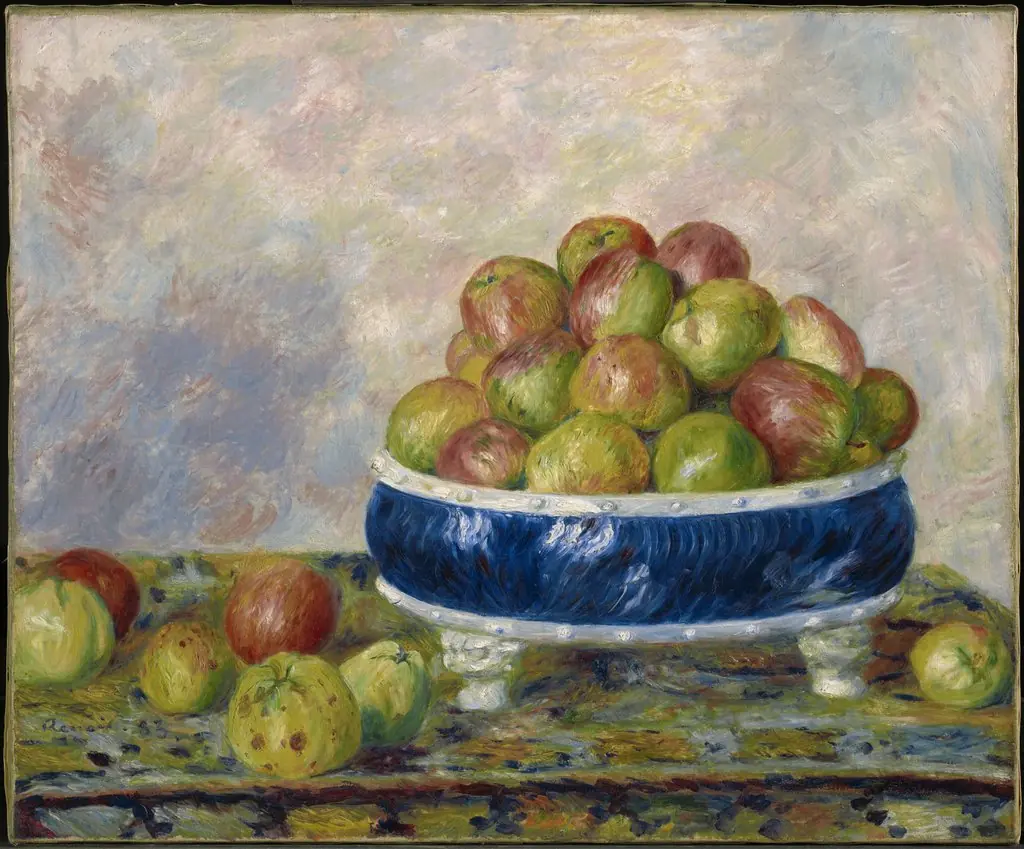
The composition centers on a cluster of red and yellow apples, a green gourd with a long stem, and peaches, arranged with quiet balance on a white cloth. These common fruits, gathered without ceremony, reflect Renoir’s enduring interest in the beauty of ordinary life. The absence of narrative or symbolism invites contemplation of form, texture, and the quiet dignity of domestic stillness.
Technique & Style
Renoir employs loose, tactile brushstrokes to convey the softness of fruit skin and the fold of linen. Warm, muted tones in the background enhance the vibrancy of the fruit without contrast. The paint is applied with a sense of immediacy, capturing the play of light across surfaces rather than precise detail. This approach aligns with his mature style, where structure emerges through color relationships rather than line.
History & Provenance
The painting was completed in 1905, during Renoir’s final years, when he worked despite increasing arthritis. It entered the Montreal Museum of Fine Arts’ collection in the 20th century, likely through a private acquisition or donation. Its documented history remains limited, but its presence in the museum’s holdings confirms its recognition as part of Renoir’s late oeuvre.
Context
In the early 20th century, Renoir turned increasingly to still life as his mobility declined. These works allowed him to focus on composition and color without the demands of portraiture or outdoor painting. His still lifes from this period reflect a synthesis of Impressionist sensibility and a quieter, more introspective approach, influenced by his study of Old Masters and his own evolving vision.
Legacy
Though less celebrated than his figures, Renoir’s late still lifes like this one demonstrate his sustained mastery of light and texture. They influenced later artists interested in the emotional resonance of everyday objects. The painting endures as a quiet testament to his ability to find harmony in simplicity, continuing to engage viewers through its understated elegance.
Artist & collection
Artist
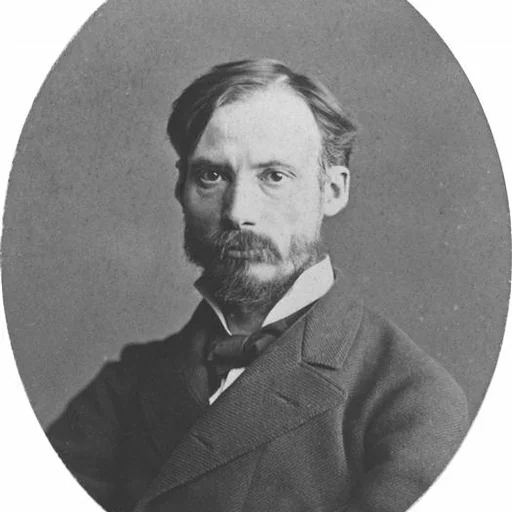
Pierre-Auguste Renoir was born on 25 February 1841 in Limoges, the son of a tailor and a seamstress.