Artwork
The guitar player
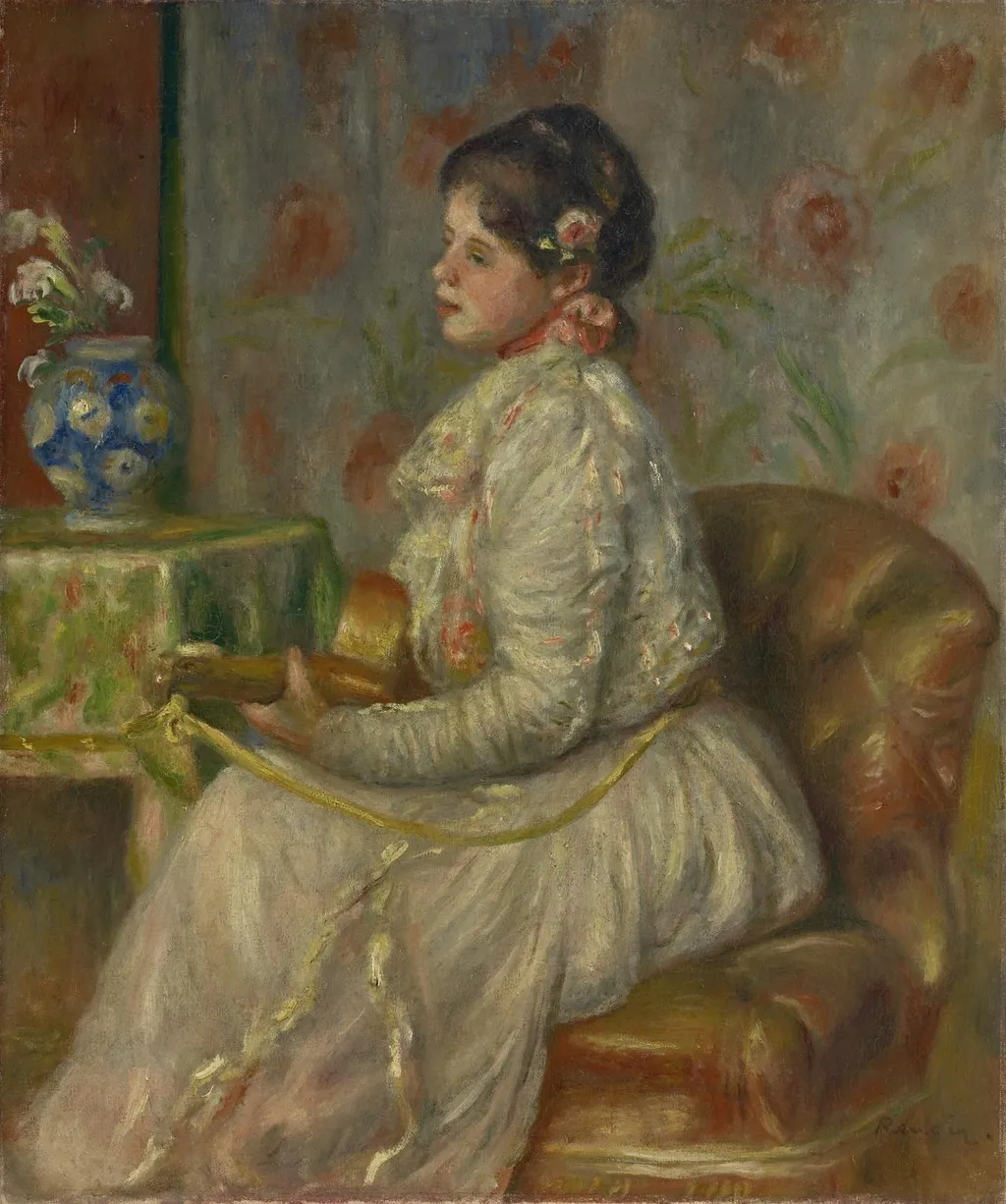
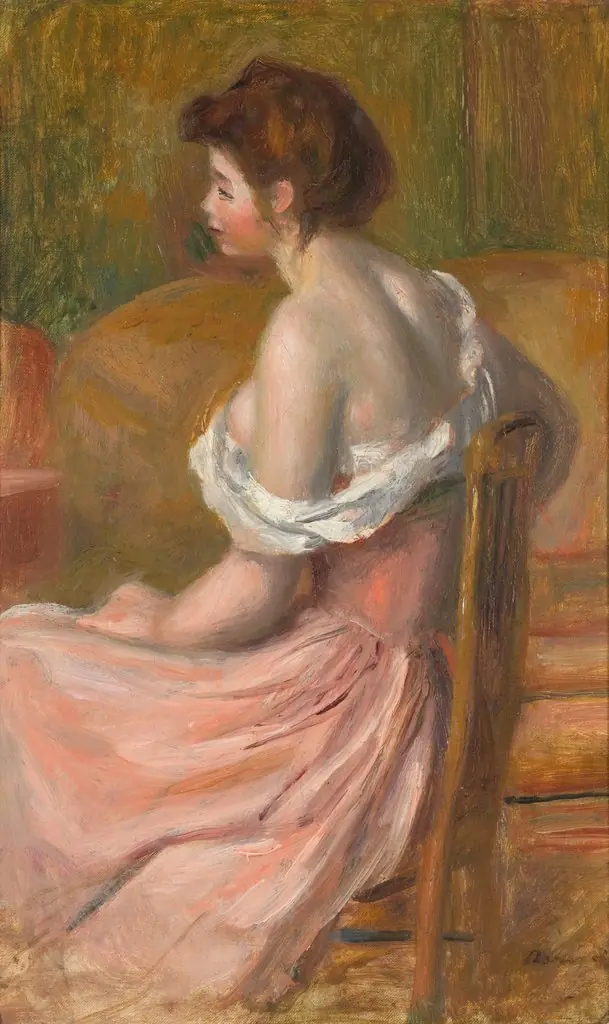
The guitar player is an oil painting by the Impressionist artist Auguste Renoir. It dates from 1890 and is held in the collection of the National Gallery of Victoria.
About this work
Overview
Renoir’s handling of light and texture invites a sense of closeness, as if the viewer is sharing a private, unguarded moment.
Painted around 1890, this oil work by Pierre-Auguste Renoir portrays a young woman seated with a guitar in her lap. It resides in the National Gallery of Victoria, Melbourne. The composition centers on stillness and quiet focus, avoiding dramatic action in favor of a contemplative mood. Renoir’s handling of light and texture invites a sense of closeness, as if the viewer is sharing a private, unguarded moment.
Subject & Meaning
The subject is a woman absorbed in quiet reflection, her gaze lowered and posture relaxed. Though she holds a guitar, there is no indication she is playing; instead, her hands rest gently on the strings, suggesting pause rather than performance. The absence of narrative or external context emphasizes inner stillness, aligning the figure with themes of introspection and solitude common in Renoir’s later work.
Technique & Style
Renoir employs soft, blended brushwork to render fabric, skin, and wood with subtle tonal shifts. The warm background—faintly reddish and orange—enhances the intimacy of the scene without competing for attention. Light falls gently across the woman’s face and dress, modeling form without harsh definition. The palette remains restrained, favoring muted tones that reinforce the painting’s calm, inward atmosphere.
History & Provenance
The painting was created during Renoir’s mature period, following his travels in Italy and a shift toward more structured compositions. It entered the National Gallery of Victoria’s collection in the 20th century, likely through a private acquisition or bequest. Its provenance before institutional ownership remains undocumented in public records, though it is not among his most widely exhibited works.
Context
In the 1890s, Renoir increasingly turned to intimate, domestic scenes, moving away from the bustling social settings of his Impressionist years. This painting reflects his interest in quiet, solitary figures—often women engaged in personal rituals. The guitar, a common symbol of leisure and artistic expression in bourgeois homes, anchors the scene in a familiar, middle-class world of private music-making.
Legacy
Though not among Renoir’s most famous works, this painting exemplifies his later sensitivity to mood and texture. It contributes to a broader body of work that redefined portraiture through emotional subtlety rather than grandeur. Its presence in a major Australian institution underscores the global reach of his quieter, introspective studies beyond the French art scene.
Own this work as a print
Artist & collection
Artist
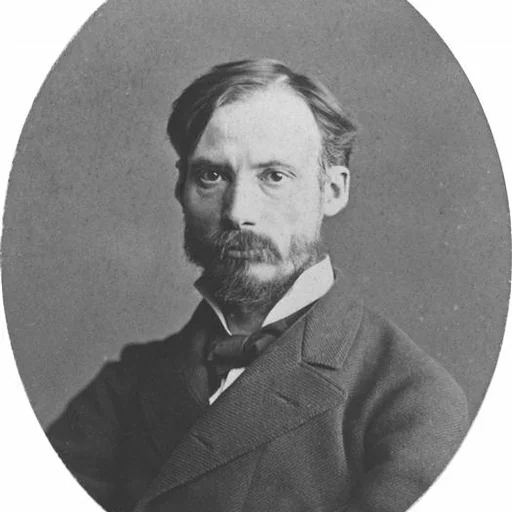
Pierre-Auguste Renoir was born on 25 February 1841 in Limoges, the son of a tailor and a seamstress.