Artwork
Vase of Roses
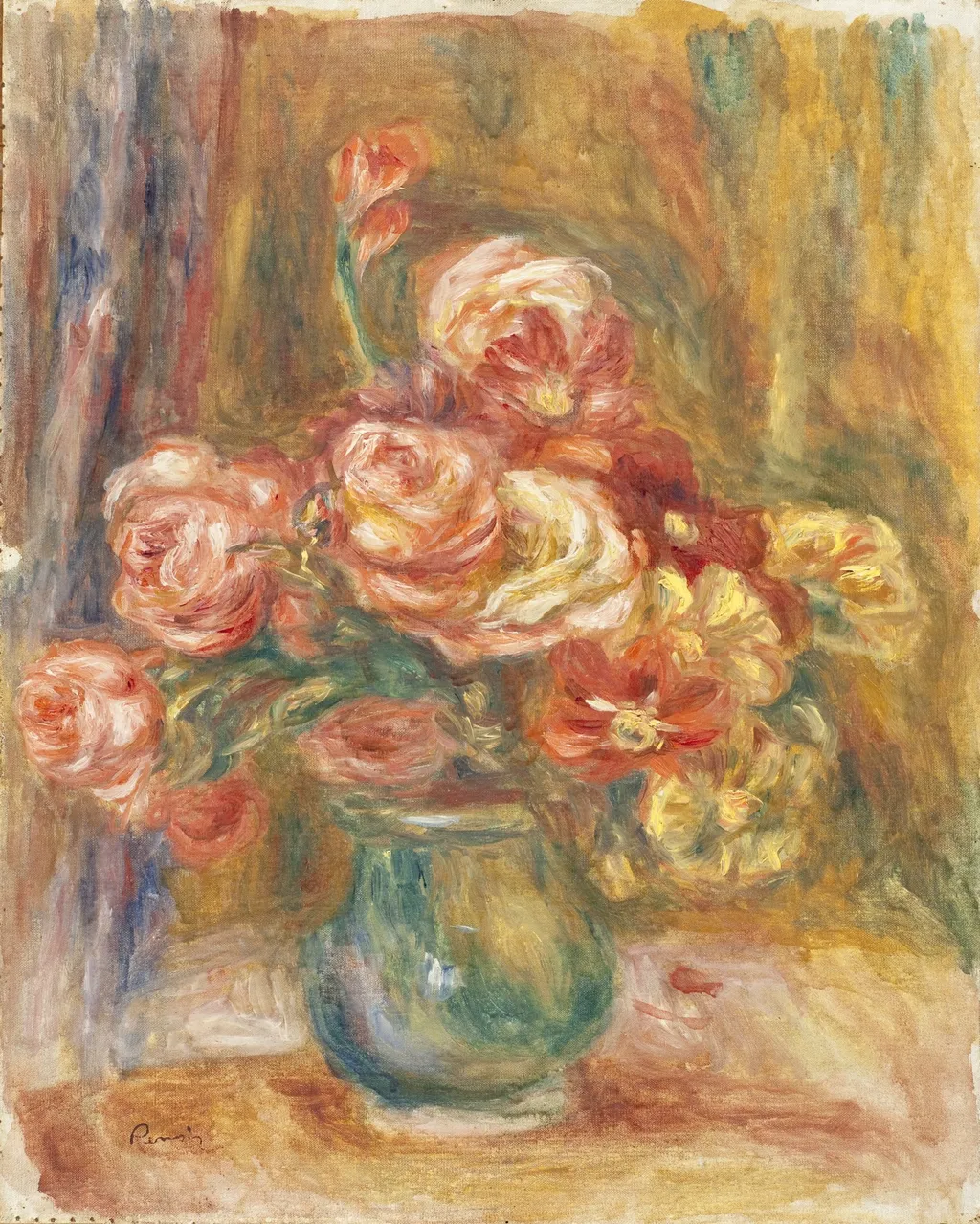
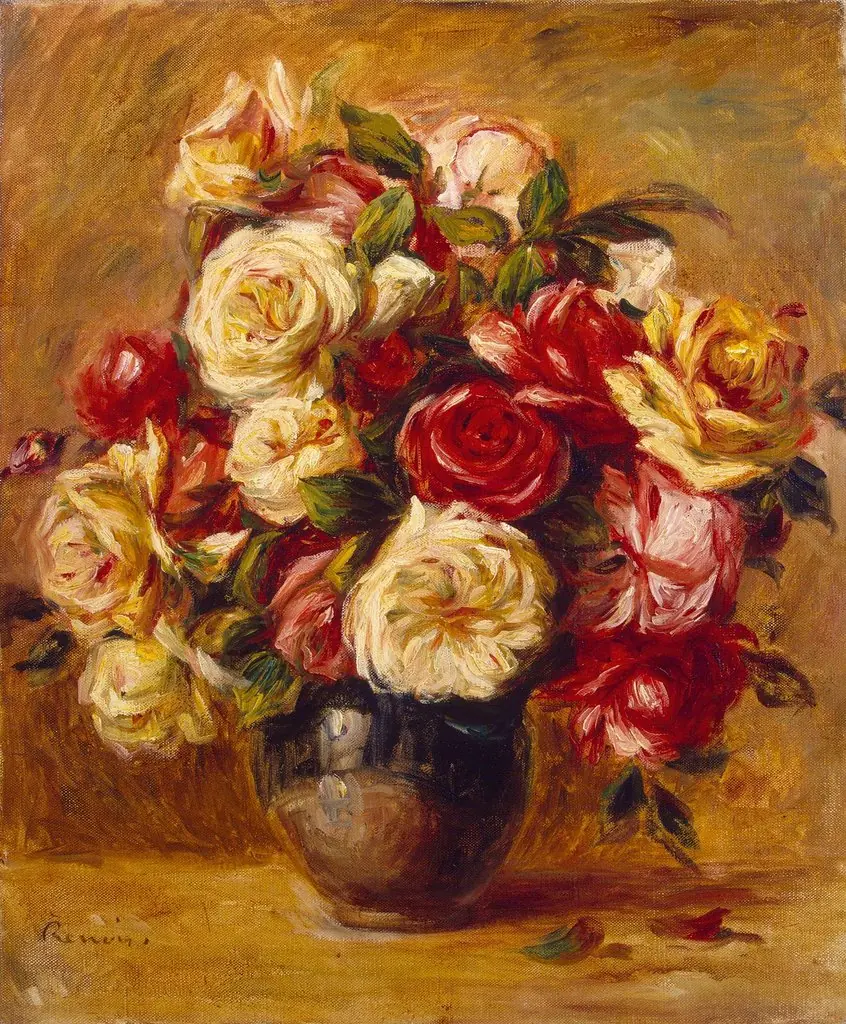
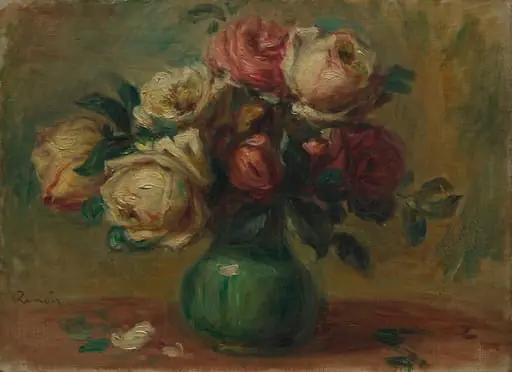
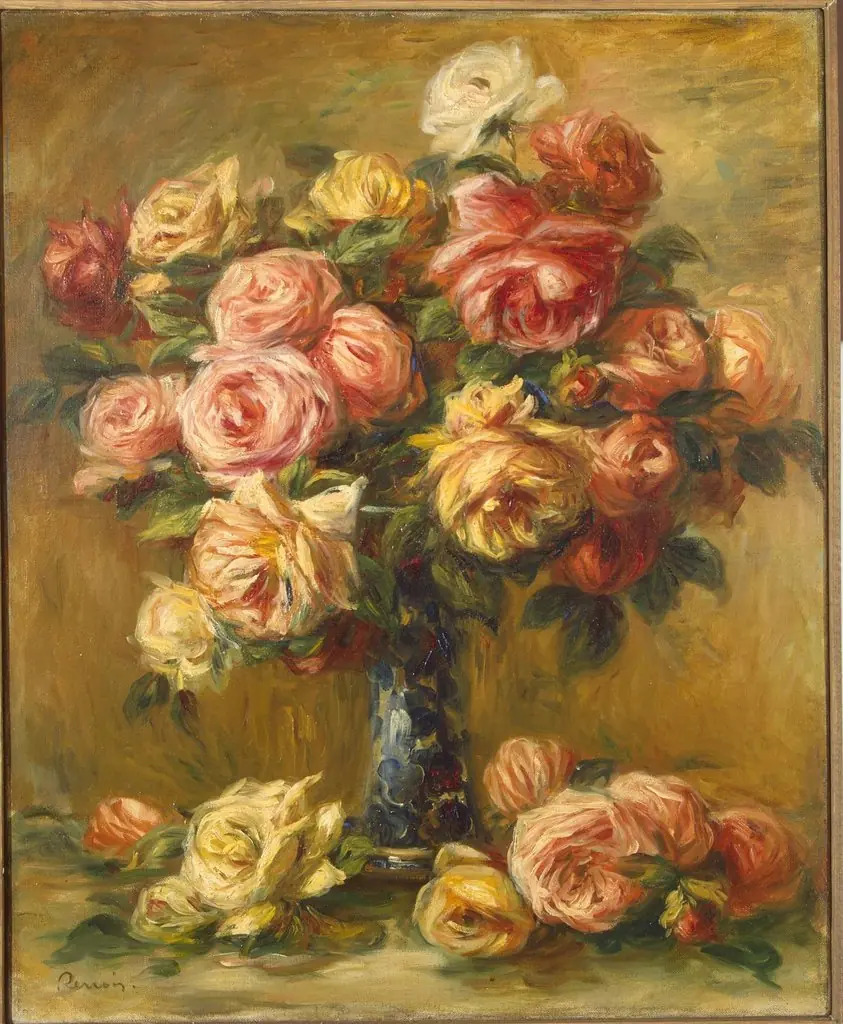
Vase of Roses is an unspecified painting by Auguste Renoir. It dates from 1896 and is held in the collection of the Los Angeles County Museum of Art.
About this work
Overview
Unlike formal botanical illustrations, Renoir’s approach emphasizes sensory impression over precise detail, inviting contemplation of everyday beauty.
Painted in 1896, Vase of Roses is a still life by Pierre-Auguste Renoir, part of the collection at the Los Angeles County Museum of Art. The work centers on a simple arrangement of roses in a vessel, rendered with the artist’s characteristic attention to light and color. Unlike formal botanical illustrations, Renoir’s approach emphasizes sensory impression over precise detail, inviting contemplation of everyday beauty.
Subject & Meaning
The subject—a single vase of roses—reflects Renoir’s enduring interest in domestic tranquility and natural form. The blooms, rendered in soft pinks and yellows, suggest fleeting vitality, while the absence of context or narrative shifts focus to the quiet dignity of the arrangement. The painting does not seek symbolism but rather evokes presence, honoring the transient grace of floral life through visual harmony.
Technique & Style
Renoir employs loose, fluid brushwork to suggest the texture of petals and the sheen of the vase, avoiding hard outlines. The green vessel, likely glass or glazed ceramic, catches ambient light, contrasting with the warm, muted background. His palette is restrained yet rich, with layered strokes creating depth and movement. The technique prioritizes optical sensation over definition, characteristic of his late Impressionist phase.
History & Provenance
Created in 1896 during Renoir’s mature period, the painting remained in private hands until acquired by the Los Angeles County Museum of Art. Its journey through collectors reflects its appeal among American patrons of French Impressionism in the early 20th century. No major exhibitions or documented controversies surround its history; its significance lies in its quiet consistency with Renoir’s lifelong themes.
Context
In the mid-1890s, Renoir increasingly turned to intimate subjects after years of large-scale figure painting. Vase of Roses aligns with his renewed focus on still life and domestic interiors, influenced by his physical discomfort and desire for calm. This period saw a refinement in his handling of color and light, moving away from the spontaneity of earlier Impressionism toward a more deliberate, tactile approach.
Legacy
Vase of Roses exemplifies Renoir’s late style, where technical mastery serves emotional resonance. It has contributed to the enduring perception of Impressionism as an art of sensory pleasure and refined observation. While not widely reproduced, it remains a touchstone for studies of his floral works and the evolution of his brushwork in his final decades.
Own this work as a print
Artist & collection
Artist
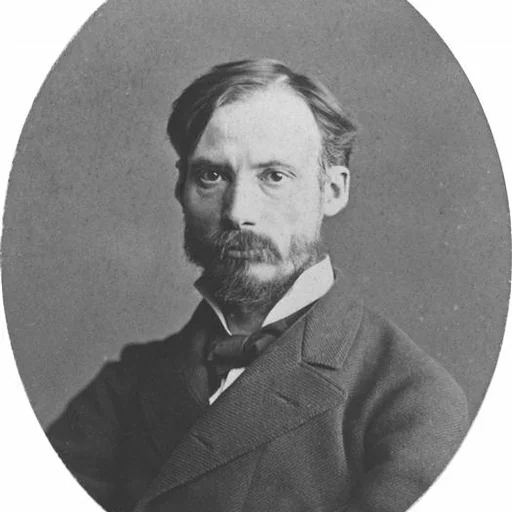
Pierre-Auguste Renoir was born on 25 February 1841 in Limoges, the son of a tailor and a seamstress.