Artwork
Street Scene from Above
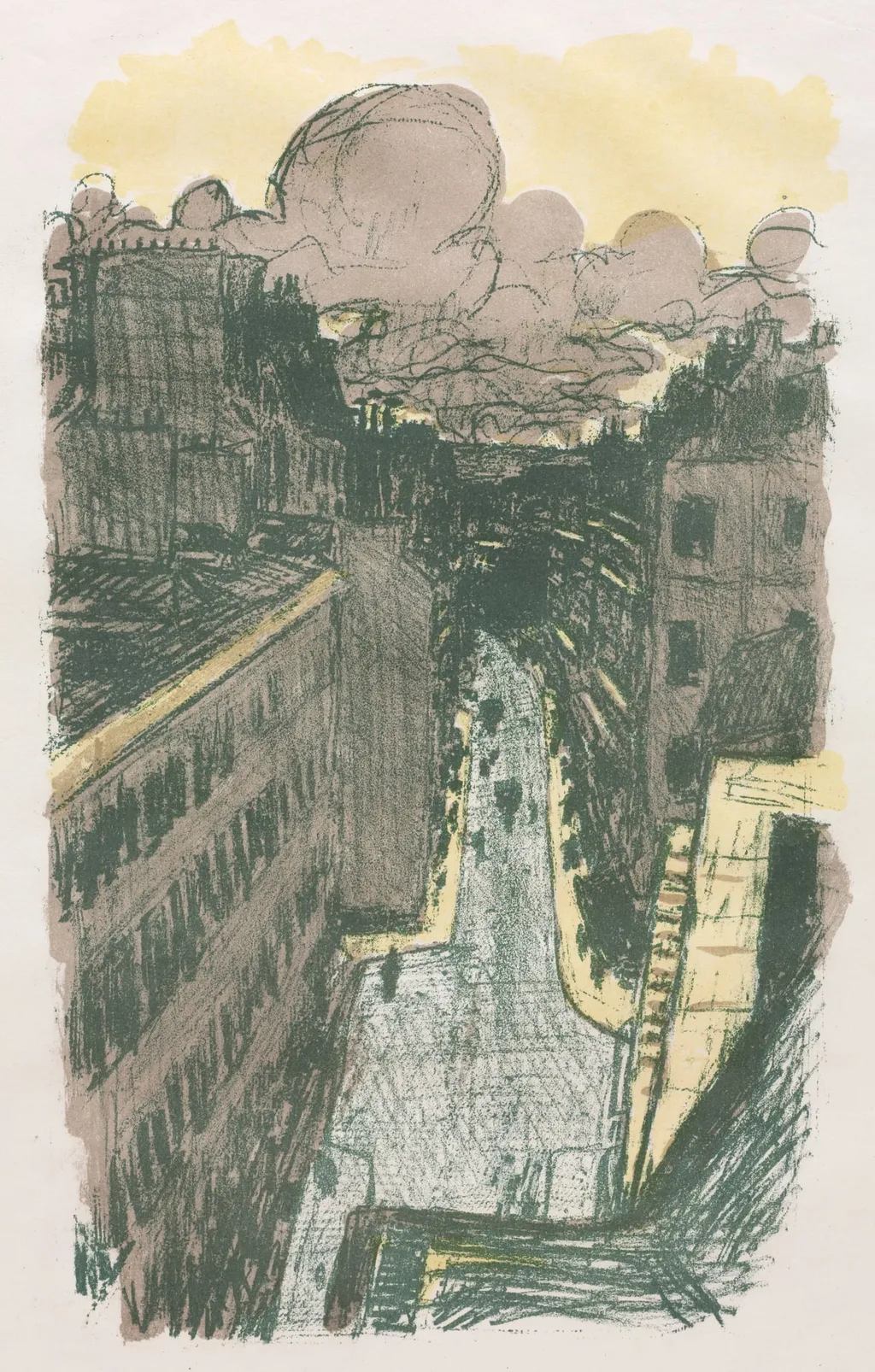
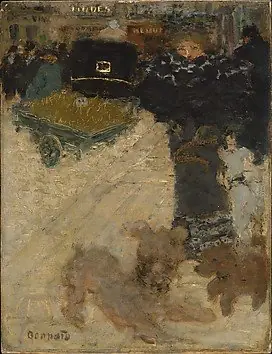
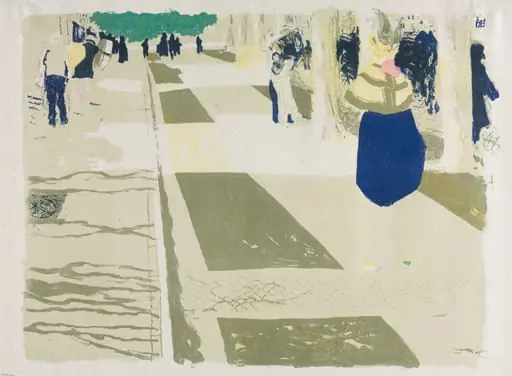
Street Scene from Above is a print by the Impressionist artist Pierre Bonnard. It dates from 1899 and is held in the collection of the Cleveland Museum of Art.
About this work
Instead of famous sights, he showed everyday life—shoppers, vendors, park visitors.
Bonnard painted a Paris street from above in 1899. Bright roofs and tiny figures fill the scene. A woman in white walks a dog below.
He worked from his Montmartre studio window. Instead of famous sights, he showed everyday life—shoppers, vendors, park visitors. The park here is the Bois de Boulogne.
This kind of quiet city scene feels like a snapshot. Check out Pierre Bonnard (French, 1867–1947) next.
Overview
Created in 1899, this suite of color lithographs captures everyday moments in Paris through the vantage point of Pierre Bonnard’s Montmartre studio. Rather than grand landmarks, the prints focus on ordinary urban life: pedestrians, vendors, and families in quiet motion. The elevated perspective lends a sense of detachment, as if observing life through a window, framing scenes that feel spontaneous and unposed.
Subject & Meaning
Bonnard’s subjects are unremarkable yet intimate: women walking dogs, children strolling, shoppers passing vendors. The Parisienne, dressed in contemporary fashion, recurs as a symbol of modern urban existence. The Bois de Boulogne appears as a retreat for leisure, not spectacle. These scenes reflect a quiet celebration of routine, emphasizing the dignity and rhythm of daily life over theatrical or monumental themes.
Technique & Style
Using color lithography, Bonnard layered subtle hues to suggest atmosphere rather than detail. Wet streets at night glow with reflected gaslight, rendered in pale yellows against deep shadows. Figures are simplified, almost silhouette-like, their forms suggested rather than defined. The composition favors flat planes and asymmetrical balance, drawing attention to patterns of light, color, and movement rather than narrative clarity.
History & Provenance
The prints were produced during Bonnard’s early career, shortly after he joined the Nabis group. They stem from his habit of sketching from his studio window, a practice that grounded his work in direct observation. While not widely exhibited at the time, these lithographs later became important examples of his interest in domestic and urban intimacy, distinguishing his approach from the more symbolic work of his contemporaries.
Context
In late 19th-century Paris, rapid urbanization and new technologies like gas lighting transformed the city’s character. Artists increasingly turned from historical or mythological subjects to contemporary life. Bonnard’s focus on overlooked corners of the city aligned with broader shifts in visual culture, where the mundane became a legitimate subject for artistic inquiry.
Legacy
These prints helped establish Bonnard as a chronicler of modern domesticity. His use of elevated viewpoints and intimate subjects influenced later generations of urban observers, from Edward Hopper to contemporary photographers. The series remains notable for its quiet lyricism, offering a restrained yet persistent vision of Parisian life that resists grandeur in favor of subtle, recurring moments.
Artist & collection
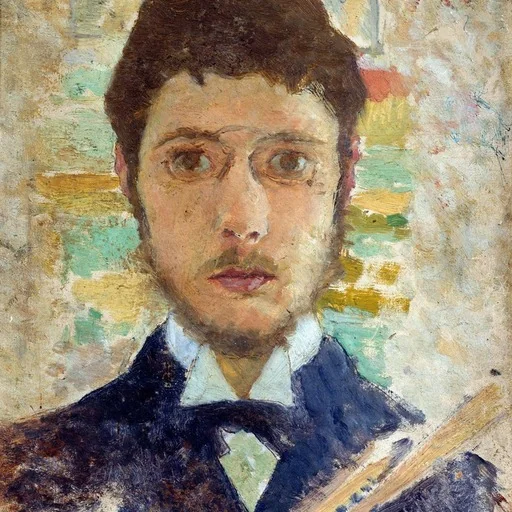
Artist
Pierre Bonnard was a French painter, illustrator and printmaker, known especially for the stylized decorative qualities of his paintings and his bold use of color.