Artwork
On the Street
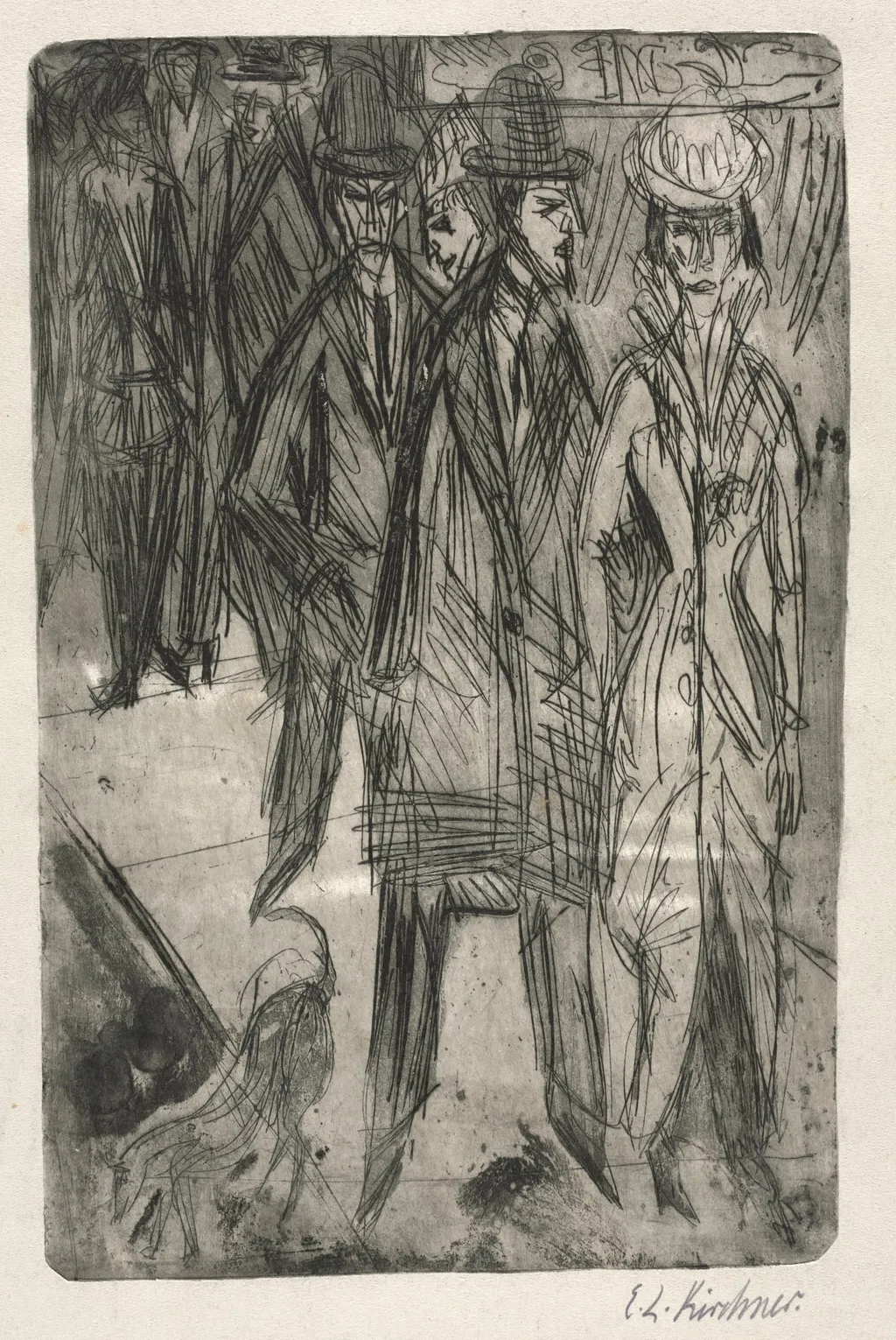
On the Street is a print by Ernst Ludwig Kirchner. It dates from 1914 and is held in the collection of the Cleveland Museum of Art.
About this work
Overview
Created around 1914, *On the Street* is a woodcut print by Ernst Ludwig Kirchner, a central figure in the German Expressionist movement.
Created around 1914, *On the Street* is a woodcut print by Ernst Ludwig Kirchner, a central figure in the German Expressionist movement. As a co-founder of Die Brücke, Kirchner sought to convey emotional intensity through simplified forms and dynamic compositions. This work captures a fleeting urban moment, reflecting the artist’s interest in modern life and its psychological undercurrents. The medium and style align with Die Brücke’s rejection of academic conventions in favor of raw, personal expression.
Subject & Meaning
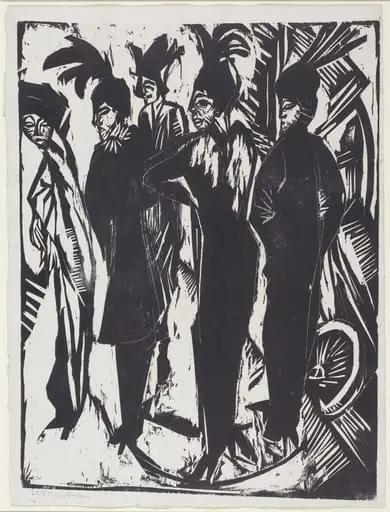
The scene portrays a group of pedestrians in a city setting, centered on a man in a hat and coat walking beside a woman. Other figures recede into the background, their forms fragmented and stylized. Rather than documenting a specific location, Kirchner conveys the alienation and anonymity of urban existence. The figures appear disconnected, their gestures stiff and their interactions ambiguous, suggesting the emotional distance inherent in modern city life.
Technique & Style
Kirchner employed woodcut printing to achieve sharp, angular lines and high-contrast areas of color. The forms are deliberately distorted, with exaggerated proportions and rhythmic contours that emphasize movement and tension. Bold, unmodulated hues and visible grain from the woodblock enhance the print’s tactile urgency. The composition avoids perspective depth, instead flattening space to heighten emotional impact and reinforce the expressive aims of Expressionism.
History & Provenance
Created during Kirchner’s most productive period, the print was made before the rise of Nazi cultural policies. In the 1930s, the regime labeled his work 'degenerate,' leading to the removal of over 600 of his pieces from German museums. Many were destroyed or sold abroad. *On the Street* survived, likely due to its circulation in private collections or international exhibitions, preserving a key example of pre-war German Expressionism.
Context
Kirchner’s work emerged amid rapid urbanization and social upheaval in early 20th-century Germany. Die Brücke artists rejected traditional realism, drawing inspiration from non-Western art, medieval woodcuts, and the raw energy of city streets. *On the Street* reflects this synthesis—its stylized figures and fractured space echo both primitive aesthetics and contemporary anxieties about modernity, aligning with broader European artistic shifts away from naturalism.
Legacy
The print remains a significant document of Expressionist printmaking, illustrating how technical constraints of woodcut could be transformed into tools of emotional expression. Kirchner’s influence extended beyond his lifetime, shaping later generations of artists interested in psychological depth and formal experimentation. Today, *On the Street* is studied for its fusion of technique and theme, offering insight into how art responded to the dislocations of modern urban life.
Artist & collection
Artist
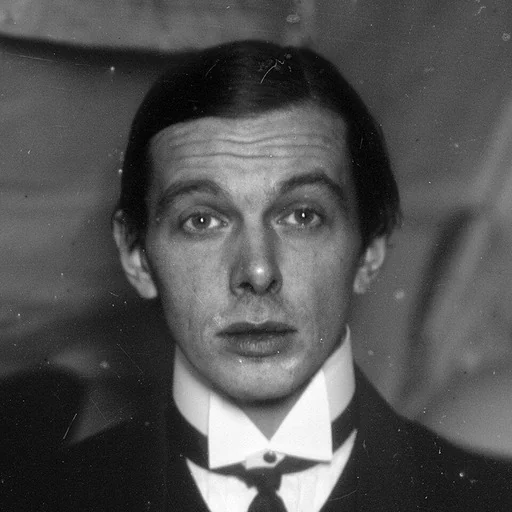
Ernst Ludwig Kirchner (6 May 1880 – 15 June 1938) was a German expressionist painter and printmaker.

![Dance Hall Bellevue [obverse], by Ernst Ludwig Kirchner](https://artifactworldgallery.com/img/ernst-ludwig-kirchner--dance-hall-bellevue-obverse--d1e14aac4297c69e-w320.webp)
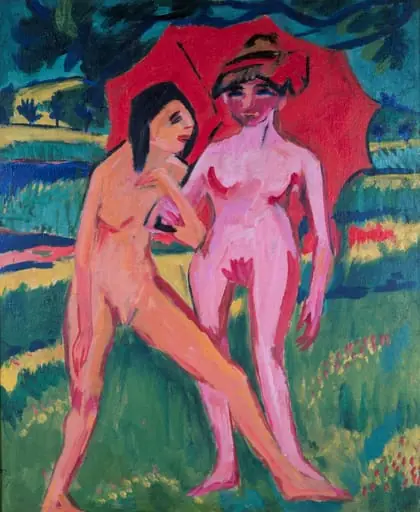
![Nude Figure [reverse], by Ernst Ludwig Kirchner](https://artifactworldgallery.com/img/ernst-ludwig-kirchner--nude-figure-reverse--4b135f0364753e98-w320.webp)
![Two Nudes [obverse], by Ernst Ludwig Kirchner](https://artifactworldgallery.com/img/ernst-ludwig-kirchner--two-nudes-obverse--eb3914183f0bc96d-w320.webp)
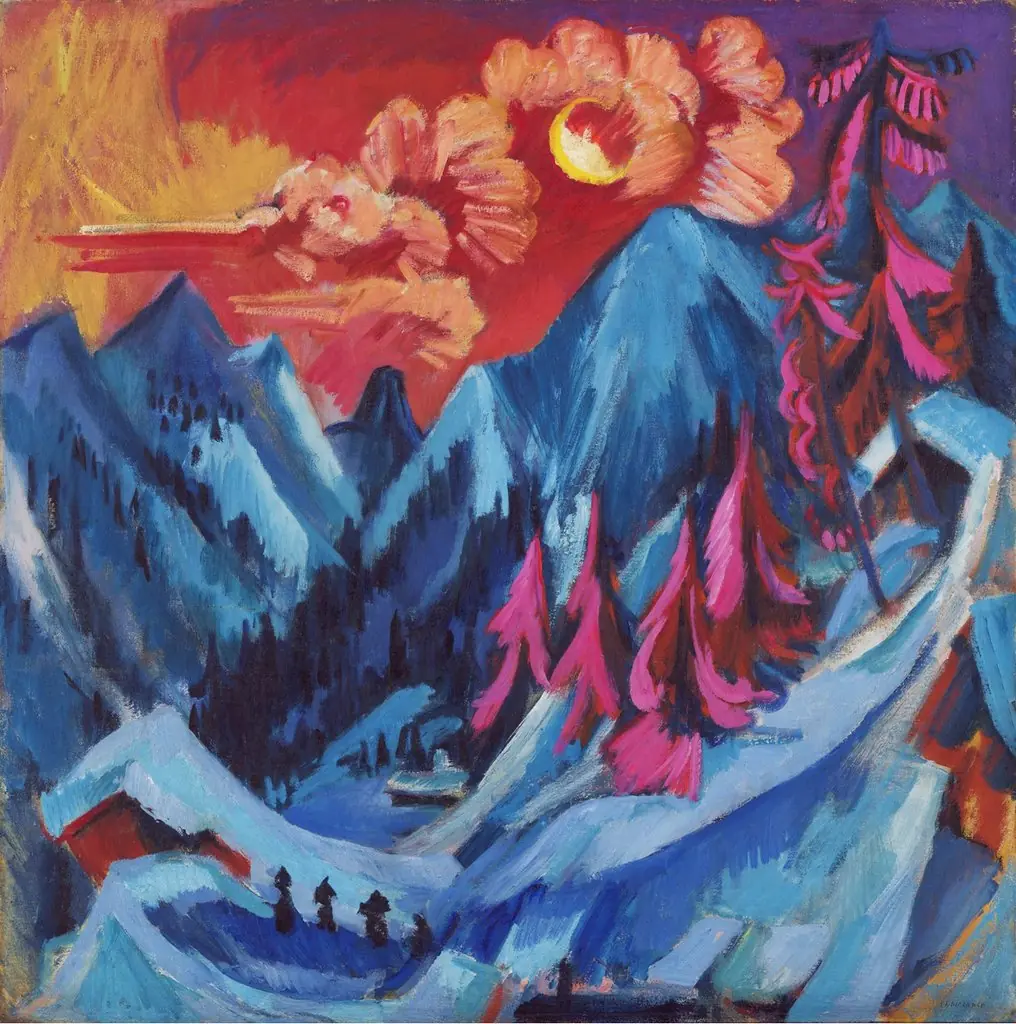
![Dancing Couple in the Snow [reverse], by Ernst Ludwig Kirchner](https://artifactworldgallery.com/img/ernst-ludwig-kirchner--dancing-couple-in-the-snow-reverse--87ca007d7c05b553-w320.webp)
 Couple in Room, Nude Man with Woman
 Heads of Two Girls
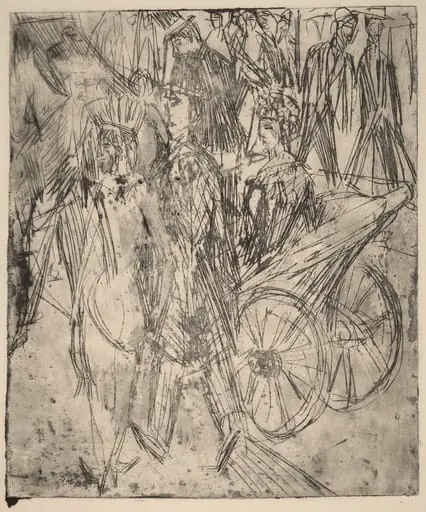 Couple in Front of a Carriage
 Untitled
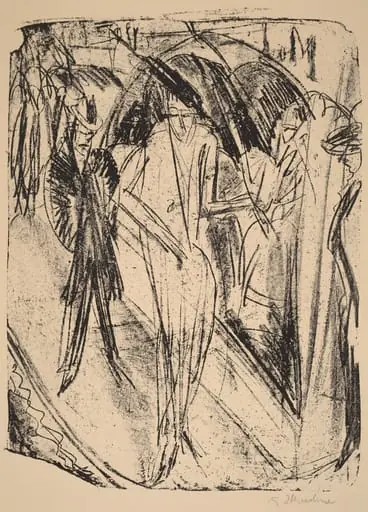 Lady in the Rain
 Untitled
 Five Women on the Street
 Street Scene with a Cripple and a Praying Man
 Women at a Table in a Room (recto) / Nude Woman (verso)
 Untitled
 Street Corner Seen from Above
 Portrait of Theo van Rysselberghe