Artwork
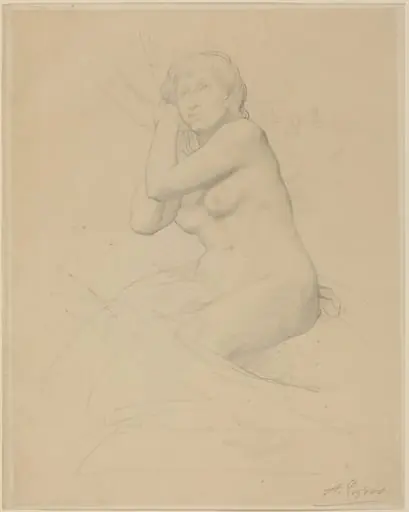
Study for the Mother in The Fisherman's Family
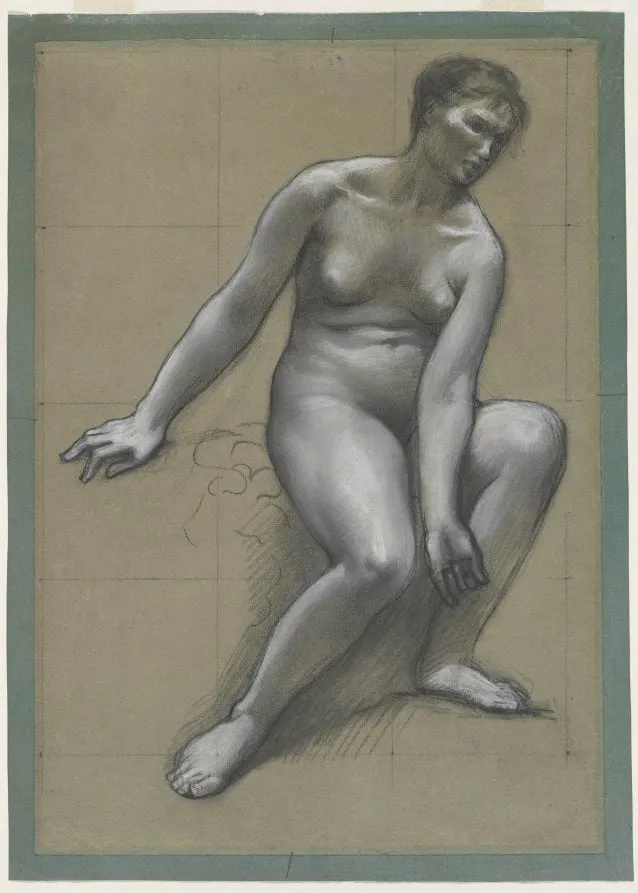
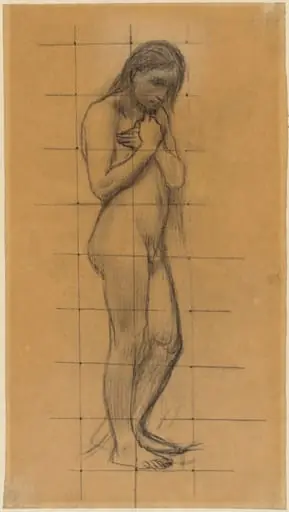
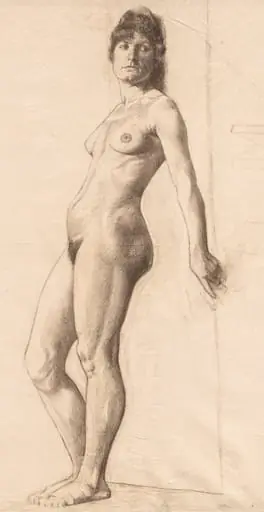
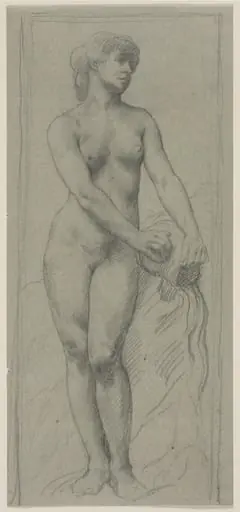
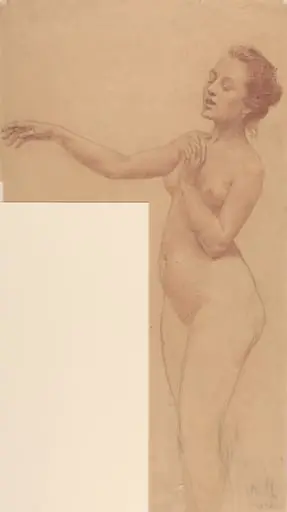
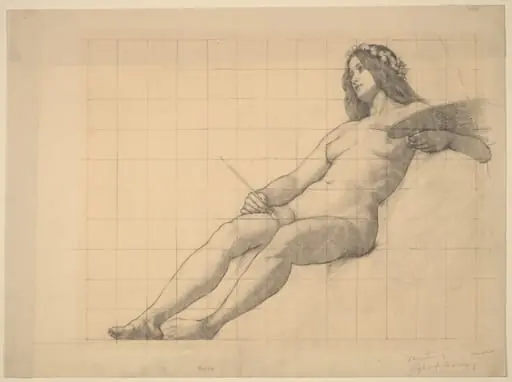
Study for the Mother in The Fisherman's Family is a drawing by the Impressionist artist Pierre Puvis de Chavannes. It dates from 1875 and is held in the collection of the Cleveland Museum of Art.
About this work
Overview
The work reflects the artist’s process of refining form and modesty, transitioning from a fully nude prototype to a partially draped composition.
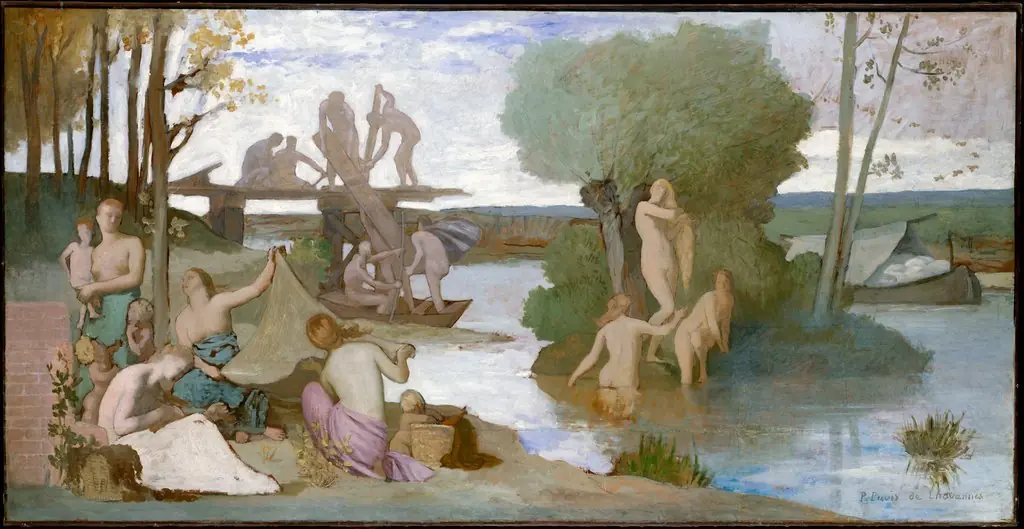
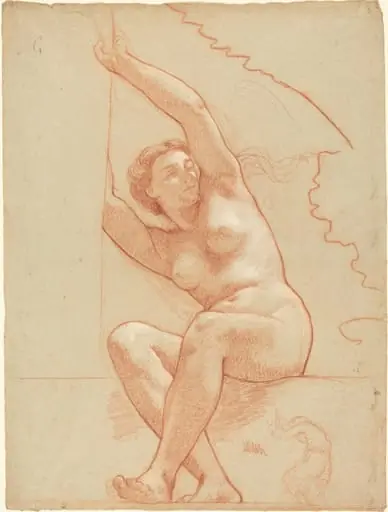
This drawing by Pierre Puvis de Chavannes is a preparatory study for the mother figure in The Fisherman's Family, first exhibited in 1875. It captures an early, more exposed version of the figure, later modified in the final painting. The work reflects the artist’s process of refining form and modesty, transitioning from a fully nude prototype to a partially draped composition. The drawing’s immediacy contrasts with the finished piece’s restrained elegance.
Subject & Meaning
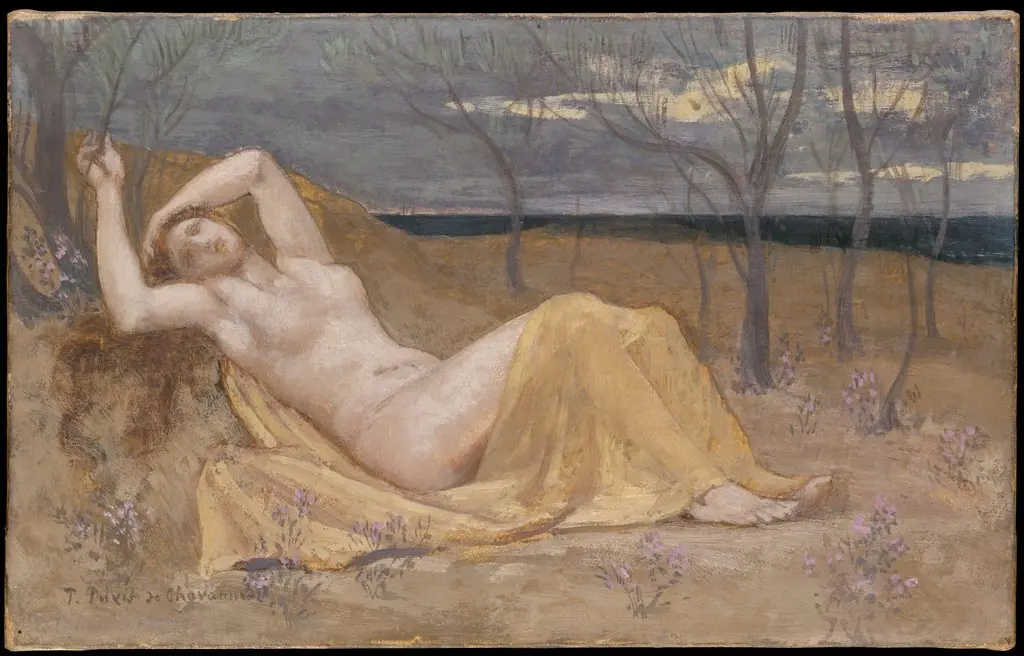
The figure represents maternal stillness, drawn from an earlier work, Summer, acquired by the French state in 1873. In this study, the woman sits sideways, face averted, one breast exposed—an intimate, unidealized presence. Puvis later softened this exposure, covering more of the body in the final painting, perhaps to align with evolving social norms or to emphasize symbolic serenity over physical realism.
Technique & Style
Executed in a loose, rapid hand, the drawing preserves naturalistic details—such as the curve of the collarbone and the positioning of the right hand—that were later smoothed into generalized forms in the painting. The use of chalk or pencil suggests a focus on volume and posture rather than finish. This approach reveals Puvis’s method: refining anatomy into quiet, monumental types through successive revisions.
History & Provenance
The drawing is linked to two major works: the 1875 Salon painting and its 1887 reduced replica. The mother’s pose originates in Summer (1872), purchased by the French government, indicating the figure’s significance to Puvis’s evolving iconography. The study’s existence confirms his iterative process, where earlier compositions were revisited and adapted for new contexts over time.
Context
In the 1870s, French academic art balanced classical ideals with emerging naturalism. Puvis navigated this tension by retaining emotional gravity while adjusting physical exposure to suit public reception. The shift from nude to partially draped in The Fisherman’s Family reflects broader cultural shifts in the depiction of the female form, favoring symbolic harmony over anatomical frankness.
Legacy
This study illustrates Puvis’s influence on Symbolist and modernist artists who valued suggestion over detail. His method of revisiting and simplifying forms anticipated later movements that prioritized emotional resonance over realism. Though not widely exhibited, such preparatory works remain key to understanding his restrained, timeless aesthetic.
Artist & collection
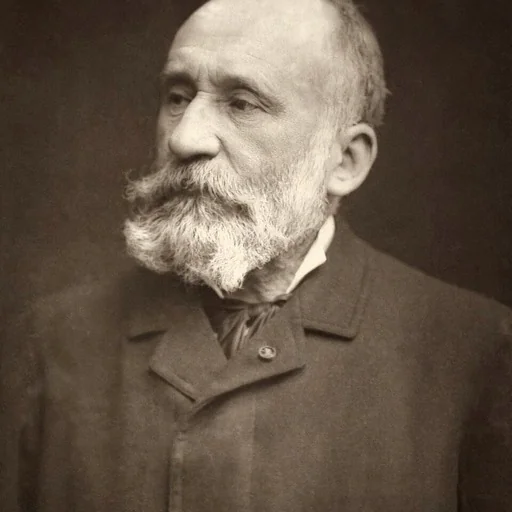
Artist
Pierre Puvis de Chavannes (French pronunciation: ; 14 December 1824 – 24 October 1898) was a French painter known for his mural painting, who came to be known as "the painter for France".